Mercy Ecospirituality Center Happenings & Blog
50th Anniversary of Earth Day Money Calendar
February 2020
Happenings Around the Farm
January temperatures fell to minus 7 degrees one night; six nights were in the single digits; two daytime readings reached 50 and 54 degrees! Twenty-three days were cloudy or had rain or snow - with about 15" of accumulation. The farm house was warm and cozy and the barn a bit on the warm side this time of year for all the animals.
A wonderful sight was seen on our bird feeder near the Sisters apartment were two beautiful Eastern Bluebirds this January. They stayed for a while but did not eat any seeds. Other birds sighted near the feeders in the kitchen/dining area were flickers, red-bellied woodpeckers, downy woodpeckers, nuthatches, chickadees, blue jays, junco and finches.
There were also six deer that passed through the backyard at dusk last week, each one appearing individually from the thicket. They moved gracefully around the pond and into the woods where the trail begins for the Cosmic Walk.
December guests came from: Cornwall, Ferrisburgh, Middlebury, North Ferrisburgh and Vergennes, VT; Guildford and West Haven, CT; and Cherry Hill, NJ.
A wonderful sight was seen on our bird feeder near the Sisters apartment were two beautiful Eastern Bluebirds this January. They stayed for a while but did not eat any seeds. Other birds sighted near the feeders in the kitchen/dining area were flickers, red-bellied woodpeckers, downy woodpeckers, nuthatches, chickadees, blue jays, junco and finches.
There were also six deer that passed through the backyard at dusk last week, each one appearing individually from the thicket. They moved gracefully around the pond and into the woods where the trail begins for the Cosmic Walk.
December guests came from: Cornwall, Ferrisburgh, Middlebury, North Ferrisburgh and Vergennes, VT; Guildford and West Haven, CT; and Cherry Hill, NJ.
Cosmic Walk
The Sun and Solar System, Earth appears 4.5 billion years ago (BYA)! In the area where our Sun emerged, a density wave passed through as it had many times before, triggering the burst of some ten thousand stars at once ... As the core temperature of the cloud increased, the hydrogen molecules melted down into single atoms generating more heat. When the temperature reached ten million degrees, the hydrogen at the center began to form helium and our star, the Sun was born. Spinning around the sun was a disc of the original sun cloud...this swirling disc of elements gave birth to Earth and eight other whirling planets. Source: The Cosmic Walk, Mercy Ecospirituality Center, Benson, VT.
Visitors are invited to take The Cosmic Walk by calling in advance: 802-537-4531. A booklet illustrating the 22 milestones along the path is also available. The walk is only open during the daylight hours.
Credit: Mary Daly, RSM, Artist; Anne Curtis, RSM, Photographer and Mary Pendergast, RSM, Writer
Visitors are invited to take The Cosmic Walk by calling in advance: 802-537-4531. A booklet illustrating the 22 milestones along the path is also available. The walk is only open during the daylight hours.
Credit: Mary Daly, RSM, Artist; Anne Curtis, RSM, Photographer and Mary Pendergast, RSM, Writer
The Adventures of Bailey and Dexter
Christmas tide is always an exciting time for Bailey and Dexter because since last December they have had visions of a special treat dance through their heads. One day Kayla came bearing the hoped for "gift" - their very own Christmas tree! Not only does it spruce up the east paddock it helps to keep their digestive system in top notch order. In short, it is a deterrent to parasites that could affect their health. From the smile on Dexter's face and Bailey's look of appreciation they are most grateful to Kayla! BC is delighted that Bailey and Dexter's have a tree!
Barn Yard Banter and BC
Unfortunately, barn yard animals and wild life do not always coexist. New kits need food and fowl are a ready source of sustenance for them. Whitie, one of our roosters, was attacked by either a raccoon or a weasel, the latter seems to be the probable culprit. Wild animals have been busy this winter as it is likely that a fox "got" the last of our ducks.
With all the happenings, BC, the barn manager, takes a few minutes to ponder the loss of her barn mates on behalf of Bailey, Dexter, Guineas and particularly the fowl.
This year bird feeders were placed in the herb garden located a short distance from the kitchen/dining windows. Sunflower and suet feeders were hung on our well used wrought iron shepherd crooks. The sunflower feeder was dragged about 100 feet away; the suet feeder has yet to be found and the shepherd crooks were bent! The ups and downs of the weather pattern has prompted this "out of the ordinary" behavior of our neighborly wild animals, in this case possibly a hungry bear. Vermont's Fish and Wildlife Department, recommends that feeders only be put from December 1 through March 31.
With all the happenings, BC, the barn manager, takes a few minutes to ponder the loss of her barn mates on behalf of Bailey, Dexter, Guineas and particularly the fowl.
This year bird feeders were placed in the herb garden located a short distance from the kitchen/dining windows. Sunflower and suet feeders were hung on our well used wrought iron shepherd crooks. The sunflower feeder was dragged about 100 feet away; the suet feeder has yet to be found and the shepherd crooks were bent! The ups and downs of the weather pattern has prompted this "out of the ordinary" behavior of our neighborly wild animals, in this case possibly a hungry bear. Vermont's Fish and Wildlife Department, recommends that feeders only be put from December 1 through March 31.
St. Francis of Assisi Memorial Garden
If you would like to memorialize a loved one, contact Mercy Farm and the name of your loved one will be entered into the Memorial Book located in the Catherine McAuley Chapel where they will be remembered in the prayers and works of the Sisters of Mercy on staff and those gathered with us in prayer.
Greetings from the Gardens
This time of year is a good time to delve into the incoming garden catalogs that seem to arrive daily! Some catalogs provide basic information specific to each crop from growing seedlings to harvest; germination guide; fertilizers; diseases; insect pests; in this case, tomato resistance codes. Many varieties from A to Z are included in Johnny's Selected Seeds.
You can never begin too early to think about the upcoming growing season and what crops will delight all of the senses - the thrill of touching the warmth of the once frozen soil; seeing the appearance of a small leaf break through the soil; the sound of a myriad of bird songs filling the air; the sight of a blossom beginning to open or bees busily collecting pollen and nectar; the fragrance of flowers and the Linden trees as it waffles across the farm and the delicate taste of vegetables right off the vine! We have so much to anticipate and to be grateful for!
You can never begin too early to think about the upcoming growing season and what crops will delight all of the senses - the thrill of touching the warmth of the once frozen soil; seeing the appearance of a small leaf break through the soil; the sound of a myriad of bird songs filling the air; the sight of a blossom beginning to open or bees busily collecting pollen and nectar; the fragrance of flowers and the Linden trees as it waffles across the farm and the delicate taste of vegetables right off the vine! We have so much to anticipate and to be grateful for!
Blooming Blossoms
The pussy willow (Salix discolor) is a name given to many of the smaller species of the genus Salix (willows and sallows) when their furry catkins are young in early spring. These species include (among many others): goat willow or goat sallow (Salix caprea), a small tree native to northern Europe and northwest Asia; grey willow or grey sallow (Salix cinerea), a small tree native to northern Europe; and the American pussy willow, the focus of this article. See: https://en.wikipedia.org
Before the male catkins come into full flower (March-May) they are covered in fine, grayish fur, leading to a fancied likeness to tiny cats, also known as "pussies". The catkins appear long before the leaves, and are one of the earliest signs of spring. Only the male trees produce these catkins. Although cuttings of male plants of wild pussy willows make attractive fresh and dried flower arrangements in early spring, the shrubs themselves are hard to cultivate and are subject to many insect pests and diseases. Their branches are also quite brittle.
They grow in meadows and fields, along river or lake shores, swamps and edges of wetlands; and usually in coniferous forests. The pussy willow is native to North America and is present in all six New England states. Exact conservation status definitions varies from state to state. See:gobotany.nativeplanttrust.org
This many-stemmed shrub or small tree has an open rounded crown; silky, furry catkins. The leaves are lance-shaped, irregularly wavy-toothed; stiff; hairy when young; slender-stalked. Leaves are shiny green above, whitish beneath.The bark is gray; fissured, scaly. The flowers are catkins 1-2.5" long; cylindrical; thick with blackish scales (a tiny, modified, usually wedged-shape leaf). There is one scale on the winter bud, and it covers the scale like a cap; covered with silky whitish hairs; in late winter and early spring long before the leaves appear. The fruit is up to a half inch long; narrow capsules; light brown; finely hairy, in early spring before leaves.
In winter, cut pussy willow twigs can be put in water and the flowers forced at warm temperatures. Some twigs will produce beautiful golden stamens, while others will bear slender greenish pistils. The Latin species name (Salix discolor) refers to the contrasting
colors of the leaf surfaces, which aid in recognition. Source: National Audubon Society Field Guide to Trees; Alfred A. Knopf, NY; 2016; p. 332
Before the male catkins come into full flower (March-May) they are covered in fine, grayish fur, leading to a fancied likeness to tiny cats, also known as "pussies". The catkins appear long before the leaves, and are one of the earliest signs of spring. Only the male trees produce these catkins. Although cuttings of male plants of wild pussy willows make attractive fresh and dried flower arrangements in early spring, the shrubs themselves are hard to cultivate and are subject to many insect pests and diseases. Their branches are also quite brittle.
They grow in meadows and fields, along river or lake shores, swamps and edges of wetlands; and usually in coniferous forests. The pussy willow is native to North America and is present in all six New England states. Exact conservation status definitions varies from state to state. See:gobotany.nativeplanttrust.org
This many-stemmed shrub or small tree has an open rounded crown; silky, furry catkins. The leaves are lance-shaped, irregularly wavy-toothed; stiff; hairy when young; slender-stalked. Leaves are shiny green above, whitish beneath.The bark is gray; fissured, scaly. The flowers are catkins 1-2.5" long; cylindrical; thick with blackish scales (a tiny, modified, usually wedged-shape leaf). There is one scale on the winter bud, and it covers the scale like a cap; covered with silky whitish hairs; in late winter and early spring long before the leaves appear. The fruit is up to a half inch long; narrow capsules; light brown; finely hairy, in early spring before leaves.
In winter, cut pussy willow twigs can be put in water and the flowers forced at warm temperatures. Some twigs will produce beautiful golden stamens, while others will bear slender greenish pistils. The Latin species name (Salix discolor) refers to the contrasting
colors of the leaf surfaces, which aid in recognition. Source: National Audubon Society Field Guide to Trees; Alfred A. Knopf, NY; 2016; p. 332
January 2020
Happenings Around the Farm
The weather pattern for December included more cloudy or partly cloudy days than sun, that is, twice as many clouds as sun rays! The month's precipitation (including both snow and rain) was over four inches. Temperatures ranged from minus one to 47 degrees. Six days reached into the forties! Two days saw wind chills at -7 (12/8) and -11 (12/19). All of this adds up to the fact that there is only a smidgen of snow covering the ground. Here's hoping January will bring more sunshine and snow!
December was a quiet month and as such gave staff time to do the "extra little things" that they are unable to get to during the year. It is also a time for staff to take in and enjoy the beauty that surrounds Mercy Farm
December was a quiet month and as such gave staff time to do the "extra little things" that they are unable to get to during the year. It is also a time for staff to take in and enjoy the beauty that surrounds Mercy Farm
The Cosmic Walk
The Universe brought into existence clouds of hydrogen and helium. The self-organizing dynamics of those clouds came to dominate the evolutionary adventure. ... One supernova released gases, debris, and all the elements on the Periodic Table that eventually reignited as our sun and eight whirling planets.
Visitors are invited to take The Cosmic Walk by calling in advance: 802-537-4531. A booklet illustrating the 22 milestones along the path is also available. The walk is only open during the daylight hours.
Credit: Mary Daly, RSM, Artist and Anne Curtis, RSM, photographer
Information on the ecospiritutality center's programs can be found at http://mercyecology.org/index.html
Visitors are invited to take The Cosmic Walk by calling in advance: 802-537-4531. A booklet illustrating the 22 milestones along the path is also available. The walk is only open during the daylight hours.
Credit: Mary Daly, RSM, Artist and Anne Curtis, RSM, photographer
Information on the ecospiritutality center's programs can be found at http://mercyecology.org/index.html
The Adventures of Bailey and Dexter
Bailey and Dexter are suffering in silence during below freezing morning temperatures. They are very happy when BC, the hens, roosters, duck and Guineas join them. Their presence makes the day more interesting!
On days when the temperature is into the thirties Bailey and Dexter have access to the paddocks as a fourth of the large barn doors are open for them to come and go as they please. When the ground is bare they may be seen nibbling otherwise they roam between the west and east paddocks checking to see what's new. They are curious creatures and need to investigate the sound of a car door closing, or who may be talking and are they coming up to say "hello". We look forward to a pat on the head and a gentle word spoken.
On days when the temperature is into the thirties Bailey and Dexter have access to the paddocks as a fourth of the large barn doors are open for them to come and go as they please. When the ground is bare they may be seen nibbling otherwise they roam between the west and east paddocks checking to see what's new. They are curious creatures and need to investigate the sound of a car door closing, or who may be talking and are they coming up to say "hello". We look forward to a pat on the head and a gentle word spoken.
Barnyard Banter and BC
It seems that the newest chickens (collective term for both hens and roosters) to join our flock have decided to remain in "their suite" rather than with the rest of the fowl in the barn during the day. The barred rock hen who sat on their nest until they emerged from their shell and then taught them survival skills has decided that she has done enough for them and has rejoined her friends.
The newbies include three hens and one barred rock rooster. Yikes! That makes three roosters. The barn yard will only get more active and a whole lot louder. Perhaps the roosters will come up with a cock-a-doodle-do schedule that will alternate their "singing" allowing only one at a time on the stage or become a choir with limited daily performances. Regardless, it will be very interesting!
Our solitary duck is right in step with his coop mates and as long as he is quacking and not clucking all will be well. The Guineas generally keep to themselves and only socialize when sunflower seeds are scattered about as a treat. At this point, the barn fills with clucking, quacking and the Guineas constant chatter, a noise sounding like "buck-wheat". The Guineas call is "gentle" when enjoying a treat. However, if a predator is near their call becomes loud, abrasive and is heard all over Benson.
BC is apt to appear from behind the bales of hay, up on rafters or through the door in hopes of finding a kibble or two waiting for her. As she does her daily tour about the farm her large black fluffy tail can be seen swaying high above her head. BC is a bit vain about her tail and her beautiful black shiny thick coat comes in second.
The newbies include three hens and one barred rock rooster. Yikes! That makes three roosters. The barn yard will only get more active and a whole lot louder. Perhaps the roosters will come up with a cock-a-doodle-do schedule that will alternate their "singing" allowing only one at a time on the stage or become a choir with limited daily performances. Regardless, it will be very interesting!
Our solitary duck is right in step with his coop mates and as long as he is quacking and not clucking all will be well. The Guineas generally keep to themselves and only socialize when sunflower seeds are scattered about as a treat. At this point, the barn fills with clucking, quacking and the Guineas constant chatter, a noise sounding like "buck-wheat". The Guineas call is "gentle" when enjoying a treat. However, if a predator is near their call becomes loud, abrasive and is heard all over Benson.
BC is apt to appear from behind the bales of hay, up on rafters or through the door in hopes of finding a kibble or two waiting for her. As she does her daily tour about the farm her large black fluffy tail can be seen swaying high above her head. BC is a bit vain about her tail and her beautiful black shiny thick coat comes in second.
St. Francis of Assisi Memorial Garden
If you would like to memorialize a loved one, contact Mercy Farm and the name of your loved one will be entered into the Memorial Book located in the Catherine McAuley Chapel where they will be remembered in the prayers and works of the Sisters of Mercy on staff and those gathered with us in prayer.
Greetings From the Gardens
"Winter seems to most of us a dead time, a season when nothing is happening. We scarcely want to poke our noses outside the house and when we do, we find only "the bleak midwinter," a wearying emptiness. The world and all living things seem to long for the enlivening touch of spring to resurrect them from the dead of winter.
In this sleep of winter, as in our own sleep, life renews itself. The hurry of doing and making is replaced by peaceful rest. Winter's peace also brings with it conditions and qualities congenial to the spiritual life. There is stillness. If we pay attention, there are new ways of seeing the familiar, revealing new aspects of things we thought we knew. Source: "The Holiness of Winter" by David Rensberger
Even our sleeping gardens relish this time of stillness - as much work has been done since spring fostering seed germination, nurturing plant growth, encouraging budding blossoms, the subsequent bearing of fruit and finally, the bursting forth of a bountiful harvest. Garden stillness is a welcome blessing!
In this sleep of winter, as in our own sleep, life renews itself. The hurry of doing and making is replaced by peaceful rest. Winter's peace also brings with it conditions and qualities congenial to the spiritual life. There is stillness. If we pay attention, there are new ways of seeing the familiar, revealing new aspects of things we thought we knew. Source: "The Holiness of Winter" by David Rensberger
Even our sleeping gardens relish this time of stillness - as much work has been done since spring fostering seed germination, nurturing plant growth, encouraging budding blossoms, the subsequent bearing of fruit and finally, the bursting forth of a bountiful harvest. Garden stillness is a welcome blessing!
Blooming Blossoms
Adding color to the "drabness of winter", the brilliant red berries of wintergreen shrubs still delight when seen along the roadside. Interesting barks and silhouettes have a profound and uplifting affect on winter scenery. Betula papyrifera (paper birch, also known as American white birch and canoe birch) is a short-lived species of birch native to North America. Paper birch is named for the tree's thin white bark, which often peels in paper like layers from the trunk. The white birch is mostly confined to Canada and the far northern United States.
It is one of the most beautiful native trees with narrow, open crown of slightly drooping to nearly horizontal branches; sometimes a shrub. It is a medium-sized deciduous tree typically reaching a height of 50'-70' with a trunk of 1'-2'. The roots are generally shallow and occupy the upper 24" of the soil and do not form tap roots. High winds are more likely to break the trunk than to uproot the tree. Within boreal forests, it often grows with a single trunk but when grown as a landscape tree it may develop multiple trunks or branch close to the ground. The bark is chalky to creamy white; smooth, thin, with long horizontal lines; separating into papery strips to reveal orange inner bark; becoming brown, furrowed, and scaly at the base. The bark has a high oil content giving it waterproof and water-resistant characteristics.
The leaves are 2"-4" long, 1"-2" wide; dark green, alternately arranged on the stem; leaves have a doubly serrated margin; it is rounded at the base and tapers to an acutely pointed tip. Its bright yellow leaves contribute to autumn colors within the northern deciduous forest.
The flowers are wind-pollinated catkins (cylindrical flower cluster) that blooms from mid-April to June depending on location. Paper birch is monoecious, meaning that one plant has both male and female flowers. The fruit matures in the fall and is composed of numerous tiny winged seeds packed between the catkin bracts. They drop between September and spring. In average seed years, 1 million seeds per acre are produced, but in bumper years 35 million per acre may be produced.
The paper birch is a pioneer species meaning it is often one of the first trees to grow in an area after other trees are removed by wildfire avalanche, or windthrow areas where the wind has blown down all trees. As such, it is a prime candidate for reforesting drastically disturbed areas.
Birch bark is a winter staple food for moose. White-tailed deer consider birch a "secondary-choice food"; snowshoe hares browse paper birch seedlings; porcupines feed on the inner bark and beavers also feed on the tree. The seeds are an important part of the diet of many birds and small mammals including: chickadees, redpolls, voles, and ruffed grouse. Yellow bellied sapsuckers drill holes in the bark of paper birch to get at the sap.
Paper birch is used for specialty products such as ice cream sticks, toothpicks, bobbins, clothespins, spools, broom handles, and toys, as well as pulpwood for paper making. Other uses include furniture, flooring, plywood, arrows, and snowshoes. Currently, only a few small-scale operations in Alaska and the Yukon produce birch syrup from this species. Paper birch is frequently planted as an ornamental because of its graceful form and attractive bark.
Native Americans made lightweight canoes, birch bark boxes (called wiigwaasi-makaak in the Anishinaabe language), and the bark was also used to create a durable waterproof layer in the construction of sod-roofed houses. Souvenirs of birch bark should always be taken from a fallen log, since stripping the bark from living trees leaves permanent ugly black scars. See: https://www. Source: National Audubon Society Field Guide to Trees, Alfred A Knopf, New York, Thirty-third Printing, 2016, pp.368-369. Source:https://en.wikipedia.org
It is one of the most beautiful native trees with narrow, open crown of slightly drooping to nearly horizontal branches; sometimes a shrub. It is a medium-sized deciduous tree typically reaching a height of 50'-70' with a trunk of 1'-2'. The roots are generally shallow and occupy the upper 24" of the soil and do not form tap roots. High winds are more likely to break the trunk than to uproot the tree. Within boreal forests, it often grows with a single trunk but when grown as a landscape tree it may develop multiple trunks or branch close to the ground. The bark is chalky to creamy white; smooth, thin, with long horizontal lines; separating into papery strips to reveal orange inner bark; becoming brown, furrowed, and scaly at the base. The bark has a high oil content giving it waterproof and water-resistant characteristics.
The leaves are 2"-4" long, 1"-2" wide; dark green, alternately arranged on the stem; leaves have a doubly serrated margin; it is rounded at the base and tapers to an acutely pointed tip. Its bright yellow leaves contribute to autumn colors within the northern deciduous forest.
The flowers are wind-pollinated catkins (cylindrical flower cluster) that blooms from mid-April to June depending on location. Paper birch is monoecious, meaning that one plant has both male and female flowers. The fruit matures in the fall and is composed of numerous tiny winged seeds packed between the catkin bracts. They drop between September and spring. In average seed years, 1 million seeds per acre are produced, but in bumper years 35 million per acre may be produced.
The paper birch is a pioneer species meaning it is often one of the first trees to grow in an area after other trees are removed by wildfire avalanche, or windthrow areas where the wind has blown down all trees. As such, it is a prime candidate for reforesting drastically disturbed areas.
Birch bark is a winter staple food for moose. White-tailed deer consider birch a "secondary-choice food"; snowshoe hares browse paper birch seedlings; porcupines feed on the inner bark and beavers also feed on the tree. The seeds are an important part of the diet of many birds and small mammals including: chickadees, redpolls, voles, and ruffed grouse. Yellow bellied sapsuckers drill holes in the bark of paper birch to get at the sap.
Paper birch is used for specialty products such as ice cream sticks, toothpicks, bobbins, clothespins, spools, broom handles, and toys, as well as pulpwood for paper making. Other uses include furniture, flooring, plywood, arrows, and snowshoes. Currently, only a few small-scale operations in Alaska and the Yukon produce birch syrup from this species. Paper birch is frequently planted as an ornamental because of its graceful form and attractive bark.
Native Americans made lightweight canoes, birch bark boxes (called wiigwaasi-makaak in the Anishinaabe language), and the bark was also used to create a durable waterproof layer in the construction of sod-roofed houses. Souvenirs of birch bark should always be taken from a fallen log, since stripping the bark from living trees leaves permanent ugly black scars. See: https://www. Source: National Audubon Society Field Guide to Trees, Alfred A Knopf, New York, Thirty-third Printing, 2016, pp.368-369. Source:https://en.wikipedia.org
December 2019
Mercy Ecology Welcomes a New Program Director
Kayla Buxton from Castleton, VT will begin her adventure as Program Coordinator at Mercy Ecospirituality Center on December 2. She comes to Mercy Ecology with a BS in Interdisciplinary Studies: Business and Environmental Studies from Plymouth State University. Her previous work experience includes Program Management; work as a seasonal junior landscaper, Engineering Project Coordinator among various other roles she has had through college and summer employments. In her cover letter she wrote; "When I read the job description for the Program Coordinator at the Mercy Ecospirituality Center, it seemed as though the land was once again calling me home, to learn and to give and to re-weave myself into this tapestry we are all a part of."
Kayla will be a wonderful addition and presence for Mercy Ecology. She will join Sister Betty in offering programs, care of the land and hospitality for guests to experience this sacred space in Benson.
Kayla will be a wonderful addition and presence for Mercy Ecology. She will join Sister Betty in offering programs, care of the land and hospitality for guests to experience this sacred space in Benson.
Happenings Around the Farm
November was beautiful and a bit cold. Lows reached 7 degrees to an all time high of 50. On average, days in between bounced back and forth between the twenties and forties; nighttime fluctuated between 7 and 45 degrees. Days will full sun were few and far between. Snowfall was about six inches.
Wild life galore! Three white-tail deer were seen meandering across the meadow; deer tracks were seen along the Cosmic Walk and unfortunately the beaver dam was breached.
November guests came from: Barre, Charlotte, Colchester, Hindsburg, Shelburne, South Burlington, Rutland and Williston, VT; Willimantic and Bloomfield, CT; Newmarket and Salem, NH; Teaneck, NJ; Brooklyn and Steinway, NY.
Wild life galore! Three white-tail deer were seen meandering across the meadow; deer tracks were seen along the Cosmic Walk and unfortunately the beaver dam was breached.
November guests came from: Barre, Charlotte, Colchester, Hindsburg, Shelburne, South Burlington, Rutland and Williston, VT; Willimantic and Bloomfield, CT; Newmarket and Salem, NH; Teaneck, NJ; Brooklyn and Steinway, NY.
Cosmic Walk
The Cosmic Walk is a living reminder of the great Journey of the Universe from its dramatic beginning to the present. As one moves through the 22 milestones, one realizes that every moment was necessary for the next sequence of transformations, resulting in the full flowering of Earth and the development of a consciousness that reflects awe and wonder.
Pictured is the primordial flaring forth nearly 15 billion years ago. The Universe begins as a stupendous energy, smaller than a seed! The Universe holds all things together and is the primary activating power in every activity.
Visitors are invited to take The Cosmic Walk by calling in advance: 802-537-4531. A booklet illustrating the 22 milestones along the path is also available. The walk is only open during the daylight hours.
Information on the ecospiritutality center's programs can be found at http://mercyecology.org/index.html
Pictured is the primordial flaring forth nearly 15 billion years ago. The Universe begins as a stupendous energy, smaller than a seed! The Universe holds all things together and is the primary activating power in every activity.
Visitors are invited to take The Cosmic Walk by calling in advance: 802-537-4531. A booklet illustrating the 22 milestones along the path is also available. The walk is only open during the daylight hours.
Information on the ecospiritutality center's programs can be found at http://mercyecology.org/index.html
The Adventures of Bailey and Dexter
All our furry and feathered friends are doing well.The consensus is that some days it is nice to stay "cooped up" in the barn where is it toasty warm. On such days, however, there is a lot of clucking, quaking and bleating and yes the occasional meowing. Bailey and Dexter provide a lot of heat to the barn - an invitation to their barn mates to gather in their pen. At this time Bailey and Dexter are not too fond of snow. However, they were spotted in the paddock after a light snowfall. Their "tune" will probably change as the intensity of the clucking, quaking and meowing becomes a constant melody.
Barnyard Banter and BC
The solitary duck takes a daily bath and when not in the water enjoys munching lettuce. Like grass it is green and if he's happy all are happy. The baby chicks are getting ready to come out of the coup with the others. They were confined because of the fox threat and the extra time apart enabled them to mature. They will now be able to fend for themselves. The Guineas stay apart from their feathered mates. They spend a good amount of time up on the rafters over the sheep. They fly down for food and water and are not likely to venture out of the barn as they do not like snow.
As for BC she is always out and about hopping along in the snow in search of a tasty meal. So far she has had little luck catching mice and voles that make their home in the meadow - under the snow.
As for BC she is always out and about hopping along in the snow in search of a tasty meal. So far she has had little luck catching mice and voles that make their home in the meadow - under the snow.
Blooming Blossoms
Among those plants that add color to winter months are the American winterberry (Llex verticillata), a deciduous shrub and a species of holly native to eastern North America and southeast Canada. Other names that have been used include black alder, Canada holly, coralberry, fever bush, Michigan holly or winterberry holly.
This species occurs particularly in wetland habitats, but also on dry sand dunes and grassland. The delicious berries are an important food resource for more than 48 species of birds including the American robin, Eastern bluebird, Cedar waxwings, mockingbirds, Cardinals, jays and some sparrows. See: https://birdsintheyard.com Mammals such as moose, whitetail deer, cottontail rabbits and snowshoe hare eat the stems and leaves. See: https://plants.usda.gov
Winterberry grows from 3' to 16' tall. In wetland it will spread to form a dense thicket, while in dry soil it remains a tight shrub. The leaves are glossy green, 1" to 3" long and an inch broad, with a serrated margin and an acute apex. Small white blooms (less than a quarter inch in diameter) with five to eight petals produce bright red fruit in fall, providing vivid winter color on bare stems. See: monrovia.com
The fruit is a globose red drupe (fleshy fruit with thin skin and a central stone containing a seed), which often persists on branches long into the winter, giving the plant its English name.
The berries were used by Native Americans for medicinal purposes, the origin of the name "fever bush". The seeds, leaves, bark and berries of the plant can cause nausea and low blood pressure if ingested.
The American winterberry is prized as an ornamental plant in gardens for the midwinter splash of bright color from densely packed berries, whose visibility is heightened by the loss of foliage; therefore it is popular even where other, evergreen, hollies are also grown. Source: https//en.wikipedia.org unless otherwise stated
This species occurs particularly in wetland habitats, but also on dry sand dunes and grassland. The delicious berries are an important food resource for more than 48 species of birds including the American robin, Eastern bluebird, Cedar waxwings, mockingbirds, Cardinals, jays and some sparrows. See: https://birdsintheyard.com Mammals such as moose, whitetail deer, cottontail rabbits and snowshoe hare eat the stems and leaves. See: https://plants.usda.gov
Winterberry grows from 3' to 16' tall. In wetland it will spread to form a dense thicket, while in dry soil it remains a tight shrub. The leaves are glossy green, 1" to 3" long and an inch broad, with a serrated margin and an acute apex. Small white blooms (less than a quarter inch in diameter) with five to eight petals produce bright red fruit in fall, providing vivid winter color on bare stems. See: monrovia.com
The fruit is a globose red drupe (fleshy fruit with thin skin and a central stone containing a seed), which often persists on branches long into the winter, giving the plant its English name.
The berries were used by Native Americans for medicinal purposes, the origin of the name "fever bush". The seeds, leaves, bark and berries of the plant can cause nausea and low blood pressure if ingested.
The American winterberry is prized as an ornamental plant in gardens for the midwinter splash of bright color from densely packed berries, whose visibility is heightened by the loss of foliage; therefore it is popular even where other, evergreen, hollies are also grown. Source: https//en.wikipedia.org unless otherwise stated
November 2019
November Blog
Post by Megan Streff, AP Biology StudentThe Plight of the Monarchs
Before taking AP Biology I didn't pay much attention to the plight of the monarchs, or even really the Sisters of Mercy’s call to sustainability in general, but this year I’ve experienced first hand the efforts made to help preserve pollinators by assisting in the care of Mercy High School of Omaha, Nebraska’s monarch garden. We (meaning the previous AP Biology classes) first began researching the benefits of a monarch garden in 2015 and shortly thereafter, planted a range of native plants on a small site confined in our- also rather small- courtyard (including the staple monarch food source, milkweed). In the following years we expanded, adding various nectar and yarrow plants. Unfortunately, this last year has failed to produce a monarch larvae presence, as we’ve discovered a fungus has been infecting our milkweed crop leaving it both inedible and uninhabitable for the monarchs. A surprisingly positive outcome has come out of this unlucky occurrence. The nectar plants have drawn a different, and certainly equally important, pollinator towards Mercy’s doors: bees.
The World Bee Project, the first private organization to launch a worldwide initiative to preserve bees and their environment, presents statistics on pollinator’s global effects saying, bees, along with other pollinators, are the prime proliferators of 87% of the world’s plants This number translates to over 77% of the global food supply. (worth $500 billion) and account for 1.4 billion jobs in the agricultural market worldwide. The Director of the Food and Agriculture Organization of the United Nations (FAO), José Grazino de Silva, summarizes this situation, saying, “Pollination services are an ‘agricultural input’ that ensures the production of crops...Improving pollinator density and diversity has a direct positive impact on crop yields, consequently promoting food and nutrition security”. But unfortunately, this important members of our ecosystem have been experiencing a rapid decline in recent decades.
This obvious necessity of honey bees and other pollinators in our society has caused not only scientists and environmentalists, but also government officials and heads of states to become concerned about their diminishing numbers. A recent PLOS ONE article titled Flight of the Bumblebee:Buzzes Predict Pollination Services, states that the decline of pollinators will cause the loss of 75% of crops and human health worldwide, which translates to almost a 200 billion dollar loss per year globally. With these consequences looming over us, it is more important than ever before to contribute in the preservation of all pollinators (not just bees or monarchs) and their habitats.
Part of the Sisters of Mercy’s mission is to promote this belief by both speech and physical action, because no matter how small the deed, it is guaranteed to have lasting effects. Some ways you can start your call to action is to simply speak out about the decline of monarchs and other pollinators and make others aware of the consequences of this problem. Along with promoting the monarch cause verbally, you can also take action in your own backyard. First, don’t use pesticides in your garden, as they kill the milkweed necessary for monarch larvae survival. Secondly, try to avoid eating foods with GMOs because their resistance to herbicides causes farmers to use them in increasingly heavier amounts, again killing important plants for the monarchs. Lastly, you should consider planting your own monarch garden at school and/or home! A monarch garden only requires a small patch of land and some milkweed (and if possible, other nectar plants), making it an easy and effective contribution to the cause.
This year I've fully realized the importance of conserving these life sustaining members of our ecosystems and have now begun to take my action in this cause. Remember that every little bit of effort counts and we need all the help we can get in order to keep pollinators, and consequently our world, alive and healthy.
Before taking AP Biology I didn't pay much attention to the plight of the monarchs, or even really the Sisters of Mercy’s call to sustainability in general, but this year I’ve experienced first hand the efforts made to help preserve pollinators by assisting in the care of Mercy High School of Omaha, Nebraska’s monarch garden. We (meaning the previous AP Biology classes) first began researching the benefits of a monarch garden in 2015 and shortly thereafter, planted a range of native plants on a small site confined in our- also rather small- courtyard (including the staple monarch food source, milkweed). In the following years we expanded, adding various nectar and yarrow plants. Unfortunately, this last year has failed to produce a monarch larvae presence, as we’ve discovered a fungus has been infecting our milkweed crop leaving it both inedible and uninhabitable for the monarchs. A surprisingly positive outcome has come out of this unlucky occurrence. The nectar plants have drawn a different, and certainly equally important, pollinator towards Mercy’s doors: bees.
The World Bee Project, the first private organization to launch a worldwide initiative to preserve bees and their environment, presents statistics on pollinator’s global effects saying, bees, along with other pollinators, are the prime proliferators of 87% of the world’s plants This number translates to over 77% of the global food supply. (worth $500 billion) and account for 1.4 billion jobs in the agricultural market worldwide. The Director of the Food and Agriculture Organization of the United Nations (FAO), José Grazino de Silva, summarizes this situation, saying, “Pollination services are an ‘agricultural input’ that ensures the production of crops...Improving pollinator density and diversity has a direct positive impact on crop yields, consequently promoting food and nutrition security”. But unfortunately, this important members of our ecosystem have been experiencing a rapid decline in recent decades.
This obvious necessity of honey bees and other pollinators in our society has caused not only scientists and environmentalists, but also government officials and heads of states to become concerned about their diminishing numbers. A recent PLOS ONE article titled Flight of the Bumblebee:Buzzes Predict Pollination Services, states that the decline of pollinators will cause the loss of 75% of crops and human health worldwide, which translates to almost a 200 billion dollar loss per year globally. With these consequences looming over us, it is more important than ever before to contribute in the preservation of all pollinators (not just bees or monarchs) and their habitats.
Part of the Sisters of Mercy’s mission is to promote this belief by both speech and physical action, because no matter how small the deed, it is guaranteed to have lasting effects. Some ways you can start your call to action is to simply speak out about the decline of monarchs and other pollinators and make others aware of the consequences of this problem. Along with promoting the monarch cause verbally, you can also take action in your own backyard. First, don’t use pesticides in your garden, as they kill the milkweed necessary for monarch larvae survival. Secondly, try to avoid eating foods with GMOs because their resistance to herbicides causes farmers to use them in increasingly heavier amounts, again killing important plants for the monarchs. Lastly, you should consider planting your own monarch garden at school and/or home! A monarch garden only requires a small patch of land and some milkweed (and if possible, other nectar plants), making it an easy and effective contribution to the cause.
This year I've fully realized the importance of conserving these life sustaining members of our ecosystems and have now begun to take my action in this cause. Remember that every little bit of effort counts and we need all the help we can get in order to keep pollinators, and consequently our world, alive and healthy.
Happenings Around the Farm
October is such a beautiful month! It is filled with shades of green slowly turning to reds, oranges, yellows. The smell of fall fills the air. Mornings have a tinge of crispiness. Days grow shorter and the night sky darker, making the myriad of stars more visible.Temperatures ranged from 29 degrees at night to a daytime high of 67 degrees. Overall it was a wet month with over eight inches of rain. Due to high winds the farm was without power October 31 into the morning of November 1.
It is always nice to share this magnificent land with "neighbors" and better yet to know who they are. While doing a walk-about the farm students from St. Joseph's College of Maine (SJC) came upon a beaver dam stretching across a tributary of the Hubbardton River. This is the second dam SJC students have discovered. The first, was several years ago and located on the southern end of the property. The dam of 2019 is more central and is at the end of the River Trail. Both were constructed within the eight acres Mercy Farm holds in conservation.
October guests came from: Burlington, Hinesburg, Middlebury, South Burlington and Shelburne, VT; Guilford, CT; Portland and Standish, ME; Burlington, New Bedford, Newburyport, Rehoboth, Salam, MA; Peru, Rye and Rye Brook, NY.
It is always nice to share this magnificent land with "neighbors" and better yet to know who they are. While doing a walk-about the farm students from St. Joseph's College of Maine (SJC) came upon a beaver dam stretching across a tributary of the Hubbardton River. This is the second dam SJC students have discovered. The first, was several years ago and located on the southern end of the property. The dam of 2019 is more central and is at the end of the River Trail. Both were constructed within the eight acres Mercy Farm holds in conservation.
October guests came from: Burlington, Hinesburg, Middlebury, South Burlington and Shelburne, VT; Guilford, CT; Portland and Standish, ME; Burlington, New Bedford, Newburyport, Rehoboth, Salam, MA; Peru, Rye and Rye Brook, NY.
Blessings on Your New Journey
"For the past 10 years Sister Holly Cloutier has ministered at Mercy Ecology at Mercy Farm in Benson. I know there are many of us in Vermont and the Northeast, Sisters of Mercy, Associates and friends, who have witnessed Holly's dedication to Earth and our Mercy Critical Concerns. We are so grateful to Holly for her willingness to share her many gifts with us, and the hundreds who have come to Mercy Farm over these years. Holly recently left his ministry, returning to Connecticut. We will miss her presence among us here but she promises to come back often to visit.
The Mercy Ecology Board members thanked Holly at the October Board meeting and I believe the Blessing that Sister Anne Curtis gave summarizes who Holly is and has been for this Ministry."
Sister Lindora Cabral, Board Chairperson
A Blessing for Holly
Holly - We give thanks for the gifts you have shared
and how they touched so many through these years.
After all your effort and toil,
look back with graciousness and peace
on all your great and quiet accomplishments.
The earth was able to trust the intention of your hands
to take seed and bring forth crops.
May your new work excite your hands.
You stand on the threshold of a new invitation
to open your life and let your heart enter another calling.
Now is the time to enjoy and live new possibilities.
See the gifts the years have given.
As you go forth know your are accompanied
By the gratitude of many.
The Mercy Ecology Board members thanked Holly at the October Board meeting and I believe the Blessing that Sister Anne Curtis gave summarizes who Holly is and has been for this Ministry."
Sister Lindora Cabral, Board Chairperson
A Blessing for Holly
Holly - We give thanks for the gifts you have shared
and how they touched so many through these years.
After all your effort and toil,
look back with graciousness and peace
on all your great and quiet accomplishments.
The earth was able to trust the intention of your hands
to take seed and bring forth crops.
May your new work excite your hands.
You stand on the threshold of a new invitation
to open your life and let your heart enter another calling.
Now is the time to enjoy and live new possibilities.
See the gifts the years have given.
As you go forth know your are accompanied
By the gratitude of many.
Mercy Ecospirituality Center Adds a Beautiful New Resource
The first Cosmic Walk organized by the Mercy Ecospirituality Center took place on Saturday, October 5. The Sisters of Mercy began Mercy Ecology, Inc. 10 years ago, establishing a Center on the 39 acres of rolling meadows and farmhouse in Benson, VT.
The Sisters of Mercy are committed to the care of creation. As long-time educators and religious leaders see the need and importance of learning and reflection for living in right relationship with Earth. Mercy focuses on ways to integrate spirituality and
sustainability through programs in ecospirituality. The Center is alsoavailable for individuals or groups seeking quiet and retreat time.
Mercy Ecospirituality Center Executive Director, Sister Anne Curtis stated, "Our new Cosmic Walk is a wonderful addition to our land. We hope it will invite those who walk it to better understand our relationship to all of creation and live more gently on this beautiful planet."
Sister Lindora Cabral, Chairperson of the Mercy Ecology, Inc. Board of Trustees, stated, "The New Cosmic Walk, which is through the woods of our land in Benson, VT, invites participants to walk and witness the past through words and symbols and observe the present as we feel our environment through the land, trees, and creatures all around us. A wonderful Earth experience!"
Visitors are invited to take The Cosmic Walk by calling in advance: 802-537-4531. A booklet illustrating the 22 milestones along the path is also available. The walk is only open during the daylight hours.
The Sisters of Mercy are committed to the care of creation. As long-time educators and religious leaders see the need and importance of learning and reflection for living in right relationship with Earth. Mercy focuses on ways to integrate spirituality and
sustainability through programs in ecospirituality. The Center is alsoavailable for individuals or groups seeking quiet and retreat time.
Mercy Ecospirituality Center Executive Director, Sister Anne Curtis stated, "Our new Cosmic Walk is a wonderful addition to our land. We hope it will invite those who walk it to better understand our relationship to all of creation and live more gently on this beautiful planet."
Sister Lindora Cabral, Chairperson of the Mercy Ecology, Inc. Board of Trustees, stated, "The New Cosmic Walk, which is through the woods of our land in Benson, VT, invites participants to walk and witness the past through words and symbols and observe the present as we feel our environment through the land, trees, and creatures all around us. A wonderful Earth experience!"
Visitors are invited to take The Cosmic Walk by calling in advance: 802-537-4531. A booklet illustrating the 22 milestones along the path is also available. The walk is only open during the daylight hours.
The Adventures of Bailey and Dexter
All is well in the barn. Bailey and Dexter are in and out all day and nights that are cool they enjoy the night air that comes in through the lower section of the open barn door. Being curious, they like to peek out to see what's happening in the paddock. Cold nights they are behind closed doors snug in their pen.The paddocks are still covered with grass giving them something to munch on throughout the day. Their winter diet consists of hay, some alfalfa pellets and kitchen vegetable scraps. The latter is an enjoyable treat for them.
Barnyard Banter and BC
The loss of a duck, two hens and a Guinea probably due to a hungry fox has necessitated confining the four new chicks and "the mother hen" that hatched them to BC's "suite". The chicks and "mother hen" were recently reunited with roosters Red and Whitie, the other hens and the duck in the coop. The coop mates generally get along well except Whitie who is challenged by Red. The four chicks have been seen emerging from under the "mother hen" who still keeps them warm, cozy and safe under all her feathers.
Two of the four chicks are Plymouth Barred Rocks (like the mother hen) and two are Araucanas. The rocks are native to America and the Araucana breed is native to Chile. Two different breeds laid their eggs in one nest. The hens are still laying two eggs a day but as the days get shorter and colder there will be very few eggs if any until spring.
All of our feathered friends except the Guineas are confined to the coop until it is determined that the fox has moved on. A brown fox was sighted in the north meadow last weekend.
BC is a happy cat now that she has her "suite" back. However, she did enjoy her time with Bailey and Dexter in the winter barn where she was safe and warm in loose comfortable hay. She is also most beautiful with her heavy black shiny winter coat. And the little lady likes all of the positive comments surrounding her beauty!
Two of the four chicks are Plymouth Barred Rocks (like the mother hen) and two are Araucanas. The rocks are native to America and the Araucana breed is native to Chile. Two different breeds laid their eggs in one nest. The hens are still laying two eggs a day but as the days get shorter and colder there will be very few eggs if any until spring.
All of our feathered friends except the Guineas are confined to the coop until it is determined that the fox has moved on. A brown fox was sighted in the north meadow last weekend.
BC is a happy cat now that she has her "suite" back. However, she did enjoy her time with Bailey and Dexter in the winter barn where she was safe and warm in loose comfortable hay. She is also most beautiful with her heavy black shiny winter coat. And the little lady likes all of the positive comments surrounding her beauty!
St. Francis of Assisi Memorial Garden
The Memorial Garden, located in the midst of Linden trees and a variety of trees along the west border, was only a short time ago covered with a brilliant array of color. Those leaves, now muted serve to insulate and nourish the bulbs, roots and all creatures that live beneath the soil.
If you would like to memorialize a loved one, contact Mercy Farm and the name of your loved one will be entered into the Memorial Book located in the Catherine McAuley Chapel where they will be remembered in the prayers and works of the Sisters of Mercy on staff and those gathered with us in prayer.
If you would like to memorialize a loved one, contact Mercy Farm and the name of your loved one will be entered into the Memorial Book located in the Catherine McAuley Chapel where they will be remembered in the prayers and works of the Sisters of Mercy on staff and those gathered with us in prayer.
Greeting from the Gardens
Students from SJC spent their time getting the vegetable gardens ready for winter including weeding the beds. The lawn furniture was brought in and neatly placed in the summer barn out of the ravages of winter storms.
One evening the students joined a Drumming session with our Massachusetts friends who arrived with an assortment of drums and other percussion instruments. Mercy Farm really rocked that night!
Benson is well known by all who live in surrounding towns and by the SJC contingency who seemingly "plan to come" during the Annual Haunted Hay Ride. Their tractor pulled hay wagon left the town square at 10:30 making for a very dark and scary ride through the forest. Such fun!
One evening the students joined a Drumming session with our Massachusetts friends who arrived with an assortment of drums and other percussion instruments. Mercy Farm really rocked that night!
Benson is well known by all who live in surrounding towns and by the SJC contingency who seemingly "plan to come" during the Annual Haunted Hay Ride. Their tractor pulled hay wagon left the town square at 10:30 making for a very dark and scary ride through the forest. Such fun!
Blooming Blossoms
The Terrace Garden is perhaps the most colorful and because of that is the most active in terms of birds and butterflies that flutter about the blossoms from the time they appear until they wither and fade with the first frost. The most eye-catching are the zinnias. Purple asters, calendula and sedum are among those also pictured in the photo. Zinnias are this month's focus.
Bright colored zinnias perk up a cloudy drab day and attract monarch and swallowtail butterflies, as well are birds, including hummingbirds, chickadees and finches. Asters attract cardinals, chickadees, goldfinches, indigo buntings, nuthatches, sparrows and towhees.
Zinnias is a genus of plants of the sunflower tribe within the daisy family. Members of the genus are notable for their solitary long-stemmed flowers that come in a variety of bright colors. The genus name honors German master botanist Johann Gottfried Zinn (1727-59).
These annuals are shrubs, and sub-shrubs native primarily to North America, with a few species in South America. They typically range in height from 4" to 40". The flowers have a range of appearances, from a single row of petals to dome shape. Zinnias may be white, chartreuse, yellow, red, purple, or lilac.
They preferably grow in situ from seed, as they dislike being transplanted. Much like daisies, zinnias prefer to have full sunlight and adequate water. In these conditions they will grow quickly but are sensitive to frost and therefore will die after the first frost of autumn. During their growing season, deadheading will encourage further blooming.
Beyond earth - experimentation aboard the International Space Station has demonstrated the capability of zinnias to grow and blossom in a weightless environment.
In America their ability to attract hummingbirds is also seen as a useful defense against white-flies and therefore zinnias are a desirable companion plant, benefiting plants that are inter-cropped with it. White-flies feed on the undersides of plant leaves and present major problems in crop protection, worldwide economic loses are estimated at hundreds of millions of dollars annually. Zinnias deter cucumber beetles and tomato worms. They attract predatory wasps and hover flies, which eat insects that would destroy garden plants. See: https://en.wikipedia.org/zinnia and https://en.wikipedia.org/whiteflies
Bright colored zinnias perk up a cloudy drab day and attract monarch and swallowtail butterflies, as well are birds, including hummingbirds, chickadees and finches. Asters attract cardinals, chickadees, goldfinches, indigo buntings, nuthatches, sparrows and towhees.
Zinnias is a genus of plants of the sunflower tribe within the daisy family. Members of the genus are notable for their solitary long-stemmed flowers that come in a variety of bright colors. The genus name honors German master botanist Johann Gottfried Zinn (1727-59).
These annuals are shrubs, and sub-shrubs native primarily to North America, with a few species in South America. They typically range in height from 4" to 40". The flowers have a range of appearances, from a single row of petals to dome shape. Zinnias may be white, chartreuse, yellow, red, purple, or lilac.
They preferably grow in situ from seed, as they dislike being transplanted. Much like daisies, zinnias prefer to have full sunlight and adequate water. In these conditions they will grow quickly but are sensitive to frost and therefore will die after the first frost of autumn. During their growing season, deadheading will encourage further blooming.
Beyond earth - experimentation aboard the International Space Station has demonstrated the capability of zinnias to grow and blossom in a weightless environment.
In America their ability to attract hummingbirds is also seen as a useful defense against white-flies and therefore zinnias are a desirable companion plant, benefiting plants that are inter-cropped with it. White-flies feed on the undersides of plant leaves and present major problems in crop protection, worldwide economic loses are estimated at hundreds of millions of dollars annually. Zinnias deter cucumber beetles and tomato worms. They attract predatory wasps and hover flies, which eat insects that would destroy garden plants. See: https://en.wikipedia.org/zinnia and https://en.wikipedia.org/whiteflies
October 2019
Happenings Around the Farm
The high daytime temperature for September was 82 degrees. As the month moved toward October night time temperatures dipped into the mid-thirties while daytime hovered around a mean of 70 degrees. Overall the weather has been dry and beautiful as the foliage becomes more colorful with each passing day.
Our many flowers have attracted a variety of butterflies (who are still around) and the hummingbirds who have now left for their winter home, that is, anywhere between southern Mexico and northern Panama.
See: hummingbirds.net The sunflowers have great seeds that attract finches who enjoy each and every morsel!
Betty was invited by Vermont Coverts to join a panel to inform participants of what Mercy Farm has done since she attended the Vermont Coverts Cooperators Workshop fall, 2014 which focused on "moving landowners from interest to action". Mercy Farm chose action! It was involved in a land management plan that includes: mowing the meadows for birds and wildlife; keeping down invasive plants and trees, turning a remote meadow back to forest land and doing a BioBlitz, 2017.
The mission of Vermont Coverts is to enlist Vermont landowners in a long term commitment to maintain and enhance diverse wildlife and healthy ecosystems blends well with the mission of Mercy Ecology, Inc.
The Cosmic Walk was enhanced by three Mercy Associates from Albany, NY. Kathy, Beth and Pat lined a section of the border to the Bee Yard with stones
September guests came from:Burlington, Fairfax and Middlebury, VT; Portland and Unity, ME; East Hampton, MA; Glen Rock, NJ; Albany, NY; Springfield, VA. Sister Judy Fortune celebrated her 50th Anniversary and had guests from many places.
Our many flowers have attracted a variety of butterflies (who are still around) and the hummingbirds who have now left for their winter home, that is, anywhere between southern Mexico and northern Panama.
See: hummingbirds.net The sunflowers have great seeds that attract finches who enjoy each and every morsel!
Betty was invited by Vermont Coverts to join a panel to inform participants of what Mercy Farm has done since she attended the Vermont Coverts Cooperators Workshop fall, 2014 which focused on "moving landowners from interest to action". Mercy Farm chose action! It was involved in a land management plan that includes: mowing the meadows for birds and wildlife; keeping down invasive plants and trees, turning a remote meadow back to forest land and doing a BioBlitz, 2017.
The mission of Vermont Coverts is to enlist Vermont landowners in a long term commitment to maintain and enhance diverse wildlife and healthy ecosystems blends well with the mission of Mercy Ecology, Inc.
The Cosmic Walk was enhanced by three Mercy Associates from Albany, NY. Kathy, Beth and Pat lined a section of the border to the Bee Yard with stones
September guests came from:Burlington, Fairfax and Middlebury, VT; Portland and Unity, ME; East Hampton, MA; Glen Rock, NJ; Albany, NY; Springfield, VA. Sister Judy Fortune celebrated her 50th Anniversary and had guests from many places.
The Adventures of Bailey and Dexter
Bailey and Dexter have been caught wistfully eyeing their winter quarters as they roam by the large open barn doors to the winter barn. Their winter coats are getting thicker so temps are not the issue. Could it be that they miss the companionship of their feathered barn mates and BC?
Dexter is well on the mend and is no longer limping. He happily trots about the paddocks with Bailey.
Dexter is well on the mend and is no longer limping. He happily trots about the paddocks with Bailey.
Barn Yard Banter and BC
BC's coat is also getting thicker and she is always busy either running about the barn yard and beyond or climbing trees. In spite of her extracurricular activity she maintains order in the barn and keeps everyone happy and safe.
Our brooding Plymouth Barred Rock successfully hatched four baby chicks and is busy teaching them the location of their food, water, and "bed" and how eat, drink, and roost. The chicks are quite small and are often beneath "their mother", covered by her feathers. Safety tips are also shared: BC is a kind cat who will look out for them and Betty, Holly and Norma will take good care of them.
The rest of the hens, Red, Whitey, the Guineas and ducks are out all day enjoying the warmth of the sun. The ducks are still enjoying their pool and splash water on unsuspecting hens who get too close. The Guineas put a lot of mileage on their "feet" as they are seen roaming all over the farm.
Our brooding Plymouth Barred Rock successfully hatched four baby chicks and is busy teaching them the location of their food, water, and "bed" and how eat, drink, and roost. The chicks are quite small and are often beneath "their mother", covered by her feathers. Safety tips are also shared: BC is a kind cat who will look out for them and Betty, Holly and Norma will take good care of them.
The rest of the hens, Red, Whitey, the Guineas and ducks are out all day enjoying the warmth of the sun. The ducks are still enjoying their pool and splash water on unsuspecting hens who get too close. The Guineas put a lot of mileage on their "feet" as they are seen roaming all over the farm.
St. Francis of Assisi Memorial Garden
The sedum in the Memorial Garden has turned to their beautiful fall bronze color.
If you would like to memorialize a loved one, contact Mercy Farm and the name of your loved one will be entered into the Memorial Book located in the Catherine McAuley Chapel where they will be remembered in the prayers and works of the Sisters of Mercy on staff and those gathered with us in prayer.
If you would like to memorialize a loved one, contact Mercy Farm and the name of your loved one will be entered into the Memorial Book located in the Catherine McAuley Chapel where they will be remembered in the prayers and works of the Sisters of Mercy on staff and those gathered with us in prayer.
Greetings from the Gardens
The sweet potatoes have been dug up and are curing. The onions and garlic are cured and dill and basil are drying. There is also an assortment of flower seeds drying for planting next year including marigold, nasturtium, black-eyed Susan, cleome and calendula. The leaves and petals of the nasturtium plant are packed with nutrition, containing high levels of vitamin C. See: ww.urbancultivator.net Flowers and/or leaves may be added to meat, vegetable, fruit or cheese dishes. See: Almanac.com
Calendula petals may be added to salads,salsas, scrambled eggs, quiche, and frittatas. The brightly colored petals of both plants add a festive appearance to salad and fruit dishes.
The zinnias and coreopsis in the herb garden are delightful!
Calendula petals may be added to salads,salsas, scrambled eggs, quiche, and frittatas. The brightly colored petals of both plants add a festive appearance to salad and fruit dishes.
The zinnias and coreopsis in the herb garden are delightful!
Blooming Blossoms
The striking foliage and unique appearance of staghorn sumac (Rhus typhina) is very hard to pass by - it actually draws one closer in wonderment. The staghorn sumac is a species of flowering plant in the family Anacardiacease, native to eastern North America. It is primarily found in southeastern Canada, the northeastern and Midwestern United States and theAppalachian Mountains, but cultivated as an ornamental throughout the temperate world.
The specific origin of typhina is explained in Linnaeus's and Ericus Torner's description of the plant with the phrase "Ramis hirtis uti typhi cervini" meaning "the branches are rough like antlers in velvet".
This deciduous shrub or small tree grows up to 16 feet tall by 20 feet broad. It has alternate, pinnately compound leaves 10-22 inches long. The leafstalk and stems are densely covered in rust-colored hairs. The velvety texture and the forking pattern of the branches, reminiscent of antlers, have lead to the common name "stag's horn sumac".
The flowers are 3-5 mm wide; with greenish petals; crowded in upright clusters to 8" long; branches are densely covered with hairs; male and female usually on separate plants. Source: National Audubon Society Field Guide to Trees, Alfred A. Knopf, New York, 2016, pp. 551-552. The flowers occur from May through July land fruit ripens from June through September in this species' native range. Fall foliage is brilliant shades of red, orange and yellow. Fruit can remain on plants from late summer through spring.
Ring-necked pheasant, bobwhite quail, wild turkey, and about 300 species of songbirds include sumac fruit in their diet. It is also known to be important only in the winter diets of ruffed grouse and the sharp-tailed grouse. Fox squirrels and cottontail rabbits eat sumac bark. White-tailed deer like the fruit and stems.
See: https://plants.usda.gov
Staghorn sumac spreads by seeds and rhizomes and forms clones often with the older shoots in the center and younger shoots around central older ones.
Besides cultivation for landscapes, the staghorn sumac is used by some beekeepers as a source of fuel for their smokers. The fruit of sumacs can be collected and soaked and washed in cold water, strained, sweetened and made into a pink "lemonade" sometimes called "Indian lemonade". The leaves and berries have been mixed with tobacco and other herbs and smoked by Native American tribes, a practice that continues today on a small scale.
All parts of this species, except the roots, can be used as both a natural dye and as a dye fixative. The plant is rich in tannins and can be added to other dye baths to improve light fastness. The leaves may be harvested in the summer and the bark all year long. Source: https://en.wikipedia.org unless otherwise noted.
The specific origin of typhina is explained in Linnaeus's and Ericus Torner's description of the plant with the phrase "Ramis hirtis uti typhi cervini" meaning "the branches are rough like antlers in velvet".
This deciduous shrub or small tree grows up to 16 feet tall by 20 feet broad. It has alternate, pinnately compound leaves 10-22 inches long. The leafstalk and stems are densely covered in rust-colored hairs. The velvety texture and the forking pattern of the branches, reminiscent of antlers, have lead to the common name "stag's horn sumac".
The flowers are 3-5 mm wide; with greenish petals; crowded in upright clusters to 8" long; branches are densely covered with hairs; male and female usually on separate plants. Source: National Audubon Society Field Guide to Trees, Alfred A. Knopf, New York, 2016, pp. 551-552. The flowers occur from May through July land fruit ripens from June through September in this species' native range. Fall foliage is brilliant shades of red, orange and yellow. Fruit can remain on plants from late summer through spring.
Ring-necked pheasant, bobwhite quail, wild turkey, and about 300 species of songbirds include sumac fruit in their diet. It is also known to be important only in the winter diets of ruffed grouse and the sharp-tailed grouse. Fox squirrels and cottontail rabbits eat sumac bark. White-tailed deer like the fruit and stems.
See: https://plants.usda.gov
Staghorn sumac spreads by seeds and rhizomes and forms clones often with the older shoots in the center and younger shoots around central older ones.
Besides cultivation for landscapes, the staghorn sumac is used by some beekeepers as a source of fuel for their smokers. The fruit of sumacs can be collected and soaked and washed in cold water, strained, sweetened and made into a pink "lemonade" sometimes called "Indian lemonade". The leaves and berries have been mixed with tobacco and other herbs and smoked by Native American tribes, a practice that continues today on a small scale.
All parts of this species, except the roots, can be used as both a natural dye and as a dye fixative. The plant is rich in tannins and can be added to other dye baths to improve light fastness. The leaves may be harvested in the summer and the bark all year long. Source: https://en.wikipedia.org unless otherwise noted.
September 2019
September Blog
Walking the Cosmic Walk at Mercy Ecospirituality Center in Benson, VT
By Anne Curtis, RSM, Executive Director of Mercy Ecology
By Anne Curtis, RSM, Executive Director of Mercy Ecology
I recently watched a 60 Minutes segment on how plastic and trash is devouring our oceans and shorelines around the globe. What stays with me are images of pristine beaches with sparkling aqua water gently rolling ashore. Then the scene pans across the white sand and plastic, garbage, and dead birds fill the television screen. You can see pieces of plastic in the carcasses of the birds… It sickened me, both physically and emotionally.
The images and feelings came back to me as I walked the newly created Cosmic Walk, through the woods of Mercy Ecospirituality Center in Benson, VT. The contrast was jarring as the quiet and towering trees filled me with a “cathedral-like” sense. It was unsettling to try to hold the images of the garbage as I walked the amazing story of our unfolding universe, our creation story.
The Cosmic Walk marks the great flaring forth from 13.7 billion years ago through the first stars and planets, to today's life on Earth and our own evolution, which in "universe time" is about 5 minutes ago. The walk is a way of journeying through the miracle of all life unfolding. It astounds to think of that first burst of energy and light giving life to everything! As I walk, I am more deeply drawn to identify with the creation and grasp the depth of my interdependence and communion with Earth, the heavens, and all beings. Then I am aware of the breeze, the touch of the Divine around and within everything! How can I not exclaim that all is sacred? And how can I not mourn the dumping of trash, tons of plastic into our vast oceans? The words of Thomas Berry come to me, "The universe is the primary revelation of the divine, the primary scripture, and the primary locus of divine-human communion." I know and experience this as I walk the story.
I find the Divine and am found by the Divine in that walk, in the cathedral of the woods. Our sacred story fills me with awe and wonder each time I step into it. It invites the question, how do you act once you know our sacred story, once you know you are intrinsically connected with all that is? Once you know that the Divine is in all of life.
The images and feelings came back to me as I walked the newly created Cosmic Walk, through the woods of Mercy Ecospirituality Center in Benson, VT. The contrast was jarring as the quiet and towering trees filled me with a “cathedral-like” sense. It was unsettling to try to hold the images of the garbage as I walked the amazing story of our unfolding universe, our creation story.
The Cosmic Walk marks the great flaring forth from 13.7 billion years ago through the first stars and planets, to today's life on Earth and our own evolution, which in "universe time" is about 5 minutes ago. The walk is a way of journeying through the miracle of all life unfolding. It astounds to think of that first burst of energy and light giving life to everything! As I walk, I am more deeply drawn to identify with the creation and grasp the depth of my interdependence and communion with Earth, the heavens, and all beings. Then I am aware of the breeze, the touch of the Divine around and within everything! How can I not exclaim that all is sacred? And how can I not mourn the dumping of trash, tons of plastic into our vast oceans? The words of Thomas Berry come to me, "The universe is the primary revelation of the divine, the primary scripture, and the primary locus of divine-human communion." I know and experience this as I walk the story.
I find the Divine and am found by the Divine in that walk, in the cathedral of the woods. Our sacred story fills me with awe and wonder each time I step into it. It invites the question, how do you act once you know our sacred story, once you know you are intrinsically connected with all that is? Once you know that the Divine is in all of life.
Happenings Around the Farm
Descriptive words for August are: rainy, dry and humid. Temperatures for the most part were in high seventies to the mid-eighties. Just over four inches of rain fell and there were only two days without any humidity. Gentle breezes were a daily delight. There is now a scattering of fall colors to delight ones senses and a reminder of what is to come.
On July 26, 2019, ten students from Maria College's Higher Education Opportunity Program (HEOP) were accompanied by Jon Coller-Takahashi, Director of Student Support and Opportunity Programs, arrived at Mercy Farm for a day of volunteerism and an educational experience. Their time was filled with a variety of activities. They helped remove Iris plants from one of the gardens; cut down a six foot poplar tree that died over the winter; removed a large stump from the lawn; carried wood chips up the Griffin Trail to be used as a base for the Cosmic Walk. Betty prepared a delicious lunch that was followed by a viewing of Dirt:The Movie, followed by discussion.
Theresa Schneider came to Mercy Farm five years ago as a student from St. Joseph's College, Brooklyn, NY. She loved it so much that she wanted to come back to volunteer, which she did this August with friends, Hugo and Suzanne. They were wonderful volunteers and were able to lay a third of the wood chips down along the Cosmic Walk. We don't know what we would have done without them. Thank you Theresa, Hugo and Suzanne!
The Cosmic Walk was a labor of love for the many volunteers who prepared the path with wood chips making it safe and pleasant - beside Theresa, Hugo and Suzanne were: two students from Salve Regina University, RI: Evangeline and Madalyn; Cristo Rey High School, Brooklyn, NY: Sisters Betty C. and Rosemary and students - Lesly, Michhell-Lee, Sharisa, Shemar, Ryan, Andrew, Erik; friends of Sister Holly: David, Krista and Karla; Stephan, a guest; Maria College, (Albany, NY) - students in the HEOP: Isis, Razan, Jadan, Cierra, Abdullah, Jasirah, Kevena, Htoolay, Jon, Elijah, and Clarissa; relatives and friends of Holly: Samantha, Aaron, Miles, Arthur and their friends from Schenectady, NY; and last but not least, two friends and neighbors from Our Lady of Seven Dolors parish, Fair Haven. We are most grateful to each one of you for your enthusiasm, interest, support and very hard work!
There is still work to be done for the celebration on October 5 so if you have time please join us in the effort of preparation of the Cosmic Walk path.
August guests came from: Burlington and Fair Haven, VT; Bloomfield and Madison, CT; Reading, MA; Albany, Brooklyn and Schenectady, NY and Brussels, Belgium.
On July 26, 2019, ten students from Maria College's Higher Education Opportunity Program (HEOP) were accompanied by Jon Coller-Takahashi, Director of Student Support and Opportunity Programs, arrived at Mercy Farm for a day of volunteerism and an educational experience. Their time was filled with a variety of activities. They helped remove Iris plants from one of the gardens; cut down a six foot poplar tree that died over the winter; removed a large stump from the lawn; carried wood chips up the Griffin Trail to be used as a base for the Cosmic Walk. Betty prepared a delicious lunch that was followed by a viewing of Dirt:The Movie, followed by discussion.
Theresa Schneider came to Mercy Farm five years ago as a student from St. Joseph's College, Brooklyn, NY. She loved it so much that she wanted to come back to volunteer, which she did this August with friends, Hugo and Suzanne. They were wonderful volunteers and were able to lay a third of the wood chips down along the Cosmic Walk. We don't know what we would have done without them. Thank you Theresa, Hugo and Suzanne!
The Cosmic Walk was a labor of love for the many volunteers who prepared the path with wood chips making it safe and pleasant - beside Theresa, Hugo and Suzanne were: two students from Salve Regina University, RI: Evangeline and Madalyn; Cristo Rey High School, Brooklyn, NY: Sisters Betty C. and Rosemary and students - Lesly, Michhell-Lee, Sharisa, Shemar, Ryan, Andrew, Erik; friends of Sister Holly: David, Krista and Karla; Stephan, a guest; Maria College, (Albany, NY) - students in the HEOP: Isis, Razan, Jadan, Cierra, Abdullah, Jasirah, Kevena, Htoolay, Jon, Elijah, and Clarissa; relatives and friends of Holly: Samantha, Aaron, Miles, Arthur and their friends from Schenectady, NY; and last but not least, two friends and neighbors from Our Lady of Seven Dolors parish, Fair Haven. We are most grateful to each one of you for your enthusiasm, interest, support and very hard work!
There is still work to be done for the celebration on October 5 so if you have time please join us in the effort of preparation of the Cosmic Walk path.
August guests came from: Burlington and Fair Haven, VT; Bloomfield and Madison, CT; Reading, MA; Albany, Brooklyn and Schenectady, NY and Brussels, Belgium.
The Adventures of Bailey and Dexter
Night time thermometer readings are not yet indicative of cool weather but the sheep sense subtle changes and realize that their nights in the summer barn are numbered. For now they will enjoy the openness of the barn that allows the wind to blow through it.
Already, Bailey and Dexter's coats are beginning to thicken so a cooler barn is a delight for them. By mid-October early November they will be anxious to settle into the warmer winter barn. Of course the Guineas will continue to roost over them, warmed by the heat the sheep give off. The rest of the feathered barn mates are happy in their coop and BC enjoys her "suite."
Already, Bailey and Dexter's coats are beginning to thicken so a cooler barn is a delight for them. By mid-October early November they will be anxious to settle into the warmer winter barn. Of course the Guineas will continue to roost over them, warmed by the heat the sheep give off. The rest of the feathered barn mates are happy in their coop and BC enjoys her "suite."
Barnyard Banter and BC
BC's Mohawk has turned to brown, the rest of her body is coming in black and is great for her winter coat. She seems to have finally learned to avoid Burdock. Perhaps there will not be any more entanglements and the need to have her shaved!
Each morning she arrives at the house for some TLC with Holly, BC sits on her lap, gets some special grooming and no doubt a treat!
Whitey the rooster is more comfortable with the other feathered barn mates but still keeps a good distance from Red the other rooster. He also stops to visit Holly in the hoop house looking for a tasty treat from her.
One of the hens has been brooding for 21 days so Norma set her up with with some eggs and has her protected in the dog crate with food, water and nesting material with her eggs. Hopefully, she will deliver six chicks for all of her labors!
The other hens have been "laying wonderfully" each day and we have been able to share their gifts with guests, neighbors and the Senior Luncheon group.
The ducks are waddling around the farm and have a routine in their wanderings. They now come around to the front of the house to find a bowl of water under the new planter.
Hummingbirds are everywhere this year! They are not only enjoying the feed but also the many flowers in bloom especially the Mexican sunflowers (Tithonia diversifolia), spider plants, (Cleome) and purple coneflowers (Echinacea purpurea).
The Monarch butterflies are here but in small numbers. They particularly like the cone flowers and Zinnias. The milkweed is here for them as well.
Each morning she arrives at the house for some TLC with Holly, BC sits on her lap, gets some special grooming and no doubt a treat!
Whitey the rooster is more comfortable with the other feathered barn mates but still keeps a good distance from Red the other rooster. He also stops to visit Holly in the hoop house looking for a tasty treat from her.
One of the hens has been brooding for 21 days so Norma set her up with with some eggs and has her protected in the dog crate with food, water and nesting material with her eggs. Hopefully, she will deliver six chicks for all of her labors!
The other hens have been "laying wonderfully" each day and we have been able to share their gifts with guests, neighbors and the Senior Luncheon group.
The ducks are waddling around the farm and have a routine in their wanderings. They now come around to the front of the house to find a bowl of water under the new planter.
Hummingbirds are everywhere this year! They are not only enjoying the feed but also the many flowers in bloom especially the Mexican sunflowers (Tithonia diversifolia), spider plants, (Cleome) and purple coneflowers (Echinacea purpurea).
The Monarch butterflies are here but in small numbers. They particularly like the cone flowers and Zinnias. The milkweed is here for them as well.
Bee Yard Buzz
The removing of invasive plants continues. The Habitat Restoration crew removed the buckthorn (Rhamnus cathartica) around the barn. They doubled checked on the work that was done last year in the Bee Yard and did foliar spraying where needed. Honeysuckle (Lonicera) and multi-flora rose (Rosa polyantha) plants present a challenge that we shall overcome!
In order to begin to eliminate the poison parsnip (Cicuta) overtaking the east meadow, the area around the pond and toward the tree line had to be plowed under. Plowing was done after the nesting season and will need to be plowed at least twice a year to kill off the poison parsnips.
In order to begin to eliminate the poison parsnip (Cicuta) overtaking the east meadow, the area around the pond and toward the tree line had to be plowed under. Plowing was done after the nesting season and will need to be plowed at least twice a year to kill off the poison parsnips.
St. Francis of Assisi Memorial Garden
What's in bloom? The black-eyed Susans are in bloom along with daisies and phlox. Photo by Betty shows the color of these late summer bloomers. In the foreground on the left is sedum, aka, "Autumn Joy", that will bloom in September and last through late fall.
If you would like to memorialize a loved one, contact Mercy Farm and the name of your loved one will be entered into the Memorial Book located in the Catherine McAuley Chapel where they will be remembered in the prayers and works of the Sisters of Mercy on staff and those gathered with us in prayer.
If you would like to memorialize a loved one, contact Mercy Farm and the name of your loved one will be entered into the Memorial Book located in the Catherine McAuley Chapel where they will be remembered in the prayers and works of the Sisters of Mercy on staff and those gathered with us in prayer.
Greetings From the Gardens
The garlic and onions have been harvested and dried and are now curing before they are ready for one of Betty's delectable dishes. Kale, Swiss chard, tomatoes, especially Black Krim; beets, and radishes along with string beans have been harvested and shared with guests, neighbors, volunteers and Fair Haven Concern Food Pantry. The squash is slowly maturing.
Mushrooms, leeks, root vegetables and others close to the dirt are a continuation from last month's article - "Yes, you need to wash your produce: Here's how".
Mushrooms - The conventional wisdom is that simply wiping mushrooms with a damp cloth or paper towel, or even a pastry brush, is preferable to rinsing them in water. That's never a bad move, but you can safely rinse or dunk at least some varieties.
White mushrooms are your safest bet. Cook's Illustrated found that a pound of white mushrooms only absorb one tablespoon of water after being submerged in water for a minute. Oyster mushrooms, absorbed a quarter of a cup. The reason? Oysters, as well as varieties such as Portobello and Shiitake, have lots of gills, which can trap a lot of water. If you plan to roast gill-heavy mushrooms and need to ensure the water is driven off, stick with wiping them clean. In fact, Deborah Madison, "The New Vegetarian Cooking for Everyone," says she often finds that Oyster, as well as Enoki, mushrooms usually come out clean enough to not even need a wipe-down.
Leeks - Certain types of produce grow in layers which trap grit. Leeks are a primary offender. Deputy Food Editor and Recipe Editor for The Washington Post, Bonnie Benwick's, method involves trimming the top and bottom of the leeks and then cutting them vertically in half. Stand them up in a container of ice water and let them soak for 15 minutes. You should see the grit drop to the bottom.
Root vegetables and tubers need a good rinse and scrub with a stiff brush. (No, you don't necessarily have to peel them.) Included in this category are: potatoes, beets, carrots, parsnips, melons and radishes. See: "Yes, you need to wash your produce. Here's how", by Becky Krystal, Maine Sunday Telegram, June 9, 2019, p. F3. (Becky Krystal is a Food Reporter for The Washington Post and Lead Writer for Voraciously)
Mushrooms, leeks, root vegetables and others close to the dirt are a continuation from last month's article - "Yes, you need to wash your produce: Here's how".
Mushrooms - The conventional wisdom is that simply wiping mushrooms with a damp cloth or paper towel, or even a pastry brush, is preferable to rinsing them in water. That's never a bad move, but you can safely rinse or dunk at least some varieties.
White mushrooms are your safest bet. Cook's Illustrated found that a pound of white mushrooms only absorb one tablespoon of water after being submerged in water for a minute. Oyster mushrooms, absorbed a quarter of a cup. The reason? Oysters, as well as varieties such as Portobello and Shiitake, have lots of gills, which can trap a lot of water. If you plan to roast gill-heavy mushrooms and need to ensure the water is driven off, stick with wiping them clean. In fact, Deborah Madison, "The New Vegetarian Cooking for Everyone," says she often finds that Oyster, as well as Enoki, mushrooms usually come out clean enough to not even need a wipe-down.
Leeks - Certain types of produce grow in layers which trap grit. Leeks are a primary offender. Deputy Food Editor and Recipe Editor for The Washington Post, Bonnie Benwick's, method involves trimming the top and bottom of the leeks and then cutting them vertically in half. Stand them up in a container of ice water and let them soak for 15 minutes. You should see the grit drop to the bottom.
Root vegetables and tubers need a good rinse and scrub with a stiff brush. (No, you don't necessarily have to peel them.) Included in this category are: potatoes, beets, carrots, parsnips, melons and radishes. See: "Yes, you need to wash your produce. Here's how", by Becky Krystal, Maine Sunday Telegram, June 9, 2019, p. F3. (Becky Krystal is a Food Reporter for The Washington Post and Lead Writer for Voraciously)
Blooming Blossoms
During a walk through a meadow, along a road and field borders one might be struck by rose-purple flower heads that beckon further interest. Thistle (Cirsium spp. and several other genera) is the common name of a group of flowering plants characterized by leaves with sharp prickles on the margins, mostly in the aster family (Asteraceae). Prickles can also occur all over the plant - on the stem and on the flat parts of the leaves. These prickles are an adaptation that protects the plant from being eaten by herbivores (deer, cow, etc.).
Thistles begin to bloom locally in spring, and persist throughout the hot summer months. They can spread by rhizome or seeds which are attached to the tufted flower - this plant seeds freely! As with most in the Aster family (including dandelions), the seeds are borne on a white fuzzy 'pappus' that helps them float away to find new places to grow. Thistles have a deep root system which makes them extremely drought tolerant. The thistle is the national flower of Scotland and appears in many Scottish symbols. See:https://localwiki.org/davis/Thistle
Thistle is the floral emblem of the Encyclopedia Britannica, which originated in Edinburgh, Scotland. It is also used to symbolize Scotland overseas. For example in Canada, it is one of the four floral emblems on the flag of Montreal; in the US, Carnegie Mellon University features the thistle in its crest in honor of the Scottish heritage of its founder, Andrew Carnegie.
Many thistles are troublesome weeds, including some invasive species including Cirsium. Typical adverse effects are competition with crops and interference with grazing in pastures, where dense growths of spiny vegetation suppress forage plants and repel grazing animals from eating either the thistle plants or neighboring forage.
Conversely, the genus Cynara includes commercially important species of artichoke and some species regarded as major weeds are commercial sources of vegetable rennet used in commercial cheese making. Similarly, some species of Silybum that occur as weeds, also are cultivated for seeds that yield vegetable oil and pharmaceutical compounds. Other thistles that nominally are weeds are important honey plants, both as bee fodder in general, and as sources of luxury mono-floral honey products.
Thistle flowers are favorite nectar sources of the pearl-bordered fritillary, small pearl-bordered fritillary, high brown fritillary, and dark green fritillary butterflies. Thistles (and thistle-seed feeders) also attract goldfinches (Spinus tristis). See: en.wikipedia.org (unless otherwise noted)
Thistles begin to bloom locally in spring, and persist throughout the hot summer months. They can spread by rhizome or seeds which are attached to the tufted flower - this plant seeds freely! As with most in the Aster family (including dandelions), the seeds are borne on a white fuzzy 'pappus' that helps them float away to find new places to grow. Thistles have a deep root system which makes them extremely drought tolerant. The thistle is the national flower of Scotland and appears in many Scottish symbols. See:https://localwiki.org/davis/Thistle
Thistle is the floral emblem of the Encyclopedia Britannica, which originated in Edinburgh, Scotland. It is also used to symbolize Scotland overseas. For example in Canada, it is one of the four floral emblems on the flag of Montreal; in the US, Carnegie Mellon University features the thistle in its crest in honor of the Scottish heritage of its founder, Andrew Carnegie.
Many thistles are troublesome weeds, including some invasive species including Cirsium. Typical adverse effects are competition with crops and interference with grazing in pastures, where dense growths of spiny vegetation suppress forage plants and repel grazing animals from eating either the thistle plants or neighboring forage.
Conversely, the genus Cynara includes commercially important species of artichoke and some species regarded as major weeds are commercial sources of vegetable rennet used in commercial cheese making. Similarly, some species of Silybum that occur as weeds, also are cultivated for seeds that yield vegetable oil and pharmaceutical compounds. Other thistles that nominally are weeds are important honey plants, both as bee fodder in general, and as sources of luxury mono-floral honey products.
Thistle flowers are favorite nectar sources of the pearl-bordered fritillary, small pearl-bordered fritillary, high brown fritillary, and dark green fritillary butterflies. Thistles (and thistle-seed feeders) also attract goldfinches (Spinus tristis). See: en.wikipedia.org (unless otherwise noted)
August 2019
Happenings Around the Farm
July, a particularly humid month, was sprinkled with just over three inches of rain. Garden hoses saw a lot of use as daytime temperatures ranged from the high seventies into the low nineties. It felt like 100 degrees on July 20 that necessitated a siesta for staff and animals.
Robins (Turdus migratorius) again made their way back to Mercy Farm and returned to their nest under the eves of the Chapel area where they gave birth to two chicks. A catbird (Dumetella carolinensis) managed to sneak one of her eggs into the nest so both Papa and Mama Robin were busy feeding three babies!
Two Mercy Ecology, Inc. board members met with five potential and new board members for orientation to the Mercy Farm Board. The day was perfect for a tour of the farm and gave all a chance to view the new crops coming up for future guests.
Three volunteers - Darla, Dave and Kristen came to assist us in preparing the Cosmic Walk for its grand opening on October 5 at two in the afternoon. They also had an enjoyable evening at the Pond Hill Ranch Rodeo.
July guests came from: Burlington, Morrisville, Poultney, VT; Atlanta, GA; Princeville, HI; Acton and Rockport, MA; Brooklyn, Clifton Park and Whitestone, NY: Pawtucket and Riverside, RI.
Robins (Turdus migratorius) again made their way back to Mercy Farm and returned to their nest under the eves of the Chapel area where they gave birth to two chicks. A catbird (Dumetella carolinensis) managed to sneak one of her eggs into the nest so both Papa and Mama Robin were busy feeding three babies!
Two Mercy Ecology, Inc. board members met with five potential and new board members for orientation to the Mercy Farm Board. The day was perfect for a tour of the farm and gave all a chance to view the new crops coming up for future guests.
Three volunteers - Darla, Dave and Kristen came to assist us in preparing the Cosmic Walk for its grand opening on October 5 at two in the afternoon. They also had an enjoyable evening at the Pond Hill Ranch Rodeo.
July guests came from: Burlington, Morrisville, Poultney, VT; Atlanta, GA; Princeville, HI; Acton and Rockport, MA; Brooklyn, Clifton Park and Whitestone, NY: Pawtucket and Riverside, RI.
The Adventures of Bailey and Dexter
Dexter is still delighted with his new look - he was sheared in June- and has been running and leaping about the paddocks. He teases Bailey until she too is following his merriment. Their summer coats keep them cool but all the prancing about probably keeps them a bit warm. Both sheep and our fowl has noticed a shortening of daylight so they all make the most of it while they can. This time of year, Bailey and Dexter have access to the paddocks anytime day or night as do the Guineas. The sheep may be spotted before dawn and after dusk happily grazing away. The Guineas only appear before dawn. Once they have gone up to the rafters they are bedded down for the night.
Barnyard Banter and BC
The hens have been very good to us in sharing their green, brown and beige eggs. They still lay at least four eggs per day and because of their generosity we are able to share their eggs with our neighbors. A special thanks goes out to our hens! The roosters, Red and Whitey, are still up to no good. When not chasing the hens they are chasing each other around the barn and beyond.
Our ducks are now staying pretty much by themselves. It is believed that they are a couple!
BC on the other hand takes her task as Barn Manager in stride mainly by keeping away from the fray. Her body fur has begun to grow back after her run in with burdock and the vets shears. And yes, her tail is still her crowning glory which is always on display - held high and swaying as she walks.
Our ducks are now staying pretty much by themselves. It is believed that they are a couple!
BC on the other hand takes her task as Barn Manager in stride mainly by keeping away from the fray. Her body fur has begun to grow back after her run in with burdock and the vets shears. And yes, her tail is still her crowning glory which is always on display - held high and swaying as she walks.
St. Francis of Assisi Memorial Garden
Sisters Perpetua Lester and Christina Costigan came from Rhode Island to volunteer in getting the Memorial Garden in shape for the summer.
The Bee Balm ( Monarda didyma) is blooming and attracting both hummingbirds and butterflies. The daisies (Bellis perennis) were in bloom and the purple cone flower (Echinacea) is just beginning its attractive bloom for bees and birds alike.
If you would like to memorialize a loved one, contact Mercy Farm and the name of your loved one will be entered into the Memorial Book located in the Catherine McAuley Chapel where they will be remembered in the prayers and works of the Sisters of Mercy on staff and those gathered with us in prayer.
The Bee Balm ( Monarda didyma) is blooming and attracting both hummingbirds and butterflies. The daisies (Bellis perennis) were in bloom and the purple cone flower (Echinacea) is just beginning its attractive bloom for bees and birds alike.
If you would like to memorialize a loved one, contact Mercy Farm and the name of your loved one will be entered into the Memorial Book located in the Catherine McAuley Chapel where they will be remembered in the prayers and works of the Sisters of Mercy on staff and those gathered with us in prayer.
Greetings from the Gardens
Now being harvested are radishes, broccoli, string beans, peppers and delicious red tomatoes! The eggplants have blossoms and the Chinese lanterns are looking good!
The cucumber vines that crept along the center pole of the hoop house had to be transplanted to the arc garden. The hoop house was too hot for them. A taller growing area, high powered fan and irrigation system may have helped. The plants are beginning to spruce up in their new location.
The following information: "Yes, you need to wash your produce. Here's how" is taken from an article written by Becky Krystal (The Washington Post) that appeared in the Maine Sunday Telegram, June 9, 2019, p. F3.
If you are tempted to skip washing your produce or give it a cursory splash, you're doing it wrong. Food-borne illness is so often thought of as a scourge of meat and seafood, but if you look at some of the most recent outbreaks, many of them - romaine lettuce, cucumbers, melons - have been tied to produce.
First, it's best to wash produce right before you use it, because dampness encourages bacteria growth and therefore spoilage, food research scientist Amanda Deering of Purdue University told The Washington Post .
The Food and Drug Administration recommends washing produce under cold running water (wash your hands before and after handling the produce). If your bag of salad or other greens says it's pre-washed, no further work is necessary.
Scrub with a brush and/or gently rub the produce with your hands, depending on what you're cleaning. Water is sufficient, so don't use soap, or bleach or even commercially made produce washes.
Drying with a clean paper towel or dish towel can remove even more bacteria.
Even if you don't plan to eat the exterior of a fruit or vegetable, you should clean the outside to avoid transferring contaminants from the surface to the inside.
Here's how to wash greens and herbs: For salad greens, Deborah Madison, in "The New Vegetarian Cooking for Everyone", recommends swishing them in a large basin of cold water, with an additional five-minute soak if they are especially dirty. Then, just lift the greens out and let the debris stay on the bottom. Dry the greens well in a salad spinner or with towels. This method also works well with herbs. Because greens (chard, bok choy, spinach, kale, etc.) tend to grow in sandy soil, care should be taken to get all the gritty deposit off them. Her process: Trim, rinse under tap water and then do the same swish-and-soak as above, repeating the soak as necessary.
Here's how to wash berries: Berries are best washed right before you eat them. Sturdier strawberries can stand up to being rinsed in a colander under running water, but Better Homes Gardens suggests that more delicate berries (blackberries, raspberries and blueberries) be set in a colander and then dipped in a bowl of water. After you've washed and drained your berries, you can dry them on a paper towel lined baking sheet or in a paper towel lined salad spinner. Some advocates washing berries in advance suggest using a vinegar-water solution to extend their shelf life.
The cucumber vines that crept along the center pole of the hoop house had to be transplanted to the arc garden. The hoop house was too hot for them. A taller growing area, high powered fan and irrigation system may have helped. The plants are beginning to spruce up in their new location.
The following information: "Yes, you need to wash your produce. Here's how" is taken from an article written by Becky Krystal (The Washington Post) that appeared in the Maine Sunday Telegram, June 9, 2019, p. F3.
If you are tempted to skip washing your produce or give it a cursory splash, you're doing it wrong. Food-borne illness is so often thought of as a scourge of meat and seafood, but if you look at some of the most recent outbreaks, many of them - romaine lettuce, cucumbers, melons - have been tied to produce.
First, it's best to wash produce right before you use it, because dampness encourages bacteria growth and therefore spoilage, food research scientist Amanda Deering of Purdue University told The Washington Post .
The Food and Drug Administration recommends washing produce under cold running water (wash your hands before and after handling the produce). If your bag of salad or other greens says it's pre-washed, no further work is necessary.
Scrub with a brush and/or gently rub the produce with your hands, depending on what you're cleaning. Water is sufficient, so don't use soap, or bleach or even commercially made produce washes.
Drying with a clean paper towel or dish towel can remove even more bacteria.
Even if you don't plan to eat the exterior of a fruit or vegetable, you should clean the outside to avoid transferring contaminants from the surface to the inside.
Here's how to wash greens and herbs: For salad greens, Deborah Madison, in "The New Vegetarian Cooking for Everyone", recommends swishing them in a large basin of cold water, with an additional five-minute soak if they are especially dirty. Then, just lift the greens out and let the debris stay on the bottom. Dry the greens well in a salad spinner or with towels. This method also works well with herbs. Because greens (chard, bok choy, spinach, kale, etc.) tend to grow in sandy soil, care should be taken to get all the gritty deposit off them. Her process: Trim, rinse under tap water and then do the same swish-and-soak as above, repeating the soak as necessary.
Here's how to wash berries: Berries are best washed right before you eat them. Sturdier strawberries can stand up to being rinsed in a colander under running water, but Better Homes Gardens suggests that more delicate berries (blackberries, raspberries and blueberries) be set in a colander and then dipped in a bowl of water. After you've washed and drained your berries, you can dry them on a paper towel lined baking sheet or in a paper towel lined salad spinner. Some advocates washing berries in advance suggest using a vinegar-water solution to extend their shelf life.
Blooming Blossoms
Lamium, (dead-nettles) is a genus of about 40-50 species of flowering plants in the family Lamiaceae. They are all herbaceous plants native to Europe, Asia, and northern Africa, but several have become very successful weeds of crop fields and are now widely naturalized across much of the temperate world.
The genus includes both annual and perennial species; they spread by both seeds and stems rooting as they grow along the ground. They have square stems and coarsely textured pairs of leaves, often striking patterns or variegation. They produce double-lipped flowers in a wide range of colors.
The common name "dead-nettle" has been derived from the German taube-nessel("deaf nut", or "nut without a kernel"), and refers to the resemblance of Lamium album to the very distantly related stinging nettles, but unlike those, they do not have stinging hairs and so are harmless or apparently "dead".
Specific information about Lamium maculatum "White Nancy", also known as spotted dead-nettle, spotted henbit and purple dragon is a species of Lamium that grows in the border gardens and Bee Yard at Mercy Farm. It develops in a variety of habitats from open grassland to woodland, generally moist, fertile soils at an altitude of 0-3,937 ft above sea level (Benson's altitude is 479 feet).This variety will rapidly colonize an area, and may become invasive given suitable growing conditions.
Laminum species are widely cultivated as ground cover, and numerous cultivars have been selected for garden use. They are frost hardy and grow well in most soils. Flower color determines planting season and light requirement: white and purple colored flowered species are planted in spring and prefer full sun. The yellow-flowered ones are planted in fall and prefer shade. They often have invasive habits and need plenty of room.
These plants are used as food plants by the larvae of some Lepidoptera (butterfly and moth) species including moths: angle shades, setaceous Hebrew character and the Coleophora case-bearers C. ballotella, C. lineolea and C. ochripennella.
See: https.//en.wikipedia.org
The genus includes both annual and perennial species; they spread by both seeds and stems rooting as they grow along the ground. They have square stems and coarsely textured pairs of leaves, often striking patterns or variegation. They produce double-lipped flowers in a wide range of colors.
The common name "dead-nettle" has been derived from the German taube-nessel("deaf nut", or "nut without a kernel"), and refers to the resemblance of Lamium album to the very distantly related stinging nettles, but unlike those, they do not have stinging hairs and so are harmless or apparently "dead".
Specific information about Lamium maculatum "White Nancy", also known as spotted dead-nettle, spotted henbit and purple dragon is a species of Lamium that grows in the border gardens and Bee Yard at Mercy Farm. It develops in a variety of habitats from open grassland to woodland, generally moist, fertile soils at an altitude of 0-3,937 ft above sea level (Benson's altitude is 479 feet).This variety will rapidly colonize an area, and may become invasive given suitable growing conditions.
Laminum species are widely cultivated as ground cover, and numerous cultivars have been selected for garden use. They are frost hardy and grow well in most soils. Flower color determines planting season and light requirement: white and purple colored flowered species are planted in spring and prefer full sun. The yellow-flowered ones are planted in fall and prefer shade. They often have invasive habits and need plenty of room.
These plants are used as food plants by the larvae of some Lepidoptera (butterfly and moth) species including moths: angle shades, setaceous Hebrew character and the Coleophora case-bearers C. ballotella, C. lineolea and C. ochripennella.
See: https.//en.wikipedia.org
July 2019
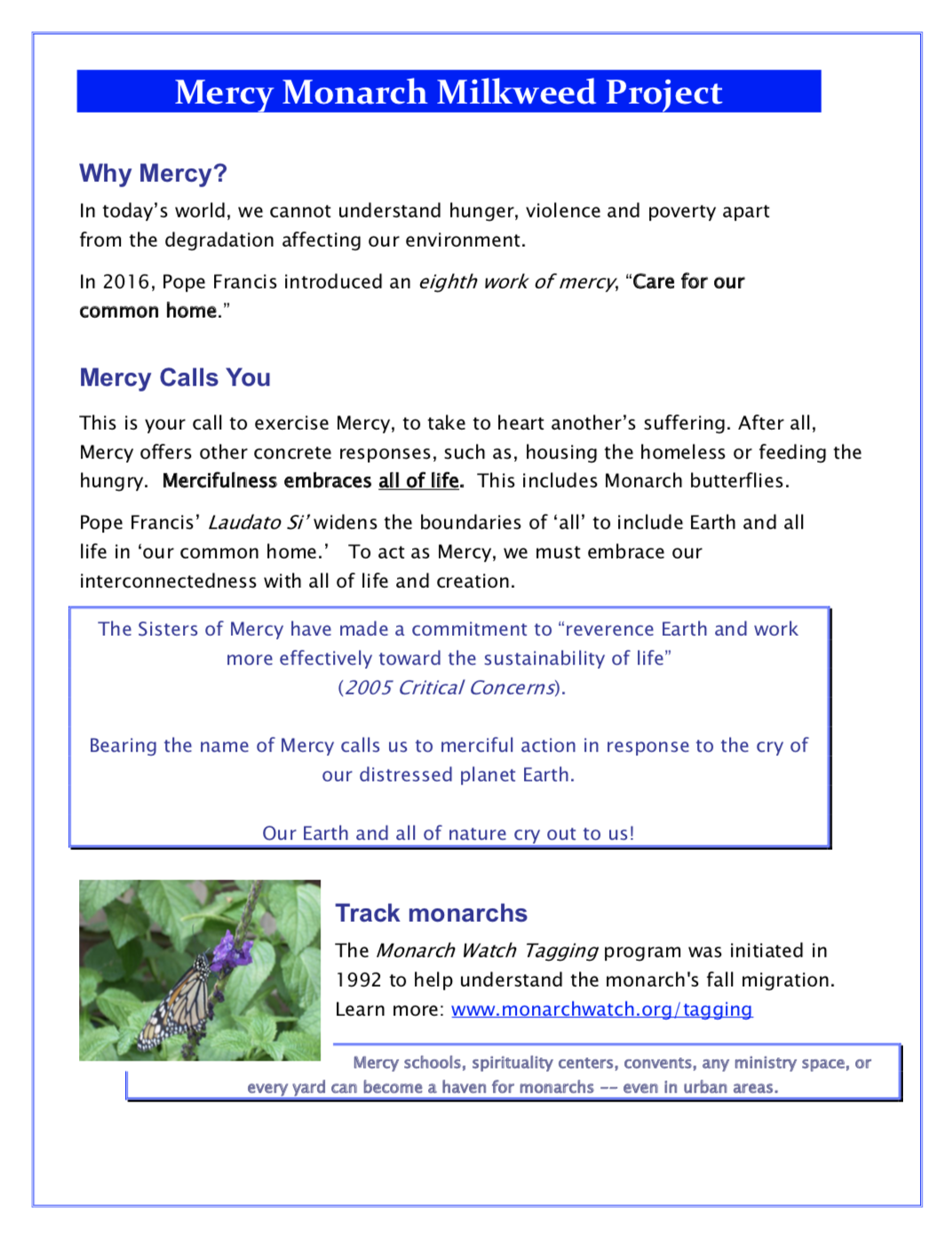
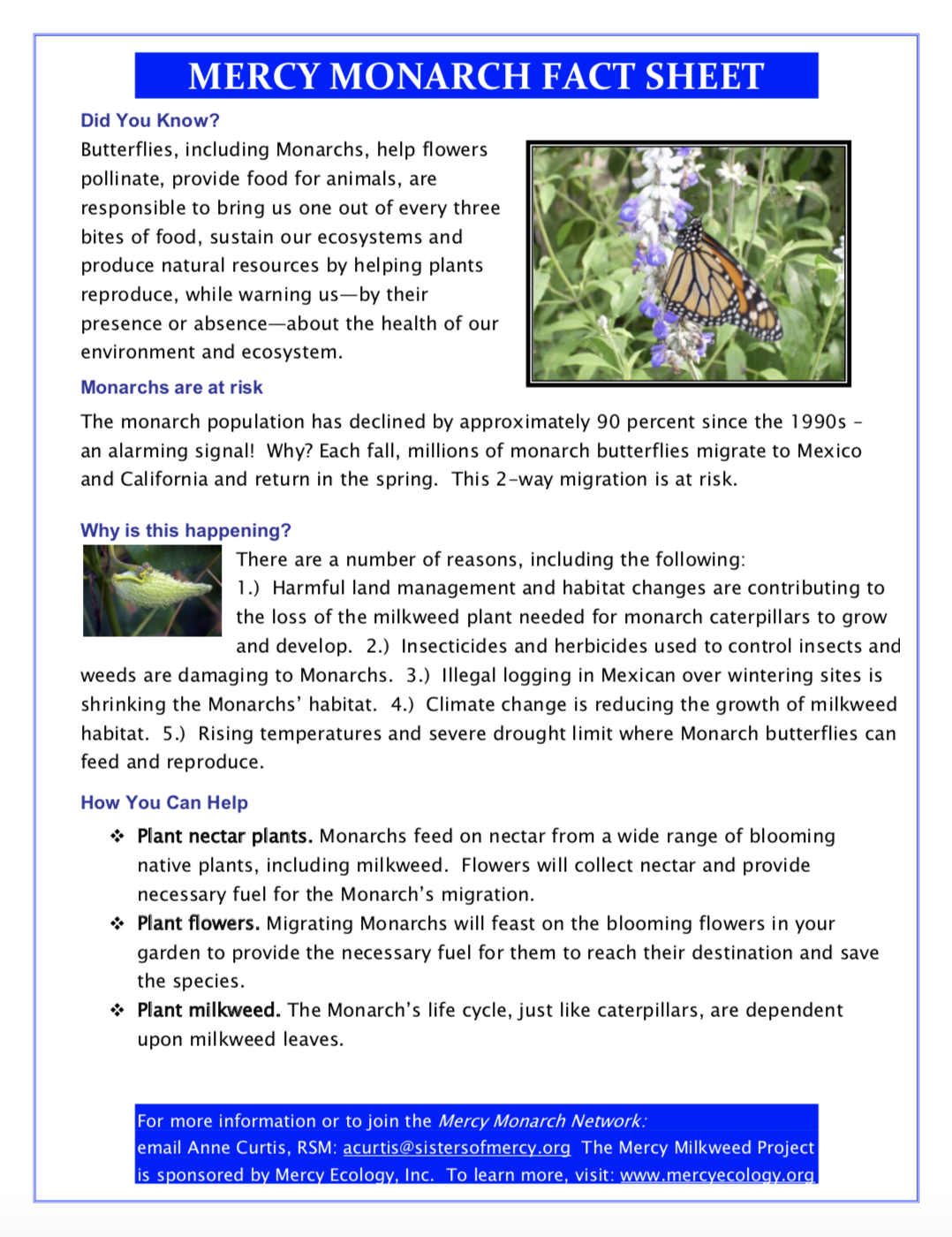
Happenings Around the Farm
June was a mix of late spring/early summer weather conditions. June 20 "beat the drum" so to speak heralding the beginning of summer with torrential rain and winds. The month's average daytime temperature was 76.5 degrees with a mean temperature of 56 degrees at night. The vegetable and flower gardens responded well to these conditions with little help from the garden hose.
During June there were several individual retreats, two private retreats and was a site of hospitality for two groups of guests.
June guests came from: Burlington, Chester, North Springfield, Rockingham, South Londonderry and Springfield, VT; Bristol, Manchester and West Hartford, CT; Kennebunkport and Portland, ME; Pawtucket and Riverside, RI. We apologize that some information was inadvertently omitted from our May guests home cities and states. May guests' also came from: Brattleboro and Poultney, VT; Unity, ME; Newark, Point Pleasant Beach, Roselle and Troy, NJ, Maple Valley, WA and Australia!
During June there were several individual retreats, two private retreats and was a site of hospitality for two groups of guests.
June guests came from: Burlington, Chester, North Springfield, Rockingham, South Londonderry and Springfield, VT; Bristol, Manchester and West Hartford, CT; Kennebunkport and Portland, ME; Pawtucket and Riverside, RI. We apologize that some information was inadvertently omitted from our May guests home cities and states. May guests' also came from: Brattleboro and Poultney, VT; Unity, ME; Newark, Point Pleasant Beach, Roselle and Troy, NJ, Maple Valley, WA and Australia!
The Adventures of Bailey and Dexter
Bailey and Dexter's friend and shearer, Grace, came and "worked her magic" on Dexter - what a handsome fellow he is! There seems to be a lightness to his steps as he proudly and gleefully dances through the paddocks. Bailey enjoys his antics and has yet to shed her "bouffant". As we go to press she will be free of this rounded puff of hair at the base of her neck. Both are delighted to be free of their winter trappings and are oh so much cooler!
The barn swallows have again taken up residence in both the winter and summer barns refurbishing last year's nests. Toward the end of June the chicks are preparing for flight school and in July there will be a lot of swooping in and out of the barn; down to the pond and back and through the trees that surround Mercy Farm. Bailey and Dexter take all of this activity and company in stride. They may even think that they live in an aviary as the Guineas sleep up on the rafters and roam in and out of the barn all day along with Red, Whitey and the hens.
The barn swallows have again taken up residence in both the winter and summer barns refurbishing last year's nests. Toward the end of June the chicks are preparing for flight school and in July there will be a lot of swooping in and out of the barn; down to the pond and back and through the trees that surround Mercy Farm. Bailey and Dexter take all of this activity and company in stride. They may even think that they live in an aviary as the Guineas sleep up on the rafters and roam in and out of the barn all day along with Red, Whitey and the hens.
Barnyard Banter and BC
We have concluded that BC is either a slow learner or thinks she is immune to burdock. Two years ago her tail looked like a club that subsequently had to be shaved. She apparently forgot her anguish at the sight of her tail. BC came home one day with burdock all over her body except for the center of her back. Another trip to the Vets and another shave this time leaving her now big bushy tail intact along with a strip of fur down her back. From all appearances she seems fine with her new hair-doo and prances about as if she had a full body of fur.
Whitey, our newest rooster who arrived at Mercy Farm with four hens, has made life interesting in the barn yard. He considers these hens, his hens. When he even looks at them out of the corner of his eye, Red chases him away as Red thinks all feathered creatures belong to him. Whitey tries to stand his ground but to no avail as Red is more than twice his size.
The Araucana, Plymouth Barred Rocks and our third breed of hens that have not yet been identified are busy producing eggs. The Guineas still stick together and follow a strict routine, roaming around the farm house, gardens and paddocks in the morning and a walk down to the pond, around the pond and back up to the barn yard via the meadow. Once in the barnyard, exhausted from their long, slow walk uphill from the pond, they are ready for a nap.
The Chocolate Runner and Blue Swedish ducks take turns for a dip in the pool, a quick shake off and back in the pool again. They also share their pool water with the hens and roosters who find the water quite tasty!
Whitey, our newest rooster who arrived at Mercy Farm with four hens, has made life interesting in the barn yard. He considers these hens, his hens. When he even looks at them out of the corner of his eye, Red chases him away as Red thinks all feathered creatures belong to him. Whitey tries to stand his ground but to no avail as Red is more than twice his size.
The Araucana, Plymouth Barred Rocks and our third breed of hens that have not yet been identified are busy producing eggs. The Guineas still stick together and follow a strict routine, roaming around the farm house, gardens and paddocks in the morning and a walk down to the pond, around the pond and back up to the barn yard via the meadow. Once in the barnyard, exhausted from their long, slow walk uphill from the pond, they are ready for a nap.
The Chocolate Runner and Blue Swedish ducks take turns for a dip in the pool, a quick shake off and back in the pool again. They also share their pool water with the hens and roosters who find the water quite tasty!
Bee Yard Buzz
The hives are quiet now but the splendor of the Bee Yard is attractive. Guests amble down perhaps for a bit of peace and solitude or to be embraced by its beauty. There are benches to enjoy the silence that is only broken by the tunes of songbirds, the scampering about of chipmunks and squirrels or their tree tip chatter. Perhaps a bumble bee will be seen as it seeks pollen or nectar from blooming plants.
The season for blooming is over for lungwort (Pulmonaria), Mayapple (Podophyllum peltatum), ginger (Asarum), and Hosta. The bugle-weed (Ajuga) reaches peak blossom in May and June. False goat's beard (Astible) will stay in bloom late June and late bloomers will begin to bloom late July or early August.
The season for blooming is over for lungwort (Pulmonaria), Mayapple (Podophyllum peltatum), ginger (Asarum), and Hosta. The bugle-weed (Ajuga) reaches peak blossom in May and June. False goat's beard (Astible) will stay in bloom late June and late bloomers will begin to bloom late July or early August.
St. Francis of Assisi Memorial Garden
In this garden, bleeding hearts (Lamprocapnos spectabilis), peonies (Paeonia), and Iris (Iris germanica) are almost past bloom. The torrential rain in June beat the peonies down and tattered the iris and bleeding heart plants. In bloom now are Jacob's ladder (Polemonium caeruleum), daisies (Bellis perennis) and pinks (Dianthus spp.). The wind chime has been relocated, still a delight to hear as it calls one to remember those memorialized.
If you would like to memorialize a loved one, contact Mercy Farm and the name of your loved one will be entered into the Memorial Book located in the Catherine McAuley Chapel where they will be remembered in the prayers and works of the Sisters of Mercy on staff and those gathered with us in prayer.
If you would like to memorialize a loved one, contact Mercy Farm and the name of your loved one will be entered into the Memorial Book located in the Catherine McAuley Chapel where they will be remembered in the prayers and works of the Sisters of Mercy on staff and those gathered with us in prayer.
Greetings from the Garden
Beets, lettuce, radishes, spinach, broccoli and kale are being harvested and enjoyed by guests. It has been fascinating to watch the cucumber vines creep along the center pole of the hoop house. Cucumbers are now dangling from the vines beckoning to be picked. Also in the hoop house are eggplants and Chinese lantern plants.
The garlic plants have produced scapes indicating that they are getting closer to harvest. The asparagus, now past harvest time, are getting ready for next spring's crop. The rhubarb is doing fine, as are the sweet potatoes and onions. The raspberry brambles are off to a slow start perhaps because of the cooler temperatures of spring.
The garlic plants have produced scapes indicating that they are getting closer to harvest. The asparagus, now past harvest time, are getting ready for next spring's crop. The rhubarb is doing fine, as are the sweet potatoes and onions. The raspberry brambles are off to a slow start perhaps because of the cooler temperatures of spring.
Blooming Blosoms
Solidago, commonly called goldenrod, is a genus of about 100 to 120 species of flowering plants in the aster family, Asteraceae. Most are herbaceous perennial species found in open areas such as meadows, prairies, and savannas. They are mostly native to North America, including Mexico.
The Solidago species grow from woody rhizomes. Their stems range from crawling to ascending or erect, with a range of heights from 1 inch to over 3 feet.
One species, sweet goldenrod (Solisago odora) range is from Nova Scotia; New Hampshire and Vermont south to Florida, west to Texas and north to Missouri, Kentucky, and Ohio. It is a smooth, anise-scented plant bearing crowded, cylindrical clusters of yellow flower heads along one side of slightly arching branches. The flowers bloom from July to September. The leaves are long (1 to 4 inches), smooth, narrow, stalk-less, with small, translucent dots.
Goldenrod often is inaccurately said to cause hay fever. The pollen producing this allergic reaction is produced mainly by ragweed (Ambrosia sp.), blooming at the same time as goldenrod and pollinated by the wind. Goldenrod pollen is too heavy and sticky to be blown far from the flowers, and is pollinated mainly by insects.
Goldenrod are attractive sources of nectar for bees, flies, wasps, and butterflies. University of Delaware entomologist Doug Tallamy's studies showed that goldenrods provide food and shelter for 115 butterflies and moth species in the U.S. Mid-Atlantic alone. More than 11 native bee species feed specifically on the plants, and in fall, monarch butterflies depend on them for nectar to fuel their long migration. Even in winter, songbirds find nourishment from the goldenrod seed heads long after the blossoms have faded.
In some places they are considered a sign of good fortune. They are considered weeds by many in North America, but are prized plants in Europe. However, goldenrod began to gain some acceptance in American gardening (other than wildflower gardening) during the 1980's.
Inventor Thomas Edison experimented with goldenrod to produce rubber, which it contains naturally. The tires on the Model T given to him by his friend Henry Ford were made from goldenrod. Like George Washington Carver, Henry Ford was deeply interested in the regenerative properties of soil and the potential of alternative crops such as peanuts and soybeans to produce plastics, paint, fuel and other products. During World War II, Ford and Carver experimented with different crops and eventually devised a way to make the rubber substitute from goldenrod. Extensive process development was conducted during WW II to commercialize goldenrod as a source of rubber. The resulting rubber was of low molecular weight resulting in an excessively tacky compound with poor tensile properties.
Other uses of goldenrod include use in formulas for cleansing of the kidney or bladder during a healing fast, in conjunction with potassium broth and specific juices. Some Native American cultures traditionally chew the leaves to relieve sore throats, and the roots to relieve toothaches. See: http://www.nwf.org "The downsides of Home Rearing", Janet Marinelli/Garden for Wildlife/June 01, 2019; https://en.wikipedia.org/wiki/goldenrod and See: National Audubon Society Field Guide to Wildflowers, Alfred A. Knopf, Publisher, 2001, pp. 415-415.
The Solidago species grow from woody rhizomes. Their stems range from crawling to ascending or erect, with a range of heights from 1 inch to over 3 feet.
One species, sweet goldenrod (Solisago odora) range is from Nova Scotia; New Hampshire and Vermont south to Florida, west to Texas and north to Missouri, Kentucky, and Ohio. It is a smooth, anise-scented plant bearing crowded, cylindrical clusters of yellow flower heads along one side of slightly arching branches. The flowers bloom from July to September. The leaves are long (1 to 4 inches), smooth, narrow, stalk-less, with small, translucent dots.
Goldenrod often is inaccurately said to cause hay fever. The pollen producing this allergic reaction is produced mainly by ragweed (Ambrosia sp.), blooming at the same time as goldenrod and pollinated by the wind. Goldenrod pollen is too heavy and sticky to be blown far from the flowers, and is pollinated mainly by insects.
Goldenrod are attractive sources of nectar for bees, flies, wasps, and butterflies. University of Delaware entomologist Doug Tallamy's studies showed that goldenrods provide food and shelter for 115 butterflies and moth species in the U.S. Mid-Atlantic alone. More than 11 native bee species feed specifically on the plants, and in fall, monarch butterflies depend on them for nectar to fuel their long migration. Even in winter, songbirds find nourishment from the goldenrod seed heads long after the blossoms have faded.
In some places they are considered a sign of good fortune. They are considered weeds by many in North America, but are prized plants in Europe. However, goldenrod began to gain some acceptance in American gardening (other than wildflower gardening) during the 1980's.
Inventor Thomas Edison experimented with goldenrod to produce rubber, which it contains naturally. The tires on the Model T given to him by his friend Henry Ford were made from goldenrod. Like George Washington Carver, Henry Ford was deeply interested in the regenerative properties of soil and the potential of alternative crops such as peanuts and soybeans to produce plastics, paint, fuel and other products. During World War II, Ford and Carver experimented with different crops and eventually devised a way to make the rubber substitute from goldenrod. Extensive process development was conducted during WW II to commercialize goldenrod as a source of rubber. The resulting rubber was of low molecular weight resulting in an excessively tacky compound with poor tensile properties.
Other uses of goldenrod include use in formulas for cleansing of the kidney or bladder during a healing fast, in conjunction with potassium broth and specific juices. Some Native American cultures traditionally chew the leaves to relieve sore throats, and the roots to relieve toothaches. See: http://www.nwf.org "The downsides of Home Rearing", Janet Marinelli/Garden for Wildlife/June 01, 2019; https://en.wikipedia.org/wiki/goldenrod and See: National Audubon Society Field Guide to Wildflowers, Alfred A. Knopf, Publisher, 2001, pp. 415-415.
Sights and Sounds of the Season
What lurks in the forest at night? With the dawning of a new day one may catch a glimpse of a nocturnal animal or bird as it makes its way home after a night of hunting. One may also hear an owl screech; see fresh scat, claw or antler makings on trees. And quite possibly an animal may cross your path. We once met a rather interesting animal - an opossum.
Opossums (Didelphidae) are the largest order of marsupials in the Western Hemisphere; it comprises 103 or more species in 19 genera. They originated in South America and entered North America in the Great American Interchange following the connection of the two continents. In the United States and Canada, the only species found is the Virginia opossum, and it is generally referred to as "possum".
The word "opussum" is borrowed from the Powhatan language and was first recorded between 1607 and 1611 by John Smith (as opassom) and William Stachey (as oposoum). Both men encountered the language at the British settlement of Jamestown, Virginia, which Smith helped to found and Strachey later served as its first secretary. The Powhatan word means "white dog or dog-like beast".
Is it opossum or possum? While it is common for people to use these two spellings interchangeably, opossum and possum actually refer to different animal groups. In most casual writings this would not make a difference, but it is important in scientific and technical contexts to know the difference. Our focus is the Virginia opossum which differs from the possum (Phalangeridae), marsupials from Australia and surrounding islands. It is also called the common brushtail possum. Its coloration ranges from chinchilla gray to a fox silver-gray and gold, even black. Their ears are larger, fur softer and much more bushy than the Virginia opossum and possums have a bushy tail covered in fur (hence the name). See: httts://writingexplained.org
Opossums are small to medium-sized marsupials that grow to the size of a house cat. They tend to be semi-arboreal omnivores, eating both plants and animals. Most have long snouts, a narrow brain case, and a prominent sagittal crest. They have an unusually full jaw that accommodates 50 teeth! Their face is white with a grayish-white body, with black ears and feet and a bare, rat-like tail. Their stance is with feet flat on the ground and the hind feet have an opposable digit with no claw. Like some New World monkeys, opossums have prehensile tails, that is, a tail adapted for grasping or holding. Juveniles are more likely to dangle from a branch. Adults may use their tail as a brace and a fifth limb when climbing. The tail is occasionally used as a grip to carry bunches of leaves or bedding materials to the nest. Their fur is coarse. Like all marsupials, the females have a pouch for carrying their young.
They are usually solitary and nomadic, staying in one area as long as food and water are easily available. Some families will group together in ready-made burrows or even under houses. Though they will temporarily occupy abandoned burrows, they do not dig or put much effort into building their own. As nocturnal animals, they favor dark, secure areas. When threatened or harmed, they will "play possum", mimicking the appearance and smell of a sick or dead animal.
The Virginia opossum lives in regions as far north as Canada and as far south to Central America, while other types of opossums only inhabit countries south of the United States. Opossums have been moving north in recent years, likely due to climate change, that is, changing weather patterns.
The Virginia opossum was once widely hunted and consumed in the United States. Opossum farms have been operated in the U.S. in the past. South Carolina cuisine includes opossum, and President Jimmy Carter hunted opossum. Opossum oil (possum grease) is high in essential fatty acids and has been used as a chest rub and a carrier for arthritis remedies given as topical salves. Opossum pelts have long been part of the fur trade. See: https://en.wikipedia.org unless otherwise noted.
Opossums also play a part in pest control. Since their diet allows them to indulge on snails, slugs and beetles, they are a welcome addition to the garden. Opossums also keep rats and cockroaches at bay by competing with them for food. In fact, it's common for opossums to kill cockroaches and rats if they find them in their territory.
See: https://www.mnn.com/earth-matters/animals/stories Opossum: Stock photo
Opossums (Didelphidae) are the largest order of marsupials in the Western Hemisphere; it comprises 103 or more species in 19 genera. They originated in South America and entered North America in the Great American Interchange following the connection of the two continents. In the United States and Canada, the only species found is the Virginia opossum, and it is generally referred to as "possum".
The word "opussum" is borrowed from the Powhatan language and was first recorded between 1607 and 1611 by John Smith (as opassom) and William Stachey (as oposoum). Both men encountered the language at the British settlement of Jamestown, Virginia, which Smith helped to found and Strachey later served as its first secretary. The Powhatan word means "white dog or dog-like beast".
Is it opossum or possum? While it is common for people to use these two spellings interchangeably, opossum and possum actually refer to different animal groups. In most casual writings this would not make a difference, but it is important in scientific and technical contexts to know the difference. Our focus is the Virginia opossum which differs from the possum (Phalangeridae), marsupials from Australia and surrounding islands. It is also called the common brushtail possum. Its coloration ranges from chinchilla gray to a fox silver-gray and gold, even black. Their ears are larger, fur softer and much more bushy than the Virginia opossum and possums have a bushy tail covered in fur (hence the name). See: httts://writingexplained.org
Opossums are small to medium-sized marsupials that grow to the size of a house cat. They tend to be semi-arboreal omnivores, eating both plants and animals. Most have long snouts, a narrow brain case, and a prominent sagittal crest. They have an unusually full jaw that accommodates 50 teeth! Their face is white with a grayish-white body, with black ears and feet and a bare, rat-like tail. Their stance is with feet flat on the ground and the hind feet have an opposable digit with no claw. Like some New World monkeys, opossums have prehensile tails, that is, a tail adapted for grasping or holding. Juveniles are more likely to dangle from a branch. Adults may use their tail as a brace and a fifth limb when climbing. The tail is occasionally used as a grip to carry bunches of leaves or bedding materials to the nest. Their fur is coarse. Like all marsupials, the females have a pouch for carrying their young.
They are usually solitary and nomadic, staying in one area as long as food and water are easily available. Some families will group together in ready-made burrows or even under houses. Though they will temporarily occupy abandoned burrows, they do not dig or put much effort into building their own. As nocturnal animals, they favor dark, secure areas. When threatened or harmed, they will "play possum", mimicking the appearance and smell of a sick or dead animal.
The Virginia opossum lives in regions as far north as Canada and as far south to Central America, while other types of opossums only inhabit countries south of the United States. Opossums have been moving north in recent years, likely due to climate change, that is, changing weather patterns.
The Virginia opossum was once widely hunted and consumed in the United States. Opossum farms have been operated in the U.S. in the past. South Carolina cuisine includes opossum, and President Jimmy Carter hunted opossum. Opossum oil (possum grease) is high in essential fatty acids and has been used as a chest rub and a carrier for arthritis remedies given as topical salves. Opossum pelts have long been part of the fur trade. See: https://en.wikipedia.org unless otherwise noted.
Opossums also play a part in pest control. Since their diet allows them to indulge on snails, slugs and beetles, they are a welcome addition to the garden. Opossums also keep rats and cockroaches at bay by competing with them for food. In fact, it's common for opossums to kill cockroaches and rats if they find them in their territory.
See: https://www.mnn.com/earth-matters/animals/stories Opossum: Stock photo
June 2019
Happenings Around the Farm
May was an extremely rainy month but fortunately while the students from Salve Maria University and Maria College were at the farm the weather showed signs of spring. They enjoyed working outside in cool comfortable conditions. The one humid day did not deter their activity.
During May, Norma and Betty participated in a Spring Wildflower Walk at the Dead Creek Wildlife Management area in Addison, VT, May 9. Guide, Bob Popp, led the group through the area and gave an informative and interesting presentation on the trees, shrubs and flowers they encountered.
Holly attended a weekend retreat at Mercy By The Sea in Madison, CT to hear Robin Wall Kimmerer, a Professor of Environmental and Forest Biology at the State University of New York College of Environmental Science and Forestry. She is the author of Braiding Sweetgrass, Gathering Moss and other works. Robin shared of her Indigenous wisdom, scientific knowledge and the teachings of plants.
May guests came from: Addison, Burlington, Fairfax and Middlebury, VT; Portland and Rockland, ME; Boston and East Hampton, MA; Lincroft, NJ; Altamant, Clifton Park, Johnstown, Latham, Philmont, Rensselaer, Saugerties, Troy and West Chazy, NY and Newport, RI.
During May, Norma and Betty participated in a Spring Wildflower Walk at the Dead Creek Wildlife Management area in Addison, VT, May 9. Guide, Bob Popp, led the group through the area and gave an informative and interesting presentation on the trees, shrubs and flowers they encountered.
Holly attended a weekend retreat at Mercy By The Sea in Madison, CT to hear Robin Wall Kimmerer, a Professor of Environmental and Forest Biology at the State University of New York College of Environmental Science and Forestry. She is the author of Braiding Sweetgrass, Gathering Moss and other works. Robin shared of her Indigenous wisdom, scientific knowledge and the teachings of plants.
May guests came from: Addison, Burlington, Fairfax and Middlebury, VT; Portland and Rockland, ME; Boston and East Hampton, MA; Lincroft, NJ; Altamant, Clifton Park, Johnstown, Latham, Philmont, Rensselaer, Saugerties, Troy and West Chazy, NY and Newport, RI.
Salve Regina University Leaves its Mark on Mercy Farms
Evie and Maddie, senior students from Salve Regina University, Newport, RI, were at the farm, May 11 to 15. This mighty duo worked on the Cosmic Walk, part of the Griffin Trail that meanders through the "old forest" on the north west side of the property terminating in the Bee Yard. Evie and Maddie cleared the trail of winter debris and used the downed buckthorn (Rhamnus cathartica) trees to outline the Griffin Trail. Buckthorns, non-native invasive species, were cut down last fall by foresters to enhance the growth of native trees, shrubs and ground cover. With saw in hand they also tackled small trees that had fallen into the trail.
Grand Opening of Cosmic Walk - Saturday, October 5.
More information will be forthcoming.
Grand Opening of Cosmic Walk - Saturday, October 5.
More information will be forthcoming.
Maria College Surpasses the Challenge
Katie, Kimberly, Cynthia, Courtney, Sam, Carlelina, Erin, Heather and Nikki, Occupational Therapy Assistant students from Maria College, Albany, NY were at Mercy Farm May 20 to 24.
While at the farm they continued the work on the Cosmic Walk; weeded gardens; started the milkweed project; cleared the driveway of twigs and leaves and the ruts left through the winter were filled. The outside furniture was moved from the barn and placed around the yard for all to enjoy. The Bee Yard was cleared of debris and the Memorial Garden sign was varnished. The soil was prepared and sweet potatoes were planted; and invasive plants were removed from the paddocks.
Maria College students arrived with a beautiful planter that they had built and filled it with Marigolds, petunias and Gerber daisies. This colorful array attracts bees, butterflies and other insects and adds a welcoming beauty to the front entrance.
In between all of the outside action the students from Salve U. and Maria College enjoyed Awakening the Dreamer, Changing the Dream and the discussion that followed. What is gleaned throughout this video is fortified by hands-on outside activity.
The staff gives a heartfelt thank you to each student for their interest in Mercy Farm and their enthusiasm and joy they shared with us. We wish you every success as you pursue your studies and ultimately your careers. May your life journey be blessed.
While at the farm they continued the work on the Cosmic Walk; weeded gardens; started the milkweed project; cleared the driveway of twigs and leaves and the ruts left through the winter were filled. The outside furniture was moved from the barn and placed around the yard for all to enjoy. The Bee Yard was cleared of debris and the Memorial Garden sign was varnished. The soil was prepared and sweet potatoes were planted; and invasive plants were removed from the paddocks.
Maria College students arrived with a beautiful planter that they had built and filled it with Marigolds, petunias and Gerber daisies. This colorful array attracts bees, butterflies and other insects and adds a welcoming beauty to the front entrance.
In between all of the outside action the students from Salve U. and Maria College enjoyed Awakening the Dreamer, Changing the Dream and the discussion that followed. What is gleaned throughout this video is fortified by hands-on outside activity.
The staff gives a heartfelt thank you to each student for their interest in Mercy Farm and their enthusiasm and joy they shared with us. We wish you every success as you pursue your studies and ultimately your careers. May your life journey be blessed.
The Adventures of Bailey and Dexter
Bailey has shed most of her winter coat. Dexter has shed some of his coat and the "wool" down his back will be sheared. Their hoofs were checked and trimming was not deemed necessary. The both enjoy a good brushing and their snacks.
They appeared to be anxious to begin their stay in the summer barn but due to the inclement weather their occupancy was delayed until the summer furniture could be moved outside. Mid-May, Bailey and Dexter appeared to release a sigh of relief as the last piece of furniture was moved out. They quickly scampered in and have nicely settled into their summer quarters. Joining the sheep are the Guineas who sleep on the rafters and in the peak, the barn swallows have built their nests and are now feeding their young.
Neither Bailey nor Dexter miss what is going on anywhere in the barnyard or the arrival of guests. They have it all over Curious George!
They appeared to be anxious to begin their stay in the summer barn but due to the inclement weather their occupancy was delayed until the summer furniture could be moved outside. Mid-May, Bailey and Dexter appeared to release a sigh of relief as the last piece of furniture was moved out. They quickly scampered in and have nicely settled into their summer quarters. Joining the sheep are the Guineas who sleep on the rafters and in the peak, the barn swallows have built their nests and are now feeding their young.
Neither Bailey nor Dexter miss what is going on anywhere in the barnyard or the arrival of guests. They have it all over Curious George!
Barnyard Banter and BC
BC is often seen standing in wonder of all that is blooming, turning green and of course the sound of cheeping birds. She seems particularly focused on the barn swallows that swoop in and out of the barn all day. BC's tail stands tall as she proudly "surveys the estate" and upon her return she takes a well deserved cat nap in a place of her choice.
We received a gift of chickens from our friends, Kingsley and Kelly. Soon after the arrival of six chickens we learned that one was a rooster who at his tender age began "cock-a-doodle-dooing" before dawn. Among the hens is an Araucana who is laying green/blue eggs.
The "old" gals are also still laying four eggs a day. Our flock of chickens now consists of two roosters, three Araucana, seven Plymouth Barred Rocks.
The Guineas, four in number, are not overly social but once in a while will mingle with the rest of the fowl. They are often seen roaming around the paddocks with the sheep. One Guinea is always on alert for hawks and fox that may disrupt life in the barn yard. Their call which can be heard "all over Benson" will deter any danger.
The Chocolate Runner and Blue Swedish ducks head right for the water when they come out of the coop. Their first stop is a hop into the pool, a quick splash, shower and than off to other sources of water that they find in unusual spots created by the rain that are scattered around the yard.
We received a gift of chickens from our friends, Kingsley and Kelly. Soon after the arrival of six chickens we learned that one was a rooster who at his tender age began "cock-a-doodle-dooing" before dawn. Among the hens is an Araucana who is laying green/blue eggs.
The "old" gals are also still laying four eggs a day. Our flock of chickens now consists of two roosters, three Araucana, seven Plymouth Barred Rocks.
The Guineas, four in number, are not overly social but once in a while will mingle with the rest of the fowl. They are often seen roaming around the paddocks with the sheep. One Guinea is always on alert for hawks and fox that may disrupt life in the barn yard. Their call which can be heard "all over Benson" will deter any danger.
The Chocolate Runner and Blue Swedish ducks head right for the water when they come out of the coop. Their first stop is a hop into the pool, a quick splash, shower and than off to other sources of water that they find in unusual spots created by the rain that are scattered around the yard.
Bee Yard Buzz
During a strong winter storm several years ago, a large pine uprooted from the ridge in the Bee Yard. The foresters sectioned it and left it in the Bee Yard for ambiance, for use by wildlife and for soil enrichment over time. Sometime during May the logs were damaged by what looks like claw marks down their length - indicative of bear activity.
Joining the blooming lungwort (Pulmonaria) are Mayapple (Podophyllum peltatum), ginger (Asarum), false goat's beard (Astible), bugle-weed (Ajuga), Hosta and a variety of ferns.
This year the decision was made not to purchase any new clusters of honey bees. No doubt the Bee Yard will still be an attraction as the sights, sounds and smells of this sacred space draw one further and further into it. The Bee Yard Trail is also a lovely walk.
Joining the blooming lungwort (Pulmonaria) are Mayapple (Podophyllum peltatum), ginger (Asarum), false goat's beard (Astible), bugle-weed (Ajuga), Hosta and a variety of ferns.
This year the decision was made not to purchase any new clusters of honey bees. No doubt the Bee Yard will still be an attraction as the sights, sounds and smells of this sacred space draw one further and further into it. The Bee Yard Trail is also a lovely walk.
St. Francis of Assisi Memorial Garden
Early May, snowdrops (Galantus), located adjacent to the Memorial Garden, were a stunning sight to behold. Their two bright green leaves and stem topped with dainty, delicate pendulous white flowers were indicative of new beginnings.
In the garden, bleeding hearts (Lamprocapnos spectabilis) have bloomed and awaiting their turn to show off their blossoms are peonies (Paeonia) and windflowers (Anemone spp.).
Iris (Iris germanica) and sedum (S. spectabile) greens are up and will be in bloom late spring to midsummer and from August to November, respectively. The Memorial Garden's plants bloom in succession from spring to mid-autumn. There is always something blooming adding color, scent and beauty and wonder to this garden.
If you would like to memorialize a loved one, contact Mercy Farm and the name of your loved one will be entered into the Memorial Book located in the Catherine McAuley Chapel where they will be remembered in the prayers and works of the Sisters of Mercy on staff and those gathered with us in prayer.
In the garden, bleeding hearts (Lamprocapnos spectabilis) have bloomed and awaiting their turn to show off their blossoms are peonies (Paeonia) and windflowers (Anemone spp.).
Iris (Iris germanica) and sedum (S. spectabile) greens are up and will be in bloom late spring to midsummer and from August to November, respectively. The Memorial Garden's plants bloom in succession from spring to mid-autumn. There is always something blooming adding color, scent and beauty and wonder to this garden.
If you would like to memorialize a loved one, contact Mercy Farm and the name of your loved one will be entered into the Memorial Book located in the Catherine McAuley Chapel where they will be remembered in the prayers and works of the Sisters of Mercy on staff and those gathered with us in prayer.
Greetings from the Gardens
The beet, lettuce, radish, and spinach seedlings and onion sets planted in the hoop house are doing very well. In a months time the cucumber seeds - now seedlings - are up a good five inches. Holly is looking forward to seeing how they do from their hanging plant pots.
The broccoli and kale plants survived the cold weather. The garlic plants are doing extremely well and the asparagus, ready for harvesting, was served to guests the end of May. Rhubarb pies will soon be on the menu thanks to Betty!
A few tips for your June garden. This is the month for enjoying peonies. Their blossoms are delightful and the fragrance divine. Put out peony cages early in June to support these beauties that drop with the weight of their blossoms. Pot up annual flowers in flower boxes and pots. Sprinkle some good quality lawn seed over thin spots. Cover seeds with a thin layer of compost or topsoil and keep lightly moist in dry times. Harvest peas, spinach, and early greens. Source: Gardner, Spring 2016.
The broccoli and kale plants survived the cold weather. The garlic plants are doing extremely well and the asparagus, ready for harvesting, was served to guests the end of May. Rhubarb pies will soon be on the menu thanks to Betty!
A few tips for your June garden. This is the month for enjoying peonies. Their blossoms are delightful and the fragrance divine. Put out peony cages early in June to support these beauties that drop with the weight of their blossoms. Pot up annual flowers in flower boxes and pots. Sprinkle some good quality lawn seed over thin spots. Cover seeds with a thin layer of compost or topsoil and keep lightly moist in dry times. Harvest peas, spinach, and early greens. Source: Gardner, Spring 2016.
Blooming Blossoms
Taraxacum is a large genus of flowering plants in the family Asteraceae, which consists of species commonly known as dandelions. The common name comes from the French dent-de-lion, meaning "lion's tooth". Dandelions are one of the most vital spring nectar sources for a wide host of pollinators.
The species of Taraxacum are tap-rooted, perennial, herbaceous plants, native to temperate areas of the Northern Hemisphere. In general, the leaves are 2-16" long, deeply and irregularly toothed and lobed and form a basal rosette above the central taproot. The flower head is about 1.5" wide; yellow to orange colored; are open in the daytime, but closed at night. The heads are borne singly on a hollow stem (scape) that is usually leafless and rises 2-18" or more above the leaves. Stems and leaves exude a white, milky latex when broken. The flower heads mature into spherical seed heads called blow-balls containing many single-seeded fruits called achenes. The seed-like fruits, with their attached "parachute" of bristles, are carried as many as 5 miles from their origin by the wind.
Dandelions are thought to have evolved about 30 million years ago in Eurasia and have been used by humans for food and as an herb for much of recorded history. They were well known to ancient Egyptians, Greeks and Romans, and have been used in Chinese tradition for over a thousand years. Dandelions probably arrived in North America on the Mayflower - not as stowaways, but brought on purpose for their medicinal benefits.
From root to flower, it can be used for food, medicine and dye for coloring. This highly nutritious plant is loaded with vitamins, minerals and fiber. Flower petals, along with other ingredients, usually including citrus, are used to make dandelion wine. The ground roasted roots can be used as a caffeine-free dandelion coffee and the dandelion is one of the ingredients of root beer.
Historically, dandelion was prized for a variety of medicinal properties, and it contains a number of pharmacologically active compounds.
Taraxacum seeds are an important food source for certain birds. Dandelions are also important plants for Northern Hemisphere bees, providing an important source of nectar and pollen early in the season. They are used as food plants by some species of butterflies and moths. They are also a source of nectar for the pearl-bordered fritillary (Boloria euphrosyne), one of the earliest emerging butterflies in the spring.
Lastly, with its wide range of uses, the dandelion is farmed in small gardens to massive farms. As well as being farmed primarily, it is kept as a companion plant; its taproot brings up nutrients for shallower-rooting plants and adds minerals and nitrogen to soil; thus it is also often added to lawn seed mixes. It is known to attract pollinating insects and release ethylene gas, which helps fruit to ripen.
Despite their useful properties, the dandelion is commonly regarded as a weed, as a result of the rise of lawn culture and marketing by herbicide companies. Every year Americans spend millions on lawn pesticides to have uniform lawns of non-native grasses, and use 30 percent of the country's water supply to keep them green. Up until the 1800's people would pull grass out of their lawns to make room for dandelions and other useful "weeds" like chickweed (Stellaria media), malva (Malva sylvestris), and chamomile (Matricaria chamomilla).
Dandelions have one of the longest flowering seasons of any plant, from March to September. As an early flowering plant they are a vitally important element of the diets of many flying and ground insects. Many types of bee and wasp, including the honey bee, bumble bee and bald-faced hornet, use dandelions as a food source. Other insects that eat dandelions include grasshoppers, mites, fireflies and butterflies.
Sources: https://en.wikipedia.org; mydandelionisaflower.org; National Audubon Society Field Guide to Wildflowers, Eastern Region, 2013, pp. 417-418.
The species of Taraxacum are tap-rooted, perennial, herbaceous plants, native to temperate areas of the Northern Hemisphere. In general, the leaves are 2-16" long, deeply and irregularly toothed and lobed and form a basal rosette above the central taproot. The flower head is about 1.5" wide; yellow to orange colored; are open in the daytime, but closed at night. The heads are borne singly on a hollow stem (scape) that is usually leafless and rises 2-18" or more above the leaves. Stems and leaves exude a white, milky latex when broken. The flower heads mature into spherical seed heads called blow-balls containing many single-seeded fruits called achenes. The seed-like fruits, with their attached "parachute" of bristles, are carried as many as 5 miles from their origin by the wind.
Dandelions are thought to have evolved about 30 million years ago in Eurasia and have been used by humans for food and as an herb for much of recorded history. They were well known to ancient Egyptians, Greeks and Romans, and have been used in Chinese tradition for over a thousand years. Dandelions probably arrived in North America on the Mayflower - not as stowaways, but brought on purpose for their medicinal benefits.
From root to flower, it can be used for food, medicine and dye for coloring. This highly nutritious plant is loaded with vitamins, minerals and fiber. Flower petals, along with other ingredients, usually including citrus, are used to make dandelion wine. The ground roasted roots can be used as a caffeine-free dandelion coffee and the dandelion is one of the ingredients of root beer.
Historically, dandelion was prized for a variety of medicinal properties, and it contains a number of pharmacologically active compounds.
Taraxacum seeds are an important food source for certain birds. Dandelions are also important plants for Northern Hemisphere bees, providing an important source of nectar and pollen early in the season. They are used as food plants by some species of butterflies and moths. They are also a source of nectar for the pearl-bordered fritillary (Boloria euphrosyne), one of the earliest emerging butterflies in the spring.
Lastly, with its wide range of uses, the dandelion is farmed in small gardens to massive farms. As well as being farmed primarily, it is kept as a companion plant; its taproot brings up nutrients for shallower-rooting plants and adds minerals and nitrogen to soil; thus it is also often added to lawn seed mixes. It is known to attract pollinating insects and release ethylene gas, which helps fruit to ripen.
Despite their useful properties, the dandelion is commonly regarded as a weed, as a result of the rise of lawn culture and marketing by herbicide companies. Every year Americans spend millions on lawn pesticides to have uniform lawns of non-native grasses, and use 30 percent of the country's water supply to keep them green. Up until the 1800's people would pull grass out of their lawns to make room for dandelions and other useful "weeds" like chickweed (Stellaria media), malva (Malva sylvestris), and chamomile (Matricaria chamomilla).
Dandelions have one of the longest flowering seasons of any plant, from March to September. As an early flowering plant they are a vitally important element of the diets of many flying and ground insects. Many types of bee and wasp, including the honey bee, bumble bee and bald-faced hornet, use dandelions as a food source. Other insects that eat dandelions include grasshoppers, mites, fireflies and butterflies.
Sources: https://en.wikipedia.org; mydandelionisaflower.org; National Audubon Society Field Guide to Wildflowers, Eastern Region, 2013, pp. 417-418.
May 2019
Climate: Symposium: Peril or Promise, The Choice is Ours
 Gina McCarthy
On Saturday, April 27, Mercy Ecology, Inc. and Connecticut Earth Mercy sponsored a day long symposium on Climate at Mercy By The Sea in Madison, CT. Keynote speaker, Gina McCarthy, Director of C- Change at Harvard and former EPA Administrator from 2013-2017, urged the audience to work at change and to forget waiting for Washington to fix our problems. She is a delightful, dynamic and inspiring speaker, but she insists that all change comes from the demands of the grassroots.
A panel consisting of students Kaley Sperling and Chloe Lerch from Mercy High, CT; Alex Duryea from URI and Chloe Moers, a junior at the MET School in Providence, gave their thoughts on climate and the failure of our current generation to tackle the climate emergency. Alex and Chloe M. are members of Nature's Trust Rhode Island, a group of youth suing the State of Rhode Island for their right to a livable climate protected and guaranteed by the State Constitution.
ounding out the panel were Marianne Comfort, Institute Justice Team, Tim DeChristopher, Climate Disobedience Center in Boston, and Darlene Kascak, Schaghiticoke Tribal Nation. Darlene grounded the day in gratitude with a Native ritual.
Bill McKibben, founder of 350.org sent a video message telling us that climate is definitely the issue of our time and of the 2020 elections. Bill asks us to work together for action on climate.
The day was interspersed with moments of reflection, conversation and pledges to action. Seventeen year old Chloe M. asked us to eliminate meat particularly, but she noted that our lunch contained throw away packets of mayonnaise and mustard and throw away snack bags. She asked us to do better for the environment.
Check out videos from our event below!
A panel consisting of students Kaley Sperling and Chloe Lerch from Mercy High, CT; Alex Duryea from URI and Chloe Moers, a junior at the MET School in Providence, gave their thoughts on climate and the failure of our current generation to tackle the climate emergency. Alex and Chloe M. are members of Nature's Trust Rhode Island, a group of youth suing the State of Rhode Island for their right to a livable climate protected and guaranteed by the State Constitution.
ounding out the panel were Marianne Comfort, Institute Justice Team, Tim DeChristopher, Climate Disobedience Center in Boston, and Darlene Kascak, Schaghiticoke Tribal Nation. Darlene grounded the day in gratitude with a Native ritual.
Bill McKibben, founder of 350.org sent a video message telling us that climate is definitely the issue of our time and of the 2020 elections. Bill asks us to work together for action on climate.
The day was interspersed with moments of reflection, conversation and pledges to action. Seventeen year old Chloe M. asked us to eliminate meat particularly, but she noted that our lunch contained throw away packets of mayonnaise and mustard and throw away snack bags. She asked us to do better for the environment.
Check out videos from our event below!
Mercy Ecology Spreads Her Wings
Mercy Ecology, Inc. is pleased to announce the Mercy Monarch Milkweed Project. Become part of a Mercy web that is working to save the monarch butterfly. Plant milkweed and nectar plants that will support the monarch.
Butterflies make the world a more beautiful place! They delight and yet do so much more than that. They help flowers pollinate. They provide food for other animals. They and other pollinators are responsible for bringing us one out of every three bites of food. They sustain our ecosystems and produce our natural resources by helping plants reproduce, while warning us - by their presence or absence - about the health of our environment and ecosystem. Butterflies are innately valuable and worthy of conservation in their own right.
In today's world, we cannot understand hunger, violence and poverty apart from the degradation affecting our environment. Pope Francis' recognition of this led him to introduce an eighth work of mercy in 2016. Care for our common home.
This is a call to exercise mercy - to take to heart another's suffering. Mercy offers concrete responses, for example: housing the homeless or feeding the hungry. Yet mercifulness embraces all of life. Pope Francis' Laudato Si' widens the boundaries of 'all' to include Earth and all life in 'our common home'. To act as Mercy we must embrace our interconnectedness with all of life, all of creation.
The Sisters of Mercy have made a commitment to "reverence Earth and work more effectively toward the sustainability of life" (2005 Critical Concerns). Bearing the name of Mercy calls us to merciful action in response to the cry of our distressed planet Earth. Vulnerable and poor, Earth and all of nature cries out to us.
Our collective Mercy effort joins other organizations and groups that already make up a network along the migratory path of the monarch.
See: https://www.youtube.com/watch?v=uqDwvuleRYc
Inaugural Mercy ministries that are participating are: Mercy Farm, Benson, VT; Mercy by the Sea Retreat and Conference Center, Madison, CT; St. Joseph's University, Hartford, CT and Carlow University, Pittsburgh, PA.
Contact Anne Curtis, RSM acurtis@sistersofmercy.org
to become part of the Mercy Monarch Network or for more information.
Butterflies make the world a more beautiful place! They delight and yet do so much more than that. They help flowers pollinate. They provide food for other animals. They and other pollinators are responsible for bringing us one out of every three bites of food. They sustain our ecosystems and produce our natural resources by helping plants reproduce, while warning us - by their presence or absence - about the health of our environment and ecosystem. Butterflies are innately valuable and worthy of conservation in their own right.
In today's world, we cannot understand hunger, violence and poverty apart from the degradation affecting our environment. Pope Francis' recognition of this led him to introduce an eighth work of mercy in 2016. Care for our common home.
This is a call to exercise mercy - to take to heart another's suffering. Mercy offers concrete responses, for example: housing the homeless or feeding the hungry. Yet mercifulness embraces all of life. Pope Francis' Laudato Si' widens the boundaries of 'all' to include Earth and all life in 'our common home'. To act as Mercy we must embrace our interconnectedness with all of life, all of creation.
The Sisters of Mercy have made a commitment to "reverence Earth and work more effectively toward the sustainability of life" (2005 Critical Concerns). Bearing the name of Mercy calls us to merciful action in response to the cry of our distressed planet Earth. Vulnerable and poor, Earth and all of nature cries out to us.
Our collective Mercy effort joins other organizations and groups that already make up a network along the migratory path of the monarch.
See: https://www.youtube.com/watch?v=uqDwvuleRYc
Inaugural Mercy ministries that are participating are: Mercy Farm, Benson, VT; Mercy by the Sea Retreat and Conference Center, Madison, CT; St. Joseph's University, Hartford, CT and Carlow University, Pittsburgh, PA.
Contact Anne Curtis, RSM acurtis@sistersofmercy.org
to become part of the Mercy Monarch Network or for more information.
Happenings Around the Farm
April was a particularly wet month with over three inches of rain plus the occasional snowy mix. Temperatures ranged from the low twenties to 69 degrees! Wind was also a factor making the cold temperatures feel bitter. This was evident on the last weekend of April. Spring flowers around the foundation of the farm house, shrubs and trees just beginning to show their buds and the returning song birds were all in a flutter with the unwelcome weather.
A snowshoe hare and porcupines were spotted near the driveway and the flying squirrel appeared in the honey house. Two Eastern painted turtles were sunning and warming themselves while floating on a log in the pond. The pond is also enjoyed by Mallard ducks. What is hidden in the brush, reeds, trees, under the soil and underwater proofs to be the most intriguing wonder of all.
Extracurricular activities: Betty took part in Earth Day at Poultney High School, an event organized through Green Mountain College; and Betty and Holly attended the Climate Change Symposium, an event sponsored by Mercy Ecology, Inc., at Mercy By the Sea, Madison, CT.
Guests and good friends of Mercy Farm came to volunteer. Emile and Diane arrived with tools in hand and constructed railings for the front door and the back deck. They helped with garden chores and more. Sisters Elizabeth, Jean- Marie, Joanne and Ruth came and gave the guest area a thorough spring cleaning. A heartfelt thank you to one and all!
April guests came from: South Burlington and Winooski, VT; Portland, ME and Millville, MA.
A snowshoe hare and porcupines were spotted near the driveway and the flying squirrel appeared in the honey house. Two Eastern painted turtles were sunning and warming themselves while floating on a log in the pond. The pond is also enjoyed by Mallard ducks. What is hidden in the brush, reeds, trees, under the soil and underwater proofs to be the most intriguing wonder of all.
Extracurricular activities: Betty took part in Earth Day at Poultney High School, an event organized through Green Mountain College; and Betty and Holly attended the Climate Change Symposium, an event sponsored by Mercy Ecology, Inc., at Mercy By the Sea, Madison, CT.
Guests and good friends of Mercy Farm came to volunteer. Emile and Diane arrived with tools in hand and constructed railings for the front door and the back deck. They helped with garden chores and more. Sisters Elizabeth, Jean- Marie, Joanne and Ruth came and gave the guest area a thorough spring cleaning. A heartfelt thank you to one and all!
April guests came from: South Burlington and Winooski, VT; Portland, ME and Millville, MA.
The Adventures of Bailey and Dexter
Our two "rag-a-muffins" are beginning to shed their winter coat. Shedding occurs in a clump here and a clump there. They rub against fences, posts, walls and leave a bit of themselves dangling from these structures. What is not rubbed off is left hanging unevenly from their bodies. They are quite the sight! They are also fussy about when they would like to be brushed. Morning is not a good time for them as there is much to see and hear in a new day. By mid-afternoon they are ready and anxious for a good brushing. The yield is minuscule compared to the bulk of their coats, especially Dexter who has a mix of hair and fleece. They enjoy being out and spend a good part of the day nibbling their way around the east and west paddocks.
Barn Yard Banter and BC
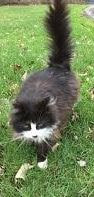
BC proudly struts about with her big beautiful bushy tail high in the air. She indeed is the master of the barn and everybody knows it! She also has a full winter coat giving her a hefty appearance that adds to her beauty.
It appears that Red, the Plymouth Barred Rock and Araucana hens grew in height and width over winter. Their feathers are stunningly lovely. And, yes, they like to hear how glamorous they are. They consistently lay four delicious eggs per day. Red and his gals travel around the barn, house, gardens and venture off into the woods behind the Memorial Garden.
Now that the snow is gone, the Guineas have resumed their walks through the meadow, around the pond, down the driveway and beyond. So far they are the only hens that occupy the rafters at night. The Araucana that roosted with them is still with the rest of the fowl in the coop.
The Chocolate Runner and Blue Swedish ducks limit their adventures to the barn yard and back yard. Their pool is handy and they are in and out of it all day even on cold days! This past winter, due to age, we lost one of the Chocolate Runners, a Guinea and "Frenchie", the last of our French hens.
Did you know? According to LiveScience.com, about 75 billion eggs are produced in the U.S. each year or about 10 percent of the world's total. Of these, 60 percent are used by consumers, 9 percent are used by the food service industry, and the rest are used in processed foods. China is the world's biggest supplier of eggs, producing about 390 billion eggs each year - half of the world's total supply. Now you know!
It appears that Red, the Plymouth Barred Rock and Araucana hens grew in height and width over winter. Their feathers are stunningly lovely. And, yes, they like to hear how glamorous they are. They consistently lay four delicious eggs per day. Red and his gals travel around the barn, house, gardens and venture off into the woods behind the Memorial Garden.
Now that the snow is gone, the Guineas have resumed their walks through the meadow, around the pond, down the driveway and beyond. So far they are the only hens that occupy the rafters at night. The Araucana that roosted with them is still with the rest of the fowl in the coop.
The Chocolate Runner and Blue Swedish ducks limit their adventures to the barn yard and back yard. Their pool is handy and they are in and out of it all day even on cold days! This past winter, due to age, we lost one of the Chocolate Runners, a Guinea and "Frenchie", the last of our French hens.
Did you know? According to LiveScience.com, about 75 billion eggs are produced in the U.S. each year or about 10 percent of the world's total. Of these, 60 percent are used by consumers, 9 percent are used by the food service industry, and the rest are used in processed foods. China is the world's biggest supplier of eggs, producing about 390 billion eggs each year - half of the world's total supply. Now you know!
Bee Yard Buzz
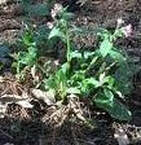
Peeking above the soil in the bee yard are wild ginger, mayapple, Lungwort (Pulmonaria), golden ray (Ligularia) and hosta. The Pulmonaria is in bloom adding a dash of pink and blue to this sacred space.
Is it honeybee or honey bee? When a species is a true example of a particular taxon (classification of organisms), the taxon is written separately. Honey bees and bumble bees are true bees, and black flies are true flies. A yellow jacket, however, is not a true jacket. See:http://www.honeybeesuite.com
Is it honeybee or honey bee? When a species is a true example of a particular taxon (classification of organisms), the taxon is written separately. Honey bees and bumble bees are true bees, and black flies are true flies. A yellow jacket, however, is not a true jacket. See:http://www.honeybeesuite.com
St. Francis of Assisi Memorial Garden
Flowering plants are beginning to appear above the leaf covered soil. This garden is still too wet prohibiting any raking. A few days of sunshine would be a welcome sight to the plants and to Betty who has her rake ready and is anxious to see this year's spring growth.
If you would like to memorialize a loved one, contact Mercy Farm and the name of your loved one will be entered into the Memorial Book located in the Catherine McAuley Chapel where they will be remembered in the prayers and works of the Sisters of Mercy on staff and those gathered with us in prayer.
If you would like to memorialize a loved one, contact Mercy Farm and the name of your loved one will be entered into the Memorial Book located in the Catherine McAuley Chapel where they will be remembered in the prayers and works of the Sisters of Mercy on staff and those gathered with us in prayer.
Greetings From the Gardens
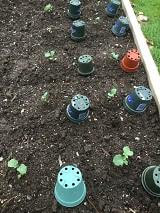
Beet, lettuce, radish, and spinach seedlings and onion sets have been planted in the hoop house. Cucumber seeds have been planted in hanging pots along the center pole above the seedlings. Broccoli seedlings were planted in a raised bed (for protection from the cold they are kept under plant pots at night). The garlic that was planted in October is up a good five inches, the asparagus is breaking through the soil and the rhubarb is looking good! Pies will be in the near future!
For a more productive yield try these three steps to help build fertility and loosen garden soil. First, a few weeks before you plan to plant, work in any cover crops and then blanket your garden bed with at least a half-inch layer of good compost - a full inch would be even better. The compost will provide the soil with a fresh infusion of nutrient-rich organic matter, and improve the soils ability to handle water and nourish crops.
Second, focus on cultivating the soil. Pounding rain, gravity and other forces can cause soil to become compacted over time, so loosening it before planting should be a priority.
Finally, apply an organic fertilizer to the degree that matches the needs of the crops you plan to plant. Light feeders with shallow roots, such as lettuce, will be fine with a small amount of organic fertilizer raked into the top few inches of soil. For widely spaced plants with big nutrient appetites (cabbage, broccoli, tomatoes, and peppers), enrich individual planting holes with a mixture of compost and organic fertilizer just before you set the seedlings. For heavy feeders such as sweet corn, use a hoe to make deep trenches in the beds, and place the fertilizer in the trenches so it will be directly below the germinating roots. Source: www. MotherEarthNews.com - 3 Steps for Spring Garden Prep
Happy gardening!
For a more productive yield try these three steps to help build fertility and loosen garden soil. First, a few weeks before you plan to plant, work in any cover crops and then blanket your garden bed with at least a half-inch layer of good compost - a full inch would be even better. The compost will provide the soil with a fresh infusion of nutrient-rich organic matter, and improve the soils ability to handle water and nourish crops.
Second, focus on cultivating the soil. Pounding rain, gravity and other forces can cause soil to become compacted over time, so loosening it before planting should be a priority.
Finally, apply an organic fertilizer to the degree that matches the needs of the crops you plan to plant. Light feeders with shallow roots, such as lettuce, will be fine with a small amount of organic fertilizer raked into the top few inches of soil. For widely spaced plants with big nutrient appetites (cabbage, broccoli, tomatoes, and peppers), enrich individual planting holes with a mixture of compost and organic fertilizer just before you set the seedlings. For heavy feeders such as sweet corn, use a hoe to make deep trenches in the beds, and place the fertilizer in the trenches so it will be directly below the germinating roots. Source: www. MotherEarthNews.com - 3 Steps for Spring Garden Prep
Happy gardening!
Blooming Blossoms
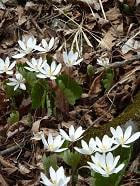
Bloodroot (Sanguinaria canadensis) is a perennial, herbaceous flowering plant native to eastern North America. It is the only species in the genus Sanguinaria. In Canada it is also known as Canada puccoon, bloodwort, redroot, and red puccoon.
Bloodroot grows from 8" to 20" tall. It has one large basal leaf up to 10" across, with five to seven lobes. The leaves and flowers sprout from a reddish rhizome with bright orange sap that grows at or slightly below the soil surface. The color of the sap is the reason for the genus name Sanguinaira, from Latin sanquinarius, means "bleeding". The rhizomes grow larger each year, and branch to form colonies. Plants start to bloom before the foliage unfolds in early spring. After blooming the leaves unfurl to their full size and go summer dormant in mid to late summer, later than some other spring ephemerals.
The flowers bloom from March to May depending on the region and weather. They have 8-12 delicate white petals, and many yellow stamens, and two sepals below the petals, which fall off after the flowers open. The flowers open when they are in sunlight and produce pollen, but no nectar. They are pollinated by small bees and flies. Seeds develop in green pods 1"-2" long, and ripen before the foliage goes dormant. The seeds are round and black to orange-red when ripe and have elaiosomes (fleshy structures attached to the seeds of many plant species). Ants, attracted to these structures that are rich in lipids and proteins, take the seeds to their nest and feed their larvae.
The bitter and toxic leaves and rhizomes are not often eaten by mammalian herbivores (for example: deer, elk, buffalo and cows). The plant has been used in medical quackery, as was evidenced by the special product produced by Dr. John Henry Pinkard during the 1920s and 1930s. Bloodroot is a popular red natural dye used by Native American artists, especially among southeastern river cane basket makers. A break in the surface of the plant, especially the roots, reveals a reddish sap which can be used as a dye. See: https://en.wikipedia.org
Bloodroot grows from 8" to 20" tall. It has one large basal leaf up to 10" across, with five to seven lobes. The leaves and flowers sprout from a reddish rhizome with bright orange sap that grows at or slightly below the soil surface. The color of the sap is the reason for the genus name Sanguinaira, from Latin sanquinarius, means "bleeding". The rhizomes grow larger each year, and branch to form colonies. Plants start to bloom before the foliage unfolds in early spring. After blooming the leaves unfurl to their full size and go summer dormant in mid to late summer, later than some other spring ephemerals.
The flowers bloom from March to May depending on the region and weather. They have 8-12 delicate white petals, and many yellow stamens, and two sepals below the petals, which fall off after the flowers open. The flowers open when they are in sunlight and produce pollen, but no nectar. They are pollinated by small bees and flies. Seeds develop in green pods 1"-2" long, and ripen before the foliage goes dormant. The seeds are round and black to orange-red when ripe and have elaiosomes (fleshy structures attached to the seeds of many plant species). Ants, attracted to these structures that are rich in lipids and proteins, take the seeds to their nest and feed their larvae.
The bitter and toxic leaves and rhizomes are not often eaten by mammalian herbivores (for example: deer, elk, buffalo and cows). The plant has been used in medical quackery, as was evidenced by the special product produced by Dr. John Henry Pinkard during the 1920s and 1930s. Bloodroot is a popular red natural dye used by Native American artists, especially among southeastern river cane basket makers. A break in the surface of the plant, especially the roots, reveals a reddish sap which can be used as a dye. See: https://en.wikipedia.org
Sights and Sounds of the Season
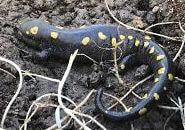
In spring, trees become broadcasting sites for birds - they chirp, whistle and warble. Songs are used to attract mates and to warn away rivals. More unusual, however is the behavior of various salamander, toad and frog species. These animals are amphibians, their lives split between dry habitat and water. Almost all of them need water in which to lay eggs. Consequently, in spring, many amphibian species converge on ponds, possibly the very ponds where they themselves hatched. Many of these species coordinate their mating with the phases of the full moon, so that hundreds or even thousands of them show up on the same night at the same pond to breed, increasing their chances of success in the mating game. They are following the urges and pathways that may be thousands of years old, but they may find that things have changed since their early ancestors first trod the earth. Roads, for example, may now lie between them and their breeding pond. In some areas, hundreds of toads, frogs or salamanders may hop or slither across roads in mass movements that set up the animals as easy victims for motor vehicles. But dedicated amphibian fans have come to the rescue in some places, carrying the animals across roads in buckets or building tunnels for animals to use. See: https://www.nwf.org
April 2019
Happenings Around the Farm
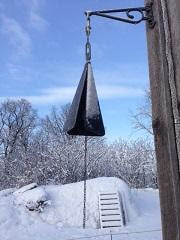
March temperatures hovered around zero and "soared" to 54 degrees twice during the month. Our last snow fall brought about six inches. There was little rain and in spite of roaring winds there was no damage or outages on the farm.
The early morning air is filled with the songs of chickadees and Cardinals and the ratty- tat-tat of the variety of woodpeckers that call Mercy Farm home.
Mercy Farm was the site for hospitality, a Deacon's Retreat, students from Gwynedd Mercy University and a visit by a potential Mercy Ecology Board member.
March guests came from: Castleton, Fair Haven, Hydeville, Poutney and Wallingford, VT; Clifton Park, NY and Doylestown, Gwynedd Valley, Harleysville, Philadelphia, Royersford and Warrington, PA.
The early morning air is filled with the songs of chickadees and Cardinals and the ratty- tat-tat of the variety of woodpeckers that call Mercy Farm home.
Mercy Farm was the site for hospitality, a Deacon's Retreat, students from Gwynedd Mercy University and a visit by a potential Mercy Ecology Board member.
March guests came from: Castleton, Fair Haven, Hydeville, Poutney and Wallingford, VT; Clifton Park, NY and Doylestown, Gwynedd Valley, Harleysville, Philadelphia, Royersford and Warrington, PA.
Alternative Student Break and Gwynedd Mercy University
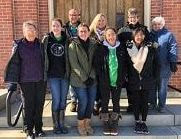
Students: Julianna, Alexa, Kelsey, Marie and Kelly arrived on Sunday, March 3 accompanied by Michelle, Campus Ministry, and Zeke, a Residence Director. Each year students from Gwynedd Mercy University (GMU), PA choose to spend their Alternative Student Break (ASB) at Mercy Farm. ABS is a learning experience the students would not otherwise have and it is also a requirement.
The weather pattern during their stay alternated between very cold days, rain, snow, clouds and thankfully, a few days of sun. The weather was no match for this enthusiastic group from Pennsylvania.
The video Awakening the Dreamer, Changing the Dream was followed by discussion led by Betty. The students found the video very enlightening and challenged them to question how they were going to contribute to changing the world and to make it a better place for them and those around them. Composting, waste reduction, snag trees, the cosmic walk and the struggle of honey bees during winter were also explored.
The educational component of the program left the students with a desire to continue their learning of environmental issues through research; to speak up when there is a better more sustainable environmentally friendly alternative to how things are being done. There are plenty of websites and groups to become a part of the environmental and social justice movements.
The students had a hands-on experience at Foggy Meadow Farm in Benson. Paul explained gardening during winter from the propagation green house where seeds are sown in a controlled environment to planting the seedlings in the high top green houses where one crop of greens is planted, harvested, the soil prepared for the next planting of new seedlings from the propagation house. The students helped harvest the greens and also prepared the soil for the next planting. It is an experience to work in short sleeves with rows of greens (such as lettuce, kale and a variety of salad greens), and to know that it is freezing cold outside!
Tracking animals in the snow; meeting and helping with the care of Bailey, Dexter, BC and all the feathered creatures were highlights of their time at Mercy Farm.
Friday, March 8 came all too soon as the students boarded the van for their trip back to Gwynedd Mercy University. As always, it is a pleasure for staff to meet and spend time with the students. It is a rewarding time for us as we enjoy their vim and vigor, their interest in our life style to mirror sustainable living in action. We are most grateful to these students for their enthusiasm, interest and help.
The weather pattern during their stay alternated between very cold days, rain, snow, clouds and thankfully, a few days of sun. The weather was no match for this enthusiastic group from Pennsylvania.
The video Awakening the Dreamer, Changing the Dream was followed by discussion led by Betty. The students found the video very enlightening and challenged them to question how they were going to contribute to changing the world and to make it a better place for them and those around them. Composting, waste reduction, snag trees, the cosmic walk and the struggle of honey bees during winter were also explored.
The educational component of the program left the students with a desire to continue their learning of environmental issues through research; to speak up when there is a better more sustainable environmentally friendly alternative to how things are being done. There are plenty of websites and groups to become a part of the environmental and social justice movements.
The students had a hands-on experience at Foggy Meadow Farm in Benson. Paul explained gardening during winter from the propagation green house where seeds are sown in a controlled environment to planting the seedlings in the high top green houses where one crop of greens is planted, harvested, the soil prepared for the next planting of new seedlings from the propagation house. The students helped harvest the greens and also prepared the soil for the next planting. It is an experience to work in short sleeves with rows of greens (such as lettuce, kale and a variety of salad greens), and to know that it is freezing cold outside!
Tracking animals in the snow; meeting and helping with the care of Bailey, Dexter, BC and all the feathered creatures were highlights of their time at Mercy Farm.
Friday, March 8 came all too soon as the students boarded the van for their trip back to Gwynedd Mercy University. As always, it is a pleasure for staff to meet and spend time with the students. It is a rewarding time for us as we enjoy their vim and vigor, their interest in our life style to mirror sustainable living in action. We are most grateful to these students for their enthusiasm, interest and help.
The Adventures of Bailey and Dexter
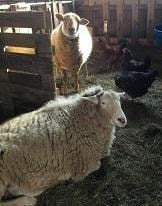
Bailey and Dexter are looking forward to a "real" spring when the grass grows green, delighting their palates. Both look like "rag-a-muffins" especially Dexter with his long straggly coat, a mix of hair and wool. Bailey's coat is short and thick and is all hair. Dexter will be sheared in April and will once again be a handsome fellow. Bailey will shed her winter coat as the weather gets warmer.
Dexter has picked up some of his mother's tricks, that is, to check the gates to see if by chance one is not latched. He enjoyed a short adventure out of the paddock until he was found and quickly returned. We are not sure whether Bailey scolded him or congratulated him on his accomplishment!
Dexter has picked up some of his mother's tricks, that is, to check the gates to see if by chance one is not latched. He enjoyed a short adventure out of the paddock until he was found and quickly returned. We are not sure whether Bailey scolded him or congratulated him on his accomplishment!
Barn Yard Banter and BC
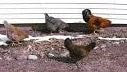
The ducks are so enjoying their water bucket and muddy holes found around the barn yard. Mud season has arrived!
BC is taking advantage of the longer days and disappears when it is time to go to her "suite" for the night.
The hens are laying again - big beautiful eggs. We receive between three and four a day. Good girls!
All of the critters, including Red and the Guineas, are outside most of the day pecking away and enjoying the sun. They are adventuring farther away from the barn now that there is some grass exposed.
BC is taking advantage of the longer days and disappears when it is time to go to her "suite" for the night.
The hens are laying again - big beautiful eggs. We receive between three and four a day. Good girls!
All of the critters, including Red and the Guineas, are outside most of the day pecking away and enjoying the sun. They are adventuring farther away from the barn now that there is some grass exposed.
Bee Yard Buzz
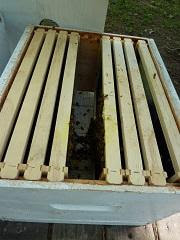
Early beehives, such as the skep, were not designed for long term use. The honey could not be extracted without destroying the hive and therefore the colony. The system only worked if the colony produced enough bees to create a swarm, which would be caught and go on to provide honey in the following year. Otherwise, each year a new swarm of bees had to be caught. There was a desperate need for a way of keeping the same colony of bees year after year so that more honey could be produced and the apiary expanded.
Rev. Lorenzo Langstroth was an American apiarist, clergyman and teacher and considered to be the father of American beekeeping. He created the modern day Langstroth hive. In 1852, Lorenzo Langstroth discovered that bees would keep a 'bee sized' pathway clear within a hive if it was between 6 and 8 mm wide. He named the discovery 'spazio di ape' (or 'bee space' in English). This discovery was important because it led to the development of hives with movable frames of comb. This allowed beekeepers to remove comb and honey without destroying the hive. It also enabled the beekeeper to start manipulating the colony; helping it develop and grow. This discovery is often cited as the start of modern beekeeping.
See: https://www.omlet.us and en.m.wikipedia.org
* The hive pictured above shows that two frames have been removed. This was done to give space for Holly to release the Queen into the hive. The larger space allows the queen cage to be incorporated into the hive.
Rev. Lorenzo Langstroth was an American apiarist, clergyman and teacher and considered to be the father of American beekeeping. He created the modern day Langstroth hive. In 1852, Lorenzo Langstroth discovered that bees would keep a 'bee sized' pathway clear within a hive if it was between 6 and 8 mm wide. He named the discovery 'spazio di ape' (or 'bee space' in English). This discovery was important because it led to the development of hives with movable frames of comb. This allowed beekeepers to remove comb and honey without destroying the hive. It also enabled the beekeeper to start manipulating the colony; helping it develop and grow. This discovery is often cited as the start of modern beekeeping.
See: https://www.omlet.us and en.m.wikipedia.org
* The hive pictured above shows that two frames have been removed. This was done to give space for Holly to release the Queen into the hive. The larger space allows the queen cage to be incorporated into the hive.
St. Francis of Assisi Memorial Garden
The garden is still snow covered. Imagine all of the activity that takes place beneath the snow!
If you would like to memorialize a loved one, contact Mercy Farm and the name of your loved one will be entered into the Memorial Book located in the Catherine McAuley Chapel where they will be remembered in the prayers and works of the Sisters of Mercy on staff and those gathered with us in prayer.
If you would like to memorialize a loved one, contact Mercy Farm and the name of your loved one will be entered into the Memorial Book located in the Catherine McAuley Chapel where they will be remembered in the prayers and works of the Sisters of Mercy on staff and those gathered with us in prayer.
Greetings from the Gardens
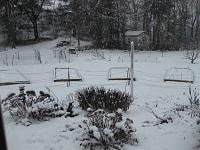
The snow has just begun to melt leaving us to dream of warmer days and all that is to come - delicious veggies and beautiful flowers soaking up the sun's rays.
Hopefully, this will be the last photo showing snow falling over the gardens for 2019!
From foreground to back ground is the Peace Garden, raised beds, arc garden and honey house along the tree line.
Hopefully, this will be the last photo showing snow falling over the gardens for 2019!
From foreground to back ground is the Peace Garden, raised beds, arc garden and honey house along the tree line.
Blooming Blossoms
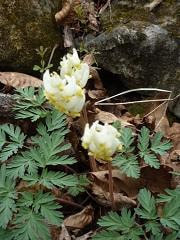
The snowdrop plant is perhaps the first to appear above the snow with its green leaves and dainty white bell-shaped blossoms. Another early bloomer is Dicentra cucullaria(Dutchman's breeches), a perennial herbaceous plant, native to rich woods of eastern North America, with a disjunct population in the Columbia Basin located in the Pacific North West.
Dutchman's breeches is a true spring woodland ephemeral species, flowering early in the spring when sunlight hits the woodland floor before the canopy of trees fills in. This is also an ideal time for the first emerging bumblebees to find nectar on the flowers. Dutchman's breeches is dependent on bumblebees (especially Bombus bimaculatus, a common eastern North American species) for cross-pollination. In fact, the flower structure and mechanism by which it is pollinated indicate that it is adapted for bumblebees, which can separate the outer and inner petals of the flower. They use their front legs to expose the stigma, stamen, and anthers. Shortly afterwards, they will sweep pollen in a forward stroke by using their middle legs, before leaving the flower to return to the colony with the pollen. In this way, D. cucullaria is pollinated as the bees move from plant to plant, and the bumblebee meets its dietary needs.
The leaves and flower stems die back in late spring after the seed has ripened, and the bulblets (miniature tubers) remain dormant through summer. In late fall, starch in the bulblets is converted to sugar, and the beginnings of the next spring's leaves and flowers develop below ground. The flowers, usually white rarely suffused with pink, are 1/2 to 3/4" long. The flowers lack fragrance.
Dutchman's breeches was likely introduced to cultivation in England when Philip Miller introduced it to the Chelsea Physic Garden. The species was, however, not mentioned in American horticultural literature until the early 19 century.
The common name Dutchman's breeches comes from the pair of outer petals which form a swollen "V" making the hanging flower look like a pair of white breeches/bloomers hung upside-down.
Native Americans and early white practitioners considered this plant useful for syphilis, skin conditions and as a blood purifier. Dutchman's breeches contains several alkaloids that may have effects on the brain and heart. However, the plant may be toxic and cause dermatitis in some people.
See: https://www.prairiemoon.com and https://en.wikipedia.org
Dutchman's breeches is a true spring woodland ephemeral species, flowering early in the spring when sunlight hits the woodland floor before the canopy of trees fills in. This is also an ideal time for the first emerging bumblebees to find nectar on the flowers. Dutchman's breeches is dependent on bumblebees (especially Bombus bimaculatus, a common eastern North American species) for cross-pollination. In fact, the flower structure and mechanism by which it is pollinated indicate that it is adapted for bumblebees, which can separate the outer and inner petals of the flower. They use their front legs to expose the stigma, stamen, and anthers. Shortly afterwards, they will sweep pollen in a forward stroke by using their middle legs, before leaving the flower to return to the colony with the pollen. In this way, D. cucullaria is pollinated as the bees move from plant to plant, and the bumblebee meets its dietary needs.
The leaves and flower stems die back in late spring after the seed has ripened, and the bulblets (miniature tubers) remain dormant through summer. In late fall, starch in the bulblets is converted to sugar, and the beginnings of the next spring's leaves and flowers develop below ground. The flowers, usually white rarely suffused with pink, are 1/2 to 3/4" long. The flowers lack fragrance.
Dutchman's breeches was likely introduced to cultivation in England when Philip Miller introduced it to the Chelsea Physic Garden. The species was, however, not mentioned in American horticultural literature until the early 19 century.
The common name Dutchman's breeches comes from the pair of outer petals which form a swollen "V" making the hanging flower look like a pair of white breeches/bloomers hung upside-down.
Native Americans and early white practitioners considered this plant useful for syphilis, skin conditions and as a blood purifier. Dutchman's breeches contains several alkaloids that may have effects on the brain and heart. However, the plant may be toxic and cause dermatitis in some people.
See: https://www.prairiemoon.com and https://en.wikipedia.org
March 2019
Happenings Around the Farm

Temperatures for February ranged from minus zero without the wind chill factored in to a high of 49 degrees. The month had five days in the forties! Precipitation alternated between rain, freezing rain and snow. Despite the rain and warm temperatures two feet of snow accumulated during the month!
Friends gathered at Mercy Farm for a weekend of shoe shoeing, drumming, relaxing and sharing an evening meal with old friends. It was also the site for a week long private retreat.
February guests came from: Middlebury, Milton and South Burlington, VT; Bloomfield, CT; Burlington, Concord and Rehoboth, MA and Cranston, RI.
Friends gathered at Mercy Farm for a weekend of shoe shoeing, drumming, relaxing and sharing an evening meal with old friends. It was also the site for a week long private retreat.
February guests came from: Middlebury, Milton and South Burlington, VT; Bloomfield, CT; Burlington, Concord and Rehoboth, MA and Cranston, RI.
The Adventures of Bailey and Dexter
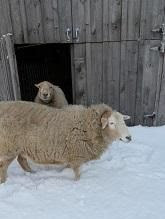
With the ups and downs of the thermometer, Bailey and Dexter have been in and out of the barn and sometimes they just stand in the door way wondering whether to stay in or venture out. The paddocks were full of snow so a stroll about would not be a lot of fun for them especially when the eatables were buried beneath the snow. However, of late the hill in the paddock got enough sun to melt the snow and once they spotted green they were "hot to trot".
Bailey and Dexter seem to delight with the cold weather as their thick winter coats keep them toasty and cozy. It appears that with the longer days the animals know that warmer weather and spring cannot be too far away.
Bailey and Dexter seem to delight with the cold weather as their thick winter coats keep them toasty and cozy. It appears that with the longer days the animals know that warmer weather and spring cannot be too far away.
Barnyard Banter and BC
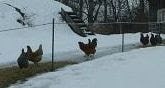
As long as the paths leading to the barn are clear of snow Red and his contingency are out walking the paths in search of whatever may be found beneath the thawing ground. Recently, the Guineas discovered that the drive way and edging along it along it were clear of snow. They gleefully ran down from the barn chanting "yeah, another food source!"
The ducks waddle about and delight when a tasty morsel appears in the retreating snow. On warm days, Norma fills their pail with water and each duck takes a turn for splash time.
Big, bushy BC is out every day walking delicately through the snow pausing only long enough to shake the snow from her paws.
The hens began laying two eggs a day about three weeks ago and as the days get longer, brighter and warmer the egg production will increase. As the nights became colder, the Araucana that insisted on sleeping up on the rafters had a change of heart and moved into the coop with Red and the hens.
Even though the animals seem overjoyed with "fresh" delights they are all amply provided with grain as well as sunflower seeds as a treat. Bailey and Dexter get their share of hay, alfalfa and vegetable "scraps". All of the animals enjoy the fresh air, beautiful winter scenery and seeing the staff and guests out in the yard.
The ducks waddle about and delight when a tasty morsel appears in the retreating snow. On warm days, Norma fills their pail with water and each duck takes a turn for splash time.
Big, bushy BC is out every day walking delicately through the snow pausing only long enough to shake the snow from her paws.
The hens began laying two eggs a day about three weeks ago and as the days get longer, brighter and warmer the egg production will increase. As the nights became colder, the Araucana that insisted on sleeping up on the rafters had a change of heart and moved into the coop with Red and the hens.
Even though the animals seem overjoyed with "fresh" delights they are all amply provided with grain as well as sunflower seeds as a treat. Bailey and Dexter get their share of hay, alfalfa and vegetable "scraps". All of the animals enjoy the fresh air, beautiful winter scenery and seeing the staff and guests out in the yard.
Bee Yard Buzz
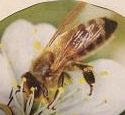
The staff has a great affinity for all creatures great and small that call Mercy Farm home. Throughout winter even though the honey bees are not obvious it is hoped that they will survive winter challenges and will soon be darting in and out of the hive carrying pollen and nectar from the early wild flowers back to the Queen, workers and drones. While we wait, a bit of bee history might be of interest.
The honey bee is a highly sophisticated insect that has evolved over millions of years. The earliest recorded bee was found in Myanmar (also known as Burma) encased in amber and has been dated as 100 million years old. It's likely that the bee originated in the Far East. In those early days, the bees were more like wasps, eating other insects rather than nectar and pollen. It's unclear exactly when bees decided to become vegetarian but the choice between eating a fly or delicious tasting nectar from a cherry tree in full bloom, seemed to be the better choice.
Today bees live all over the world and there are approximately 20,000 species. These range from the giant leaf eating bee, which is over an inch long to the tiny dwarf bee which is just 0.08 inches long. The honey bee is just one of these species. Most bees do not live in colonies, preferring a more solitary existence. Bumblebees, for example live in burrows in the ground.
Crop pollination scientists believe that bees are responsible for the rich flower diversity we enjoy today. Most flowering plants cannot self-pollinate and pollination that relies on the wind to carry their seed is not very efficient, so flowers evolved with bright colors and markings to attract bees and to ensure that they were rewarded for the pollination service provided them with a nutritious nectar too. The bees drink the nectar and transport it in a special stomach back to the hive to share with the Queen, and also to feed the hive bees and the larvae which will become the new bees.
See: https://www.omlet
The honey bee is a highly sophisticated insect that has evolved over millions of years. The earliest recorded bee was found in Myanmar (also known as Burma) encased in amber and has been dated as 100 million years old. It's likely that the bee originated in the Far East. In those early days, the bees were more like wasps, eating other insects rather than nectar and pollen. It's unclear exactly when bees decided to become vegetarian but the choice between eating a fly or delicious tasting nectar from a cherry tree in full bloom, seemed to be the better choice.
Today bees live all over the world and there are approximately 20,000 species. These range from the giant leaf eating bee, which is over an inch long to the tiny dwarf bee which is just 0.08 inches long. The honey bee is just one of these species. Most bees do not live in colonies, preferring a more solitary existence. Bumblebees, for example live in burrows in the ground.
Crop pollination scientists believe that bees are responsible for the rich flower diversity we enjoy today. Most flowering plants cannot self-pollinate and pollination that relies on the wind to carry their seed is not very efficient, so flowers evolved with bright colors and markings to attract bees and to ensure that they were rewarded for the pollination service provided them with a nutritious nectar too. The bees drink the nectar and transport it in a special stomach back to the hive to share with the Queen, and also to feed the hive bees and the larvae which will become the new bees.
See: https://www.omlet
St. Francis of Assisi Memorial Garden
All is quiet in the Memorial Garden except the chimes when tickled by a breeze. Below the mulch and several inches of soil there is a lot of activity. These layers protect the plant roots, animals and microbes from freezing and the latter returns nutrients to the soil.
If you would like to memorialize a loved one, contact Mercy Farm and the name of your loved one will be entered into the Memorial Book located in the Catherine McAuley Chapel where they will be remembered in the prayers and works of the Sisters of Mercy on staff and those gathered with us in prayer.
If you would like to memorialize a loved one, contact Mercy Farm and the name of your loved one will be entered into the Memorial Book located in the Catherine McAuley Chapel where they will be remembered in the prayers and works of the Sisters of Mercy on staff and those gathered with us in prayer.
Greetings from the Gardens
By now, the vegetable seeds and growing soil have arrived, the seed trays have been prepared for planting and the basement of Mercy Farm has been set up to handle all of the trays that will seeded. We are all ready to plant now - but it is too early. Oh, will April ever get here!
Blooming Blossoms
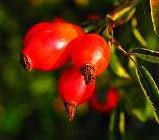
In keeping with the "Irish theme", Rosa canina, billed as one of the "Top 8 Native Irish Plants That You Really Should Know" by Heiton Buckley was selected for this month's blossom.
Rosa canina, commonly known as the dog rose, is a variable, climbing wild rose species native to Europe, northwest Africa, and western Asia. It is the most common wild rose in Ireland and is also known as sweet briar, birar rose, witches' briar or hip rose.
It is a deciduous shrub normally ranging in height from 3' to 16'. Its stems are covered with small, sharp, hooked prickles, which aid it in climbing. The leaves are pinnate, with 5-7 leaflets and when rubbed have a sweet scent. The flowers are usually pale pink, but can vary between a deep pink and white. They open from June to July and have a light scent attracting bees, butterflies and other insects. The egg-shaped fruits (hips) grow from October to November and are a very important food source for birds during winter.
The plant is high in certain antioxidants. The fruit is noted for its high level of vitamin C, and is used to make syrup, tea, and marmalade. During World War II, there was a scarcity of fruit in Ireland so people used to take dog rose syrup for vitamin C; in the United States, Rosa canina was planted in victory gardens, and can still be found growing along the country, including roadsides and in wet, sandy areas along the coastlines. In Bulgaria the hips are used to make a sweet wine as well as tea. In the traditional Austrian medicine, Rosa canina fruits have been used internally as tea for treatment of viral infections and disorders of the urinary tract system. Hips are used as a flavoring in Cockta, a soft drink made in Slovenia.
See: heitonbuckley.ie; www.askaboutireland.ie and en.m.wikipedia.org
Rosa canina, commonly known as the dog rose, is a variable, climbing wild rose species native to Europe, northwest Africa, and western Asia. It is the most common wild rose in Ireland and is also known as sweet briar, birar rose, witches' briar or hip rose.
It is a deciduous shrub normally ranging in height from 3' to 16'. Its stems are covered with small, sharp, hooked prickles, which aid it in climbing. The leaves are pinnate, with 5-7 leaflets and when rubbed have a sweet scent. The flowers are usually pale pink, but can vary between a deep pink and white. They open from June to July and have a light scent attracting bees, butterflies and other insects. The egg-shaped fruits (hips) grow from October to November and are a very important food source for birds during winter.
The plant is high in certain antioxidants. The fruit is noted for its high level of vitamin C, and is used to make syrup, tea, and marmalade. During World War II, there was a scarcity of fruit in Ireland so people used to take dog rose syrup for vitamin C; in the United States, Rosa canina was planted in victory gardens, and can still be found growing along the country, including roadsides and in wet, sandy areas along the coastlines. In Bulgaria the hips are used to make a sweet wine as well as tea. In the traditional Austrian medicine, Rosa canina fruits have been used internally as tea for treatment of viral infections and disorders of the urinary tract system. Hips are used as a flavoring in Cockta, a soft drink made in Slovenia.
See: heitonbuckley.ie; www.askaboutireland.ie and en.m.wikipedia.org
February 2019
Happenings Around the Farm
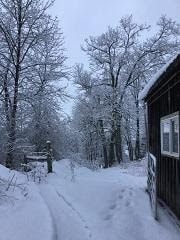
Daytime temperatures ranged from minus 21 to 42 degrees. The wind chill plummeted single digit temps to well below zero. The early days of January saw rain, freezing rain and sheet. Snow showers were scattered throughout the month in between snow storms that dropped 5, 7, 9 and 18 inches of snow that gave the farm a winter wonderland appearance. The last day of January began at minus 5 with a wind chill of minus 21! What will February bring?
Mercy Farm was the site of two week long private retreats; a Recovery Retreat impacted by a January snow storm "forced" our guests to leave early Saturday evening; overnight hospitality for two and a two day retreat for one rounded out the month.
December guests came from: Bristol,Ferrisburgh, Middlebury, Monkton, North Springfield, Vergennes and Wallingford, VT; Silver Lake, NH; Cherry Hill, NJ and Newport, RI.
Mercy Farm was the site of two week long private retreats; a Recovery Retreat impacted by a January snow storm "forced" our guests to leave early Saturday evening; overnight hospitality for two and a two day retreat for one rounded out the month.
December guests came from: Bristol,Ferrisburgh, Middlebury, Monkton, North Springfield, Vergennes and Wallingford, VT; Silver Lake, NH; Cherry Hill, NJ and Newport, RI.
The Adventures of Bailey and Dexter
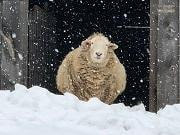
Biting cold temperatures and 18" of snow from one storm and the accumulative effects of other storms kept Bailey and Dexter in their cozy quarters. You may be sure that Red and his contingency along with the Guineas and BC joined them! It's just one big happy fluffy, furry, feathery family! Bailey and Dexter are enjoying Tim's hay and its sweet smell still lingers in the barn. Each new dawn adds another minute to the length of a day. Bailey and Dexter are anxious to get out and roam around in the paddocks. All of the barn mates hope that the weather will warm up. They will have to wait another month for that to be true.
In Dexter's defense, his winter coat is five inches deep all the way around, giving him a "full figure"!
In Dexter's defense, his winter coat is five inches deep all the way around, giving him a "full figure"!
Barn Yard Banter and BC
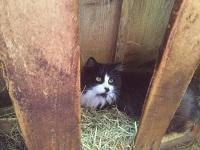
Such a fuzzy, fussy cat! She still manages to secure a spot where she can hide and find a bit of peace. It is hard being the Master of the Barn. BC's winter task is to keep all who dwell in the barn safe, warm and happy. No wonder she needs "her space"!
Red, the hens and Guineas also demand that their walk way is clear. The Guineas, however, will glide down to the wild bird feeders for dropped sunflower seeds. Their return trip back to the barn can be challenging as it is up hill. The seeds are well worth the trip!
The ducks now prefer to wash themselves in a water bucket rather than go into the frigid water of their pool. If there is a puddle to be found they happily "jump in" and have a splash party. Oh, such fun it is to be a duck at Mercy Farm!
Red, the hens and Guineas also demand that their walk way is clear. The Guineas, however, will glide down to the wild bird feeders for dropped sunflower seeds. Their return trip back to the barn can be challenging as it is up hill. The seeds are well worth the trip!
The ducks now prefer to wash themselves in a water bucket rather than go into the frigid water of their pool. If there is a puddle to be found they happily "jump in" and have a splash party. Oh, such fun it is to be a duck at Mercy Farm!
Bee Yard Buzz
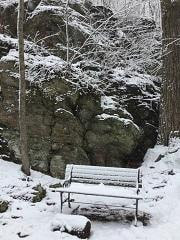
The stillness of the Bee Yard is inviting. The short, crisp walk is well worth the trip as even in winter it is a most beautiful place to be. Quiet stillness permeates and the Bee Yard calls for one to sit for a while.
A few interesting facts about bee pollen include: pollen contains concentrations of almost every known nutrient; one of those nutrients, glucoside, helps transport nutrients into the bloodstream for use; it is rich in B-vitamins; it is extremely rich in Rutin and has an undetermined amount of HGH (Human Growth Hormone) Gonadatropin.
A few interesting facts about bee pollen include: pollen contains concentrations of almost every known nutrient; one of those nutrients, glucoside, helps transport nutrients into the bloodstream for use; it is rich in B-vitamins; it is extremely rich in Rutin and has an undetermined amount of HGH (Human Growth Hormone) Gonadatropin.
St. Francis of Assisi Memorial Garden
The snow in the Memorial Garden is still on the increase in spite of the rains that come and go. A frozen crust now covers the garden and the wind chime is enveloped in ice.
If you would like to memorialize a loved one, contact Mercy Farm and the name of your loved one will be entered into the Memorial Book located in the Catherine McAuley Chapel where they will be remembered in the prayers and works of the Sisters of Mercy on staff and those gathered with us in prayer.
If you would like to memorialize a loved one, contact Mercy Farm and the name of your loved one will be entered into the Memorial Book located in the Catherine McAuley Chapel where they will be remembered in the prayers and works of the Sisters of Mercy on staff and those gathered with us in prayer.
Greetings from the Garden
January is the month for the arrival of dozens of seed catalogs. There are so many vegetables to consider. Step one of the 2019 garden season, selecting seeds and identifying seedlings to be purchased, has begun!
Seeds include: radishes, a variety of squash, beets, gourds, cucumbers, artichokes, beans, lettuce, spinach and flowers. Seedlings comprise: peppers, eggplant, sweet potatoes and a variety of tomatoes. The garlic that was planted in October will begin to peer through the soil early June.
Seeds include: radishes, a variety of squash, beets, gourds, cucumbers, artichokes, beans, lettuce, spinach and flowers. Seedlings comprise: peppers, eggplant, sweet potatoes and a variety of tomatoes. The garlic that was planted in October will begin to peer through the soil early June.
Blooming Blossoms

A search for a "romantic" plant for Valentine's Day revealed a legend that the amaryllis began as a shy, timid nymph. Amaryllis fell deeply in love with Alteo, a shepherd with Hercules' strength and Apollo's beauty, but her affections were unrequited. Hoping that she could win him over by bestowing upon him the thing he desired most - a flower so unique it had never existed in the world before - Amaryllis sought advice from the oracle of Delphi.
Following his instructions Amaryllis dressed in maiden's white and appeared at Alteo's door for 30 nights, each time piercing her heart with a golden arrow. When at
last Alteo opened his door, there before him was a striking crimson flower, sprung from the blood of Amaryllis's heart. With this romantic - albeit tragic - tale as its beginning. It is not surprising that today the amaryllis has come to symbolize pride, determination and radiant beauty. See: https://teleflora.com
Hippeastrum is a genus of about 90 species and over 600 hybrids and cultivars of perennial herbaceous bulbous plants. Hippeastrum is a genus in family
Amaryllidaceae. The name Hippeastrum, given to it by William Herbert, means "Knight's-star-lily", although precisely what Herbert meant by the name is not certain.
For many years there was confusion among botanists over the generic names Amaryllisand Hippeastrum, one result of which is that the common name "amaryllis" is
mainly used for cultivars of this genus, often sold as indoor flowering bulbs particularly at Christmas. By contrast the generic name Amaryllis applies to bulbs from
South Africa, usually grown outdoors.The genus is native to tropical and subtropical regions of the Americas from Argentina north to Mexico and the Caribbean.
Although the 1987 decision settled the question of the scientific name of the genus, the common name "amaryllis" continues to be used. Bulbs sold as amaryllis and
described ready to bloom for the holidays belong to the genus Hippeastrum whose species can be grown inside in pots or outside in warmer climates (Hardiness 7B-11). Many will bloom year after year provided they are given a dormant period in a cool, dark place for two months without water or fertilizer although some bulbs will start growing before the two-month period is up.
Of the many hybrids, the best known are those producing flowers with red, pink, salmon, orange and white colors. Although many names are used to describe hybrids
and cultivars, for example, Large Flowering, Dutch, Royal Dutch, and Trumpets, as the name suggests, have flared, tube-shaped flowers. Single, double, and miniature bulbs are the one typically sold by nurseries and other stores for the holidays in December and for Valentine's Day and Easter. See: https://en.wikipedia.org and Reader's Digest Illustrated Guide to Gardening, USA, 1992, pp 324, 419 unless otherwise noted.
Following his instructions Amaryllis dressed in maiden's white and appeared at Alteo's door for 30 nights, each time piercing her heart with a golden arrow. When at
last Alteo opened his door, there before him was a striking crimson flower, sprung from the blood of Amaryllis's heart. With this romantic - albeit tragic - tale as its beginning. It is not surprising that today the amaryllis has come to symbolize pride, determination and radiant beauty. See: https://teleflora.com
Hippeastrum is a genus of about 90 species and over 600 hybrids and cultivars of perennial herbaceous bulbous plants. Hippeastrum is a genus in family
Amaryllidaceae. The name Hippeastrum, given to it by William Herbert, means "Knight's-star-lily", although precisely what Herbert meant by the name is not certain.
For many years there was confusion among botanists over the generic names Amaryllisand Hippeastrum, one result of which is that the common name "amaryllis" is
mainly used for cultivars of this genus, often sold as indoor flowering bulbs particularly at Christmas. By contrast the generic name Amaryllis applies to bulbs from
South Africa, usually grown outdoors.The genus is native to tropical and subtropical regions of the Americas from Argentina north to Mexico and the Caribbean.
Although the 1987 decision settled the question of the scientific name of the genus, the common name "amaryllis" continues to be used. Bulbs sold as amaryllis and
described ready to bloom for the holidays belong to the genus Hippeastrum whose species can be grown inside in pots or outside in warmer climates (Hardiness 7B-11). Many will bloom year after year provided they are given a dormant period in a cool, dark place for two months without water or fertilizer although some bulbs will start growing before the two-month period is up.
Of the many hybrids, the best known are those producing flowers with red, pink, salmon, orange and white colors. Although many names are used to describe hybrids
and cultivars, for example, Large Flowering, Dutch, Royal Dutch, and Trumpets, as the name suggests, have flared, tube-shaped flowers. Single, double, and miniature bulbs are the one typically sold by nurseries and other stores for the holidays in December and for Valentine's Day and Easter. See: https://en.wikipedia.org and Reader's Digest Illustrated Guide to Gardening, USA, 1992, pp 324, 419 unless otherwise noted.
January 2019
Happenings Around the Farm
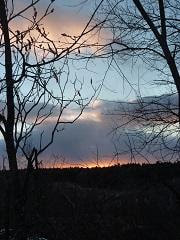
Daytime temperatures ranged from 10 to 40 degrees. The only precipitation during December was in the form of rain and on December 28, freezing rain!
Vermont, like most of the Northeast, saw little snow in the lower elevations. The Green Mountains had plenty of snow to delight skiers, boarders and those who like to enjoy the snowy scenery. This quiet time gave staff time to get caught up on all the little things that are put off during busy times.
Mercy Farm was the site of a Yoga Retreat, a late fall event that has become a tradition, as twelve ladies gather for this ascetic and spiritual experience in a setting that enhances their special weekend.
December guests came from: Charlotte, Essex Junction, Hinesburg, Montpelier, Shelburne and Williston, VT, and Orlando, FL.
Vermont, like most of the Northeast, saw little snow in the lower elevations. The Green Mountains had plenty of snow to delight skiers, boarders and those who like to enjoy the snowy scenery. This quiet time gave staff time to get caught up on all the little things that are put off during busy times.
Mercy Farm was the site of a Yoga Retreat, a late fall event that has become a tradition, as twelve ladies gather for this ascetic and spiritual experience in a setting that enhances their special weekend.
December guests came from: Charlotte, Essex Junction, Hinesburg, Montpelier, Shelburne and Williston, VT, and Orlando, FL.
The Adventures of Bailey and Dexter
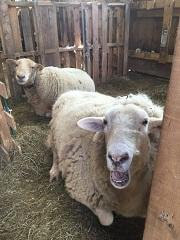
It seems that Bailey and Dexter are puzzled by the lack of snow as they look wistfully toward the sky in hopes that that will make the snow fall. The mild weather allows them to roam the paddocks and gives them a little time without their barn mates. A bit of peace and quiet are good for the soul.
The Vet came to check on the sheep, specifically Dexter, who had been seen occasionally walking with a limp. His limping has disappeared. They were both found to be healthy, but Dexter is slightly overweight. His 5" thick winter coat gives his shape a barrel-like appearance masking his actual size.
Somehow or other, Bailey the instigator, found a way out of the paddock and with Dexter close on her hoofs, made their way to the backyard where they enjoyed time eating grass until the staff spotted the escapees and moved them back to their paddock
The Vet came to check on the sheep, specifically Dexter, who had been seen occasionally walking with a limp. His limping has disappeared. They were both found to be healthy, but Dexter is slightly overweight. His 5" thick winter coat gives his shape a barrel-like appearance masking his actual size.
Somehow or other, Bailey the instigator, found a way out of the paddock and with Dexter close on her hoofs, made their way to the backyard where they enjoyed time eating grass until the staff spotted the escapees and moved them back to their paddock
Barn Yard Banter and BC
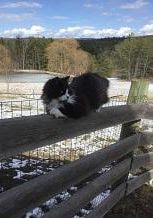
When not keeping a close eye on the barn's indoor sport activities, BC is very busy during the daytime away from the calamity with daytime hunting. As evening approaches, she is most eager for the warmth, comfort and food that her "suite" provides.
Yes, the Araucana is still sleeping in the rafters! All measures have been tried to entice her into the coop at night where it would be warmer. Red seems to be taking a break from his interest in the hens, as all of their feathers have grown back. The hens are on vacation from laying eggs. Why? Very cold weather will slow down the laying of eggs because the chicken's bodily resources have to go into keeping them warm rather than to produce eggs. However, the primary reason for a winter slowdown is shorter days. In addition, autumn is the season chickens molt (shed their feathers) and produce strong feathers for the coming year. See: mypetchicken.com
A new amenity has been added to the barn, a swimming pool for the ducks! They enjoy they pool! Their aquatic activities include: bathing, drinking and rinsing their dirt filled mouths. Other amenities include: daily housekeeping, room service, snack and beverage service, and a beauty parlor that specializes in brushing Bailey, Dexter and BC.
Like Bailey and Dexter, the Guineas need time away from the hens and Red. During the sunny part of the day they enjoy sitting close to the south side of the barn to soak in the warmth from the sun and to relax. Another, special feature - an outdoor solarium for the Guineas!
Yes, the Araucana is still sleeping in the rafters! All measures have been tried to entice her into the coop at night where it would be warmer. Red seems to be taking a break from his interest in the hens, as all of their feathers have grown back. The hens are on vacation from laying eggs. Why? Very cold weather will slow down the laying of eggs because the chicken's bodily resources have to go into keeping them warm rather than to produce eggs. However, the primary reason for a winter slowdown is shorter days. In addition, autumn is the season chickens molt (shed their feathers) and produce strong feathers for the coming year. See: mypetchicken.com
A new amenity has been added to the barn, a swimming pool for the ducks! They enjoy they pool! Their aquatic activities include: bathing, drinking and rinsing their dirt filled mouths. Other amenities include: daily housekeeping, room service, snack and beverage service, and a beauty parlor that specializes in brushing Bailey, Dexter and BC.
Like Bailey and Dexter, the Guineas need time away from the hens and Red. During the sunny part of the day they enjoy sitting close to the south side of the barn to soak in the warmth from the sun and to relax. Another, special feature - an outdoor solarium for the Guineas!
Bee Yard Buzz
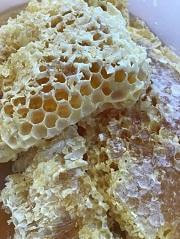
Much has been said about the hives and honey, this issue will focus on the "structure" bees build for their sweet product and more. A honeycomb is a mass of hexagonal prismatic wax cells built by honey bees in their nests to contain their larvae and stores of honey and pollen.
Beekeepers may remove the entire honeycomb to harvest the honey. Honey bees consume about 8.4 pounds of honey to secrete 1 pound of wax, so it makes economic sense to return the wax to the hive after harvesting the honey. The structure of the comb may be left basically intact when honey is extracted from it by uncapping and spinning in a centrifugal machine, the honey extractor. If the honey comb is too worn out, the wax can be reused in a number of ways, including making sheets of comb foundation with hexagonal pattern. Such foundation sheets allow the bees to build the comb with less effort, and the hexagonal pattern of worker-size cell bases discourages the bees from building the larger drone cells. Plastic frames used by many beekeepers have the hexagonal pattern and is the base for building the honey combs.
Fresh, new comb is sometimes sold and used intact as comb honey, especially if the honey is being spread on bread rather than used in cooking or as a sweetener.
Bees use their antennae, mandibles and legs to manipulate the wax during comb construction, while actively warming the wax. During the construction of the hexagonal cells, wax temperature is between 92.5 and 99.7 degrees F, well below the 104 degree F at which wax is assumed to be liquid for initiating new comb construction. The body temperature of bees is a factor for regulating an ideal wax temperature for building the comb. https:/en.wikipedia.org/wiki/Honeycomb
Honeycomb wax has been eaten for centuries and has nutritional value and health benefits. See: https://livestrong.com.>article>48
Beekeepers may remove the entire honeycomb to harvest the honey. Honey bees consume about 8.4 pounds of honey to secrete 1 pound of wax, so it makes economic sense to return the wax to the hive after harvesting the honey. The structure of the comb may be left basically intact when honey is extracted from it by uncapping and spinning in a centrifugal machine, the honey extractor. If the honey comb is too worn out, the wax can be reused in a number of ways, including making sheets of comb foundation with hexagonal pattern. Such foundation sheets allow the bees to build the comb with less effort, and the hexagonal pattern of worker-size cell bases discourages the bees from building the larger drone cells. Plastic frames used by many beekeepers have the hexagonal pattern and is the base for building the honey combs.
Fresh, new comb is sometimes sold and used intact as comb honey, especially if the honey is being spread on bread rather than used in cooking or as a sweetener.
Bees use their antennae, mandibles and legs to manipulate the wax during comb construction, while actively warming the wax. During the construction of the hexagonal cells, wax temperature is between 92.5 and 99.7 degrees F, well below the 104 degree F at which wax is assumed to be liquid for initiating new comb construction. The body temperature of bees is a factor for regulating an ideal wax temperature for building the comb. https:/en.wikipedia.org/wiki/Honeycomb
Honeycomb wax has been eaten for centuries and has nutritional value and health benefits. See: https://livestrong.com.>article>48
The St. Francis of Assisi Memorial Garden
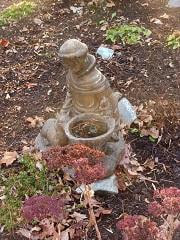
All is quiet in the Memorial Garden with the exception of gentle breezes that stir the wind chime. Like all of nature during this time of hibernation, the soil is being rejuvenated.
If you would like to memorialize a loved one, contact Mercy Farm and the names of your loved one will be entered into the Memorial Book located in the Catherine McAuley Chapel where they will be remembered in the prayers and works of the Sisters of Mercy on staff and those gathered with us in prayer.
If you would like to memorialize a loved one, contact Mercy Farm and the names of your loved one will be entered into the Memorial Book located in the Catherine McAuley Chapel where they will be remembered in the prayers and works of the Sisters of Mercy on staff and those gathered with us in prayer.
Greeting From the Gardens
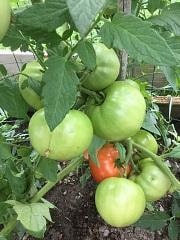
Before saying "see you in the spring", Norma covered several gardens with heavy black plastic to keep the weeds down. Hopefully, a weedy annoyance will be eliminated.
January's arrival brings a myriad of gardening catalogs and with this excitement for the new crop intensifies. In the meantime, we dream of what to plant, where to plant and when we will begin our gardening in earnest. Surely, spring is just around the corner!
January's arrival brings a myriad of gardening catalogs and with this excitement for the new crop intensifies. In the meantime, we dream of what to plant, where to plant and when we will begin our gardening in earnest. Surely, spring is just around the corner!
Blooming Blossoms

Cyclamen is a genus of 23 species of perennial flowering plants in the family Primulaceae. Cyclamen species are native to Europe and the Mediterranean Basin east to Iran, with one species in Somalia. They grow from tubers and are valued for their flowers with up swept petals and variable patterned leaves.
Cyclamen is Medieval Latin, from earlier Latin Cycaminosbecause of the round tuber. In many languages, Cyclamen species are colloquially called by a name like the English sowbread, or swinebread because they are said to be eaten by pigs.
Cyclamens have a tuber, from which leaves, flowers and roots grow. In most species, leaves come up in autumn, grow through winter, and then die in spring, then the plant goes dormant. The shape of the leaves varies between the species, and even between different specimens of the same species. The color of the upper side of the leaves is variable. Most species have leaves variegated in several shades of green and silver, either in an irregular pattern of blotches or Christmas tree shape. The lower side of the leaves is often shiny, and its color varies from plain green to rich red or purple.
Flowering time may be any month of the year, depending on species. Each is on a stem coming from a growing point on the tuber. In all species, the stem is normally bent 150-180 degrees at the tip, so that the nose of the flower faces downwards. Petal shape varies depending on species. Petal color may be white, pink, or purple, often even darker color on the nose.
The flower stem coils or bends when the fruit begins to form. The fruit is a round pod that opens by several flaps or teeth at maturity and contains numerous sticky seeds, brown at maturity. Natural seed dispersal is by ants (myrmecochory), which eat the sticky covering and then discard the seeds. Cyclamen species are eaten by caterpillars of the Gothic moth.
In many areas within the native range, cyclamen populations have been severely depleted by collection from the wild, often illegally, for the horticultural trade; some species are now endangered as a result. However, in a few areas, plant conservation charities have educated local people to control the harvest carefully at a sustainable level, including sowing seed for future crops, both sustaining the wild populations and producing a reliable long term income. Many cyclamen are also propagated in nurseries without harm to the wild plants. See: https://en.wikipedia.org/wiki/Cyclamen
Cyclamen is Medieval Latin, from earlier Latin Cycaminosbecause of the round tuber. In many languages, Cyclamen species are colloquially called by a name like the English sowbread, or swinebread because they are said to be eaten by pigs.
Cyclamens have a tuber, from which leaves, flowers and roots grow. In most species, leaves come up in autumn, grow through winter, and then die in spring, then the plant goes dormant. The shape of the leaves varies between the species, and even between different specimens of the same species. The color of the upper side of the leaves is variable. Most species have leaves variegated in several shades of green and silver, either in an irregular pattern of blotches or Christmas tree shape. The lower side of the leaves is often shiny, and its color varies from plain green to rich red or purple.
Flowering time may be any month of the year, depending on species. Each is on a stem coming from a growing point on the tuber. In all species, the stem is normally bent 150-180 degrees at the tip, so that the nose of the flower faces downwards. Petal shape varies depending on species. Petal color may be white, pink, or purple, often even darker color on the nose.
The flower stem coils or bends when the fruit begins to form. The fruit is a round pod that opens by several flaps or teeth at maturity and contains numerous sticky seeds, brown at maturity. Natural seed dispersal is by ants (myrmecochory), which eat the sticky covering and then discard the seeds. Cyclamen species are eaten by caterpillars of the Gothic moth.
In many areas within the native range, cyclamen populations have been severely depleted by collection from the wild, often illegally, for the horticultural trade; some species are now endangered as a result. However, in a few areas, plant conservation charities have educated local people to control the harvest carefully at a sustainable level, including sowing seed for future crops, both sustaining the wild populations and producing a reliable long term income. Many cyclamen are also propagated in nurseries without harm to the wild plants. See: https://en.wikipedia.org/wiki/Cyclamen
December 2018
Happenings Around the Farm
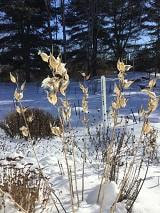
November was a cloudy month with a lot of rain. But weather patterns change and on Thursday, November 14 the first major storm dropped six inches of white fluffy snow giving Mercy Farm an added dimension of beauty! Scattered snow showers dotted the latter part of the month. Bring out the shovels - winter is here.
The bird feeders were put up in early November and have attracted several Cardinals pairs, juncos, red and yellow finches, red-bellied and downy woodpeckers, mourning doves, tufted titmice, blue jays, sparrows, and of course, squirrels.
During November Mercy Farm was the site for seven members of the Order of Ecumenical Franciscans and a private retreat for a United Christ Minister.
November guests came from: Morrisville, Rutland and St. Johnsbury, VT; New Market, NH; Teaneck, NJ; Steinway, NY and Sugarloaf, PA.
The bird feeders were put up in early November and have attracted several Cardinals pairs, juncos, red and yellow finches, red-bellied and downy woodpeckers, mourning doves, tufted titmice, blue jays, sparrows, and of course, squirrels.
During November Mercy Farm was the site for seven members of the Order of Ecumenical Franciscans and a private retreat for a United Christ Minister.
November guests came from: Morrisville, Rutland and St. Johnsbury, VT; New Market, NH; Teaneck, NJ; Steinway, NY and Sugarloaf, PA.
The Adventures of Bailey and Dexter
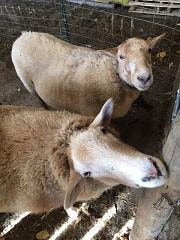
And with the snow came freezing temperatures ranging from minus 1 to the low thirties that necessitated the use of a heated water bucket for the sheep and a heated water tank for the fowl. BC also joins the hens at their water tank. Bailey and Dexter's friend, Tim, arrived early November with a truck load of sweet smelling hay that will keep them well nourished and happy during the winter months.
During the freezing cold and blizzard conditions, all of the animals stay warm and safe in the barn and we like to think that they enjoy each other's company. It goes without saying that the hens, Red, Guineas, ducks and BC find the warmest place to be - with Bailey and Dexter in their quarters.
During the freezing cold and blizzard conditions, all of the animals stay warm and safe in the barn and we like to think that they enjoy each other's company. It goes without saying that the hens, Red, Guineas, ducks and BC find the warmest place to be - with Bailey and Dexter in their quarters.
Barnyard Banter and BC
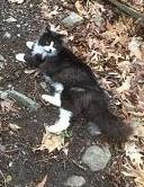
One of the two Araucana still enjoys staying by herself in the rafters but will occasionally join the group in the chicken coop. Of late, Red has managed to get himself up onto the rafters and has spent a night or two apart from the rest of the fowl. In the morning the Araucana seems to say "So much for peace and quiet!"
Frenchie holds her own against the Guineas when they try to get her share of the sunflower seeds. The hens (chicken and ducks) are on winter break, that is, they have not laid any eggs since the arrival of shorter days and cold weather.
Red is Red, in his mind he is king of the barn as he struts about and crows. However, BC still has the upper paw as she is the one in charge, the Master of the Barn. Some day Red will learn. The three ducks have settled in nicely with life in the barn during their first winter at Mercy Farm. The Guineas are as independent as ever. They don't like the snow and will glide down to the bird feeders to enjoy seeds dropped by the wild birds.
Frenchie holds her own against the Guineas when they try to get her share of the sunflower seeds. The hens (chicken and ducks) are on winter break, that is, they have not laid any eggs since the arrival of shorter days and cold weather.
Red is Red, in his mind he is king of the barn as he struts about and crows. However, BC still has the upper paw as she is the one in charge, the Master of the Barn. Some day Red will learn. The three ducks have settled in nicely with life in the barn during their first winter at Mercy Farm. The Guineas are as independent as ever. They don't like the snow and will glide down to the bird feeders to enjoy seeds dropped by the wild birds.
Bee Yard Buzz
Did you know that honey has the potential to top 300 varieties? In the raw form honey has a more therapeutic value. There are 75 substances found in honey, including vitamins B and C, enzymes, and minerals (phosphorus, calcium, magnesium, selenium, iron, zinc and potassium). Honey has the highest composition of glucose and fructose and has monosaccharide (simple sugars), which are more easily assimilated than any other forms.
This unique view of bottled honey was taken by a student from Maria College, Albany, NY.
See: http://www.cherokbeeclub.com and Weyn's Honing >be>bees-and hone
This unique view of bottled honey was taken by a student from Maria College, Albany, NY.
See: http://www.cherokbeeclub.com and Weyn's Honing >be>bees-and hone
St. Francis of Assisi Memorial Garden
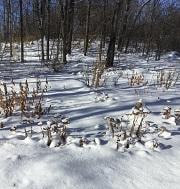
A mantle of snow covered the garden giving it a crisp dazzling beauty. The flower heads and stalks offer food and shelter to wild birds and small animals. Meanwhile, beneath the snow, life goes on as the bulbs gather nutrients from organic matter and the roots prepare for spring.
If you would like to memorialize a loved one, contact Mercy Farm and the names of your loved ones will be entered into the Memorial Book located in the Catherine McAuley Chapel where they will be remembered in the prayers and works of the Sisters of Mercy on staff and those gathered with us in prayer.
If you would like to memorialize a loved one, contact Mercy Farm and the names of your loved ones will be entered into the Memorial Book located in the Catherine McAuley Chapel where they will be remembered in the prayers and works of the Sisters of Mercy on staff and those gathered with us in prayer.
Greetings from the Garden
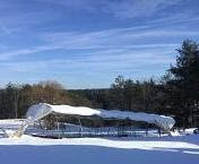
The raised beds, in-ground gardens and hoop house have all been put to bed for the winter. The soil beneath the snow is far from dormant. Soil protects plant roots,
animals, and microbes from freezing. As air temperatures drop below 32 degrees F, water within the top layers of soil will eventually freeze. This is commonly known
as the frost layer. Snow, mulch, compost and leaves that fall naturally provide soil and root insulation.
Many soil-dwelling animals including insects, frogs, snakes, turtles, worms, and gophers burrow below the frost layer to survive winter months. Soil microbes (bacteria and fungi that live in the soil year round) can be active in winter months. Once spring comes, the microbes become even more active.
See: soilmatters.wordpress.com
animals, and microbes from freezing. As air temperatures drop below 32 degrees F, water within the top layers of soil will eventually freeze. This is commonly known
as the frost layer. Snow, mulch, compost and leaves that fall naturally provide soil and root insulation.
Many soil-dwelling animals including insects, frogs, snakes, turtles, worms, and gophers burrow below the frost layer to survive winter months. Soil microbes (bacteria and fungi that live in the soil year round) can be active in winter months. Once spring comes, the microbes become even more active.
See: soilmatters.wordpress.com
Blooming Blossoms
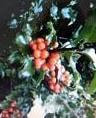
Ilex opaca, the American holly also known as "White Holly" is a species of holly, native to the eastern and south-central United States, from coastal Massachusetts south to central Florida and west to southeastern Missouri and eastern Texas. It may be found in sparse numbers in the northern part of its range.
The American holly is an evergreen tree with narrow, rounded, dense crown of spiny leaves, small white flowers, and bright red berries. It grows to a height of 40-70 feet. The bark is light gray; thin; smooth or rough and warty. The twigs are brown or gray; stout, covered with fine hairs when young. The flowers are a quarter of an
inch wide; with 4 rounded white petals; in short clusters at the base of new leaves and along the twigs. The fruit is a small red drupe (stone fruit) containing four seeds (nutlets) that are more like pits; berrylike; bright red (rarely orange or yellow); bitter pulp; scattered; short-stalked; maturing in autumn, remaining attached in winter.
Llex opaca typically grows as an under story tree in moist forests.The flowers are pollinated by insects, including bees, wasps, ants, and night-flying moths. The berries are reputedly poisonous to humans, but are important survival food for birds, who will eat the berries after other food sources are exhausted. The tree also
forms a thick canopy which offers protection for birds from predators and storms. Songbirds including thrushes, mockingbirds, catbirds, bluebirds and thrashers frequently feed on the berries. Cedar waxwings will strip the trees of fruit if they are not already bare during their northward migration. Squirrels and deer will also consume holly to survive after all their food sources have been eaten.
This evergreen is popular for Christmas decorations; ornament shade, and hedges. The whitish, fine-textured wood is especially suited for inlays in cabinetwork, handles, carvings, rulers, and whip handles. It can also be dyed and used to substitute for ebony. The sap is watery, and contains a bitter substance used as an herbal tonic. Leaves from the American holly can be used to make a tea-like beverage. American holly tea does not contain caffeine.
Other interesting facts about holly include:
In healdry, the system by which coats of arms and other ceremonial bearings are devised, described and regulated, holly is used to symbolize truth.
The American holly, called the evergreen or Christmas holly (Llex opaca Aiton) was named the state tree of Delaware on May 1, 1939.
See: https://wiki.pedia.org and National Audubon Society Field Guide to Trees, Eastern Edition, 2016, p. 564
In regard to holy symbolism, the red berries represent the blood that Jesus shed on the cross and the pointed leaves symbolize the crown of throns. Holly is known as
christdorn in German, meaning "Christ thorn". See: kiddle>co>kids>Holly
The American holly is an evergreen tree with narrow, rounded, dense crown of spiny leaves, small white flowers, and bright red berries. It grows to a height of 40-70 feet. The bark is light gray; thin; smooth or rough and warty. The twigs are brown or gray; stout, covered with fine hairs when young. The flowers are a quarter of an
inch wide; with 4 rounded white petals; in short clusters at the base of new leaves and along the twigs. The fruit is a small red drupe (stone fruit) containing four seeds (nutlets) that are more like pits; berrylike; bright red (rarely orange or yellow); bitter pulp; scattered; short-stalked; maturing in autumn, remaining attached in winter.
Llex opaca typically grows as an under story tree in moist forests.The flowers are pollinated by insects, including bees, wasps, ants, and night-flying moths. The berries are reputedly poisonous to humans, but are important survival food for birds, who will eat the berries after other food sources are exhausted. The tree also
forms a thick canopy which offers protection for birds from predators and storms. Songbirds including thrushes, mockingbirds, catbirds, bluebirds and thrashers frequently feed on the berries. Cedar waxwings will strip the trees of fruit if they are not already bare during their northward migration. Squirrels and deer will also consume holly to survive after all their food sources have been eaten.
This evergreen is popular for Christmas decorations; ornament shade, and hedges. The whitish, fine-textured wood is especially suited for inlays in cabinetwork, handles, carvings, rulers, and whip handles. It can also be dyed and used to substitute for ebony. The sap is watery, and contains a bitter substance used as an herbal tonic. Leaves from the American holly can be used to make a tea-like beverage. American holly tea does not contain caffeine.
Other interesting facts about holly include:
In healdry, the system by which coats of arms and other ceremonial bearings are devised, described and regulated, holly is used to symbolize truth.
The American holly, called the evergreen or Christmas holly (Llex opaca Aiton) was named the state tree of Delaware on May 1, 1939.
See: https://wiki.pedia.org and National Audubon Society Field Guide to Trees, Eastern Edition, 2016, p. 564
In regard to holy symbolism, the red berries represent the blood that Jesus shed on the cross and the pointed leaves symbolize the crown of throns. Holly is known as
christdorn in German, meaning "Christ thorn". See: kiddle>co>kids>Holly
November 2018
Happenings Around the Farm
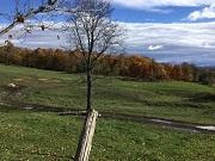
October was a cold and rainy month. The fall foliage, however, was spectacular! Nature's beauty made up for the weather, as it is hard to think about cold and rain when surrounded by the colors of autumn, crisp air and the smell of smoke from wood stoves as it waffled through the air.
During October Mercy Farm was the site for a day of reflection, private retreats, Pranic Healing Workshop, volunteer service week for students from Saint Joseph's College of Maine, 11th Step Recovery Retreat, ten different guests for hospitality and two guests joining the drumming circle group for a fine dinner and friendship. Habitat Restoration came to remove buckthorn trees and several volunteers came to assist them.
October guests came from: Bradford, Burlington, Mendon, Middlebury, North Springfield, Shelburne, South Burlington, Springfield and Wallingford, VT: Portland and Standish, ME; Burlington, Concord, New Bedford, Rehoboth, Salem and Wareham, MA; Metuchen, Scotch Plains, Union and Westfield, NJ; and Pawtucket, RI.
During October Mercy Farm was the site for a day of reflection, private retreats, Pranic Healing Workshop, volunteer service week for students from Saint Joseph's College of Maine, 11th Step Recovery Retreat, ten different guests for hospitality and two guests joining the drumming circle group for a fine dinner and friendship. Habitat Restoration came to remove buckthorn trees and several volunteers came to assist them.
October guests came from: Bradford, Burlington, Mendon, Middlebury, North Springfield, Shelburne, South Burlington, Springfield and Wallingford, VT: Portland and Standish, ME; Burlington, Concord, New Bedford, Rehoboth, Salem and Wareham, MA; Metuchen, Scotch Plains, Union and Westfield, NJ; and Pawtucket, RI.
SJC Students Arrive in the Nick of Time
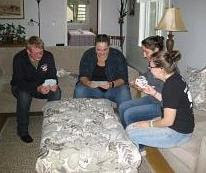
The large white passenger van with friends old and new from Saint Joseph's College of Maine arrived October 5 for their annual trip to Mercy Farm. Austin, Mary Claire, Sarah and Aliyan are now old hands at the farm and do their work effectively, thoroughly and happily and accompanying the students was Autumn Zubricki, Campus Ministry and Father Gabriel Muteru, Chaplain.
While here the crew cleaned up all of the gardens and prepared the hoop house for winter, assisted in the preparation of meals and took a trip to Green Mountain College (GMC) where Ryan Ihrke, Director of Sustainability at GMC and a member of the Mercy Ecology, Inc., took the students around campus and highlighted GMC's efforts toward achieving their goal of reaching 100 percent sustainability.
Betty also walked the students through several videos (Queen of the Sun, Dirt: The Movie and the Universe Story). A discussion, questions and answers was part of this educational experience. Queen of the Sun left the biggest impact on the students as they all commented on "learning about how the environment affects bees, their habits and life cycle"; "colony collapse disorder and how that has affected pollination and wide scale farming."
The annual Haunted Hay Ride draws a lot of people from Benson, surrounding towns and from Standish, Maine. The students and staff look forward to this evening of fun, scary moments and screams, as well as, the opportunity to experience life in a rural community up close and personal.
While here the crew cleaned up all of the gardens and prepared the hoop house for winter, assisted in the preparation of meals and took a trip to Green Mountain College (GMC) where Ryan Ihrke, Director of Sustainability at GMC and a member of the Mercy Ecology, Inc., took the students around campus and highlighted GMC's efforts toward achieving their goal of reaching 100 percent sustainability.
Betty also walked the students through several videos (Queen of the Sun, Dirt: The Movie and the Universe Story). A discussion, questions and answers was part of this educational experience. Queen of the Sun left the biggest impact on the students as they all commented on "learning about how the environment affects bees, their habits and life cycle"; "colony collapse disorder and how that has affected pollination and wide scale farming."
The annual Haunted Hay Ride draws a lot of people from Benson, surrounding towns and from Standish, Maine. The students and staff look forward to this evening of fun, scary moments and screams, as well as, the opportunity to experience life in a rural community up close and personal.
The Adventures of Bailey and Dexter
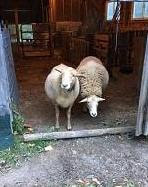
With night time temperatures falling into the thirties Bailey and Dexter were anxious to move from their summer quarters to the winter barn. They joined all their feathered friends and will keep each other warm during the cold winter nights. This is not to say that all of the animals did not spend most of the summer together. The sheep had no choice but to be in the summer barn that is cooler because of the openness of the structure. The "birds" follow the sheep regardless of weather conditions.
Bailey and Dexter are pictured in the doorway of the winter barn where they appear to be deciding whether or not to venture forth into the crispness of the early morning. Eventually, they moved out to graze in the west paddock. Their friend Tim will soon bring them their store of hay (winter feed) that will also give the barn the scent of sweet mowed hay, a place for BC to get away from the ground action and a new setting for the Guineas, hens and Red to investigate.
Bailey and Dexter are pictured in the doorway of the winter barn where they appear to be deciding whether or not to venture forth into the crispness of the early morning. Eventually, they moved out to graze in the west paddock. Their friend Tim will soon bring them their store of hay (winter feed) that will also give the barn the scent of sweet mowed hay, a place for BC to get away from the ground action and a new setting for the Guineas, hens and Red to investigate.
Barn Yard Banter and BC
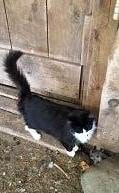
Red's tail feathers have begun to grow back. He is again a stunning specimen of a Rhode Island Red rooster. However, he still has an attitude and if he wants a particular sunflower seed no hen or duck will get it. Red, daunted but undeterred by the four Guineas who stare him down for the same seed. They all squabble over the abundance of seeds that are scattered around the barn floor. BC either sits back and enjoys the skirmish or roams through the motley group as they vie for the seeds.
BC's tail has grown back but does not appear to be as fluffy as it once was. Sh-h-h, this is our opinion and not hers so all is good as she is again a very happy and always a beautiful cat! As Master of the Barn, her days are quite full as she roams the barn, barn yard and most of the 39 acres. She seems to be on the lookout for Tim and has thoughts of napping high up on the bales of hay.
One of the two Araucana hens still insists on sleeping on the rafters in the barn. So far the cold nights have not lured her into the coop with the hens, ducks and Red. It would be warmer but noisy and she would have to jostle for a spot suitable to her liking. In the barn she goes where she wants to spend the night, perhaps up over the sheep or tucked into one of the hay cribs where she would be safe and warm.
Frenchie, our only French hen, now spends her days outside with the flock. During her respite she regained her vim and vigor and is busy trying to figure out the yellow-orange beaks and feet and what all of the quacks and honks mean. And what do we do with the blue wading pool? I don't swim and the water does not look too appealing.
BC's tail has grown back but does not appear to be as fluffy as it once was. Sh-h-h, this is our opinion and not hers so all is good as she is again a very happy and always a beautiful cat! As Master of the Barn, her days are quite full as she roams the barn, barn yard and most of the 39 acres. She seems to be on the lookout for Tim and has thoughts of napping high up on the bales of hay.
One of the two Araucana hens still insists on sleeping on the rafters in the barn. So far the cold nights have not lured her into the coop with the hens, ducks and Red. It would be warmer but noisy and she would have to jostle for a spot suitable to her liking. In the barn she goes where she wants to spend the night, perhaps up over the sheep or tucked into one of the hay cribs where she would be safe and warm.
Frenchie, our only French hen, now spends her days outside with the flock. During her respite she regained her vim and vigor and is busy trying to figure out the yellow-orange beaks and feet and what all of the quacks and honks mean. And what do we do with the blue wading pool? I don't swim and the water does not look too appealing.
Bee Yard Buzz
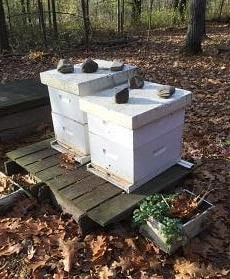
Honey was collected for processing and the bees are holding their own despite the cold and rainy weather. Holly has placed an excluder bar (mouse guard) at the entrance of the hive to keep the hive safe from mice. We look forward to seeing our hives full of healthy bees in the spring.
Did you know that honey has been proven to exhibit significant inhibitory effects on the bacteria that cause gastric ulcers; has been referenced by the ancient Greeks, Assyrians, Chinese and Romans; and has biblical references such as "Land of milk and honey", "Honeycomb" and is also mentioned in other religious texts such as the Koran? See: http://www.cherokbeeclub.com
Did you know that honey has been proven to exhibit significant inhibitory effects on the bacteria that cause gastric ulcers; has been referenced by the ancient Greeks, Assyrians, Chinese and Romans; and has biblical references such as "Land of milk and honey", "Honeycomb" and is also mentioned in other religious texts such as the Koran? See: http://www.cherokbeeclub.com
St. Francis of Assisi Memorial Garden
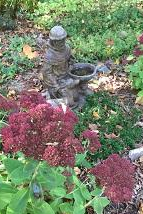
All of the flowers have gone to seed and will be left intact to provide food for the wild birds during winter. The sedum heads are large, rust colored and still beautiful. The Memorial Garden is now covered with an artist's palette of fall colors as leaves continue to drop providing a thick blanket that will keep plant bulbs and roots insulated and nourished.
If you would like to memorialize a loved one, contact Mercy Farm and the names of your loved ones will be entered into the Memorial Book located in the Catherine McAuley Chapel where they will be remembered in the prayers and works of the Sisters of Mercy on staff and those gathered with us in prayer.
If you would like to memorialize a loved one, contact Mercy Farm and the names of your loved ones will be entered into the Memorial Book located in the Catherine McAuley Chapel where they will be remembered in the prayers and works of the Sisters of Mercy on staff and those gathered with us in prayer.
Greetings from the Garden
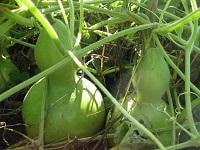
Thanks to the students from Saint Joseph's College of Maine the vegetable and berry gardens have all been put to bed for the winter. Guests have enjoyed eggplant Parmesan, raspberry pies, Ratatouille, butternut soup, acorn squash, delicious tomatoes, onions and Hubbard squash.
The flower gardens will all be cut back in the spring leaving stalks and seed heads as food for birds and other wildlife --- squirrel, chipmunks who on warm days will come out to nibble.
The gardens produced an abundance of acorn and Hubbard squash, sweet potatoes, eggplant, onions and garlic. The last crop to be harvested was the goose neck gourds that are now drying in the basement. When they are dry they will be painted and used as ornaments.
The flower gardens will all be cut back in the spring leaving stalks and seed heads as food for birds and other wildlife --- squirrel, chipmunks who on warm days will come out to nibble.
The gardens produced an abundance of acorn and Hubbard squash, sweet potatoes, eggplant, onions and garlic. The last crop to be harvested was the goose neck gourds that are now drying in the basement. When they are dry they will be painted and used as ornaments.
Blooming Blossoms
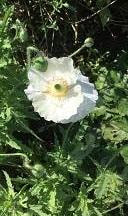
Our named flower gardens are the Peace, Terrace, Purple Bee Balm and Herb Gardens and the St. Francis of Assisi Memorial Garden. We hope the photo will make you smile, lift you up, encourage you ... may it bring whatever you need when it arrives. This month the Poppy is featured.
A poppy is a flowering plant in the subfamily Papaveroideae of the family Papaveraceae. They are a herbaceous annual, biennial or short-lived perennial plants, often grown for their colorful flowers. Some species are monocarpic, dying after flowering. Poppies can be over 40 inches tall with flowers up to 5 inches across. Flowers have 4 to 6 petals that are showy and may be of almost any color and some have markings. The petals are crumpled in the bud and as blooming finishes, the petals often lie flat before falling away. Most species secrete latex when injured. Bees use poppies as a pollen source.
The flowers of most poppy species are attractive and are widely cultivated as annual or perennial ornamental plants. A few species have other uses, principally as sources of drugs and foods. The opium poppy (Papaver somniferum) is the source of the crude drug opium which contains powerful medicinal alkaloids such as morphine and has been used since ancient times as an analgesic and narcotic medicinal and recreational drug. Poppy seeds are rich in oil, carbohydrates, calcium and protein. Poppy oil is often used as cooking oil, salad dressing oil or in products such as margarine. Poppy oil can also be added to spices for cakes or breads. Poppy products are also used in different paints, varnishes, and some cosmetics.
Poppies have long been used as a symbol of sleep, peace, and death. Sleep because the opium extracted from them is a sedative, and death because of the common blood-red color of the red poppy in particular. In Greek and Roman myths, poppies were used as offerings to the dead. Poppies used as emblems on tombstones symbolize eternal sleep.
The poppy of war time remembrance is Papaver rhoeas, the red-flowered corn poppy. This poppy is a common weed in Europe and is found in many locations, including Flanders, Belgium the setting of the famous poem "In Flanders Fields" by the Canadian surgeon and soldier John McCrae. The poem was composed at the battlefront on May 3, 1915 during the Second Battle of Ypres, Belgium. Following the trench warfare in the poppy fields of Flanders during World War I, poppies have become a symbol of remembrance of soldiers who have died during wartime. In Canada, the United Kingdom, the United States, South Africa and New Zealand, artificial poppies are worn to commemorate those who died in war. This form of commemoration is associated with Remembrance Day, which falls on November 11 and is observed by the Commonwealth of Nations member states since the end of WW I.
Veterans Day originated as "Armistice Day" on November 11, 1919, the first anniversary of the end of WW I. Congress passed a resolution in 1926 for an annual observance, and November 11 became a national holiday beginning in 1938. The U.S .holiday was renamed Veterans Day in 1954 and celebrates the service of all U.S. military veterans.
John McCrae composed In Flanders Field after Alexis Helmer, a close friend and former student, was killed during the Second Battle of Ypres, Belgium.
SEE: https://en.wikipedia.org/wiki/poppy
A poppy is a flowering plant in the subfamily Papaveroideae of the family Papaveraceae. They are a herbaceous annual, biennial or short-lived perennial plants, often grown for their colorful flowers. Some species are monocarpic, dying after flowering. Poppies can be over 40 inches tall with flowers up to 5 inches across. Flowers have 4 to 6 petals that are showy and may be of almost any color and some have markings. The petals are crumpled in the bud and as blooming finishes, the petals often lie flat before falling away. Most species secrete latex when injured. Bees use poppies as a pollen source.
The flowers of most poppy species are attractive and are widely cultivated as annual or perennial ornamental plants. A few species have other uses, principally as sources of drugs and foods. The opium poppy (Papaver somniferum) is the source of the crude drug opium which contains powerful medicinal alkaloids such as morphine and has been used since ancient times as an analgesic and narcotic medicinal and recreational drug. Poppy seeds are rich in oil, carbohydrates, calcium and protein. Poppy oil is often used as cooking oil, salad dressing oil or in products such as margarine. Poppy oil can also be added to spices for cakes or breads. Poppy products are also used in different paints, varnishes, and some cosmetics.
Poppies have long been used as a symbol of sleep, peace, and death. Sleep because the opium extracted from them is a sedative, and death because of the common blood-red color of the red poppy in particular. In Greek and Roman myths, poppies were used as offerings to the dead. Poppies used as emblems on tombstones symbolize eternal sleep.
The poppy of war time remembrance is Papaver rhoeas, the red-flowered corn poppy. This poppy is a common weed in Europe and is found in many locations, including Flanders, Belgium the setting of the famous poem "In Flanders Fields" by the Canadian surgeon and soldier John McCrae. The poem was composed at the battlefront on May 3, 1915 during the Second Battle of Ypres, Belgium. Following the trench warfare in the poppy fields of Flanders during World War I, poppies have become a symbol of remembrance of soldiers who have died during wartime. In Canada, the United Kingdom, the United States, South Africa and New Zealand, artificial poppies are worn to commemorate those who died in war. This form of commemoration is associated with Remembrance Day, which falls on November 11 and is observed by the Commonwealth of Nations member states since the end of WW I.
Veterans Day originated as "Armistice Day" on November 11, 1919, the first anniversary of the end of WW I. Congress passed a resolution in 1926 for an annual observance, and November 11 became a national holiday beginning in 1938. The U.S .holiday was renamed Veterans Day in 1954 and celebrates the service of all U.S. military veterans.
John McCrae composed In Flanders Field after Alexis Helmer, a close friend and former student, was killed during the Second Battle of Ypres, Belgium.
SEE: https://en.wikipedia.org/wiki/poppy
October 2018
Happenings Around the Farm
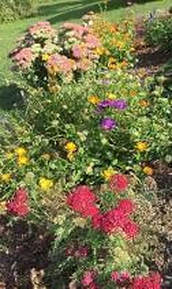
September had its share of sun, partly cloudy and cloudy days. There were 21 days where the humidity was above 75% and the rain total was three inches. Such weather conditions make gardening interesting and challenging. On extremely humid days work was done in "two shifts" from seven until noon and resumed as the day cooled off. The animals were also put to bed later - between eight and nine. They too enjoyed the cooler air.
The flower gardens were spectacular; brightly colored; fragrant and buzzing with bees, butterflies and other insects.
During September Mercy Farm was the site for private retreats, Art of Spiritual Guidance and hospitality.
September guests came from: Addison, Fairfax, Huntington, Middlebury and North Springfield, VT: Cromwell, East Hampton, East Hartford, Niantic and Unionville, CT; Princeville, HI; Rockland, ME; Silver Spring, MD; ; Glen Rock, NJ and Philadelphia, PA.
The flower gardens were spectacular; brightly colored; fragrant and buzzing with bees, butterflies and other insects.
During September Mercy Farm was the site for private retreats, Art of Spiritual Guidance and hospitality.
September guests came from: Addison, Fairfax, Huntington, Middlebury and North Springfield, VT: Cromwell, East Hampton, East Hartford, Niantic and Unionville, CT; Princeville, HI; Rockland, ME; Silver Spring, MD; ; Glen Rock, NJ and Philadelphia, PA.
Best Wishes and Gratitude
Sister Mary Friel completed her volunteer work and is off to new adventures. Since her arrival in early May, she dressed up and organized the border gardens and added color by planting chrysanthemums and Marigolds in various gardens. Inpatients were also planted around the mail box at the end of the driveway. Nice touch! The raised vegetable beds were part of her expertise and Mary cooked for guests while Betty was on vacation. Thank you Mary for your presence among us and for all that you did while at the farm.
Forest Management Plan
The Forest Management Plan is moving forward. Robert Hyams of Habitat Restoration Solutions, LLC began killing invasives, alien or non-native species, that have negative consequences on the environment, cause economic harm, and impact human health. Buckthorns, honeysuckle and multi-floral rose are examples of non-native species found on the farm. Work began September 17 in the NW forest removing invasives and cutting down buckthorn trees. The work is ongoing so watch for more information in the November issue
The Adventures of Bailey and Dexter
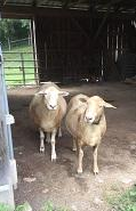
The west paddock is located on the back side of the barn making any activity in that area a mystery. Bailey and Dexter alternate their paddocks each week and are missed right away when they are in the west paddock. The big question is what goes on behind the barn as the hens, rooster, ducks and Guineas go where ever the sheep are. Do they all like playing hide and seek from the staff or is it that community is important to all of them!
The photo shows the sheep looking east with the west paddock pictured behind them. The grass will be even greener when they return to this paddock.
Bailey and Dexter are always glad when fall arrives and look forward to a tasty treat of apples.
The photo shows the sheep looking east with the west paddock pictured behind them. The grass will be even greener when they return to this paddock.
Bailey and Dexter are always glad when fall arrives and look forward to a tasty treat of apples.
Barnyard Banter and BC
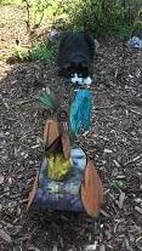
If it was only BC involved with a tale of her tail another narrative would not be necessary. A quick recap about BC's unhappy experience. Swishing her tail while roaming through burdock acted like a magnet drawing all the dried "particles" to it. This rendered her beautiful, bushy black tail the appearance of a club. Dr. Janet's options were very limited leaving the best remedy to shave her tail. BC thought all of her beauty resided in her tail and was quite distraught about the a whole tale. Now, it seems that our Rhode Island Red Rooster met his match. Red's tale is a bit different from BCs. Putting all of their observations together, Holly and Betty concluded that Red finally met his match - the Chocolate runners and the Swedish blue ducks - apparently had enough of his "attitude" and ganged up on him. They managed to pull out his long beautifully colored tail feathers!
One day Holly and Betty noticed that there were a few feathers missing. The following day there were none! In respect for Red's feelings there will be no photos of this handsome bird until his distinctive plumage waves as he struts about.
The Araucana continues to stay out in the barn at night apart from the rest of the flock who sleep in the coop. Each night she has a different evening guest. The other hens seem to be taking turns to keep her company. Hopefully, they asked if she would enjoy their presence. Some nights the Araucana flies up to the highest rafter and is joined by one of her barred rock friends.
Meanwhile the Guineas take it all in and are glad not to be part of their shenanigans. Unfortunately, BC still wanders through the burdock and Red will probably still have an attitude. And so ends another barn yard tale!
Despite all of the hoopla, the girls continue to lay those delicious eggs.
One day Holly and Betty noticed that there were a few feathers missing. The following day there were none! In respect for Red's feelings there will be no photos of this handsome bird until his distinctive plumage waves as he struts about.
The Araucana continues to stay out in the barn at night apart from the rest of the flock who sleep in the coop. Each night she has a different evening guest. The other hens seem to be taking turns to keep her company. Hopefully, they asked if she would enjoy their presence. Some nights the Araucana flies up to the highest rafter and is joined by one of her barred rock friends.
Meanwhile the Guineas take it all in and are glad not to be part of their shenanigans. Unfortunately, BC still wanders through the burdock and Red will probably still have an attitude. And so ends another barn yard tale!
Despite all of the hoopla, the girls continue to lay those delicious eggs.
Bee Yard Buzz
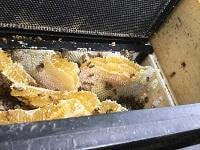
The honey harvest was initially scheduled for September 15 and due to poor weather conditions had to be postponed. Several other attempts at harvesting were also put off due to cool temperatures, wind and/or rain. The hives have been checked and one hive has a lot of honey and bee activity. The other does not and will not be harvested. Hopefully, early October will provide optimum weather conditions so the harvest can occur. Delaying a honey harvest has economic consequences for beekeepers. Several beekeepers in our area lost their honey because the bees ate the honey in the hives.
The Lemon Tree
We are sad to report that the lemon tree has struggled all summer to remain healthy. It always enjoyed its summer location outside under the linden trees. The lemon tree has been moved back to its off season location - the chapel. We are hopeful that it will again thrive, blossom, bear fruit and delight the palates of all.
The Francis of Assisi Memorial Garden
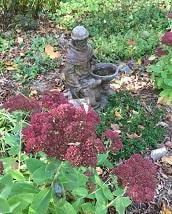
Phlox, black-eyed Susan and sedum are in bloom. The sedum is particularly beautiful as their seed heads are now a deep rosy-red giving the garden a striking accent.
If you would like to memorialize a loved one, contact Mercy Farm and the names of your loved ones will be entered into the Memorial Book located in the Catherine McAuley Chapel where they will be remembered in the prayers and works of the Sisters of Mercy on staff and those gathered with us in prayer.
If you would like to memorialize a loved one, contact Mercy Farm and the names of your loved ones will be entered into the Memorial Book located in the Catherine McAuley Chapel where they will be remembered in the prayers and works of the Sisters of Mercy on staff and those gathered with us in prayer.
Blooming Blossoms
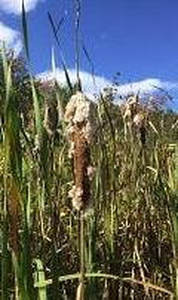
Besides the St. Francis Assisi Memorial Garden our named flower gardens are the: Peace, Terrace, Purple Bee Balm and Herb Gardens. Each month you will receive a bouquet from us. We hope the photo will make you smile, lift you up, encourage you ... may it bring whatever you need when it arrives. Featured this month are cattails (Typha) that grow around the pond.
Typha is a family of about 30 species of monocots (flowering plants whose seeds typically contain only one embryonic leaf) in the family Typhaceae. These plants have many common names: reed, cattail, punks, corn dog grass or water sausage (United States); bulrush or reedmace (England); and bulrush or cattail (Canada). This genus is largely distributed in the Northern Hemisphere, where it is found in a variety of wetland habitats. Red-wing black birds are frequently seen perched on top of a cattail or swooping about the pond.
Cattails have edible parts: the lower parts of the leaves can be used in a salad; the young stems can be eaten raw or boiled; the young flowers (cattails) can be roasted and the yellow pollen that appears mid-summer, can be added to pancakes for added nutrients. Source:ediblewildfood.com The rhizomes are edible as evidence of preserved starch grains on grinding stones suggests they were already eaten in Europe 30,000 years age.
Medicinal uses include: poultices that can be applied to cuts. The plant is also a good source of vitamins A, B and C; phosphorous and potassium.
Source: offthegridnews.com
Other uses of cattails include but are not limited to: chair seating (the rushes are harvested and the leaves often dried for later use in chair seats); feed for cattle and chickens; building materials (tribes in Peru and Bolivia used the plants to construct rafts and boats; during World War II, the United States Navy used the down of Typha as a substitute for kapok in life vests and aviation jackets and thermal insulation in buildings as an organic alternative to conventional insulating materials such as glass wool or stone wool.
Cattails provide food and shelter for a variety of mammals (e.g., muskrats, beavers), waterfowl (e.g., Canada geese and many ducks) and nesting birds (e.g., Red-winged blackbirds). Source mpgnorth.com
Although cattail are native wetland plants, they can be aggressive in their competition with other native species. They have been problematic in many regions in North America. Native sedge (course grass that grows in swampy areas) are displaced and wet meadows shrink, likely as a response to altered hydrology of wetlands and increased nutrient levels. An introduced or hybrid species may be contributing to the problem. Preventing invasion by preserving water level fluctuations, including periods of drought, and to maintain infertile conditions may help deter the spread of cattails.
Unless otherwise noted. See: https://en.wikipedia.org/wiki/Typha
Typha is a family of about 30 species of monocots (flowering plants whose seeds typically contain only one embryonic leaf) in the family Typhaceae. These plants have many common names: reed, cattail, punks, corn dog grass or water sausage (United States); bulrush or reedmace (England); and bulrush or cattail (Canada). This genus is largely distributed in the Northern Hemisphere, where it is found in a variety of wetland habitats. Red-wing black birds are frequently seen perched on top of a cattail or swooping about the pond.
Cattails have edible parts: the lower parts of the leaves can be used in a salad; the young stems can be eaten raw or boiled; the young flowers (cattails) can be roasted and the yellow pollen that appears mid-summer, can be added to pancakes for added nutrients. Source:ediblewildfood.com The rhizomes are edible as evidence of preserved starch grains on grinding stones suggests they were already eaten in Europe 30,000 years age.
Medicinal uses include: poultices that can be applied to cuts. The plant is also a good source of vitamins A, B and C; phosphorous and potassium.
Source: offthegridnews.com
Other uses of cattails include but are not limited to: chair seating (the rushes are harvested and the leaves often dried for later use in chair seats); feed for cattle and chickens; building materials (tribes in Peru and Bolivia used the plants to construct rafts and boats; during World War II, the United States Navy used the down of Typha as a substitute for kapok in life vests and aviation jackets and thermal insulation in buildings as an organic alternative to conventional insulating materials such as glass wool or stone wool.
Cattails provide food and shelter for a variety of mammals (e.g., muskrats, beavers), waterfowl (e.g., Canada geese and many ducks) and nesting birds (e.g., Red-winged blackbirds). Source mpgnorth.com
Although cattail are native wetland plants, they can be aggressive in their competition with other native species. They have been problematic in many regions in North America. Native sedge (course grass that grows in swampy areas) are displaced and wet meadows shrink, likely as a response to altered hydrology of wetlands and increased nutrient levels. An introduced or hybrid species may be contributing to the problem. Preventing invasion by preserving water level fluctuations, including periods of drought, and to maintain infertile conditions may help deter the spread of cattails.
Unless otherwise noted. See: https://en.wikipedia.org/wiki/Typha
Sights and Sounds of the Season
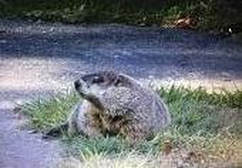
Pause! Look and listen to nature as it begins its journey into fall and subsequently winter. Pause! Consider wildlife both in flight and afoot as they begin their migration to warmer environments or heading to their dens for the long winter ahead. Pause! Consider the return of old feathered and furry friends who summered away from your backyard.
Chipmunks (Tamias) gather food in their expandable cheeks and make countless trips stocking special chambers in their burrows for the upcoming winter - which they'll spend alternating between sleeping and eating, only venturing out on warm, sunny days.
Chipmunks hibernate, but instead of storing fat they periodically dip into their cache of nuts and seeds throughout the winter.
See: National Geographic>mammals>group
Squirrels (Sciuridae) establish winter nests and gather thousands of acorns. White oak acorns quickly germinate if buried, so squirrels either eat them as they go or remove the germ/embryo from the acorn before burying it. Red oak acorns, which won't germinate until spring, are just buried.
Squirrels do not hibernate in winter, but they do not like bitter cold weather, opting to stay warm with their friends rather than venture out.
See: SquirrelNutrition.com
Woodchucks, aka groundhogs (Marmota monax) either seek or dig a special winter burrow in or near woods, which are somewhat warmer than open fields. Adults hunker down in their leaf and pine needle-lined sleeping chambers in late September or early October, while the young continue to fatten up for another few weeks. In most areas, groundhogs hibernate from October to March or April, but in more temperate areas, they may hibernate as little as three months.
See: Wikipedia>wiki>Groundhog
Beavers (Castor canadensis) inspect their dams, repair any damages, and reinforce their lodges. They must cut, haul, and "plant" tree branches on the muddy pond floor to be sure of fresh food when the pond freezes over.
They do not hibernate, but are less active during winter, spending most of their time in the lodge or den.
See: https://wdfw.wa.gov>living>beaver
Chipmunks (Tamias) gather food in their expandable cheeks and make countless trips stocking special chambers in their burrows for the upcoming winter - which they'll spend alternating between sleeping and eating, only venturing out on warm, sunny days.
Chipmunks hibernate, but instead of storing fat they periodically dip into their cache of nuts and seeds throughout the winter.
See: National Geographic>mammals>group
Squirrels (Sciuridae) establish winter nests and gather thousands of acorns. White oak acorns quickly germinate if buried, so squirrels either eat them as they go or remove the germ/embryo from the acorn before burying it. Red oak acorns, which won't germinate until spring, are just buried.
Squirrels do not hibernate in winter, but they do not like bitter cold weather, opting to stay warm with their friends rather than venture out.
See: SquirrelNutrition.com
Woodchucks, aka groundhogs (Marmota monax) either seek or dig a special winter burrow in or near woods, which are somewhat warmer than open fields. Adults hunker down in their leaf and pine needle-lined sleeping chambers in late September or early October, while the young continue to fatten up for another few weeks. In most areas, groundhogs hibernate from October to March or April, but in more temperate areas, they may hibernate as little as three months.
See: Wikipedia>wiki>Groundhog
Beavers (Castor canadensis) inspect their dams, repair any damages, and reinforce their lodges. They must cut, haul, and "plant" tree branches on the muddy pond floor to be sure of fresh food when the pond freezes over.
They do not hibernate, but are less active during winter, spending most of their time in the lodge or den.
See: https://wdfw.wa.gov>living>beaver
September 2018
Happenings Around the Farm

August was a rainy, humid and warm month. Night time temperatures refreshingly fell into the low fifties! There is a scattering of colored leaves seen in the hills surrounding the farm. The forest, too, appears to be thinning out as the east meadow beyond the forest is now seen.
During August Mercy Farm was the site for a couples retreat, hospitality, and a Mercy Ecology, Inc. Board sub-committee meeting. Several guests came to "just enjoy and visit" the Sisters! And others were part of a bus tour!
August guests came from: Burlington and Winooski, VT; Bloomfield, East Hartford, Glastonbury and West Hartford, CT; Boston, MA; Pawtucket and Providence, RI; Rochester, NY and Brussels, Belgium. No distance is too great to enjoy the peacefulness of Mercy Farm!
A sunny day brought a bus tour of 46 people from the Rochester, NY area to Mercy Farm as part of their tour of Vermont. While at the farm they enjoyed Dirt: The Movie as well as a walkabout the farm including the Bee Yard, barn and animals before leaving for lunch at the Fair Haven Inn.
Mary Friel, SND, attended the 44th Annual Summer Conference of Northeast Organic Farming Association (NOFA), August 10-12 at Hampshire, Amherst, Massachusetts. The Theme of this year's conference was "Honoring our Past, Finding our Future". The keynote speaker was Rakin White, a seed keeper from the Mohawk Community. She spoke movingly of how seeds tell us stories that form our identity.
During August Mercy Farm was the site for a couples retreat, hospitality, and a Mercy Ecology, Inc. Board sub-committee meeting. Several guests came to "just enjoy and visit" the Sisters! And others were part of a bus tour!
August guests came from: Burlington and Winooski, VT; Bloomfield, East Hartford, Glastonbury and West Hartford, CT; Boston, MA; Pawtucket and Providence, RI; Rochester, NY and Brussels, Belgium. No distance is too great to enjoy the peacefulness of Mercy Farm!
A sunny day brought a bus tour of 46 people from the Rochester, NY area to Mercy Farm as part of their tour of Vermont. While at the farm they enjoyed Dirt: The Movie as well as a walkabout the farm including the Bee Yard, barn and animals before leaving for lunch at the Fair Haven Inn.
Mary Friel, SND, attended the 44th Annual Summer Conference of Northeast Organic Farming Association (NOFA), August 10-12 at Hampshire, Amherst, Massachusetts. The Theme of this year's conference was "Honoring our Past, Finding our Future". The keynote speaker was Rakin White, a seed keeper from the Mohawk Community. She spoke movingly of how seeds tell us stories that form our identity.
The Adventures of Bailey and Dexter
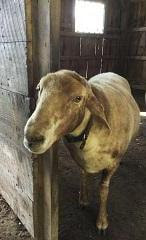
The sound of Brother David's voice brought Bailey and Dexter running out to see who this strange man was. It didn't take long for them to "cozy" up to Brother David. The instigator of our duo, Bailey, somehow managed to wiggle her way through a section of heavy gauge fencing used to close off one part of the barn. It was quite a surprise to see Bailey and Dexter (of course he followed her) looking at us from the smaller area trying to figure out how to get out of their predicament. Perhaps Bailey was just nostalgic and wanted to visit her first summer's experience in one of her favorite places. She has many as long as Dexter is at her side.
From all appearances Dexter has gotten much larger throughout the summer. He is taller and wider than Bailey. Yes, and they are both beautiful and they like to hear just how beautiful they are! Come to Mercy Farm so you can personally let them know that they are simply beautiful!
From all appearances Dexter has gotten much larger throughout the summer. He is taller and wider than Bailey. Yes, and they are both beautiful and they like to hear just how beautiful they are! Come to Mercy Farm so you can personally let them know that they are simply beautiful!
Barn Yard Banter and BC
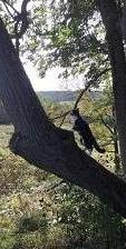
One of the Araucana hens still insists on roosting in the barn at night apart from those in the coop. She is occasionally joined by one of the Barred Rock hens. They found a secluded and protected spot to spend the night and so far it is their secret place.
For too long the Guineas roamed freely in the raised bed of "Jet" star tomatoes. After loosing close to two dozen tomatoes the bed was surrounded with chicken fencing. Of note, it doesn't take long for four Guineas to move through a raised bed of delicious fruit! The plants are now flourishing and producing beautifully. The Guineas look wistfully at what might have been - a summer full of red ripe juicy tomato snacks!
The egg department is still flourishing with both chickens and ducks contributing to many a delicious meal. Thank you girls!
BC, Master of the Barn, and now two years old is still full of "the old scratch" and very quick and agile. She is super cat, that is, she is faster that a speeding bee, more powerful than a grizzly bear, able climb the tallest trees with a single bound. That's our BC!
For too long the Guineas roamed freely in the raised bed of "Jet" star tomatoes. After loosing close to two dozen tomatoes the bed was surrounded with chicken fencing. Of note, it doesn't take long for four Guineas to move through a raised bed of delicious fruit! The plants are now flourishing and producing beautifully. The Guineas look wistfully at what might have been - a summer full of red ripe juicy tomato snacks!
The egg department is still flourishing with both chickens and ducks contributing to many a delicious meal. Thank you girls!
BC, Master of the Barn, and now two years old is still full of "the old scratch" and very quick and agile. She is super cat, that is, she is faster that a speeding bee, more powerful than a grizzly bear, able climb the tallest trees with a single bound. That's our BC!
Quacky Ducks
The three ducks run about the yard. Two of them are Chocolate runners and the third a Swedish Blue hen. One of the "runners" leaves the flock for hours on end before returning to their swimming pool. Like their barn mates they are up and out early and put a lot of mileage on their webbed feet.
Bee Yard Buzz
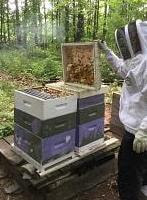
Holly, our resident beekeeper has been busy getting ready for harvesting honey. The hives have been inspected and the frames are laden with honey. The honey house, extractor, tubs and five gallon buckets, strainers, knives have all been cleaned. The bee suits and gloves are handy. Pine straw, paper and wood shavings have been gathered and dried for use in the smoker (smoke calms the bees).
During September on a dry, calm and cool day Holly, Jeanne (who has helped with the harvest for the past five years) and fellow beekeeper Art will open the hives, remove the frames and bring them to the honey house. Honey will then be extracted from the frames, gathered in a holding tub, strained and bottled.
During September on a dry, calm and cool day Holly, Jeanne (who has helped with the harvest for the past five years) and fellow beekeeper Art will open the hives, remove the frames and bring them to the honey house. Honey will then be extracted from the frames, gathered in a holding tub, strained and bottled.
The St. Francis of Assisi Memorial Garden
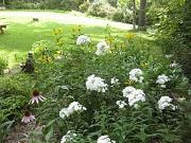
Hidden among the tall white phlox (P. paniculata), purple cone flower (Echinacea) and brown-eyed Susan (Rudbeckia) is the statue of St. Francis with a few of his beloved animals. The shades of purple, yellow, brown and white make this garden come to life. Sedum (S. spectabile) has yet to add a beautiful rosy-red color to the garden
If you would like to memorialize a loved one, contact Mercy Farm and their names will be entered into the Memorial Book located in the Catherine McAuley Chapel where they will be remembered in the prayers and works of the Sisters of Mercy on staff and those gathered with us in prayer.
If you would like to memorialize a loved one, contact Mercy Farm and their names will be entered into the Memorial Book located in the Catherine McAuley Chapel where they will be remembered in the prayers and works of the Sisters of Mercy on staff and those gathered with us in prayer.
Greetings From the Garden
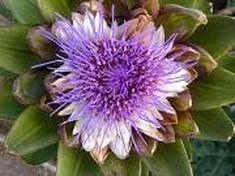
The herb garden is buzzing with bees and butterflies and full of the color of Alyssum (Lobularia maritima), Tickseed (Coreopsis), Echinacea, Sedum and basil. Tomatoes, artichokes, squash, peppers and Marigolds (Tagetes) fill the hoop house. The kitchen garden delights with rhubarb, sweet potatoes and string beans. The arc garden abounds with gourds; Hubbard, butternut and acorn squash; peppers; beets; string beans and basil. Eggplant, tomatoes, peppers, basil, gourds and an all time favorite - lima beans fill our raised beds. It was a late season for our gardens but each day it is getting bigger and bigger!
Many butterflies have been spotted particularly Monarch (Danaus plexippus) and Swallowtail throughout all of the vegetable and flower gardens.
Many butterflies have been spotted particularly Monarch (Danaus plexippus) and Swallowtail throughout all of the vegetable and flower gardens.
Blooming Blossoms
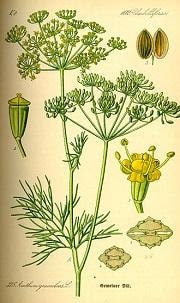
Besides the St. Francis Assisi Memorial Garden our named flower gardens are the: Peace, Terrace, Purple Bee Balm and Herb Gardens. During the summer months you will receive a bouquet from us. We hope the photo will make you smile, lift you up, encourage you ... may it bring whatever you need when it arrives. Featured this month is the Herb Garden, specifically, dill plants that offer airy flower/seed heads.
Dill (Anethum graveolens) is an annual herb in the celery family Apiaceae. It is the only species in the genus Anethum. Dill is widely grown in Eurasia where its leaves and seeds are used as a herb or spice for flavoring food.
Dill grows up to 16-24 inches, with slender hollow stems and alternate, finely divided , softly delicate leaves 4-8 inches long. The flowers are white to yellow, in small umbels up to three and a half inches in diameter. The seeds are small, thick and slightly curved with a longitudinally ridged surface.
Fresh and dried dill leaves (sometimes called "dill weed" to distinguish it from dill seed) are widely used herbs in Europe and Asia. Like caraway, the fern-like leaves of dill are aromatic and are used to flavor cured salmon and other fish dishes; soups and pickles. Dill is best when used fresh as it loses its flavor rapidly if dried; however, freeze-dried dill leaves retain their flavor relatively well for a few months.
In central and eastern Europe, Scandinavia, Baltic states, Russia and Finland dill is a popular culinary herb used in salads, soups, sauces; fish and meat; and vegetable dishes. In Santa Maria, Azores, dill is the most important ingredient of the traditional Holy Ghost soup.Dill is found practically everywhere in Santa Maria and is curiously rare in the other Azorean Islands. A newer, non-traditional use of dill is paired up with chives as a flavoring of potato chips. This flavor of potato chips called "dillchips" is quite popular in Sweden.
The Arab countries uses of dill include as a spice in cold dishes and pickles. Dill weed is commonly used to flavor cabbage dishes in Egypt and in Israel, dill seed is used to spice salads and also to flavor omelettes.
Successful cultivation of dill requires warm to hot summers with a lot of sunshine and rich, well drained soil. The seeds are viable for three to ten years. The plants flower once and then quickly die off. When used as a companion plant, dill attracts many beneficial insects as the umbrella flower heads go to seed. It makes good companion plants for cucumbers and broccoli and is a poor companion for carrots and tomatoes.
The seeds are harvested by cutting the flower heads off the stalks when the seed is beginning to ripen. The heads are placed upside down in a paper bag and left in a warm, dry place for a week. The seeds then separate from the stems easily for storage in an air tight container.
See: https://en.wikipedia.org/wiki/dill. The 1885 illustration was done by Prof. Dr. Otto Wilhelm Thome' Flora von Deutschland (Wikepedia)
Dill (Anethum graveolens) is an annual herb in the celery family Apiaceae. It is the only species in the genus Anethum. Dill is widely grown in Eurasia where its leaves and seeds are used as a herb or spice for flavoring food.
Dill grows up to 16-24 inches, with slender hollow stems and alternate, finely divided , softly delicate leaves 4-8 inches long. The flowers are white to yellow, in small umbels up to three and a half inches in diameter. The seeds are small, thick and slightly curved with a longitudinally ridged surface.
Fresh and dried dill leaves (sometimes called "dill weed" to distinguish it from dill seed) are widely used herbs in Europe and Asia. Like caraway, the fern-like leaves of dill are aromatic and are used to flavor cured salmon and other fish dishes; soups and pickles. Dill is best when used fresh as it loses its flavor rapidly if dried; however, freeze-dried dill leaves retain their flavor relatively well for a few months.
In central and eastern Europe, Scandinavia, Baltic states, Russia and Finland dill is a popular culinary herb used in salads, soups, sauces; fish and meat; and vegetable dishes. In Santa Maria, Azores, dill is the most important ingredient of the traditional Holy Ghost soup.Dill is found practically everywhere in Santa Maria and is curiously rare in the other Azorean Islands. A newer, non-traditional use of dill is paired up with chives as a flavoring of potato chips. This flavor of potato chips called "dillchips" is quite popular in Sweden.
The Arab countries uses of dill include as a spice in cold dishes and pickles. Dill weed is commonly used to flavor cabbage dishes in Egypt and in Israel, dill seed is used to spice salads and also to flavor omelettes.
Successful cultivation of dill requires warm to hot summers with a lot of sunshine and rich, well drained soil. The seeds are viable for three to ten years. The plants flower once and then quickly die off. When used as a companion plant, dill attracts many beneficial insects as the umbrella flower heads go to seed. It makes good companion plants for cucumbers and broccoli and is a poor companion for carrots and tomatoes.
The seeds are harvested by cutting the flower heads off the stalks when the seed is beginning to ripen. The heads are placed upside down in a paper bag and left in a warm, dry place for a week. The seeds then separate from the stems easily for storage in an air tight container.
See: https://en.wikipedia.org/wiki/dill. The 1885 illustration was done by Prof. Dr. Otto Wilhelm Thome' Flora von Deutschland (Wikepedia)
Sights and Sounds of the Season
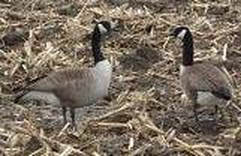
Pause! Look and listen to nature as it begins its journey into fall and subsequently winter. Pause! Consider wildlife both in flight and afoot as they begin their migration to warmer environments or heading to their dens for the long winter ahead. Pause! Consider the return of old feathered and furry friends who summered away from your backyard.
On the move now are:
Raptors - a group that includes hawks, eagles, and falcons - begin migrating with the cool northwesterly winds of August. Until early December, you can spot them riding the winds along mountain ridges, lake shores and coastlines, or gliding upon warm currents of air that rise from valleys.
Canada geese (Branta canadensis)= head south in ribbon-like "vees." When your hear their honking, look up and enjoy the beauty of their formation, a fleeting moment of their journey to southern United States and Mexico. See: the Backyard Birdsong Guide, Cornell Lab of Ornithology Audio Field Guide, 2008
Birds- including, but not limited to: hummingbirds, spotted sandpipers, barn swallows, wood thrush and Eastern phoebes, meadowlarks, common starlings and robins are flocking in preparation for their long fight to southern states, Mexico and/or Central America. See: the Backyard Birdsong Guide, Cornell Lab of Ornithology Audio Field Guide, 2008
Monarch (Danaus plexippus), buckeye (Junonia coenia) and
painted lady butterflies-also begin heading south, flying low in southerly winds, but high in northerly winds, which enable them to travel up to 60 miles per day. Each night they roost in huge numbers on trees along the way. Monarchs winter in Southern California; buckeyes are common residents across the southern United States and much of Mexico. The butterfly regularly expands its range northward each year to temporarily colonize much of the U.S., occasionally reaching southern Canada. Beginning in late summer huge numbers of adults migrate suthward into Florida where they overwinter. The American painted lady (Vanessa virginiensis) migrates southward to northern South America. Noteworthy, it has been seen occasionally in Europe, Hawaii, and the larger Caribbean islands.
See: entnemdept.ufl.edu
You can help wildlife in their journey by providing native evergreen trees to provide cover, shelter and food for birds. Add roosting boxes or line nest boxes with pine needles to provide safe roosting places. Provide a birdbath and bird feeders and keep them clean and filled. Ask building managers to turn off lights in tall buildings during peak migration - lights can disorient birds migrating at night, and can result in deadly collisions.
Unless otherwise noted See:www.humanesociety.org/animals/resources/tips/watching_wildlife_fall.html
On the move now are:
Raptors - a group that includes hawks, eagles, and falcons - begin migrating with the cool northwesterly winds of August. Until early December, you can spot them riding the winds along mountain ridges, lake shores and coastlines, or gliding upon warm currents of air that rise from valleys.
Canada geese (Branta canadensis)= head south in ribbon-like "vees." When your hear their honking, look up and enjoy the beauty of their formation, a fleeting moment of their journey to southern United States and Mexico. See: the Backyard Birdsong Guide, Cornell Lab of Ornithology Audio Field Guide, 2008
Birds- including, but not limited to: hummingbirds, spotted sandpipers, barn swallows, wood thrush and Eastern phoebes, meadowlarks, common starlings and robins are flocking in preparation for their long fight to southern states, Mexico and/or Central America. See: the Backyard Birdsong Guide, Cornell Lab of Ornithology Audio Field Guide, 2008
Monarch (Danaus plexippus), buckeye (Junonia coenia) and
painted lady butterflies-also begin heading south, flying low in southerly winds, but high in northerly winds, which enable them to travel up to 60 miles per day. Each night they roost in huge numbers on trees along the way. Monarchs winter in Southern California; buckeyes are common residents across the southern United States and much of Mexico. The butterfly regularly expands its range northward each year to temporarily colonize much of the U.S., occasionally reaching southern Canada. Beginning in late summer huge numbers of adults migrate suthward into Florida where they overwinter. The American painted lady (Vanessa virginiensis) migrates southward to northern South America. Noteworthy, it has been seen occasionally in Europe, Hawaii, and the larger Caribbean islands.
See: entnemdept.ufl.edu
You can help wildlife in their journey by providing native evergreen trees to provide cover, shelter and food for birds. Add roosting boxes or line nest boxes with pine needles to provide safe roosting places. Provide a birdbath and bird feeders and keep them clean and filled. Ask building managers to turn off lights in tall buildings during peak migration - lights can disorient birds migrating at night, and can result in deadly collisions.
Unless otherwise noted See:www.humanesociety.org/animals/resources/tips/watching_wildlife_fall.html
August 2018
Happenings Around the Farm
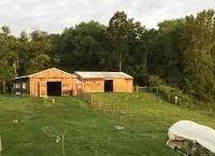
July was a particularly dry month with a rain accumulation of about two inches. Hot humid weather prevailed with a few days of cooler air scattered throughout July. Night time temperatures refreshingly fell into the low fifties!
Mercy Farm was the site for a private retreat, hospitality and Cristo Rey Brooklyn High School (CRBHS) student volunteer opportunity. Several guests also came "to find out about Mercy Farm."
July guests came from: Benson, Burlington and Hydeville, VT; Plainville, CT, Portland, ME; Middletown, RI; Brooklyn, Clifton Park and New York City, NY.
Mike Kessler, an animal tracker, toured the farm with Betty. During their walk along the Griffin Trail Mike spotted bear tracks including a set of bear cub tracks. Moose
tracks were also found by the pond! On July 24, a fawn was seen near the hoop house, unable to get into it he turned up his nose and moved on. Such tracks and sightings are indicators that the fields and forests surrounding Mercy Farm are alive and well. Thank God!
Staff extracurricular activities included attendance at the weekly summer concert series in Fair Haven and Castleton; a Strawberry Festival; Breakfast and Farm Tour
at Kayhart Brothers Dairy, in West Addison and a delicious dinner at the Dodds!
Mercy Farm was the site for a private retreat, hospitality and Cristo Rey Brooklyn High School (CRBHS) student volunteer opportunity. Several guests also came "to find out about Mercy Farm."
July guests came from: Benson, Burlington and Hydeville, VT; Plainville, CT, Portland, ME; Middletown, RI; Brooklyn, Clifton Park and New York City, NY.
Mike Kessler, an animal tracker, toured the farm with Betty. During their walk along the Griffin Trail Mike spotted bear tracks including a set of bear cub tracks. Moose
tracks were also found by the pond! On July 24, a fawn was seen near the hoop house, unable to get into it he turned up his nose and moved on. Such tracks and sightings are indicators that the fields and forests surrounding Mercy Farm are alive and well. Thank God!
Staff extracurricular activities included attendance at the weekly summer concert series in Fair Haven and Castleton; a Strawberry Festival; Breakfast and Farm Tour
at Kayhart Brothers Dairy, in West Addison and a delicious dinner at the Dodds!
Forest Management Plan Update
As recommended by the Forest Management Plan work on eradicating invasives plants and Buckthorn trees in the west area of Mercy Farm will begin in August and run into the fall. Invasives are non-native plants that take over an area and have a negative impact on native growth.
To increase the variety of native trees; a silver maple, a red maple and an oak tree were planted near the pond at the head of the Griffin Trail. Sean, a volunteer from
Foggy Meadow Farm, helped plant these trees.
To increase the variety of native trees; a silver maple, a red maple and an oak tree were planted near the pond at the head of the Griffin Trail. Sean, a volunteer from
Foggy Meadow Farm, helped plant these trees.
Welcome Cristo Rey Brooklyn High School Students!
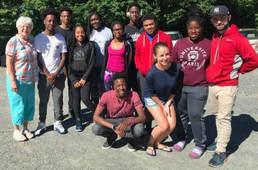
Students: Jamel, Conroy, Naquawn, Justin, Kamilah, Kaydrianna, Clarise and Faith arrived at Mercy Farm with Alumni Leader, Ryan; Chaperones, Tara and Luis and Sister Betty Calfapietra, RSM, liasion to Mercy Farm were at Mercy Farm from July 3 to 7.
Tara Crimmins, Religion teacher and Assistant Campus Minister, shared the following reflections on their second annual visit to Mercy Farm. "The students were immediately in awe of the beautiful farm and the great differences between this way of life and life in Brooklyn, NY. For the next four days we worked on the farm completing various planting, farming, beekeeping and cooking tasks. We worked very closely with Sisters Betty, Holly and Mary F. and the students quickly developed close, meaningful relationships with these lovely women. We also were given plenty of opportunities to explore the beautiful state of Vermont, going to state parks, lakes and visiting Middlebury College! Our days were filled with hard work and lots of laughter.
I watched our students embrace the new setting, work hard and remain continuously humble and grateful. All the students expressed gratitude for being given the
opportunity to work on the farm."
The following responses from the students include: I liked that there were different tasks every day; it was a real eye-opener; working with the bees; the importance of bees and bee endangerment; weeding and other related garden work; working outside was a fun experience and it was something different.
New learnings included: bees, how to drive the gator, cooking for a big group; how to weed and an awareness of the need to help change corporate policies regarding the care of or lack of care for Earth and the need to change my personal habits.
When asked how they would apply these new learnings in their lives they said: I will become more responsible in my life; first apply them at home and then tell others
about my experience; be more active and connect with nature more; gardening, my Mom wants to garden so I'll guide her; continue to learn what I can do to protect
bees. More reduction in the use of plastic; planting of flowers at CRBHS, tending to our backyard soil - our garden at home.
Student goals achieved were: putting my guard down and being free and open to everything; working hard and trying new things; facing my fear of bees; doing "stuff"
I wouldn't normally do; stepping out of my comfort zone and getting dirty.
Tara Crimmins, Religion teacher and Assistant Campus Minister, shared the following reflections on their second annual visit to Mercy Farm. "The students were immediately in awe of the beautiful farm and the great differences between this way of life and life in Brooklyn, NY. For the next four days we worked on the farm completing various planting, farming, beekeeping and cooking tasks. We worked very closely with Sisters Betty, Holly and Mary F. and the students quickly developed close, meaningful relationships with these lovely women. We also were given plenty of opportunities to explore the beautiful state of Vermont, going to state parks, lakes and visiting Middlebury College! Our days were filled with hard work and lots of laughter.
I watched our students embrace the new setting, work hard and remain continuously humble and grateful. All the students expressed gratitude for being given the
opportunity to work on the farm."
The following responses from the students include: I liked that there were different tasks every day; it was a real eye-opener; working with the bees; the importance of bees and bee endangerment; weeding and other related garden work; working outside was a fun experience and it was something different.
New learnings included: bees, how to drive the gator, cooking for a big group; how to weed and an awareness of the need to help change corporate policies regarding the care of or lack of care for Earth and the need to change my personal habits.
When asked how they would apply these new learnings in their lives they said: I will become more responsible in my life; first apply them at home and then tell others
about my experience; be more active and connect with nature more; gardening, my Mom wants to garden so I'll guide her; continue to learn what I can do to protect
bees. More reduction in the use of plastic; planting of flowers at CRBHS, tending to our backyard soil - our garden at home.
Student goals achieved were: putting my guard down and being free and open to everything; working hard and trying new things; facing my fear of bees; doing "stuff"
I wouldn't normally do; stepping out of my comfort zone and getting dirty.
The Adventures of Bailey and Dexter
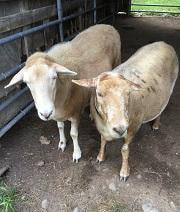
Bailey and Dexter have a new routine, that is, they are able to come and go at will all through the day and night. Both the east and west paddocks are securely fenced in and when they are in the east paddock the barn gate on that side is open at night. They may be seen enjoying the cool night air and a bed time snack and as dawn breaks they are out basking in the early morning light. The following week they are in the west paddock and watch the sun set and the beginning of a new day as the sun light rises over the barn.
Their winter coats are a thing of the past. Bailey and Dexter are always ready for a good brushing and look for just one more stroke of the brush down their backs. And, of course, they look forward to their fresh vegetable scraps and alfalfa treats.
Their winter coats are a thing of the past. Bailey and Dexter are always ready for a good brushing and look for just one more stroke of the brush down their backs. And, of course, they look forward to their fresh vegetable scraps and alfalfa treats.
Barn Yard Banter and BC
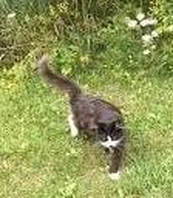
The French hen has been laying eggs in the coop on a regular basis. So much for retirement! Supposedly they can lay up to ten years. "Frenchie" enjoys her time apart from the rest of the fowl, especially Red. She particularly enjoys the evening hours as Betty lets her have the run of the barn and yard after the rest of the fowl have been put to bed.
During July we lost a Guinea and the gray and white Araucana hen. The culprit, probably a fox seeking food for its young.
It seems that where the sheep are the Guineas, hens, Red and ducks are all meandering about the paddock either in search of food or a nice spot to sunbathe or to take a dust bath. At other times our feathered friends wander all around the property giving Bailey and Dexter a little reprieve. Red's presence is commanding as with his head held high, chest out he struts about the property. If attention to him is not to his liking a cock-a-doodle-do is loud and repetitive until his hens come running. The entertainment in the barn yard is always rewarding and never ending. The barred rock hens and ducks do their part each day in the egg laying department.
BC creates her own entertainment. Her tail has fluffed out. She is very proud and shows off her tail as she holds it high and swings it from side to side. BC is still able to leap up the tallest tree, climb the ledge in the Bee Yard, tear through the gardens and strut down the driveway. Having gotten too close to the barn swallow nests and their chicks the adults swoop to warn her that they mean business so she keeps her distance from them. It seems that she has an uphill battle to maintain her role as Master of the Barn. When the Guineas are not challenging her, Red or the ducks are. So far she has held her ground!
During July we lost a Guinea and the gray and white Araucana hen. The culprit, probably a fox seeking food for its young.
It seems that where the sheep are the Guineas, hens, Red and ducks are all meandering about the paddock either in search of food or a nice spot to sunbathe or to take a dust bath. At other times our feathered friends wander all around the property giving Bailey and Dexter a little reprieve. Red's presence is commanding as with his head held high, chest out he struts about the property. If attention to him is not to his liking a cock-a-doodle-do is loud and repetitive until his hens come running. The entertainment in the barn yard is always rewarding and never ending. The barred rock hens and ducks do their part each day in the egg laying department.
BC creates her own entertainment. Her tail has fluffed out. She is very proud and shows off her tail as she holds it high and swings it from side to side. BC is still able to leap up the tallest tree, climb the ledge in the Bee Yard, tear through the gardens and strut down the driveway. Having gotten too close to the barn swallow nests and their chicks the adults swoop to warn her that they mean business so she keeps her distance from them. It seems that she has an uphill battle to maintain her role as Master of the Barn. When the Guineas are not challenging her, Red or the ducks are. So far she has held her ground!
Quacky Ducks
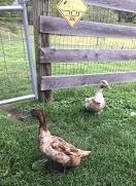
The two Chocolate Runners and the Swedish Blue/Cayuga mix run as a threesome until one of the Chocolate Runners disappears for several hours. Perhaps she just needs some space away from all of the barn yard noise and activity. Who knows? She is not "quacking"!
Indian Runners, also known as Chocolate Runners, are a breed of Anas platyrhynchos, the domestic duck. They stand erect like penguins and, rather than waddling, they run. The females usually lay 150 to 200 eggs a year. They were found on the Indonesian islands of Lombok, Java and Bali where they were 'walked' to market and sold as egg-layers or for meat. These ducks do not fly and only rarely form nests and incubate their own eggs. They run or walk, often dropping their eggs wherever they happen to be.
The ducks vary in weight between three and five pounds. Their height (from crown to tail tip) ranges from 20 inches in small females to 30 inches in taller males. The body is long, slim but round in appearance. The eggs are often greenish-white in color. Runners have tight feathering. Drakes have a small curl on the tip of their tails, while the hens have flat tails. Only hens quack and drakes are limited to a hoarse whisper. Other breeds of ducks make up for their lack of noise! They often swim in ponds and streams, but are likely to be preoccupied foraging in the grassy meadows for worms, slugs, even catching flies.
Like many other breeds of waterfowl imported into Europe and America, the term 'Indian' may well be fanciful, denoting a loading port or the transport by 'India-men' sailing ships of the East India Company.
Our Chocolate Runner is one of eight varieties of Indian Runners recognized by the American Poultry Association. See: https://en.wikipedia.org
Indian Runners, also known as Chocolate Runners, are a breed of Anas platyrhynchos, the domestic duck. They stand erect like penguins and, rather than waddling, they run. The females usually lay 150 to 200 eggs a year. They were found on the Indonesian islands of Lombok, Java and Bali where they were 'walked' to market and sold as egg-layers or for meat. These ducks do not fly and only rarely form nests and incubate their own eggs. They run or walk, often dropping their eggs wherever they happen to be.
The ducks vary in weight between three and five pounds. Their height (from crown to tail tip) ranges from 20 inches in small females to 30 inches in taller males. The body is long, slim but round in appearance. The eggs are often greenish-white in color. Runners have tight feathering. Drakes have a small curl on the tip of their tails, while the hens have flat tails. Only hens quack and drakes are limited to a hoarse whisper. Other breeds of ducks make up for their lack of noise! They often swim in ponds and streams, but are likely to be preoccupied foraging in the grassy meadows for worms, slugs, even catching flies.
Like many other breeds of waterfowl imported into Europe and America, the term 'Indian' may well be fanciful, denoting a loading port or the transport by 'India-men' sailing ships of the East India Company.
Our Chocolate Runner is one of eight varieties of Indian Runners recognized by the American Poultry Association. See: https://en.wikipedia.org
Bee Yard Buzz
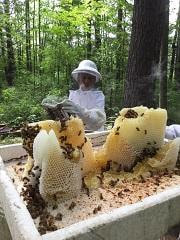
The sounds of birds chirping, honey bees buzzing, chipmunks scampering and squirrels chattering dominate the Bee Yard. A slight breeze gently flutters the leaves of a full green canopy that encloses this sacred space. Hosta are now in bloom and are frequently visited by the honey bees. Ginger, Mayapple, Golden Ray (Pulmonaria), and Astilbe continue to stretch out beyond their early beginnings as "aspiring" plants.
Both bee hives have been checked for bee activity and a sign of hive health was found. Hooray! The honey bees have been so busy that another super had to be added to each hive. Assisting Holly with this process was Sister Elizabeth Driscoll who donned a beekeeper's suit and operated the "smoker" to keep the bees calm as each hive was inspected. The frames were laden with honey; honey comb had formed on the inside of the hive cover (see photo) and the bees had increased in number all of which necessitated the addition
of supers.
Both bee hives have been checked for bee activity and a sign of hive health was found. Hooray! The honey bees have been so busy that another super had to be added to each hive. Assisting Holly with this process was Sister Elizabeth Driscoll who donned a beekeeper's suit and operated the "smoker" to keep the bees calm as each hive was inspected. The frames were laden with honey; honey comb had formed on the inside of the hive cover (see photo) and the bees had increased in number all of which necessitated the addition
of supers.
The St. Francis of Assisi Memorial Garden
The Memorial Garden has a variety of shade loving plants and has done very well this year. The red bee balm is still in bloom and the tall phlox are about to burst forth. Astilbe, Coreopsis, Black-eye Susan and Cone (Echinacea) flowers are still beautiful. A new wind chime completes this quiet reflective space.
If you would like to memorialize a loved one, contact Mercy Farm and their names will be entered into the Memorial Book located in the Catherine McAuley Chapel where they will be remembered in the prayers and works of the Sisters of Mercy on staff and those gathered with us in prayer.
If you would like to memorialize a loved one, contact Mercy Farm and their names will be entered into the Memorial Book located in the Catherine McAuley Chapel where they will be remembered in the prayers and works of the Sisters of Mercy on staff and those gathered with us in prayer.
Greetings from the Gardens
Tomatoes and cucumbers have already ripened on the vine and enjoyed by guests and staff. The acorn and butternut squash blossoms have begun to close - a step toward the formation of delicious veggies.The eggplants are doing very well and may be found in a raised bed with Marigolds and Zinnias that are in full bloom. The tomatoes and cucumbers still continue to delight. Peppers, beets, artichoke, onions, sweet potato and yes, Lima beans are all doing well! Basil, chives, dill, calendula, thyme, sage and lavender are used in recipes as they appear. Gourds were also planted and have begun to "run hither and yon" taking their small blossoms with them. The garlic has been harvested. Raspberries frozen and awaiting the next pie. The asparagus has gone to seed.
Hooray for the new raised beds! Although our planing season started late and was challenged by weather conditions our beds are producing, nicely. Our heartfelt thanks to Dave, Kristen and Darla for the construction of the new beds.
Hooray for the new raised beds! Although our planing season started late and was challenged by weather conditions our beds are producing, nicely. Our heartfelt thanks to Dave, Kristen and Darla for the construction of the new beds.
Blooming Bloosoms
Besides the St. Francis Assisi Memorial Garden our named flower gardens are the: Peace, Terrace, Purple Bee Balm and Herb gardens. The Iris garden has become the Purple Bee Balm garden and is enjoyed by bees, butterflies and finches.
During the summer months you will receive a bouquet from us. We hope the photo will make you smile, lift you up, encourage you ... may it bring whatever you need when it arrives.
Featured this month is the Cleome (Cleome hassleriana), that is commonly referred to as spider plants, spider flowers, spider weeds or bee plants. They are native to South America. See https://en.wikipedia.org
This annual is known for its exceedingly long seed pods that develop before the flowers bloom and progress upward on the stalk, to give the plant their spidery look. They are large, sturdy plants, ranging from 3 to 6 feet tall and 2 to 3 inches wide. Cleome flowers are white, pink or lavender, with many opening at once, grow in airy clusters of flowers, six to eight inches in diameter. Their foliage is palm-like.
See: https://gardenguides.com
Many species of insects are attracted to cleomes, especially bees, which help in the pollination of nearby plants. See: https://www.google.com
Spider plants grow well in average soil located in full or nearly full sun. It is very drought-tolerant, though it will look and grow better if watered well. Space spider plants one to three feet apart. See:https://home.howstuffworks.com They self-sow and are generally trouble free. Source: Reader's Digest Illustrated Guide to Gardening, 1992, p. 294
During the summer months you will receive a bouquet from us. We hope the photo will make you smile, lift you up, encourage you ... may it bring whatever you need when it arrives.
Featured this month is the Cleome (Cleome hassleriana), that is commonly referred to as spider plants, spider flowers, spider weeds or bee plants. They are native to South America. See https://en.wikipedia.org
This annual is known for its exceedingly long seed pods that develop before the flowers bloom and progress upward on the stalk, to give the plant their spidery look. They are large, sturdy plants, ranging from 3 to 6 feet tall and 2 to 3 inches wide. Cleome flowers are white, pink or lavender, with many opening at once, grow in airy clusters of flowers, six to eight inches in diameter. Their foliage is palm-like.
See: https://gardenguides.com
Many species of insects are attracted to cleomes, especially bees, which help in the pollination of nearby plants. See: https://www.google.com
Spider plants grow well in average soil located in full or nearly full sun. It is very drought-tolerant, though it will look and grow better if watered well. Space spider plants one to three feet apart. See:https://home.howstuffworks.com They self-sow and are generally trouble free. Source: Reader's Digest Illustrated Guide to Gardening, 1992, p. 294
July 2018
Happenings Around the Farm
June was a very windy month with a few thunder boomers yielding a lot of noise but little precipitation. Staff with hoses in hand were kept busy watering the thirsty growing vegetables and flowers. As June drew to a close the much needed soaking rains came, a blessing to the gardens and to us!
Critters encountered while walking about the farm include a fisher cat seen on two different occasions at dawn, a fox who comes around 7 p.m. each day and possibly a Black-chinned hummingbird (found in most of the western United States). If so, it is a long way from "home"!
Mercy Farm was the site for several private retreats, a Woman's Retreat, a couples retreat and five volunteers.
Betty, Holly and Mary F. attended a presentation by Bill McGibben at The Residence in Middlebury. His two fold message to a packed audience was to register to vote and to diminish the use of fossil fuels.
Joining the staff this summer is Sister Elizabeth Driscoll. As a Vermonter, she is very familiar with the farm and is happy to be back. Sister helped relocate the rhubarb bed, replanted the rhubarb and now looks forward to her next project!
June guests came from: Burlington, Hinesburg, North Chittenden, North Ferrisburg, Shelburne and Wells, VT; Atlanta GA; Portland, ME and Danvers, Marblehead and Millville, MA.
Critters encountered while walking about the farm include a fisher cat seen on two different occasions at dawn, a fox who comes around 7 p.m. each day and possibly a Black-chinned hummingbird (found in most of the western United States). If so, it is a long way from "home"!
Mercy Farm was the site for several private retreats, a Woman's Retreat, a couples retreat and five volunteers.
Betty, Holly and Mary F. attended a presentation by Bill McGibben at The Residence in Middlebury. His two fold message to a packed audience was to register to vote and to diminish the use of fossil fuels.
Joining the staff this summer is Sister Elizabeth Driscoll. As a Vermonter, she is very familiar with the farm and is happy to be back. Sister helped relocate the rhubarb bed, replanted the rhubarb and now looks forward to her next project!
June guests came from: Burlington, Hinesburg, North Chittenden, North Ferrisburg, Shelburne and Wells, VT; Atlanta GA; Portland, ME and Danvers, Marblehead and Millville, MA.
Hooray for New Raised Beds!
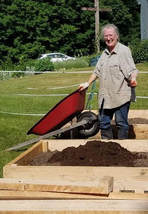
Dave, Kristine and Darla, friends from Massachusetts and Georgia made their yearly visit to the farm June 15-17. This is the sixth year that this terrific threesome have come to the farm. It goes without saying that their help is invaluable! Their biggest project this year was to replace the twelve deteriorating raised beds with new lumber. Once built new soil and compose was added, seeds and seedlings planted.
Other chores included removing weeds and adding compost to the Hoop House and Peace Garden.
Our friends, Peter and Jeannie from Wells, VT came and enjoyed time at the farm and while visiting replaced the mail box.
Other chores included removing weeds and adding compost to the Hoop House and Peace Garden.
Our friends, Peter and Jeannie from Wells, VT came and enjoyed time at the farm and while visiting replaced the mail box.
The Adventures of Bailey and Dexter
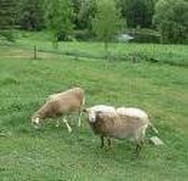
Norma, our farm hand, continues to care for Bailey and Dexter and the highlight of their day is to have Norma give them a good brushing. They were seen running in the East Paddock like new lambs when the temperature dropped from 97 degrees to a much cooler and more tolerable reading. The sheep have access to the barn during the day, but even the barn brought little relief from the heat.
Bailey still has a strip of hair running down her back and carries two "saddle bags" on her hind legs.
As always, they are pleased to see the arrival of guests, bleat their delight and anxiously wait while they get settled. The sheep seem to know their routine and wait patiently until they spot a guest taking the short walk toward them where a gentle pat, a talk or a song may be shared.
Bailey still has a strip of hair running down her back and carries two "saddle bags" on her hind legs.
As always, they are pleased to see the arrival of guests, bleat their delight and anxiously wait while they get settled. The sheep seem to know their routine and wait patiently until they spot a guest taking the short walk toward them where a gentle pat, a talk or a song may be shared.
Barnyard Banter and BC
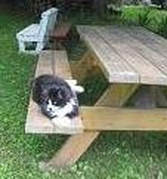
The hens are still producing an abundance of delicious eggs. Red and the girls are eager to go into the coop in the evening as they put a lot of milage on their feet during their daily travels around the farm.
It seems that BC "never learns from past foibles". She still roams where the burdock grows and will return with a few old burrs attached to her fur, including her tail, that had to be shaved last spring to eliminate the burrs. We are happy to report that the fur on her tail is filling in and BC is very happy about that as she believes all of her beauty is in her big bushy tail!
One day when not investigating what's new around the farm BC climbed up to the top rafters in the barn to get to the barn swallow nest and the chicks.Now, If she is anywhere near the barn the barn swallows attack her by swooping down causing her to crouch. A repeat of last year's attempt to reach the nest.
The Guineas and Red have occasionally "locked feathers" and recently they had a contest about who was to be the dominate fowl. It appears that they made peace with each other - until the next time! The Guineas and Red are of similar size and one of the five Guineas is a male. Perhaps the Guineas think that there is safety in numbers.
It seems that BC "never learns from past foibles". She still roams where the burdock grows and will return with a few old burrs attached to her fur, including her tail, that had to be shaved last spring to eliminate the burrs. We are happy to report that the fur on her tail is filling in and BC is very happy about that as she believes all of her beauty is in her big bushy tail!
One day when not investigating what's new around the farm BC climbed up to the top rafters in the barn to get to the barn swallow nest and the chicks.Now, If she is anywhere near the barn the barn swallows attack her by swooping down causing her to crouch. A repeat of last year's attempt to reach the nest.
The Guineas and Red have occasionally "locked feathers" and recently they had a contest about who was to be the dominate fowl. It appears that they made peace with each other - until the next time! The Guineas and Red are of similar size and one of the five Guineas is a male. Perhaps the Guineas think that there is safety in numbers.
Quacky Ducks
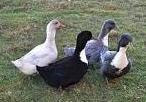
For almost two days one of the ducks was AWOL but happily returned safe and sound from where ever it went. A bit of information about the Swedish blue, one of the three breeds of ducks on the farm.
The Swedish Blue emerged during the nineteenth century in what was then Swedish Pomerania, now divided between north-west Poland and north-east Germany; the first documented mention is from 1835. Some birds were exported to the United States in 1884, and it was added to the Standard of Perfection of the American Poultry Association in 1904 as the "Swedish", with the single color variety "blue".
The population of the Swedish Blue in Sweden consists of only 148 breeding birds; its conservation status world-wide was listed as "critical" by the Food and Agriculture
Organization of the United Nations in 2007 and in 2014 was listed as "endangered-maintained" in Sweden. No data is reported from Ireland, the only other country
reporting the breed. It is listed as "watch" by the American Livestock Breeds Conservancy. The Swedish Blue is not a popular breed either; specifics on wing color
make the breed challenging to perfect and often discourage breeders and hobbyists from owning the breed.
The Swedish blue is a medium-sized bird: the male weighs between 6-8 pounds and the female usually weighs 5-7 pounds. Drakes are generally darker than ducks.
The ducks lay some 100-150 white or tinted eggs per year weighing 2-3 ounces.
See: https://em.wikipedia.org Betty uses their eggs for baking delicious goodies.
The Swedish Blue emerged during the nineteenth century in what was then Swedish Pomerania, now divided between north-west Poland and north-east Germany; the first documented mention is from 1835. Some birds were exported to the United States in 1884, and it was added to the Standard of Perfection of the American Poultry Association in 1904 as the "Swedish", with the single color variety "blue".
The population of the Swedish Blue in Sweden consists of only 148 breeding birds; its conservation status world-wide was listed as "critical" by the Food and Agriculture
Organization of the United Nations in 2007 and in 2014 was listed as "endangered-maintained" in Sweden. No data is reported from Ireland, the only other country
reporting the breed. It is listed as "watch" by the American Livestock Breeds Conservancy. The Swedish Blue is not a popular breed either; specifics on wing color
make the breed challenging to perfect and often discourage breeders and hobbyists from owning the breed.
The Swedish blue is a medium-sized bird: the male weighs between 6-8 pounds and the female usually weighs 5-7 pounds. Drakes are generally darker than ducks.
The ducks lay some 100-150 white or tinted eggs per year weighing 2-3 ounces.
See: https://em.wikipedia.org Betty uses their eggs for baking delicious goodies.
Bee Yard Buzz
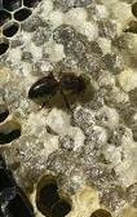
The honey bees are at home in their new surroundings. The bees arrive in a special box with the Queen in a small cage a small box with a sugar plug on one end used to keep the her separated from the cluster while being transported. After awhile, the Queen is released from her cage by the workers (female bees) that eat through the sugar plug releasing her into the hive body. It is indeed a happy hive now!
Actually, there are two hives each with a Queen. Both hives are doing well as there is a lot activity in the Bee Yard with all of the comings and goings from the hives to flowers for pollen and nectar and back to the hives.
The only flower in bloom now is the lamium. Some flowers have passed their prime for this year while others await their seasonal turn to burst forth.
Actually, there are two hives each with a Queen. Both hives are doing well as there is a lot activity in the Bee Yard with all of the comings and goings from the hives to flowers for pollen and nectar and back to the hives.
The only flower in bloom now is the lamium. Some flowers have passed their prime for this year while others await their seasonal turn to burst forth.
The St. Francis of Assisi Memorial Garden
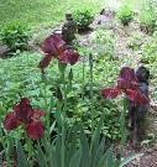
The days of June brought out the bloom of the Shasta daisies. The irises and peonies were beautiful and those slower to bloom have extended the color and fragrance of of these flowers.
If you would like to memorialize a loved one, contact Mercy Farm and their names will be entered into the Memorial Book located in the Catherine McAuley Chapel where they will be remembered in the prayers and works of the Sisters of Mercy on staff and those gathered with us in prayer.
If you would like to memorialize a loved one, contact Mercy Farm and their names will be entered into the Memorial Book located in the Catherine McAuley Chapel where they will be remembered in the prayers and works of the Sisters of Mercy on staff and those gathered with us in prayer.
Greetings from the Gardens
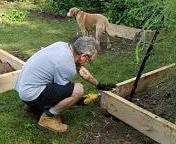
Sweet potatoes were planted and continue to grow and blossom. Onions, green beans, tomatoes, peppers and flowers have been planted. Some of the summer squash has been harvested. The plastic covering has been installed on the hoop house and the tomatoes, peppers and onions are doing well. It appears that there will be a bumper crop of raspberries this year! The garlic scapes have formed - can harvest be that far away?
The resident rabbit came and ate the kale and a fawn came into the garden where Holly and Norma were working. The fawn became startled when she realized she was not alone and jumped over the fence to escape. The mother and her fawn were sighted the next day on Mill Pond Road running off into the woods.
It should be noted that the long winter season, cold spring and dry June delayed crop growth. The recent rain and hot weather will surely be helpful. The vegetables planted in the new raised beds are blossoming. All is good!
The flower gardens boardering the house have been "whipped into shape" by Mary F. These gardens are full of color and delightful scents - and honey bees!
The resident rabbit came and ate the kale and a fawn came into the garden where Holly and Norma were working. The fawn became startled when she realized she was not alone and jumped over the fence to escape. The mother and her fawn were sighted the next day on Mill Pond Road running off into the woods.
It should be noted that the long winter season, cold spring and dry June delayed crop growth. The recent rain and hot weather will surely be helpful. The vegetables planted in the new raised beds are blossoming. All is good!
The flower gardens boardering the house have been "whipped into shape" by Mary F. These gardens are full of color and delightful scents - and honey bees!
Blooming Bloosoms
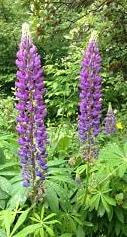
Besides the St. Francis Assisi Memorial Garden our named flower gardens are the: Peace, Terrace, Iris and Herb gardens. During the summer months you will receive a bouquet from us. We hope the photo will make you smile, lift you up, encourage you ... may it bring whatever you need when it arrives.
Featured this month is the lupine (Lupinus) a member of the legume or pea family. This genus includes over 200 species, most originate in North and South America. Lupine can survive in various climates and are classified as invasive in some parts of the world due to their ability to quickly occupy new habitats and disturb the growth of native plant species. People cultivate them for ornamental purposes and as a source of food.
Lupine have grey-green leaves covered with soft, silver hairs. The flowers grow in dense clusters or open whorls on the spike above the leaves. They produces blue, purple, red, yellow, white or two-colored flowers. Butterflies, bees and hummingbirds are the main pollinators of the flowers. Survival of the Karner blue butterfly in the wild depends on the blue lupine. It lays eggs on the blue lupine overwinter. Caterpillars hatch during the spring and use leaves of the blue lupine as a major source of food. The fruit of the lupine are hairy, soybean-like, curled pods.
The name lupine originates from the Latin word "lupus", which means "wolf". It refers to the old belief that lupine exhausts nutrients and ravages land like a wolf.
Despite its name, lupine is actually able to improve the quality of the soil. It lives in symbiosis with nitrogen-fixing bacteria that enrich the soil with nitrogen. They are
often planted near squash, cucumber and broccoli to improve the quality of the soil and to facilitate the growth of these plants. White, yellow and blue lupines are
cultivated as a source of food for cattle and poultry around the world.
Ancient Romans and Egyptians cultivated lupine as a source of food. Lupine seeds are still popular and used as an ingredient of various sweet and savory dishes around the world. They are a rich source of proteins, anti-oxidants, and dietary fibers. Seeds can be consumed as a bean or ground into flour.
See: www.softschools.com/facts/plants/lupine_facts/1153
Featured this month is the lupine (Lupinus) a member of the legume or pea family. This genus includes over 200 species, most originate in North and South America. Lupine can survive in various climates and are classified as invasive in some parts of the world due to their ability to quickly occupy new habitats and disturb the growth of native plant species. People cultivate them for ornamental purposes and as a source of food.
Lupine have grey-green leaves covered with soft, silver hairs. The flowers grow in dense clusters or open whorls on the spike above the leaves. They produces blue, purple, red, yellow, white or two-colored flowers. Butterflies, bees and hummingbirds are the main pollinators of the flowers. Survival of the Karner blue butterfly in the wild depends on the blue lupine. It lays eggs on the blue lupine overwinter. Caterpillars hatch during the spring and use leaves of the blue lupine as a major source of food. The fruit of the lupine are hairy, soybean-like, curled pods.
The name lupine originates from the Latin word "lupus", which means "wolf". It refers to the old belief that lupine exhausts nutrients and ravages land like a wolf.
Despite its name, lupine is actually able to improve the quality of the soil. It lives in symbiosis with nitrogen-fixing bacteria that enrich the soil with nitrogen. They are
often planted near squash, cucumber and broccoli to improve the quality of the soil and to facilitate the growth of these plants. White, yellow and blue lupines are
cultivated as a source of food for cattle and poultry around the world.
Ancient Romans and Egyptians cultivated lupine as a source of food. Lupine seeds are still popular and used as an ingredient of various sweet and savory dishes around the world. They are a rich source of proteins, anti-oxidants, and dietary fibers. Seeds can be consumed as a bean or ground into flour.
See: www.softschools.com/facts/plants/lupine_facts/1153
June 2018
Mercy Ecology at Mercy Farm seeks full-time team member -
The Board of Mercy Ecology, Inc. strongly believes in and supports the importance of the mission "to inspire reverence for Earth and to live in harmony with all creation" and so we seek a team member who:
- Embraces and supports our mission
- Wishes to live in community, contribute to our ministry at Mercy Farm, and share the work of running an eco-spiritual center: caring for the land, providing Mercy hospitality for guests who come for quiet, working with volunteers and students who come to learn.
- Has a love of nature, gardening, and animals
- Faces each new day with flexibility and creativity
- Demonstrates computer skills: Microsoft Word and Excel
- Is able to work with people of all ages
Start date can be somewhat flexible, but we hope to have the position filled before Harvest.
For more information please contact Sister Nancy Audette, Executive Director,
at naudettersm@gmail.com
The Board of Mercy Ecology, Inc. strongly believes in and supports the importance of the mission "to inspire reverence for Earth and to live in harmony with all creation" and so we seek a team member who:
- Embraces and supports our mission
- Wishes to live in community, contribute to our ministry at Mercy Farm, and share the work of running an eco-spiritual center: caring for the land, providing Mercy hospitality for guests who come for quiet, working with volunteers and students who come to learn.
- Has a love of nature, gardening, and animals
- Faces each new day with flexibility and creativity
- Demonstrates computer skills: Microsoft Word and Excel
- Is able to work with people of all ages
Start date can be somewhat flexible, but we hope to have the position filled before Harvest.
For more information please contact Sister Nancy Audette, Executive Director,
at naudettersm@gmail.com
Happenings Around the Farm
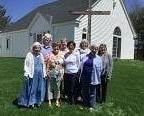
The rainy weather of early May was a blessings for the gardens. Eventually, the weather pattern shifted to dry, high winds and plenty of pollen! The busy month of May included: a private retreat, hospitality, a day of reflection for Deacon's wives, Maria College students, Members Board and the Art of Spiritual Guidance reflection weekend.
Staff extracurricular activities included Betty, Holly and Mary Q's attendance at the Assembly of the Sisters of Mercy held in Springfield, MA the latter part of April. The students from Maria College joined Betty, Holly and Mary F. at workshop entitled: Climate Change and Wildlife.
Our May guests came from: Addison, Brandon, Burlington,Colchester, Fairfax, Lyndonville, Middlebury, Morrisville, Newport, North Bennington, St. Johnsbury, Vergennes and Wells, VT; Boston, Burlington, Lee, Rehoboth, Shutesbury and Rockport, MA; Glen Rock, Metuchen and Orange, NJ; Albany, Ballston Lake, Granville, Hannacroix, Ozone Park and Rensselaer, NY; Milford, PA and Cumberland and North Kingston, RI.
Staff extracurricular activities included Betty, Holly and Mary Q's attendance at the Assembly of the Sisters of Mercy held in Springfield, MA the latter part of April. The students from Maria College joined Betty, Holly and Mary F. at workshop entitled: Climate Change and Wildlife.
Our May guests came from: Addison, Brandon, Burlington,Colchester, Fairfax, Lyndonville, Middlebury, Morrisville, Newport, North Bennington, St. Johnsbury, Vergennes and Wells, VT; Boston, Burlington, Lee, Rehoboth, Shutesbury and Rockport, MA; Glen Rock, Metuchen and Orange, NJ; Albany, Ballston Lake, Granville, Hannacroix, Ozone Park and Rensselaer, NY; Milford, PA and Cumberland and North Kingston, RI.
Welcome to Mercy Farm!

Sister Mary Friel, a Sister of Notre Dame de Namure, joined the Mercy Farm Staff May 15, as a volunteer through harvest. Sister Mary is Professor Emeritus, Western Connecticut State University. She is a Master Gardener through the Master Gardener Program sponsored by the University of Connecticut. She enjoys gardening, cooking, hospitality and doing educational programs around ecology. We are very pleased to have Mary with us.
Eight Grateful Students
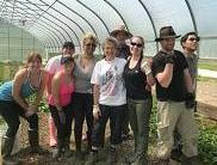
A sunny day brought Becky, Courtney, Danielle, Jason, Laura, Mary, Peter and Reshmi to Mercy Farm. They are all Occupational Therapy Assistant students at Maria College, Albany, NY. During their stay from May 14 to May 18, these students cleaned up and beautified the Bee Yard and ledge. The Griffin trail was cleared of winter's ravage and the Arc and Iris Gardens were weeded. As the weeders worked their way to the center of the Iris Garden a wonderful and rewarding surprise awaited them - the dog wood tree was covered with buds! The rain and sunshine brought out the best of this young sapling. An afternoon was spent at Foggy Meadow Farm pulling up spent spinach and other greens, to ready the soil for the next crop. While out for a walk the students saw a buck on Howard Hill Road; a fisher cat; and a spotted salamander who had taken up residence in the Hoop House.
The educational part of the week, presented by Betty, was the video Awakening the Dreamer, Changing the Dream followed by discussion. At the end of the four session program, students were presented with a bracelet symbolizing Awakening the Dreamer. Each bracelet was created by the people of Ecuador to show the connection between Ecuadorian people and the people of the United States.
The students accompanied by Betty, Holly and Mary F. attended a talk by Vermont Fish & Wildlife Biologist, Tom Rogers who discussed the impact of climate change on Vermont's wildlife and the ways we can help conserve biodiversity in Vermont in the face of these new threats. Although the focus was on Vermont, what Tom shared with the audience was not limited to Vermont and ways to address the issues are applicable to the Northeast.
The students were asked to share their Mercy Farm experience. Their comments, concisely woven together include: What they liked most - the bond between students and the Sisters; working outside; interacting and getting to know the Sisters. New learnings: bees and beekeeping; how much our Earth is in trouble; that I can stand up for a more environmentally sustainable, spiritually fulfilling and socially just world and ways in which we can individually help the environment. How they will continue what was learned: read, stay informed, listen and watch documentaries, learn from local experts; make changes in daily habits and encourage others to do the same; recycle more, avoid plastics and research information on how to continue helping. Were their goals met? A resounding yes and comments follow: I learned more about sustainability; worked hard; assisted on the farm and achieved that and so much more!; learned more about climate change and the environment; met new people; opened myself up to others; expanded relationships and did for others selflessly; and a deeper awareness of the environment and the need to cut back on things consumed for a safe and healthier planet.
The educational part of the week, presented by Betty, was the video Awakening the Dreamer, Changing the Dream followed by discussion. At the end of the four session program, students were presented with a bracelet symbolizing Awakening the Dreamer. Each bracelet was created by the people of Ecuador to show the connection between Ecuadorian people and the people of the United States.
The students accompanied by Betty, Holly and Mary F. attended a talk by Vermont Fish & Wildlife Biologist, Tom Rogers who discussed the impact of climate change on Vermont's wildlife and the ways we can help conserve biodiversity in Vermont in the face of these new threats. Although the focus was on Vermont, what Tom shared with the audience was not limited to Vermont and ways to address the issues are applicable to the Northeast.
The students were asked to share their Mercy Farm experience. Their comments, concisely woven together include: What they liked most - the bond between students and the Sisters; working outside; interacting and getting to know the Sisters. New learnings: bees and beekeeping; how much our Earth is in trouble; that I can stand up for a more environmentally sustainable, spiritually fulfilling and socially just world and ways in which we can individually help the environment. How they will continue what was learned: read, stay informed, listen and watch documentaries, learn from local experts; make changes in daily habits and encourage others to do the same; recycle more, avoid plastics and research information on how to continue helping. Were their goals met? A resounding yes and comments follow: I learned more about sustainability; worked hard; assisted on the farm and achieved that and so much more!; learned more about climate change and the environment; met new people; opened myself up to others; expanded relationships and did for others selflessly; and a deeper awareness of the environment and the need to cut back on things consumed for a safe and healthier planet.
The Adventures of Bailey and Dexter
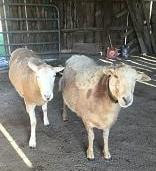
Our resident sheep are enjoying their time outside, "entertaining" our visitors and keeping a watchful eye on who is on "their turf". It is amusing to watch all the games the animals play with each other. Bailey and Dexter seem pleased to have three families of barn swallows nest in the summer barn with them. The chicks have yet to go to flight school as they are barely able peek out over their nest anticipating the arrival of their parents with a morsel of food.
Bailey's winter coat is slowly but surly moving toward a summer look. She still has "saddle-bags" and a strip of hair all the way down her back. As time passes, the saddle-bags are smaller and the strip, narrower. So all is good. Dexter is quite pleased with himself and his summer attire. One can see it in his eyes and how he prances about with the attitude "what a handsome fellow am I!" Bailey and Dexter take advantage of the length of day and enjoy the early mornings and late evenings to do as they please. They are "up with the birds" and retire as the sunlight fades away adding up to a good 12 hours to enjoy the paddocks.
Bailey's winter coat is slowly but surly moving toward a summer look. She still has "saddle-bags" and a strip of hair all the way down her back. As time passes, the saddle-bags are smaller and the strip, narrower. So all is good. Dexter is quite pleased with himself and his summer attire. One can see it in his eyes and how he prances about with the attitude "what a handsome fellow am I!" Bailey and Dexter take advantage of the length of day and enjoy the early mornings and late evenings to do as they please. They are "up with the birds" and retire as the sunlight fades away adding up to a good 12 hours to enjoy the paddocks.
Barn Yard Banter and BC
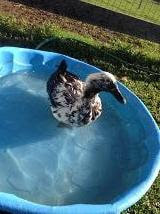
Four ducks were welcomed by our barn yard critters in May. They have nicely blended in with the sheep, hens, rooster, Guineas and BC. That is not to say that Bailey and Dexter don't look askance at them, or that the hens, who share their coop with them at night, wonder why more fowl? or Red and the Guineas ignore them or that BC keeps her distance. It will eventually all work out.
Mary and John, friends of ours, were downsizing and were looking for a nice place for their ducks and so Mercy Farm became home to them. Each duck is of a different breed: brown chocolate runner, a Cayuga, Mandarin and Swedish blue. There are two drakes and two hens or ducks. The latter have laid over a dozen large eggs that Betty uses for baking. The ducks begin their day with a jump in their swimming pool that is visited frequently throughout the day. They are seen with the rest of the fowl routing for food all around the barn yard, house and the gardens.
The hens continue to lay more eggs as each month passes. The hens follow Red who struts with great pomp and circumstance. While the Guineas have resumed their summer schedule: roaming the paddocks and near by wooded areas in the morning and a walk around the house and down and around the pond and back up to the barn. All of the "birds" take time throughout the day alternating between their search for food, sunbathing, dust baths and napping in the barn.
Frenchie enjoys her quiet time in the coop and particularly her time outside after all have retired to the coop.
BC seems to think that with her added duck responsibilities she is entitled to more time outside as she is no where to be found when her barn mates are put to bed. In short, her night life is a mystery and fortunately after a night on the town a friendly face enjoying the arrival of dawn greets us from outside of the barn.
A gray fox has been seen jogging along side of the house toward the barn. It is dis-swayed by the alarm call from the Guineas and trots off over the ridge until the next sighting. The hen count is status quo.
Mary and John, friends of ours, were downsizing and were looking for a nice place for their ducks and so Mercy Farm became home to them. Each duck is of a different breed: brown chocolate runner, a Cayuga, Mandarin and Swedish blue. There are two drakes and two hens or ducks. The latter have laid over a dozen large eggs that Betty uses for baking. The ducks begin their day with a jump in their swimming pool that is visited frequently throughout the day. They are seen with the rest of the fowl routing for food all around the barn yard, house and the gardens.
The hens continue to lay more eggs as each month passes. The hens follow Red who struts with great pomp and circumstance. While the Guineas have resumed their summer schedule: roaming the paddocks and near by wooded areas in the morning and a walk around the house and down and around the pond and back up to the barn. All of the "birds" take time throughout the day alternating between their search for food, sunbathing, dust baths and napping in the barn.
Frenchie enjoys her quiet time in the coop and particularly her time outside after all have retired to the coop.
BC seems to think that with her added duck responsibilities she is entitled to more time outside as she is no where to be found when her barn mates are put to bed. In short, her night life is a mystery and fortunately after a night on the town a friendly face enjoying the arrival of dawn greets us from outside of the barn.
A gray fox has been seen jogging along side of the house toward the barn. It is dis-swayed by the alarm call from the Guineas and trots off over the ridge until the next sighting. The hen count is status quo.
Bee Yard Buzz
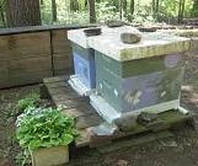
The Bee Yard once asleep during the harshness of winter now awakens with buds and emergence of leaflets. Bird song fills the air, squirrels and chipmunks scamper about. There is the scent of the forest floor bursting with the renewal of earth coming alive. Warm breezes gently drift about welcoming all who enter this sacred space.
May 11, Holly traveled to Williamstown in eastern Vermont and picked up two clusters (established colonies) of honey bees. A colony consists of a single queen, hundreds of male drones and 20,000-30,000 female worker bees. Each colony also consists of developing eggs, and pupae. See: orkin.org.
Once back at Mercy Farm, Holly installed the bees into the hives and provided them with a sugar water supplement to foster their adjustment in their new setting. Mandy Carrier, RSM helped Holly with this process. October, 2017, Saint Joseph College of Maine students painted the hives blue and green and painted a variety of leaves on them. Perhaps the new look with entice the honey bees to stay at home!
The flowering of Mayapple, pulmonaria, astilbe, ajuga and lamium are scattered about this area providing food, that is, nectar and pollen, for the Honey Bees. Lilies-of-the-valley all of a sudden appeared this year and wild violets were planted by the students. Besides raking the Bee Yard, Maria College students gathered rocks and made rock statures and a hummingbird feeder was hung near the gardens. And, once again, the Bee Yard is blessed with the sight and sound of Honey Bees!
May 11, Holly traveled to Williamstown in eastern Vermont and picked up two clusters (established colonies) of honey bees. A colony consists of a single queen, hundreds of male drones and 20,000-30,000 female worker bees. Each colony also consists of developing eggs, and pupae. See: orkin.org.
Once back at Mercy Farm, Holly installed the bees into the hives and provided them with a sugar water supplement to foster their adjustment in their new setting. Mandy Carrier, RSM helped Holly with this process. October, 2017, Saint Joseph College of Maine students painted the hives blue and green and painted a variety of leaves on them. Perhaps the new look with entice the honey bees to stay at home!
The flowering of Mayapple, pulmonaria, astilbe, ajuga and lamium are scattered about this area providing food, that is, nectar and pollen, for the Honey Bees. Lilies-of-the-valley all of a sudden appeared this year and wild violets were planted by the students. Besides raking the Bee Yard, Maria College students gathered rocks and made rock statures and a hummingbird feeder was hung near the gardens. And, once again, the Bee Yard is blessed with the sight and sound of Honey Bees!
The St. Fancis of Assisi Memorial Garden
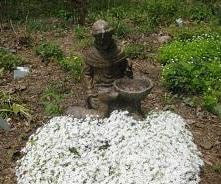
A huge covering of white phlox is in front of the statue of St. Francis. Also in full bloom and gracing the garden are bleeding hearts and windflowers.
If you would like to memorialize a loved one, contact Mercy Farm and their names will be entered into the Memorial Book located in the Catherine McAuley Chapel where they will be remembered in the prayers and works of the Sisters of Mercy on staff and those gathered with us in prayer.
If you would like to memorialize a loved one, contact Mercy Farm and their names will be entered into the Memorial Book located in the Catherine McAuley Chapel where they will be remembered in the prayers and works of the Sisters of Mercy on staff and those gathered with us in prayer.
Greetings from the Gardens
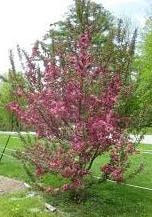
Due to the windy weather the hoop house has not yet had the plastic covering replaced. Cold weather crops that have been planted are: beets, spinach, radish, and onions. A variety of warmer weather crops will be planted in June. Rhubarb and asparagus have been harvested. The garlic plants are growing tall. The apple trees are leafing out and raspberry brambles look good. The sweet potatoes are developing a strong root system and will be planted June 5. Located in the arc garden is a flowering crab apple tree and now in full bloom it attracts the Honey Bees who are busily gathering pollen and nectar from the blossoms.
Photo credit: Betty Secord
Photo credit: Betty Secord
Blooming Blossoms
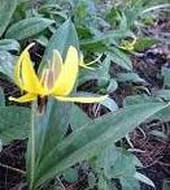
Besides the St. Francis Assisi Memorial Garden our named flower gardens are the: Peace, Terrace, Iris and Herb gardens. During the summer months you will receive a bouquet from us. We hope the photo will make you smile, lift you up, encourage you ... may it bring whatever you need when it arrives.
Featured this month is the trout lily (Erythronium americanum), also known as yellow trout lily and dog tooth violet, is a species of perennial, colony forming spring ephemeral flower native to North America and dwelling in woodland habitats. The common name "trout lily" refers to the appearance of its gray-green leaves mottled with brown or gray, which allegedly resemble the coloring of brook trout.
The trout lily does not flower for the first 4-7 years of its life. While the plant is too young to flower it will grow one leaf and once it has reached maturity may grow two paired leaves and a flower stalk. In any given trout lily colony 99 percent of the plants will be non-flowering and only have one leaf and .5 percent will have paired leaves and flowers. Trout lilies bloom in early spring before the trees growing above it develop leaves, allowing unobstructed access to sunlight and also allows it to grow when soil nutrient levels are high. The yellow trout lily produces an erect stalk with nodding one-inch flowers that close at night. This flower grows from a corm, or underground bulb shaped like an oval. The corm is located in the upper 4 inches of soil although it may be as deep as 12 inches. The bulbs are buried very deeply compared to other lily family plants. In North America, trout lilies grow in colonies that may be up to 300 years old.
See: en.m.wikipedia.org
Featured this month is the trout lily (Erythronium americanum), also known as yellow trout lily and dog tooth violet, is a species of perennial, colony forming spring ephemeral flower native to North America and dwelling in woodland habitats. The common name "trout lily" refers to the appearance of its gray-green leaves mottled with brown or gray, which allegedly resemble the coloring of brook trout.
The trout lily does not flower for the first 4-7 years of its life. While the plant is too young to flower it will grow one leaf and once it has reached maturity may grow two paired leaves and a flower stalk. In any given trout lily colony 99 percent of the plants will be non-flowering and only have one leaf and .5 percent will have paired leaves and flowers. Trout lilies bloom in early spring before the trees growing above it develop leaves, allowing unobstructed access to sunlight and also allows it to grow when soil nutrient levels are high. The yellow trout lily produces an erect stalk with nodding one-inch flowers that close at night. This flower grows from a corm, or underground bulb shaped like an oval. The corm is located in the upper 4 inches of soil although it may be as deep as 12 inches. The bulbs are buried very deeply compared to other lily family plants. In North America, trout lilies grow in colonies that may be up to 300 years old.
See: en.m.wikipedia.org
May 2018
Happenings Around the Farm
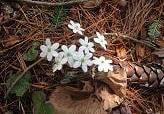
What a mixed bag of precipitation and related weather conditions! Six o'clock morning temperatures ranged from a low of 15 degrees to 51 degrees! Day time temps rose 20 degrees or more from the starting or startling early readings. Winds ranged from gentle to gale force. Seven days of rain, freezing rain, sheet, and measurable snow rounded off the April weather pattern that compromised plant and animal life. As May drew closer the early spring wild flowers emerged from the once frozen soil.
During April, Mercy Farm was the site for the Sisters of Mercy Sponsors Council and the Mercy Ecology Board, Inc. meetings; a private retreat and hospitality.
Our April guests came from: Benson, Burlington, Essex Junction, Orwell and Poultney,VT; Bloomfield, Bristol and West Hartford, CT; Portland, ME; Nashua,NH; Albany, NY; Dallas, PA; Johnston, Middletown, North Providence, Pawtucket and Riverside, RI.
During April, Mercy Farm was the site for the Sisters of Mercy Sponsors Council and the Mercy Ecology Board, Inc. meetings; a private retreat and hospitality.
Our April guests came from: Benson, Burlington, Essex Junction, Orwell and Poultney,VT; Bloomfield, Bristol and West Hartford, CT; Portland, ME; Nashua,NH; Albany, NY; Dallas, PA; Johnston, Middletown, North Providence, Pawtucket and Riverside, RI.
Special Guests
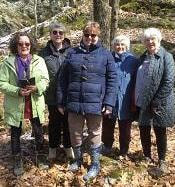
Members of the Sponsor Council met at Mercy Farm for their annual meeting. The Sponsor Council assists in the oversight of the Sisters of Mercy sponsored ministries in the Northeast. Mercy Farm is one of those ministries. After a weekend of work they went on a walking tour of the farm. They are pictured in the Bee Yard for a photo op.
A Celebration
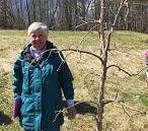
During April in recognition of Arbor Day, the Mercy Ecology, Inc. Board set aside time to plant a swamp white oak tree. Board Members and Mercy Farm staff proceeded to the site for a Tree Planting Blessing. Following the opening ritual - "It is not hard to see why the ancient druids celebrated in groves of trees. Trees are a vital part of all life on this plant ... With each tree we plant and tend as it grows, we provide a blessing to the land and its inhabitants. As the tree grows, so too does our connection with this land. We welcome this tree to our sacred home in honor of our sister, Mary Quinn, who in her being blessed this land and kept it sacred and holy." The participants symbolically used ash, soil, water and air to bless "our" tree.
Staff extracurricular activities included: a presentation by Beekeeper Matt Riley on the role of honeybees in our world. Riley, also a storyteller, wove stories of his experience with bees throughout his talk. Tips were given on how to keep lawns and gardens a healthy environment for bees. He also stressed the vital role bees play in the pollination of plants and the extremely important part they play in keeping the environment healthy. Holly and Mary attended this interesting talk and gleaned new insights in beekeeping.
The Audubon Society sponsored an evening session on the migratory routes of blue-winged and golden-winged warblers including the wonder of migratory patterns and the challenges these warblers encounter along the southern journey and their return to their summer habitats. Betty and Mary joined their friend Karen for this most informative presentation.
Betty, Holly and Mary spent a day at the Shelburne Museum which featured the exhibit "In the Garden" highlighting such American artists as: Laura Zindel, Clarice Smith, Richard Saja, James C. Sharp and Georgia O'Keeffe. "In the Garden" explored the profound influence that flowers and insects have had on art. "Puppets: World on a String" was also viewed and enjoyed. Howdy Doody and the Muffets brought back fond memories from the past! A walk about the grounds revealed a replication of life from by-gone ages. A delicious lunch was enjoyed and as we neared home a yummy dessert was enjoyed at the Wheel Inn Restaurant in Benson.
Staff extracurricular activities included: a presentation by Beekeeper Matt Riley on the role of honeybees in our world. Riley, also a storyteller, wove stories of his experience with bees throughout his talk. Tips were given on how to keep lawns and gardens a healthy environment for bees. He also stressed the vital role bees play in the pollination of plants and the extremely important part they play in keeping the environment healthy. Holly and Mary attended this interesting talk and gleaned new insights in beekeeping.
The Audubon Society sponsored an evening session on the migratory routes of blue-winged and golden-winged warblers including the wonder of migratory patterns and the challenges these warblers encounter along the southern journey and their return to their summer habitats. Betty and Mary joined their friend Karen for this most informative presentation.
Betty, Holly and Mary spent a day at the Shelburne Museum which featured the exhibit "In the Garden" highlighting such American artists as: Laura Zindel, Clarice Smith, Richard Saja, James C. Sharp and Georgia O'Keeffe. "In the Garden" explored the profound influence that flowers and insects have had on art. "Puppets: World on a String" was also viewed and enjoyed. Howdy Doody and the Muffets brought back fond memories from the past! A walk about the grounds revealed a replication of life from by-gone ages. A delicious lunch was enjoyed and as we neared home a yummy dessert was enjoyed at the Wheel Inn Restaurant in Benson.
The Adventures of Bailey and Dexter
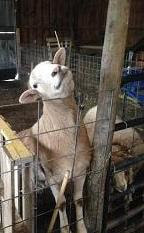
April was a busy month for Bailey and Dexter; Dexter was sheared while his mother Bailey continues to shed her winter coat. As Katahdin Hair Sheep, they usually shed their winter coats, however, during the development of this breed (1950s-1970s) from African hairless sheep and sheep with fleece, Dexter must have a recessive trait, that is, a bit of fleece. This characteristic necessitates shearing as he does not shed his coat.
Now quite handsome, Dexter needs only a touch up. He patiently watches as Bailey, now the "rag-a-muffin" is brushed. The sheep were moved into their summer quarters accompanied by the Guineas and joined by the return of the barn swallows who have built their nests near the peak of the roof. It appears that there are three pair of swallows who dart in and out through the wide barn doors and are seen doing aeronautical maneuvers through the meadow. Bailey and Dexter are happily enjoying meadow grass and their usual treat of vegetable peels and alfalfa.
Now quite handsome, Dexter needs only a touch up. He patiently watches as Bailey, now the "rag-a-muffin" is brushed. The sheep were moved into their summer quarters accompanied by the Guineas and joined by the return of the barn swallows who have built their nests near the peak of the roof. It appears that there are three pair of swallows who dart in and out through the wide barn doors and are seen doing aeronautical maneuvers through the meadow. Bailey and Dexter are happily enjoying meadow grass and their usual treat of vegetable peels and alfalfa.
Barn Yard Banter and BC
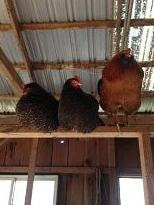
Before first light Red begins his crowing that seems to intensify as dawn approaches. The Guineas are the first birds up and out. Red and the hens have to wait for maid service to open the coop door. At which time they all scramble out after Red and head for the barn yard. And so their day begins: scratching at the soil for bugs, catching insects, sunning themselves, taking dust baths, seeing what is growing in the gardens and roaming all over the property.
Frenchie, our retired hen, lingers about after all of the other hens and Red have retired to the coop. She spends time outside stretching her legs and sampling whatever lies beneath the soil. She eventually ambles back into the barn and to her "suite". Once all of the animals are in bed the barn is secured for the night.
During the month of April the eight Barred Rocks and the two Araucanas laid just over 15 dozen eggs. An increase in egg laying has been seen as the days become longer and brighter
BC is still busy keeping an eye on everyone. She continues to give the hens a gentle swat as she passes them. As for the sheep she keeps at respectable distance as she meanders with Bailey and Dexter. She seems to know when we are out in the gardens or on the trails and will catch up with us and watch garden work or continue the walk to the Bee Yard or to the pond. The fur on BC's tail is slowly but surly growing back. But she still howls when she catches a glimpse of her tail.
Frenchie, our retired hen, lingers about after all of the other hens and Red have retired to the coop. She spends time outside stretching her legs and sampling whatever lies beneath the soil. She eventually ambles back into the barn and to her "suite". Once all of the animals are in bed the barn is secured for the night.
During the month of April the eight Barred Rocks and the two Araucanas laid just over 15 dozen eggs. An increase in egg laying has been seen as the days become longer and brighter
BC is still busy keeping an eye on everyone. She continues to give the hens a gentle swat as she passes them. As for the sheep she keeps at respectable distance as she meanders with Bailey and Dexter. She seems to know when we are out in the gardens or on the trails and will catch up with us and watch garden work or continue the walk to the Bee Yard or to the pond. The fur on BC's tail is slowly but surly growing back. But she still howls when she catches a glimpse of her tail.
Bee Yard Buzz
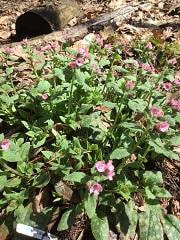
Sights and sounds in the Bee Yard are increasing. A male Cardinal was recently seen perched on a pine branch; the sounds of water still trickle down the face of the rock formation; a variety of birds are heard; the Pulmonaria (Lugwort), a spring plant is in bloom and its' spotted leaves and pink buds opening to blue are a most welcome sight!
Holly has been busy readying the hives for the honey bees that will be picked up May 11. The Bee Yard is still quite wet from the snow and rain. The improvement in weather conditions will enable the raking up of branches, leaves and pine cones that now cover the yard.
Holly has been busy readying the hives for the honey bees that will be picked up May 11. The Bee Yard is still quite wet from the snow and rain. The improvement in weather conditions will enable the raking up of branches, leaves and pine cones that now cover the yard.
The St. Francis of Assisi Memorial Garden
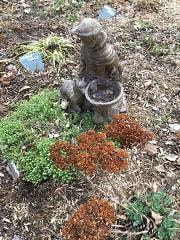
Shoots of bleeding hearts, peony, iris, Star of Bethlehem and sedum have made their appearance. Phlox and lambs ear are green and the lilac is budding. All a delight to see. This garden is too wet to rake or to cut back the stems and seed heads that were left to help the birds over winter.
If you would like to memorialize a loved one, contact Mercy Farm and their names will be entered into the Memorial Book located in the Catherine McAuley Chapel where they will be remembered in the prayers and works of the Sisters of Mercy on staff and those gathered with us in prayer.
If you would like to memorialize a loved one, contact Mercy Farm and their names will be entered into the Memorial Book located in the Catherine McAuley Chapel where they will be remembered in the prayers and works of the Sisters of Mercy on staff and those gathered with us in prayer.
Greetings From the Garden
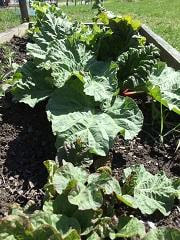
The raised beds are workable and rhubarb, Alpine strawberries and garlic are growing nicely. The asparagus has yet to show itself and the raspberry brambles are covered with emerging green leaves. The in-ground beds are quite wet in places but the chives are up as are numerous lupines. The ground is workable in the kitchen garden and will soon be planted with sweet potatoes. The herb garden's chives are up and there are signs of parsley, rosemary and lavender.
Blooming Blossoms
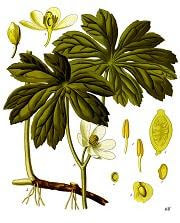
Besides the St. Francis Assisi Memorial Garden our named flower gardens are the: Peace, Terrace, Iris and Herb gardens. We also have a few indoor plants so during the winter months you will receive a bouquet from us. We hope the photo will make you smile, lift you up, encourage you ... may it bring whatever you need when it arrives.
Featured this month is the Mayapple (Podophyllum peltatum), a herbaceous perennial plant in the Barberry family described as a genus by Linnaeus in 1753. Common names: mayapple, American mandrake, wild mandrake and ground lemon. It is widespread across most of the eastern United States and southeastern Canada. Mayapples are woodland plants typically growing in colonies derived from a single root. It is quite distinctive, with its pair of large, umbrella-like, deeply-lobed palmate leaves borne on short stalks at the end of a single stem. The single apple-blossom-like flower hangs downwards, and is held at the end of a short stalk that springs from the angle of the two leaf stalks. The stems grow to 12 to 20 inches tall. Pretty white flowers appear in early May, not the "apple". The fruit or "apple" is produced early summer and ripens later in summer. All of the parts of the plant are poisonous, including the green fruit, but once the fruit has turned yellow, it can be safely eaten with the seeds removed.
Native Americans used the roots as a purgative and to treat hepatitis and fevers and a partly synthetic derivative is now used in cancer treatments.
See: en.m.wikipedia.org (text and photo credits) and Wildflowers of North America, Joan Barker, Parragon, 2009, p.138.
Featured this month is the Mayapple (Podophyllum peltatum), a herbaceous perennial plant in the Barberry family described as a genus by Linnaeus in 1753. Common names: mayapple, American mandrake, wild mandrake and ground lemon. It is widespread across most of the eastern United States and southeastern Canada. Mayapples are woodland plants typically growing in colonies derived from a single root. It is quite distinctive, with its pair of large, umbrella-like, deeply-lobed palmate leaves borne on short stalks at the end of a single stem. The single apple-blossom-like flower hangs downwards, and is held at the end of a short stalk that springs from the angle of the two leaf stalks. The stems grow to 12 to 20 inches tall. Pretty white flowers appear in early May, not the "apple". The fruit or "apple" is produced early summer and ripens later in summer. All of the parts of the plant are poisonous, including the green fruit, but once the fruit has turned yellow, it can be safely eaten with the seeds removed.
Native Americans used the roots as a purgative and to treat hepatitis and fevers and a partly synthetic derivative is now used in cancer treatments.
See: en.m.wikipedia.org (text and photo credits) and Wildflowers of North America, Joan Barker, Parragon, 2009, p.138.
April 2018
Staff Updates
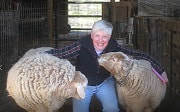
Sister Mary Quinn has been a valued staff member at Mercy Farm for almost 5 years. For personal reasons, she has decided to return to Maine this Spring.
All of us at the farm will miss Sister Mary. She has been and is a gift to us mostly because of her hospitable and caring ways not only of her human companions Betty, Holly and all of our guests, but also of Dexter, Bailey, the chickens and the myriad of birds and animals on the property.
Sister Mary is multi-talented and able to multi-task - writing the monthly newsletter, providing photographs for it, and picking up interesting stories to share. She perseveres when there is a problem to solve in the house, on the land or with the animals, with getting the newsletter out each month in a timely fashion, making sure the data base is up to date and accurate, sending out thank you notes, and so forth. There is not a machine she doesn't love, Gator (our utility truck for carting refuse, etc), lawn mower (the sheep's paddock has never had it so good), snow blower (our oil man is so appreciative of the path to the tank, as we are for getting up to the barn), and any tool that can make life easier and work lighter for all of us. Whenever anything needs to be done Mary is there willing and able to do it.
Sr. Mary will be impossible to replace for all that she has been and for all that she does here at Mercy Farm. Fortunately and thankfully, from Maine she will continue to produce the Newsletter and perform other tasks as an "extended staff" member, and we hope she will always consider Mercy Farm "home".
Summer Volunteer -
In May, we will welcome Sister Mary Friel who will spend the growing season with us as a full time volunteer.She is a Sister of Notre Dame de Namur from Connecticut and is currently at Springbank Retreat Center in South Carolina. We look forward to having Mary Friel as part of our Mercy Farm community.
Mercy Ecology at Mercy Farm seeks full-time team member -
The Board of Mercy Ecology strongly believes in and supports the importance of the mission "to inspire reverence for Earth and to live in harmony with all creation" and so we seek a team member who:
- Embraces and supports our mission
- Wishes to live in community, contribute to our ministry at Mercy Farm, and share the work of running an eco-spiritual center: caring for the land, providing Mercy hospitality for guests who come for quiet, working with volunteers and students who come to learn.
- Has a love of nature, gardening, and animals
- Faces each new day with flexibility and creativity
- Demonstrates computer skills: Microsoft Word and Excel
- Is able to work with people of all ages
Start date can be somewhat flexible, but we hope to have the position filled before Harvest.
For more information please contact Sister Nancy Audette, Executive Director,
at naudettersm@gmail.com
All of us at the farm will miss Sister Mary. She has been and is a gift to us mostly because of her hospitable and caring ways not only of her human companions Betty, Holly and all of our guests, but also of Dexter, Bailey, the chickens and the myriad of birds and animals on the property.
Sister Mary is multi-talented and able to multi-task - writing the monthly newsletter, providing photographs for it, and picking up interesting stories to share. She perseveres when there is a problem to solve in the house, on the land or with the animals, with getting the newsletter out each month in a timely fashion, making sure the data base is up to date and accurate, sending out thank you notes, and so forth. There is not a machine she doesn't love, Gator (our utility truck for carting refuse, etc), lawn mower (the sheep's paddock has never had it so good), snow blower (our oil man is so appreciative of the path to the tank, as we are for getting up to the barn), and any tool that can make life easier and work lighter for all of us. Whenever anything needs to be done Mary is there willing and able to do it.
Sr. Mary will be impossible to replace for all that she has been and for all that she does here at Mercy Farm. Fortunately and thankfully, from Maine she will continue to produce the Newsletter and perform other tasks as an "extended staff" member, and we hope she will always consider Mercy Farm "home".
Summer Volunteer -
In May, we will welcome Sister Mary Friel who will spend the growing season with us as a full time volunteer.She is a Sister of Notre Dame de Namur from Connecticut and is currently at Springbank Retreat Center in South Carolina. We look forward to having Mary Friel as part of our Mercy Farm community.
Mercy Ecology at Mercy Farm seeks full-time team member -
The Board of Mercy Ecology strongly believes in and supports the importance of the mission "to inspire reverence for Earth and to live in harmony with all creation" and so we seek a team member who:
- Embraces and supports our mission
- Wishes to live in community, contribute to our ministry at Mercy Farm, and share the work of running an eco-spiritual center: caring for the land, providing Mercy hospitality for guests who come for quiet, working with volunteers and students who come to learn.
- Has a love of nature, gardening, and animals
- Faces each new day with flexibility and creativity
- Demonstrates computer skills: Microsoft Word and Excel
- Is able to work with people of all ages
Start date can be somewhat flexible, but we hope to have the position filled before Harvest.
For more information please contact Sister Nancy Audette, Executive Director,
at naudettersm@gmail.com
Happenings Around the Farm
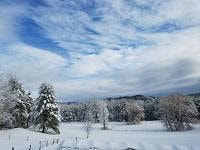
Weather wise March was full of surprises! There were three northeasters one per week during the first three weeks of March. Each brought incredible beauty as well as plenty of wind and snow. The last two weeks were quiet, with night temperatures falling below freezing and rising into the low forties during the day. Great weather for sap gathering!
Also of note, a bit bedraggled from the storms, pink hyacinths and daffodils have appeared above the now thawing soil!
Until just lately, the usual songbirds flocked to the feeders. During the storm many more of our faithful bird species came undeterred by the Red-wing blackbirds. With the warmer temperatures and budding of some trees and shrubs the birds are able to get enough to eat in the forest that surrounds the farm.
March was a busy month. Guests came for a private retreat; volunteer activities and education surrounding eco-spirituality; days of reflection and hospitality.
Our March guests came from: Benson, Brandon, Burlington and Wallingford, VT; Bloomfield, CT; Lake Katrine, Poughkeepsie, Scotia and Voorheesville, NY; Chester Springs, Hatfield, North Wales, Perkasle, Philadelphia, Souderton and Telford, PA and Cumberland, RI.
Also of note, a bit bedraggled from the storms, pink hyacinths and daffodils have appeared above the now thawing soil!
Until just lately, the usual songbirds flocked to the feeders. During the storm many more of our faithful bird species came undeterred by the Red-wing blackbirds. With the warmer temperatures and budding of some trees and shrubs the birds are able to get enough to eat in the forest that surrounds the farm.
March was a busy month. Guests came for a private retreat; volunteer activities and education surrounding eco-spirituality; days of reflection and hospitality.
Our March guests came from: Benson, Brandon, Burlington and Wallingford, VT; Bloomfield, CT; Lake Katrine, Poughkeepsie, Scotia and Voorheesville, NY; Chester Springs, Hatfield, North Wales, Perkasle, Philadelphia, Souderton and Telford, PA and Cumberland, RI.
Gwynedd Mercy University Arrives in Storm
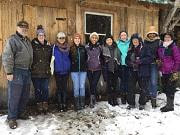
On March 4, six students: Allison, Dilon, Emily, Katie, Lizy, Nhien and Sara, Coordinator of Mercy Volunteer Corp, arrived at Mercy Farm just in time for supper and an evening to relax. The morning schedule began with a video presentation followed by a discussion on Awaking the Dreamer-Changing the Dream lead by Betty. A walking tour of the farm via the trails concluded in the barn where the students "got up close and personal" with the animals. Following lunch, the students were then divided among Betty (meal prep), Holly (Bee Yard/Honey House) and Mary (trails and barn). Supper was at 5:30 followed by a reflection on the day and free time.
Sprinkled in between the basic schedule was an afternoon trip to Green Mountain University whose tag line - First in Sustainability - was demonstrated as Ryan, Director of Sustainability, did a walking tour of the campus that included a visual and tutorial on the ways students have been able to make a tangible and positive impact on the campus via: a campus wide recycling program, construction of a bike hut and tiny house, and a computer readout of the electrical power each dorm uses and challenge events to see which dorm can drop its power consumption the most. The biomass furnace, solar panels, green houses, goats and hens were also part of the tour.
A morning was spent at a local sugar house. Bob and Karen began with an explanation of the process of sugaring as well as the opportunity to gather sap for the next batch to be boiled down into maple syrup. Samples of both the sap from the taps and maple syrup right out of the finishing tank were enjoyed by all. Bob and Karen gave the students a jar of syrup that was enjoyed over pancakes the next morning. Simply, delicious!! Thank you Bob and Karen!
An afternoon was spent at Foggy Meadow Farm where Paul described the workings of the high tunnel green house and some of the vegetables, including: spinach, Asian and mustard greens to name a few, filled this huge space. The task was to harvest bok choy and to pull up spent greens and weeds, readying the soil for the next planting.
A Nor'easter blew through Wednesday and Thursday that gave all time outside shoveling the white fluffy "stuff". Rounding off their time, students painted trail names on the new trail markers, gave a tutorial on Facebook and cooked up some fresh bok choy.
Friday came all to soon and the GMU students made one last trip to the barn to say good bye to the animals but particularly Bailey and Dexter before boarding the van for their return trip to Pennsylvania.
Sprinkled in between the basic schedule was an afternoon trip to Green Mountain University whose tag line - First in Sustainability - was demonstrated as Ryan, Director of Sustainability, did a walking tour of the campus that included a visual and tutorial on the ways students have been able to make a tangible and positive impact on the campus via: a campus wide recycling program, construction of a bike hut and tiny house, and a computer readout of the electrical power each dorm uses and challenge events to see which dorm can drop its power consumption the most. The biomass furnace, solar panels, green houses, goats and hens were also part of the tour.
A morning was spent at a local sugar house. Bob and Karen began with an explanation of the process of sugaring as well as the opportunity to gather sap for the next batch to be boiled down into maple syrup. Samples of both the sap from the taps and maple syrup right out of the finishing tank were enjoyed by all. Bob and Karen gave the students a jar of syrup that was enjoyed over pancakes the next morning. Simply, delicious!! Thank you Bob and Karen!
An afternoon was spent at Foggy Meadow Farm where Paul described the workings of the high tunnel green house and some of the vegetables, including: spinach, Asian and mustard greens to name a few, filled this huge space. The task was to harvest bok choy and to pull up spent greens and weeds, readying the soil for the next planting.
A Nor'easter blew through Wednesday and Thursday that gave all time outside shoveling the white fluffy "stuff". Rounding off their time, students painted trail names on the new trail markers, gave a tutorial on Facebook and cooked up some fresh bok choy.
Friday came all to soon and the GMU students made one last trip to the barn to say good bye to the animals but particularly Bailey and Dexter before boarding the van for their return trip to Pennsylvania.
Just in Time for the Second Nor'easter
Some of Maria Colleges finest students: Kate, Liz, Emma and Sarah arrived the day before the third Nor'easter of March blew in on March 13. This allowed for an afternoon walking tour of the farm culminating in the barn. Following free time and a delicious supper, Betty presented the first part of Awakening the Dreamer Changing the Dream. No doubt these Occupational Therapy Assistant students used the rest of the evening doing some homework or working on a jigsaw puzzle.
The rest of their schedule followed that of GMU with some differences in activities due to the blizzard. Time in the barn with Mary included mucking out the sheep's area, socializing with Bailey and Dexter and moving compost out to the Kitchen Garden. The GMU students had lettered all of the trail signs and Kate, Liz, Emma and Sarah brushed polyurethane on the signs, affixed each sign to a fence post and secured the finished product at each trail head. Shoveling snow from the walkways, decks and stairs occurred throughout the day during periods of a waning in the storm.
The students helped Holly finish the work in the Kitchen Garden, as Beekeeper, she gave the students a tour of the Bee Yard and showed the video Queen of the Sun, that describes the pollination dilemma due to the colony collapse disorder. Time was also spent removing honey from a frame and jarring it to take home. Thursday afternoon was spent at Foggy Meadow Farm working in the green house. A peek at living in a small rural community was experienced at the Wheel Inn Restaurant where a delicious meal and friendship were shared and at the Benson General Store where students saw the uniqueness of Benson's eclectic store.
And soon, Friday dawned and Kate, Liz, Emma and Sarah would leave the farm but not before they gave a traditional and informative session about Occupational Therapy. Each time there is something new to be learned. It is an amazing profession! There was also time for a photographic and Facebook tutorial.
The students commented on their appreciation of Awakening the Dreamer Changing the Dream and came away with "it doesn't have to be difficult to be environmentally aware"; "being more aware of my environment and educating others. "Starting gardens and maybe even a bee hive at my school." And still other comments - "... to become more knowledgeable of life skills ... knowing more about farm chores, making meals planting and taking care of the environment." " Working with everyone helped me to see that I can make a difference and help others too as well."
We are most appreciative of the students from Gwynedd Mercy University and Maria College who generously gave of their time and energy to not only help us but their willingness to share in our life and to experience life on a small farm in rural Vermont. At Mercy Farm we try to integrate sustainable living practices and the interconnectedness of all things under the umbrella of eco-spirituality. We are humbled and pleased by the presence of Allison, Dilon, Emily, Katie, Lizy, Nhien, Sara; Kate, Liz, Emma and Sarah among us. We are most grateful to each of you - you too have made a difference in our lives. Thank you!
The rest of their schedule followed that of GMU with some differences in activities due to the blizzard. Time in the barn with Mary included mucking out the sheep's area, socializing with Bailey and Dexter and moving compost out to the Kitchen Garden. The GMU students had lettered all of the trail signs and Kate, Liz, Emma and Sarah brushed polyurethane on the signs, affixed each sign to a fence post and secured the finished product at each trail head. Shoveling snow from the walkways, decks and stairs occurred throughout the day during periods of a waning in the storm.
The students helped Holly finish the work in the Kitchen Garden, as Beekeeper, she gave the students a tour of the Bee Yard and showed the video Queen of the Sun, that describes the pollination dilemma due to the colony collapse disorder. Time was also spent removing honey from a frame and jarring it to take home. Thursday afternoon was spent at Foggy Meadow Farm working in the green house. A peek at living in a small rural community was experienced at the Wheel Inn Restaurant where a delicious meal and friendship were shared and at the Benson General Store where students saw the uniqueness of Benson's eclectic store.
And soon, Friday dawned and Kate, Liz, Emma and Sarah would leave the farm but not before they gave a traditional and informative session about Occupational Therapy. Each time there is something new to be learned. It is an amazing profession! There was also time for a photographic and Facebook tutorial.
The students commented on their appreciation of Awakening the Dreamer Changing the Dream and came away with "it doesn't have to be difficult to be environmentally aware"; "being more aware of my environment and educating others. "Starting gardens and maybe even a bee hive at my school." And still other comments - "... to become more knowledgeable of life skills ... knowing more about farm chores, making meals planting and taking care of the environment." " Working with everyone helped me to see that I can make a difference and help others too as well."
We are most appreciative of the students from Gwynedd Mercy University and Maria College who generously gave of their time and energy to not only help us but their willingness to share in our life and to experience life on a small farm in rural Vermont. At Mercy Farm we try to integrate sustainable living practices and the interconnectedness of all things under the umbrella of eco-spirituality. We are humbled and pleased by the presence of Allison, Dilon, Emily, Katie, Lizy, Nhien, Sara; Kate, Liz, Emma and Sarah among us. We are most grateful to each of you - you too have made a difference in our lives. Thank you!
The Adventures of Bailey and Dexter
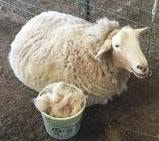
Bailey and Dexter, Kathadin Hair Sheep, have already begun to shed their hair. They rub against the fencing and side of the barn which removes some hair. Both look forward to a good brushing. Dexter seems quite pleased with himself or is he just happy that a good brushing yielded a bucket full of hair or is it a little bit of each. He is even happier now that another brushing removed the hair on his chest. Bailey is always glad when the beauty parlor is open as it gives her time to socialize and to be renewed with a new do.
Like the hens, their days are longer as they are up and out around seven and put to bed about five thirty. Although they tend to spend time in the barn, they may be seen roaming from one side of the barn to the other in search of anything that might delight their palates. They always like the excitement the students bring to say nothing about all of the pats and hugs. Bailey even gave a few kisses!
Yes, and every once in a while Bailey sees an opportunity to "escape" and see if the grass is any greener beyond the fence. She likes all the commotion her antics cause and the lure of alfalfa is very enticing - and delicious!
Like the hens, their days are longer as they are up and out around seven and put to bed about five thirty. Although they tend to spend time in the barn, they may be seen roaming from one side of the barn to the other in search of anything that might delight their palates. They always like the excitement the students bring to say nothing about all of the pats and hugs. Bailey even gave a few kisses!
Yes, and every once in a while Bailey sees an opportunity to "escape" and see if the grass is any greener beyond the fence. She likes all the commotion her antics cause and the lure of alfalfa is very enticing - and delicious!
Barn Yard Banter and BC
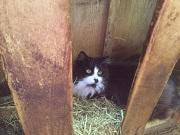
All the barn dwellers enjoy the longer and warmer days. The maid cannot get the coop door open fast enough and when opened they are on the run to get outside to begin another day of adventure. Red and his hens are seen all around the house, in the flower and vegetable gardens, hoop house and beyond the paddocks into the woods. Red is heard before anyone of them is sighted. The hens' coloring (salt and pepper, black and gray or shades of dark brown) keep them well hidden in the underbrush. They may also be heard as they scratch the leaf covered ground making a rustling noise in the search for something tasty.
During the month of March the eight Barred Rocks and two Araucana hens laid a total of 144 eggs, twenty-one of which were from the Araucanas. Good girls!
Frenchie relishes her retirement and the perks that go with it. Each day is a day of leisure, nibbling here and there when not resting or day dreaming of the good times past.
The Guineas are up and out with sun rise and may be heard greeting the day. They roam all over the property and on warm sunny days they stretch out for a nap on the side of the hill in the west paddock. Dust baths are taken in the barn by all of the flock as the soil is still too damp and cold.
Recently, Betty saw a fox along the driveway so we are on fox alert and hope that the Guineas will protect their barn mates. There is always one Guinea focused and alert of the surroundings as the others scratch in search of food or are eating or napping. Guineas have an abrasive call that lets everyone know that danger is eminent be that of a fox, a hawk or other intruders. So far there have been no other sightings.
Occasionally a howl may be heard from BC as she catches a glimpse of her tail which was shaved in order to get rid of all the burdock that had accumulated on it. She still hasn't learned that burdock is one plant to avoid at all costs. The fur in growing back ever so slowly and not as quickly as BC would like. She has not lost her spunk or mischievous spirit. The hens receive a gentle swipe as she walks past, she will stop and stare down Red and a Guinea if she feels up to challenge of their glare and quick response to her which sets her off on the run. She pretty much roams all of the 39 acres that make up Mercy Farm. When not roaming she is crouched down and focused on what lurks in the tall grass or brush. Sometimes she just sits and looks out over her estate. Other times she finds a secluded spot from which to contemplate life.
During the month of March the eight Barred Rocks and two Araucana hens laid a total of 144 eggs, twenty-one of which were from the Araucanas. Good girls!
Frenchie relishes her retirement and the perks that go with it. Each day is a day of leisure, nibbling here and there when not resting or day dreaming of the good times past.
The Guineas are up and out with sun rise and may be heard greeting the day. They roam all over the property and on warm sunny days they stretch out for a nap on the side of the hill in the west paddock. Dust baths are taken in the barn by all of the flock as the soil is still too damp and cold.
Recently, Betty saw a fox along the driveway so we are on fox alert and hope that the Guineas will protect their barn mates. There is always one Guinea focused and alert of the surroundings as the others scratch in search of food or are eating or napping. Guineas have an abrasive call that lets everyone know that danger is eminent be that of a fox, a hawk or other intruders. So far there have been no other sightings.
Occasionally a howl may be heard from BC as she catches a glimpse of her tail which was shaved in order to get rid of all the burdock that had accumulated on it. She still hasn't learned that burdock is one plant to avoid at all costs. The fur in growing back ever so slowly and not as quickly as BC would like. She has not lost her spunk or mischievous spirit. The hens receive a gentle swipe as she walks past, she will stop and stare down Red and a Guinea if she feels up to challenge of their glare and quick response to her which sets her off on the run. She pretty much roams all of the 39 acres that make up Mercy Farm. When not roaming she is crouched down and focused on what lurks in the tall grass or brush. Sometimes she just sits and looks out over her estate. Other times she finds a secluded spot from which to contemplate life.
Bee Yard Buzz
Honey bees (Apis mellifera) are the iconic bee species that has become the face of the pollinator decline crisis. In North America, honey bees are not considered wildlife. They are a domesticated species, originally imported from Europe. Also in North America there are over 4,000 wild native bee species that provide equally important pollination services in natural ecosystems as well as in agriculture and most are far less well-known or as well-studied as honey bees. Like honey bees, many native bee species are also facing steep population declines and need our help.
Honey bees do the bulk of pollination of commercial agricultural crops that require pollination, but many native bees are important commercially as well. Bumble bees employ a special tactic called "buzz pollination" where they grab a flower and vigorously vibrate their wing muscles to shake the pollen out of the flower. Honey bees cannot do this and can't pollinate such crops as tomatoes, cranberries, or eggplant that require buzz pollination. Also using this tactic are southeastern blueberry bees and orchard mason bees, important pollinators of blueberries and fruit trees, respectively.
The National Wildlife Federation (NWF) has teamed up with Beesponsible to inspire and empower people to take action on behalf of declining bee populations. For more information on Beesponsible and its new social media campaign to support the important work of the NWF, visit Beesponsible.com.
See: nwf.org Buzzworthy:NWF Teams Up with Beesponsible to Save Bees
Honey bees do the bulk of pollination of commercial agricultural crops that require pollination, but many native bees are important commercially as well. Bumble bees employ a special tactic called "buzz pollination" where they grab a flower and vigorously vibrate their wing muscles to shake the pollen out of the flower. Honey bees cannot do this and can't pollinate such crops as tomatoes, cranberries, or eggplant that require buzz pollination. Also using this tactic are southeastern blueberry bees and orchard mason bees, important pollinators of blueberries and fruit trees, respectively.
The National Wildlife Federation (NWF) has teamed up with Beesponsible to inspire and empower people to take action on behalf of declining bee populations. For more information on Beesponsible and its new social media campaign to support the important work of the NWF, visit Beesponsible.com.
See: nwf.org Buzzworthy:NWF Teams Up with Beesponsible to Save Bees
The Lemon Tree That Never Stops Giving
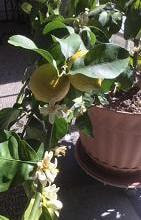
The branches of the lemon tree are "loaded" with buds! The tree shows all of the stages of growth from the smallest of buds to delicately fragrant blossoms eventually emerging into minute lemons that continue their development from green to beautiful ripe yellow lemons that will be enjoyed by all.
The Francis of Assisi Memorial Garden
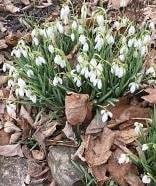
Like the rest of our gardens, this garden is too soft to rake leaving us to wonder what new growth is emerging. Located near the Memorial Garden are Snowdrops, which began to blossom in February. It is amazing how they withstood the blizzards.
If you would like to memorialize a loved one, contact Mercy Farm and their names will be entered into the Memorial Book located in the Catherine McAuley Chapel where they will be remembered in the prayers and works of the Sisters of Mercy on staff and those gathered with us in prayer.
If you would like to memorialize a loved one, contact Mercy Farm and their names will be entered into the Memorial Book located in the Catherine McAuley Chapel where they will be remembered in the prayers and works of the Sisters of Mercy on staff and those gathered with us in prayer.
Greetings from the Garden
The vegetable gardens, now free of snow and standing water, await the sun and wind to help dry them out so we can begin to work the soil. The garlic that was planted in October somehow grew through all of the snow, January thaw, standing water and blizzards. The plants broke through the soil and some are two inches tall. The resilience of nature is amazing! The hoop house will soon have a new plastic covering. Over April we look forward to days that are weather conducive for soil preparation and planting.
Blooming Blossoms
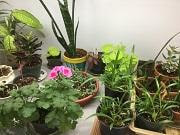
The vegetable gardens, now free of snow and standing water, await the sun and wind to help dry them out so we can begin to work the soil. The garlic that was planted in October somehow grew through all of the snow, January thaw, standing water and blizzards. The plants broke through the soil and some are two inches tall. The resilience of nature is amazing! The hoop house will soon have a new plastic covering. Over April we look forward to days that are weather conducive for soil preparation and planting.
March 2018
Happenings Around the Farm
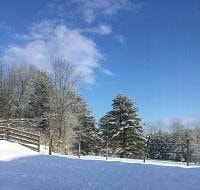
Weather wise February was an interesting month! Wake up temperatures ranged from minus 5 to 49 and everything in between. Day time temps climbed 20 to 30 degrees above the earlier six o'clock morning reading. Days of bright blue skies were mixed in with varied precipitation, that is, days of just snow to days changing from freezing rain, sleet, snow and back to rain.
Our songbirds continued to flock to the feeders. Warm days saw only a few gold finches enjoying the sunflower seeds. The others were off fending for themselves in the near by forest and meadow. Besides the usual gathering of songbirds, four wild turkeys wandered through the north meadow enjoying tid-bits along the way before continuing their trek down toward the pond before disappearing into the woods.
February was a relatively quiet month. Guests came for hospitality, private retreat, days of reflection and friends joined us for a meal and an evening of light-hearted conversation and camaraderie. Bob and Karen came with family members to visit our barn yard menagerie. Needless to say Bailey and Dexter were right on hand to greet our friends. Red strutted about with his hens, the Guineas as usual either kept their distance or flew up to the barn rafters. BC mingled in with all the goings on.
February 17, a mild day, Betty attended a lecture by Ed Sharron, Naturalist Park Service Communication Specialist, on tracking animals. His presentation was followed by a hike through the forest at Marsh-Billings-Rockerfeller Historical Park in Woodstock, VT for actual tracking. Now our resident tracker, Betty will be able to identify the various animals living on the property and those that follow their migratory route through the farm.
Sunday the 25 began with freezing rain that turned to all rain. Mondaywas bright and sunny with temperatures into the forties. In the still of the early morning as land fog covered the ground Canada geese were heard as they continued their journey north. Can it be that spring is just around the corner?
Our February guests came from: Benson, Burlington, Colchester and Wallingford VT; Bloomfield, CT; Boston, MA and Pawtucket, RI.
Our songbirds continued to flock to the feeders. Warm days saw only a few gold finches enjoying the sunflower seeds. The others were off fending for themselves in the near by forest and meadow. Besides the usual gathering of songbirds, four wild turkeys wandered through the north meadow enjoying tid-bits along the way before continuing their trek down toward the pond before disappearing into the woods.
February was a relatively quiet month. Guests came for hospitality, private retreat, days of reflection and friends joined us for a meal and an evening of light-hearted conversation and camaraderie. Bob and Karen came with family members to visit our barn yard menagerie. Needless to say Bailey and Dexter were right on hand to greet our friends. Red strutted about with his hens, the Guineas as usual either kept their distance or flew up to the barn rafters. BC mingled in with all the goings on.
February 17, a mild day, Betty attended a lecture by Ed Sharron, Naturalist Park Service Communication Specialist, on tracking animals. His presentation was followed by a hike through the forest at Marsh-Billings-Rockerfeller Historical Park in Woodstock, VT for actual tracking. Now our resident tracker, Betty will be able to identify the various animals living on the property and those that follow their migratory route through the farm.
Sunday the 25 began with freezing rain that turned to all rain. Mondaywas bright and sunny with temperatures into the forties. In the still of the early morning as land fog covered the ground Canada geese were heard as they continued their journey north. Can it be that spring is just around the corner?
Our February guests came from: Benson, Burlington, Colchester and Wallingford VT; Bloomfield, CT; Boston, MA and Pawtucket, RI.
The Adventures of Bailey and Dexter
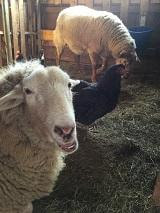
With the warm weather, Bailey and Dexter began to shed their winter coats. A good brushing facilitates the removal of loose hair that is otherwise removed by them rubbing their bodies against the fencing or the side of the barn. They seem to prefer the beauty salon where there is always chatter, pats and "aren't you beautiful or handsome" depending who is under the brush.
Holly found another Christmas tree, their third of the season, that they have been slow to eat. In their minds Christmas is over.
There is a come and go as you please policy in the barn for all of the animals. It is hard to tell if Bailey and Dexter like the occasional roam through the paddocks or use it as an escape from all of the hens clucking be that in or out of harmony with each other. It depends on whether or not you are a hen, rooster, sheep or human! They are loud and often off key.
Afternoon finds the sheep ruminating in the barn as they keep a watchful eye on the hens that come and go around them or around their legs. Red and BC do an occasional walk through making sure all is calm and their barn mates are safe and happy.
The photo shows Dexter and Bailey in their pen surrounded by some of the hens. Dexter seems to say to Bailey "when are these birds going back to their own home?"
Holly found another Christmas tree, their third of the season, that they have been slow to eat. In their minds Christmas is over.
There is a come and go as you please policy in the barn for all of the animals. It is hard to tell if Bailey and Dexter like the occasional roam through the paddocks or use it as an escape from all of the hens clucking be that in or out of harmony with each other. It depends on whether or not you are a hen, rooster, sheep or human! They are loud and often off key.
Afternoon finds the sheep ruminating in the barn as they keep a watchful eye on the hens that come and go around them or around their legs. Red and BC do an occasional walk through making sure all is calm and their barn mates are safe and happy.
The photo shows Dexter and Bailey in their pen surrounded by some of the hens. Dexter seems to say to Bailey "when are these birds going back to their own home?"
Barn Yard Banter and BC
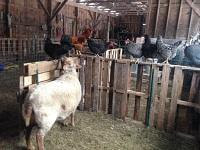
As soon as the barn doors are open in the morning the hens and Red (and BC) run for the outside where they were seen in early February nibbling at the snow. Now they search the back yard, hoop house and under the wild bird feeders for what lies beneath the thawing ground or for a missed seed or two over looked by the songbirds.
Red's crow is almost perfect as he now hits the last note of his cock-a-doodle-do. At times he seems to extend the "do-o-o!" The hens pretty much lay their eggs in an unused hay crib, taking turns in the same nest where as many as seven eggs have been found in one day! The seven barred rocks and two Araucana hens laid a total of 123 eggs, the equivalent of just over 10 dozen eggs, during February! The abundance was shared with friends and neighbors. Two of our hens, a French and Araucana, have retired and now enjoy days of leisure.
The five Guineas are outside at the crack of dawn making their way through the paddock thereby getting a head start on the "eats" before the housekeeper arrives with water, a treat of sunflower seeds and conversation. Their circle of travel increases as the snow diminishes. It won't be long before they are seen in the north meadow.
BC still howls as she catches a glimpse of her shaved tail. The fur is ever so slowly growing back. No, she has not learned that burdock was the cause of her anguish as she still returns from an outing with a burr here and there. Her paw prints in the snow tell tales of her travels and paths taken around the 39 acres that comprise Mercy Farm. BC is fulfilling her responsibilities as barn cat keeping other creatures at bay, maintaining tranquility among barn mates and entertaining all with her antics. She has found an out of the way place on top of the hay bales, a good 8 feet above the fray, where she can stretch out and nap in peace.
Red's crow is almost perfect as he now hits the last note of his cock-a-doodle-do. At times he seems to extend the "do-o-o!" The hens pretty much lay their eggs in an unused hay crib, taking turns in the same nest where as many as seven eggs have been found in one day! The seven barred rocks and two Araucana hens laid a total of 123 eggs, the equivalent of just over 10 dozen eggs, during February! The abundance was shared with friends and neighbors. Two of our hens, a French and Araucana, have retired and now enjoy days of leisure.
The five Guineas are outside at the crack of dawn making their way through the paddock thereby getting a head start on the "eats" before the housekeeper arrives with water, a treat of sunflower seeds and conversation. Their circle of travel increases as the snow diminishes. It won't be long before they are seen in the north meadow.
BC still howls as she catches a glimpse of her shaved tail. The fur is ever so slowly growing back. No, she has not learned that burdock was the cause of her anguish as she still returns from an outing with a burr here and there. Her paw prints in the snow tell tales of her travels and paths taken around the 39 acres that comprise Mercy Farm. BC is fulfilling her responsibilities as barn cat keeping other creatures at bay, maintaining tranquility among barn mates and entertaining all with her antics. She has found an out of the way place on top of the hay bales, a good 8 feet above the fray, where she can stretch out and nap in peace.
Bee Yard Buzz
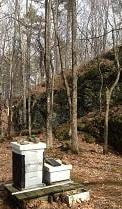
February 27, a relatively warm day, seemed to invite one to take a walk to the Bee Yard. The face of the rock formation once covered with icicles is now bare. The Bee Yard spoke in sounds of water gently dripping from the ledge and outcroppings barely audible until the drops landed with a thud on the blanket of autumn's dried leaves. A swishing noise was heard as the wind swirled through the pine trees bringing down their cones which cover a now snow less floor. Squirrels were busy chatting back and forth and an occasional bird call could be heard in the distance. The honey hives, the focal point of the Bee Yard, sat alone and quiet - in the beauty that encapsulated them.
Did you know that:
Bee pollen has been medically used as far back as 2nd B.C.
Honey bees pollinate 80 percent of green growing plants.
Roman legionaries carried pollen cakes with them on long marches as their only source of food.
Emperor Charlemagne requested honey and pollen be in the form of tax payments.
Scientific studies have found that a person can live indefinitely on bee pollen and water.
See: http://www.cherokeebeeclub.com/Bee%20Facts.htm
Did you know that:
Bee pollen has been medically used as far back as 2nd B.C.
Honey bees pollinate 80 percent of green growing plants.
Roman legionaries carried pollen cakes with them on long marches as their only source of food.
Emperor Charlemagne requested honey and pollen be in the form of tax payments.
Scientific studies have found that a person can live indefinitely on bee pollen and water.
See: http://www.cherokeebeeclub.com/Bee%20Facts.htm
The Lemon Tree That Never Stops Giving
During the month of February the lemon tree had a mix of buds and lemons in various stages of growth. It is interesting and fun to watch as a small bud matures into a white blossom and then bursts forth into a delicate and fragrant flower. The lemons range in size from tiny to almost ready for harvest. Our March guests will be the beneficiaries of fresh lemons!
The Francis of Assisi Memorial Garden
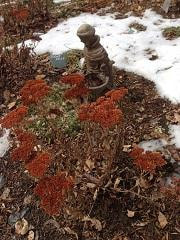
The Memorial Garden has a dab of snow here and there. The wind chime is heard as a gentle breeze tickles its chime. Hidden behind sedum, now showing off its rust colored seed heads, is the statue of Saint Francis giving water to a deer.
If you would like to memorialize a loved one, contact Mercy Farm and their names will be entered into the Memorial Book located in the Catherine McAuley Chapel where they will be remembered in the prayers and works of the Sisters of Mercy on site and those gathered with us in prayer.
If you would like to memorialize a loved one, contact Mercy Farm and their names will be entered into the Memorial Book located in the Catherine McAuley Chapel where they will be remembered in the prayers and works of the Sisters of Mercy on site and those gathered with us in prayer.
Blooming Bloosoms
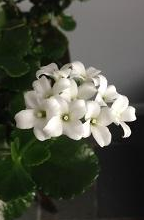
Besides the St. Francis Memorial Garden our named flower gardens are the: Peace, Terrace, Iris and Herb gardens. We also have a few indoor plants so during the winter months you will receive a bouquet from us. We hope the photo will make you smile, lift you up, encourage you ... may it bring whatever you need when it arrives.
Kalanchoe is the plant for March. This bright and cheerful succulent with thick green leaves are easy to care for and can be grown indoors or outdoors, as long as they are in relatively warm conditions and have exposure to sunlight. They need minimal watering and can suffer if over-watered. They are resistant to many diseases that harm more delicate plants and are a great low-maintenance plant.
Kalanchoe is a genus of about 125 species of tropical, succulent flowering plants in the family Crassulaceae, mainly native to Madagascar and tropical Africa. Kalanchoes are characterized by opening their flowers by growing new cells on the inner surface of the petals to force them outwards, and on the outside of the petals to close them. The flowers are divided into four sections with eight stamens.
The genus was first described by the botanist Michel Adanson in 1763. Adanson cited Georgius Josephus Camellus, a Jesuit missionary, pharmacist and naturalist as his source for the name. Kalanchoe came from the Chinese name "Kalanchauhy". The genus is predominantly native to the Old World. Only one species of this genus originates from the Americas, 56 from southern and eastern Africa and 60 species in Madagascar. It is also found in south-eastern Asia and China.
In traditional medicine, Kalanchoer species have been used to treat aliments such as infections, rheumatism and inflammation.
See: en.wikipedia.org/wiki/Kalanchoe and https://wikihow.com/Grow-Kalanchoe
Kalanchoe is the plant for March. This bright and cheerful succulent with thick green leaves are easy to care for and can be grown indoors or outdoors, as long as they are in relatively warm conditions and have exposure to sunlight. They need minimal watering and can suffer if over-watered. They are resistant to many diseases that harm more delicate plants and are a great low-maintenance plant.
Kalanchoe is a genus of about 125 species of tropical, succulent flowering plants in the family Crassulaceae, mainly native to Madagascar and tropical Africa. Kalanchoes are characterized by opening their flowers by growing new cells on the inner surface of the petals to force them outwards, and on the outside of the petals to close them. The flowers are divided into four sections with eight stamens.
The genus was first described by the botanist Michel Adanson in 1763. Adanson cited Georgius Josephus Camellus, a Jesuit missionary, pharmacist and naturalist as his source for the name. Kalanchoe came from the Chinese name "Kalanchauhy". The genus is predominantly native to the Old World. Only one species of this genus originates from the Americas, 56 from southern and eastern Africa and 60 species in Madagascar. It is also found in south-eastern Asia and China.
In traditional medicine, Kalanchoer species have been used to treat aliments such as infections, rheumatism and inflammation.
See: en.wikipedia.org/wiki/Kalanchoe and https://wikihow.com/Grow-Kalanchoe
Sound the Trumpets!
The 2017 winners of the New England Getaway Raffle are:
Eva Lallo, RI - $500
Ann Curtis, MD - East Lyme, CT
Pat Chasse, ME - Crooked Lake, NY
Chris Kavanagh, RI - Pine Point, ME
Lindora Cabral, VT - Mercy Center, CT
Mary Suenson, ME - Mercy Farm, VT
Congratulations and Thank You to everyone!
This benefit raffle for Mercy Ecology at Mercy Farm, Benson, VT,
a non-profit sponsored ministry of the Sisters of Mercy,
will enhance our mission --
to teach reverence for Earth and work toward sustainability
of life by acting in harmony with all creation.
Ann Curtis, MD - East Lyme, CT
Pat Chasse, ME - Crooked Lake, NY
Chris Kavanagh, RI - Pine Point, ME
Lindora Cabral, VT - Mercy Center, CT
Mary Suenson, ME - Mercy Farm, VT
Congratulations and Thank You to everyone!
This benefit raffle for Mercy Ecology at Mercy Farm, Benson, VT,
a non-profit sponsored ministry of the Sisters of Mercy,
will enhance our mission --
to teach reverence for Earth and work toward sustainability
of life by acting in harmony with all creation.
February 2018
Happenings Around the Farm
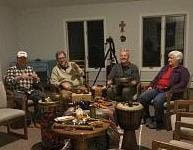
The end of December's frigid weather found it's way into January. Minus 29 degrees greeted us on New Year's Day! The thermometer danced below freezing for most of the month until the last three days when the "mercury" soared reaching into the forties and beyond to 60 degrees. The high temperature were just a tease as the last three days of January we were back in the teens with night temps in single digits!
Our songbirds still spend time at the feeders and are delightfully entertaining as they swoop in for a seed and dart back to a safe place to enjoy it. As many as five mourning doves have been seen together in the platform feeder. It remains a mystery as to how they could find seeds among all the feathers.
During January Mercy Farm was the site for a recovery retreat, a private retreat, a guest seeking information about the farm and hospitality for friends to gather, reminisce and enjoy the peace and beauty that surrounds the farm. Friends also came for time to catch up over a comfortable cup of tea.
January 11 we attended The Benson Village School Winter Concert. Students from Kindergarten to grade 8 entertained a nearly packed gym with a variety of songs from Do-Re-Me to Shalom Chaverim (Peace Friends) to C-Jam Blues. The Middle School Band, a flute quintet, clarinet and saxophone quartet were excellent and the evening concluded with a Jingle Bell Rock sing along.
Dan, Greg, Jim and Joel were among our guests. Carolyn and Reggie joined them for drumming and a delicious home cooked dinner of roasted beef with all of the trimmings. Accompanying Dan and friends were an assortment of chimes, Tibetan bells, djembe (African hand drum), tongue drum, Didjeridoo (an Australian Aborigine spiritual instrument) as well as Native American frame drums. At Dan's invitation we joined our musician friends in the Catherine McAuley Chapel for a "Sound Bath." With eyes closed Dan, Greg and Jim used a variety of instruments all filling the chapel with gentle soft sounds that easily transported us to a different time and space. It was truly a delightful evening.
Our January guests came from: Addison, Benson, Brandon, Cornwall, Ferrisburgh, Hancock, Middlebury, North Springfield, Orwell and Starksboro, VT; Branford and Mystic, CT; Burlington, Concord, Rehoboth and Shrewsbury, MA; Cherry Hill, NJ and Ticonderoga, NY.
Our songbirds still spend time at the feeders and are delightfully entertaining as they swoop in for a seed and dart back to a safe place to enjoy it. As many as five mourning doves have been seen together in the platform feeder. It remains a mystery as to how they could find seeds among all the feathers.
During January Mercy Farm was the site for a recovery retreat, a private retreat, a guest seeking information about the farm and hospitality for friends to gather, reminisce and enjoy the peace and beauty that surrounds the farm. Friends also came for time to catch up over a comfortable cup of tea.
January 11 we attended The Benson Village School Winter Concert. Students from Kindergarten to grade 8 entertained a nearly packed gym with a variety of songs from Do-Re-Me to Shalom Chaverim (Peace Friends) to C-Jam Blues. The Middle School Band, a flute quintet, clarinet and saxophone quartet were excellent and the evening concluded with a Jingle Bell Rock sing along.
Dan, Greg, Jim and Joel were among our guests. Carolyn and Reggie joined them for drumming and a delicious home cooked dinner of roasted beef with all of the trimmings. Accompanying Dan and friends were an assortment of chimes, Tibetan bells, djembe (African hand drum), tongue drum, Didjeridoo (an Australian Aborigine spiritual instrument) as well as Native American frame drums. At Dan's invitation we joined our musician friends in the Catherine McAuley Chapel for a "Sound Bath." With eyes closed Dan, Greg and Jim used a variety of instruments all filling the chapel with gentle soft sounds that easily transported us to a different time and space. It was truly a delightful evening.
Our January guests came from: Addison, Benson, Brandon, Cornwall, Ferrisburgh, Hancock, Middlebury, North Springfield, Orwell and Starksboro, VT; Branford and Mystic, CT; Burlington, Concord, Rehoboth and Shrewsbury, MA; Cherry Hill, NJ and Ticonderoga, NY.
The Adventures of Bailey and Dexter
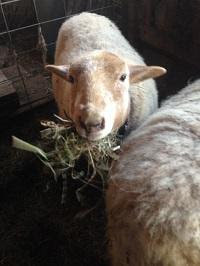
Bailey and Dexter got their Christmas wish, not one but two Christmas trees. They nibbled the first tree down to the bark and appeared bewildered when the skeleton tree was removed from the east paddock. January 27 was a lucky day for them as their friend Wes at the Transfer Station provided their second tree! All is well now that the sheep have an edible diversion to ponder besides just the same menu of hay every day.
With temps falling below zero for days on end the beverage service to the barn continues. Besides the fresh, ice free water all the animals are glad for the company and the extra attention they receive including a good brushing for Bailey and Dexter.
The chickens, a collective term for hens and roosters, the Guineas and BC spend a lot of time with the sheep or in their pen when they are outside. One day a barred rock hen was in the crib while Bailey and Dexter were eating their breakfast of hay! Needless to say later that day we found an egg in the crib. The sheep seem to eat around the hen until the hen leaves and then finish eating their hay. So far three eggs have been collected from the crib. It should be noted that the hens have a nice coop with nesting boxes. Unfortunately, they choose to lay their eggs elsewhere.
With temps falling below zero for days on end the beverage service to the barn continues. Besides the fresh, ice free water all the animals are glad for the company and the extra attention they receive including a good brushing for Bailey and Dexter.
The chickens, a collective term for hens and roosters, the Guineas and BC spend a lot of time with the sheep or in their pen when they are outside. One day a barred rock hen was in the crib while Bailey and Dexter were eating their breakfast of hay! Needless to say later that day we found an egg in the crib. The sheep seem to eat around the hen until the hen leaves and then finish eating their hay. So far three eggs have been collected from the crib. It should be noted that the hens have a nice coop with nesting boxes. Unfortunately, they choose to lay their eggs elsewhere.
Barn Yard Banter and BC
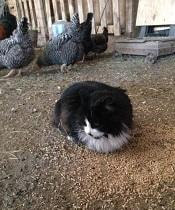
Since the last week of December our frost free pump in the barn froze due to days of temperatures well below freezing. To solve this problem a poultry fount with heated base was purchased. Even BC strolls up to the fount for a drink. Speaking of our barn cat, she has a knack for finding burdock. She acts like a magnet collecting the prickly flower heads now dried easily attach to her fur. Burdocks work their way into the fur resulting in matted fur. One afternoon BC's big beautiful fluffy tail managed to become quite entangled with the dried flower heads. She looked at her tail in great dismay and howled. BC was whisked off to the vets where her tail was shaved relieving what was probably a very painful problem. Due to the extreme cold weather she was confined to her "suite" for several days. During the quarantine, BC missed being out with her barn yard friends and became out of sorts when she looked at her tail, in spite of telling her that all her beauty was not in her tail.
She is now seen roaming happily throughout the property. When passing a hen she gives a gentle swipe and trots off. She is also in and out of Bailey and Dexter's pen, walking along the top of the hay cribs or climbing up to the top of the pile of baled hay. She is again a very happy gal!
Sunny mild days bring our fine feathered friends outside. They may pause to enjoy the sun's warmth or walk along the foundation of the house and barn as the soil is soft and a delicacy may be plucked from the now thawing soil. The bird feeders are a big attraction and they gobble up what ever seed has fallen. On cold days all choose to stay in the barn where they perch on the fencing or on the top of fence poles. They totter back and forth until their body is balanced on heavy gauge wire with the diameter of spaghetti. Some fly up to the rafters out of the fray or sit near the windows sunning themselves.
Deserving special attention is our sole French hen who is perhaps the oldest of the flock. She spends her days in the coop relishing the peace and quiet, eating grain, sunflower seeds and resting. Her nighttime sleeping arrangement is an area outside the coop where she continues to eat and rest without the distraction of the rooster.
She is now seen roaming happily throughout the property. When passing a hen she gives a gentle swipe and trots off. She is also in and out of Bailey and Dexter's pen, walking along the top of the hay cribs or climbing up to the top of the pile of baled hay. She is again a very happy gal!
Sunny mild days bring our fine feathered friends outside. They may pause to enjoy the sun's warmth or walk along the foundation of the house and barn as the soil is soft and a delicacy may be plucked from the now thawing soil. The bird feeders are a big attraction and they gobble up what ever seed has fallen. On cold days all choose to stay in the barn where they perch on the fencing or on the top of fence poles. They totter back and forth until their body is balanced on heavy gauge wire with the diameter of spaghetti. Some fly up to the rafters out of the fray or sit near the windows sunning themselves.
Deserving special attention is our sole French hen who is perhaps the oldest of the flock. She spends her days in the coop relishing the peace and quiet, eating grain, sunflower seeds and resting. Her nighttime sleeping arrangement is an area outside the coop where she continues to eat and rest without the distraction of the rooster.
Bee Yard Buzz
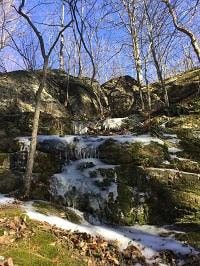
During winter the bee yard can be very still. Some days there is no sound of leaves rustling, birds chirping or small animals scampering across the snow. Warmer weather has now caused the icicles on the face of the rock formation to thaw - the dripping is almost silent. There is no sound from the bee hive and again we can only hope that the honey bees survive the winter.
This months fun facts are about honey. Characteristic properties of honey are: antibiotic, antiviral, anti-inflammatory, anti-carcinogenic, expectorant, anti-allergic, laxative and anti-anemic. Honey glucose boosts absorption of essential minerals such as zinc, calcium and magnesium.
Of the over 900 different remedies used in ancient Egypt, more than 500 were honey-based. Hieroglyphics refer to honey as the "universal healer" and jars were placed in tombs of the dead. See: http://www.cherokeebeeclub.com/Bee%20Facts.htm
This months fun facts are about honey. Characteristic properties of honey are: antibiotic, antiviral, anti-inflammatory, anti-carcinogenic, expectorant, anti-allergic, laxative and anti-anemic. Honey glucose boosts absorption of essential minerals such as zinc, calcium and magnesium.
Of the over 900 different remedies used in ancient Egypt, more than 500 were honey-based. Hieroglyphics refer to honey as the "universal healer" and jars were placed in tombs of the dead. See: http://www.cherokeebeeclub.com/Bee%20Facts.htm
The Lemon Tree That Never Stops Giving
Holly picked three big juicy sweet lemons in January and Betty used the fruit in a variety of dishes for our guests. Over time Holly's lemon tree has spread hither and yond via seeds that were requested and subsequently given away. It is fun to watch these seeds grow into a tree that will bear the long awaited juicy fruit.
The Francis of Assisi Memorial Garden

The snow cover in the Memorial Garden is diminishing with the warmer weather. A ray of sunlight struck the statue of St. Francis revealing a lamb under his watchful eye. The garden is always beautiful regardless of the time of day or season.
If you would like to memorialize a loved one, contact Mercy Farm and their names will be entered into the Memorial Book located in the Catherine McAuley Chapel where they will be remembered in the prayers and works of the Sisters of Mercy on site and those gathered with us in prayer.
If you would like to memorialize a loved one, contact Mercy Farm and their names will be entered into the Memorial Book located in the Catherine McAuley Chapel where they will be remembered in the prayers and works of the Sisters of Mercy on site and those gathered with us in prayer.
Greetings from the Gardens
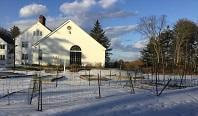
The twelve inch boards comprising the raised beds once invisible under the snow are now seen. An encouraging sight! The apple trees will be pruned during the next cold snap. And one of these days, the raspberry brambles will be cut back. This will happen late March or early April depending on Mother Nature. Holly has already begun to plan the layout for the rest gardens and what seeds will be planted where. Mary waits for the best time to cut back the brambles
Blooming Blossoms

Besides the St. Francis Memorial Garden our named flower gardens are the: Peace, Terrace, Iris and Herb gardens. We also have a few indoor plants so during the winter months you will receive a bouquet from us. We hope the photo will make you smile, lift you up, encourage you ... may it bring whatever you need when it arrives.
The flower featured this month is the Ice Cube Orchid (Phalaenopsis Blume), also know as moth orchids. It is abbreviated Phal in the horticultural trade and is an orchid genus of approximately 60 species. The Ice Cube Orchid is one of the most popular orchids in the trade, through the development of many artificial hybrids. See: wikipedia
The name "ice cube orchid" perhaps comes from the fact that it is nourished and sustained by three ice cubes per week!
The common name of "moth orchid" derives from the shape of the flower which resembles a moth in flight.
See: ourhouseplants.com
Phalaenopsis orchid, the most highly coveted of ornamental plants, the delicate, exotic and graceful orchid represents love, luxury, beauty and strength.
See: https://www.teleflora.com>orchids
The flower featured this month is the Ice Cube Orchid (Phalaenopsis Blume), also know as moth orchids. It is abbreviated Phal in the horticultural trade and is an orchid genus of approximately 60 species. The Ice Cube Orchid is one of the most popular orchids in the trade, through the development of many artificial hybrids. See: wikipedia
The name "ice cube orchid" perhaps comes from the fact that it is nourished and sustained by three ice cubes per week!
The common name of "moth orchid" derives from the shape of the flower which resembles a moth in flight.
See: ourhouseplants.com
Phalaenopsis orchid, the most highly coveted of ornamental plants, the delicate, exotic and graceful orchid represents love, luxury, beauty and strength.
See: https://www.teleflora.com>orchids
Plan Now to Invite Birds to your Home
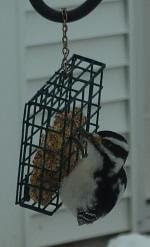
Winter is a great time to start thinking about how to improve your garden for birds and other backyard wildlife. Start planning your garden now and make a haven for wildlife by including the elements of a Certified Wildlife Habitat! It's as easy as providing sources of food, water, cover and places to raise their young and maintaining your garden in a natural, sustainable way.
The Urban Balcony - 1 shallow dish with water = water; 1 roosting box = cover; l large flower pot with three native plants, including milkweed = food sources, place to raise their young, cover, sustainability; eliminate chemical pesticides = sustainability.
The Suburban Haven - 1 tree = food, cover, place to raise their young; 1 hummingbird feeder or native nectar plant = food; 1 berrying shrub = food, cover, place to raise their young; 1 birdbath = water; organic mulch or ground cover = sustainability; limit water use = sustainability.
The Natural Grounds - 1 wooded area = food, cover, place to raise their young; 1 garden pond = water, cover, place to raise their young; a native wildflower patch = food, cover, place to raise their young; 1 berrying shrub = food, cover, place to raise their young; remove invasive exotic plants = sustainability; reduce or eliminate lawn = sustainability.
Each garden achieves the same goals: 3 food sources, 1 water source, 2 places for cover, 2 places to raise their young and 2 sustainable gardening practices. Does your garden provide these things? Certify it as a Certified Wildlife Habitat!
See: NationalWildlifeFederation@nwf.org via mta-bbaspool.convio.net
The Urban Balcony - 1 shallow dish with water = water; 1 roosting box = cover; l large flower pot with three native plants, including milkweed = food sources, place to raise their young, cover, sustainability; eliminate chemical pesticides = sustainability.
The Suburban Haven - 1 tree = food, cover, place to raise their young; 1 hummingbird feeder or native nectar plant = food; 1 berrying shrub = food, cover, place to raise their young; 1 birdbath = water; organic mulch or ground cover = sustainability; limit water use = sustainability.
The Natural Grounds - 1 wooded area = food, cover, place to raise their young; 1 garden pond = water, cover, place to raise their young; a native wildflower patch = food, cover, place to raise their young; 1 berrying shrub = food, cover, place to raise their young; remove invasive exotic plants = sustainability; reduce or eliminate lawn = sustainability.
Each garden achieves the same goals: 3 food sources, 1 water source, 2 places for cover, 2 places to raise their young and 2 sustainable gardening practices. Does your garden provide these things? Certify it as a Certified Wildlife Habitat!
See: NationalWildlifeFederation@nwf.org via mta-bbaspool.convio.net
January 2018
Happenings Around the Farm
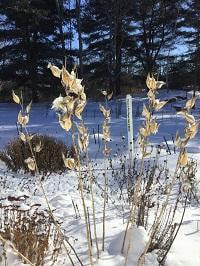
December began with an accumulation of one inch of rain! Snow finally arrived on the ninth leaving a covering of one inch. Winter blew in on the twelfth with nine inches of snow. Along with the snow were accompanying temperatures reaching minus 8 during the night rising to single digits during the day. The month ended with extremely frigid temperatures and six inches of snow. Each season brings a new and unique beauty to the landscape. Winter has a crisp look, a crunch beneath ones feet, the smell of wood stoves waffling through the air and the feeling that spring is just around the corner is recognized by longer days.
The bird feeders are filled morning and night for our songbirds. Added to our December early arrivals (eastern bluebirds, hairy woodpeckers, mourning doves, chickadees, blue jays and nuthatches) are cardinals, juncos, gold finches, downy, pileated and red-bellied woodpeckers.
During December Mercy Farm was the site for a couple's retreat, a guest seeking information about the farm and hospitality for friends to gather, reminisce and enjoy the coziness of the farm.
The last week of December was quiet allowing the staff to join their families for Christmas. Our home and animals were well cared for by our friend and neighbor Norma.
Our December guests came from: Benson, Burlington, Essex Junction, Fair Haven, Wallingford and West Rutland, VT; Hartford and Windsor, CT and Strousburg, PA
The bird feeders are filled morning and night for our songbirds. Added to our December early arrivals (eastern bluebirds, hairy woodpeckers, mourning doves, chickadees, blue jays and nuthatches) are cardinals, juncos, gold finches, downy, pileated and red-bellied woodpeckers.
During December Mercy Farm was the site for a couple's retreat, a guest seeking information about the farm and hospitality for friends to gather, reminisce and enjoy the coziness of the farm.
The last week of December was quiet allowing the staff to join their families for Christmas. Our home and animals were well cared for by our friend and neighbor Norma.
Our December guests came from: Benson, Burlington, Essex Junction, Fair Haven, Wallingford and West Rutland, VT; Hartford and Windsor, CT and Strousburg, PA
The Adventures of Bailey and Dexter
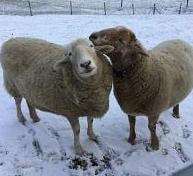
Our sheep take everything in stride, the snow being no exception. First things first, after a breakfast of hay Bailey and Dexter plan their day. As the temperature climbs a bit they decide to venture forth, wandering through the gently falling snow, stopping here or there for a nibble of something. The ten inches plus snow limit their time in the paddocks to peeking out the door to watch the accumulating snow. They venture out just in case there is a bare spot of grass to nibble. Regardless of the weather or the amount of snow they can always be seen at three in the afternoon peering through the east paddock gate giving a bleat or two reminding us that it is time for all good animals to be fed and put to bed for the night.
The extreme cold weather has necessitated adding a beverage service to the list of amenities to Bailey, Dexter, BC and their fine feathered friends. By noon the water in the hens' bowls has frozen. The bowls are freed of ice; warm tap water from the house is added, to keep the water from freezing too fast, to the cold water from the frost free hydrant in the barn. This is a process that is repeated at bedtime. Bailey and Dexter have a heated bucket of water which is topped off at night. The last few days of December the temperature reached to minus 20 or a bit warmer into single numbers! Days of consistent cold left the frost free hydrant frozen making it necessary to carry jugs of water from the house to the barn. A warm spell is not in the foreseeable future.
Our friend Wes, from the transfer station, is keeping watch for discarded Christmas trees as Bailey and Dexter enjoy eating the foliage. Many of the popular varieties selected as Christmas trees can be used as a food supplement in limited quantities. The white pine and Scotch pine are common along with the Fraser, Douglas fir, and the blue spruce.
Apparently to sheep, these trees not only taste good but the needles are good for their digestion. They also provide a sufficient source of vitamin C; trace amounts of nutrients, antioxidants, minerals and forage. In addition, the activity of chewing down on a tasty novelty interrupts the boring days of winter and eating only hay. A tasty treat plus health benefits!
Chickens also enjoy either nibbling or playing with the pine needles and branches. The entire Christmas tree can provide a wind break in the chicken run, and as an activity center for bored chickens.
Every year 36 million Christmas trees are harvested for the holidays, with most ending up in land fills afterward. As noted above, an environmentally-friendly alternative is giving them to sheep, goats and chickens.
See: timbercreekfarm.com and BuzzFeednews
The extreme cold weather has necessitated adding a beverage service to the list of amenities to Bailey, Dexter, BC and their fine feathered friends. By noon the water in the hens' bowls has frozen. The bowls are freed of ice; warm tap water from the house is added, to keep the water from freezing too fast, to the cold water from the frost free hydrant in the barn. This is a process that is repeated at bedtime. Bailey and Dexter have a heated bucket of water which is topped off at night. The last few days of December the temperature reached to minus 20 or a bit warmer into single numbers! Days of consistent cold left the frost free hydrant frozen making it necessary to carry jugs of water from the house to the barn. A warm spell is not in the foreseeable future.
Our friend Wes, from the transfer station, is keeping watch for discarded Christmas trees as Bailey and Dexter enjoy eating the foliage. Many of the popular varieties selected as Christmas trees can be used as a food supplement in limited quantities. The white pine and Scotch pine are common along with the Fraser, Douglas fir, and the blue spruce.
Apparently to sheep, these trees not only taste good but the needles are good for their digestion. They also provide a sufficient source of vitamin C; trace amounts of nutrients, antioxidants, minerals and forage. In addition, the activity of chewing down on a tasty novelty interrupts the boring days of winter and eating only hay. A tasty treat plus health benefits!
Chickens also enjoy either nibbling or playing with the pine needles and branches. The entire Christmas tree can provide a wind break in the chicken run, and as an activity center for bored chickens.
Every year 36 million Christmas trees are harvested for the holidays, with most ending up in land fills afterward. As noted above, an environmentally-friendly alternative is giving them to sheep, goats and chickens.
See: timbercreekfarm.com and BuzzFeednews
Barn Yard Banter and BC
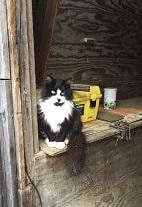
The barn yard changed with the first measurable snow, although only an inch deep, BC ran out into a ground covered in white. A quick trip up to the rock formation, around the barn and back inside to mull over what had happened to green grass and warmer days and to ponder whether or not she should venture forth into the beauty of the day. BC decided to weigh the pros and cons of this decision from a place where she could see what was happening outside as well as inside the barn. She eventually chose to hear the crunch beneath her paws, feel the snow as it gently fell on her winter coat and a lick or two of the lacy ice particles on the blades of grass brought new meaning to winter!
As December passed the one inch of snow became so much more! Twenty inches now covers this area! Each day gave the animals a new choice on how they would spend their days. On days that howled with blowing wind and snow found all cozied up in the barn.
Days with sunshine found the Guineas and BC huddled outside against the south side of the barn where they were warmed by the sun. The barred rock hens spent some of their day wandering about the paddocks and along the snow blown path scratching the frozen earth for whatever enticed them. The band of three is still pretty tight and is always together. The French hens, the oldest of the flock, spend their winter in the barn tucked together in a patch of sunshine or snuggled in the hay.
The extreme aggressiveness of the Plymouth barred rock (Rock) rooster necessitated his removal from the farm. Red, now the sole rooster, is seen strutting about, finding a high roost from where he gives a hearty cock-a-doodle-do! The barn is calmer now as all adjust to a new reality.
On a lighter note, the silver and black Araucana hen has been seen in the hay crib as Bailey and Dexter savor a meal of hay. She wanders through the hay at the tip of their noses but the sheep engrossed with their meal ignore her.
As December passed the one inch of snow became so much more! Twenty inches now covers this area! Each day gave the animals a new choice on how they would spend their days. On days that howled with blowing wind and snow found all cozied up in the barn.
Days with sunshine found the Guineas and BC huddled outside against the south side of the barn where they were warmed by the sun. The barred rock hens spent some of their day wandering about the paddocks and along the snow blown path scratching the frozen earth for whatever enticed them. The band of three is still pretty tight and is always together. The French hens, the oldest of the flock, spend their winter in the barn tucked together in a patch of sunshine or snuggled in the hay.
The extreme aggressiveness of the Plymouth barred rock (Rock) rooster necessitated his removal from the farm. Red, now the sole rooster, is seen strutting about, finding a high roost from where he gives a hearty cock-a-doodle-do! The barn is calmer now as all adjust to a new reality.
On a lighter note, the silver and black Araucana hen has been seen in the hay crib as Bailey and Dexter savor a meal of hay. She wanders through the hay at the tip of their noses but the sheep engrossed with their meal ignore her.
Bee Yard Buzz
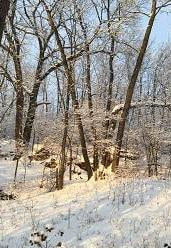
The Bee Yard expresses its overwhelming beauty as an abundance of steady snow gently rests on tree boughs and builds up on the evergreens, pulling their limbs toward the frozen ground below. The bee hive is barely visible through the falling snow. We can only hope that the honey bees will survive the winter.
Did you know that honey:
- varieties can contain as much as 300 milligrams of vitamin C per 100 grams of honey.
- has a PH of 3.4-3.6, and can kill many kinds of bacteria it comes in contact with.
- contains valuable nutrients that are easily digested by our bodies.
- contains proteins, carbohydrates, organic acids, along with antimicrobial compounds.
- is one of the foods with the highest content of enzy
Did you know that honey:
- varieties can contain as much as 300 milligrams of vitamin C per 100 grams of honey.
- has a PH of 3.4-3.6, and can kill many kinds of bacteria it comes in contact with.
- contains valuable nutrients that are easily digested by our bodies.
- contains proteins, carbohydrates, organic acids, along with antimicrobial compounds.
- is one of the foods with the highest content of enzy
The Lemon Tree That Never Stops Giving
Since late August, the lemon tree has resided in front of the sliding door in the Catherine McAuley chapel, a spot well suited for lemon production. There are at least 21 lemons on the tree at various stages of development along with branches of blossoms. The time of harvest is still a ways away.
The Francis of Assisi Memorial Garden
A thick blanket of snow covers the Memorial Garden. The wind chime is heard as a gentle breeze passes through the garden. Beneath all of the snow and frozen earth a variety of bulbs and plant roots are being nourished, strengthened and renewed for the seasons to come.
If you would like to memorialize a loved one, contact Mercy Farm and their names will be entered into the Memorial Book located in the Catherine McAuley Chapel where they will be remembered in the prayers and works of the Sisters of Mercy on site and those gathered with us in prayer.
If you would like to memorialize a loved one, contact Mercy Farm and their names will be entered into the Memorial Book located in the Catherine McAuley Chapel where they will be remembered in the prayers and works of the Sisters of Mercy on site and those gathered with us in prayer.
Greetings from the Garden
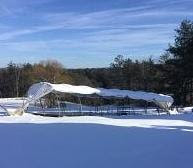
Like the Memorial Garden, all flower, vegetable and bramble beds are "snowed in". In some beds the soil with a layer of fall dressing is being rejuvenated, the garlic bulbs and asparagus roots are being readied to burst forth late spring and the alpine strawberry and raspberry bramble roots continue to strengthen and spread. The hoop house is silent now and the sides have been rolled up so its beds will be nourished by the snow.
A number of seed catalogs have arrived and soon the plotting and planning for the crop of 2018 will begin in earnest!
A number of seed catalogs have arrived and soon the plotting and planning for the crop of 2018 will begin in earnest!
How to Help Songbirds in the Winter
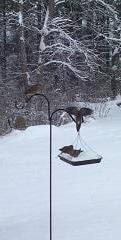
Make a decision to put out bird food regularly.
In particular, before and after severe weather. If possible, feeding first thing in the morning and late afternoon can help birds restore energy when it is most needed, before and after snow storms. Once you attract birds to feed during winter, you will need to remain consistent because the birds come to rely on the food source you're providing and expect it. Sudden cessation of the food source while the weather is still severe can be catastrophic for the birds.
Position feeders where birds can find them easily and can keep an eye out for any possible dangers.
Always try to locate feeders out of the wind.
Provide the sort of food that the birds would be getting on their normal diet, while focusing most on foods of high calorie content. Suet cakes, black oil sunflower seeds and Niger/Nyjer thistle seed are favorites of our winter songbirds.
Additional Tips: Remember to clear feeders of snow regularly; clean feeders regularly using a mild disinfectant solution. If squirrels become a problem, put out a critter block for them; high energy suet is recommended for winter and be patient, it may take some weeks before the birds realize that you're offering delicious, high energy fare for them.
In particular, before and after severe weather. If possible, feeding first thing in the morning and late afternoon can help birds restore energy when it is most needed, before and after snow storms. Once you attract birds to feed during winter, you will need to remain consistent because the birds come to rely on the food source you're providing and expect it. Sudden cessation of the food source while the weather is still severe can be catastrophic for the birds.
Position feeders where birds can find them easily and can keep an eye out for any possible dangers.
Always try to locate feeders out of the wind.
Provide the sort of food that the birds would be getting on their normal diet, while focusing most on foods of high calorie content. Suet cakes, black oil sunflower seeds and Niger/Nyjer thistle seed are favorites of our winter songbirds.
Additional Tips: Remember to clear feeders of snow regularly; clean feeders regularly using a mild disinfectant solution. If squirrels become a problem, put out a critter block for them; high energy suet is recommended for winter and be patient, it may take some weeks before the birds realize that you're offering delicious, high energy fare for them.
December 2017
Happenings Around the Farm
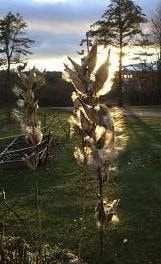
October's summer like weather flowed into early November and abruptly changed November 7 when finally it was fall! The forest now stripped of its leaves allows one to see through it to the meadows and Eastern Pines off in the distance. Temperatures are seasonal now and vegetation and creatures great and small are beginning to get back on track. Night temperatures have been in the mid teens and stretch into the thirties by early afternoon. There have been days of heavy winds and gusts, rain, snow and sunshine. Our outdoor chores are complete including snow shovels and the snow thrower ready for what ever might come. The fire wood has been stacked on the inside wood rack and and the gator loaded with wood is handy and dry when needed. The bird feeders await the arrival of winter birds. So far we have seen hairy woodpeckers, mourning doves, chickadees, blue jays and nuthatches.
During November Mercy Farm was the site for the Order of Ecumenical Franciscans Retreat, A Journey to Self Yoga Retreat, private retreats, the Mercy Ecology Board meeting and hospitality.
When not readying for winter, staff attended a conference focusing on the Lake Champlain watershed entitled Save the Water.
Our November guests came from: Benson, Burlington, Castleton, Charlotte, Colchester, Essex Junction, Hinesburg, Montpelier, Orwell, Rutland, Shelburne, South Burlington, St. Johnsbury and Underhill Center, VT; Mountain Center, CA; Bloomfield, Bristol, Hartford, West Hartford and Willimantic, CT; Orlando, FL; Portland, ME; Portsmouth and Salem, NH; Richman, IN; Farmington, NM; Clifton Park and Rensselaer, NY; Strousbury and Sugarloaf, PA and Pawtucket, RI.
During November Mercy Farm was the site for the Order of Ecumenical Franciscans Retreat, A Journey to Self Yoga Retreat, private retreats, the Mercy Ecology Board meeting and hospitality.
When not readying for winter, staff attended a conference focusing on the Lake Champlain watershed entitled Save the Water.
Our November guests came from: Benson, Burlington, Castleton, Charlotte, Colchester, Essex Junction, Hinesburg, Montpelier, Orwell, Rutland, Shelburne, South Burlington, St. Johnsbury and Underhill Center, VT; Mountain Center, CA; Bloomfield, Bristol, Hartford, West Hartford and Willimantic, CT; Orlando, FL; Portland, ME; Portsmouth and Salem, NH; Richman, IN; Farmington, NM; Clifton Park and Rensselaer, NY; Strousbury and Sugarloaf, PA and Pawtucket, RI.
The Adventures of Bailey and Dexter
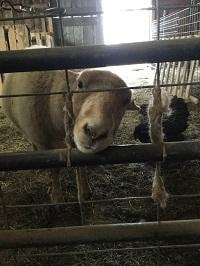
Bailey and Dexter moved into the winter barn November 7 and that night the temperature dropped to 17 degrees! They were happy to be in their new quarters as it is warmer for all of the animals to be in same area. This new arrangement gives the sheep a perk or two, that is, the gates to both paddocks are left open giving them the freedom to roam as they please. Secondly, with their summer grazing limited their diet now includes hay! Of course they also have a snack of carrots or vegetable peels with a bit of alfalfa pellets. All very tempting!
Although older, Bailey quickly spots an open gate and quickly moves into the great outdoors. The Gator was used to bring the lawn furniture into the summer barn for
storage and with all of the coming and going through the west gate it was inadvertently left open. In the meantime the sheep had been brought into the winter barn for the night. Mary was on the east side of the barn rolling up a hose when startled by the appearance of Bailey and Dexter doing some serious lawn grazing. Off to the alfalfa barrel and then off to the sheep in an attempt to tease them back to the barn. Unfortunately, they would have nothing to do with the alfalfa and continued to "mow the lawn". Betty came to the rescue with two nice big delicious looking carrots. Still they stood their ground and moved from the backyard to the front yard. Finally, Bailey took a bite of a carrot and slowly but surely the sheep one bite at a time followed Mary and Betty back to the barn.
Although older, Bailey quickly spots an open gate and quickly moves into the great outdoors. The Gator was used to bring the lawn furniture into the summer barn for
storage and with all of the coming and going through the west gate it was inadvertently left open. In the meantime the sheep had been brought into the winter barn for the night. Mary was on the east side of the barn rolling up a hose when startled by the appearance of Bailey and Dexter doing some serious lawn grazing. Off to the alfalfa barrel and then off to the sheep in an attempt to tease them back to the barn. Unfortunately, they would have nothing to do with the alfalfa and continued to "mow the lawn". Betty came to the rescue with two nice big delicious looking carrots. Still they stood their ground and moved from the backyard to the front yard. Finally, Bailey took a bite of a carrot and slowly but surely the sheep one bite at a time followed Mary and Betty back to the barn.
Barn Yard Banter and BC
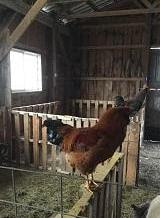
This summer BC managed to find every burdock she could to the point that she had to see the vet to have them cut out. You may recall that she was shaved except for her head and paws. Like Bailey and Dexter she has a nice warm winter coat. She still manages to find a burdock or two and shows them off as if they accessorized her wardrobe. Cats are so fussy.
The weather is of little concern to BC. No matter what the prediction she is out and about surveying the estate or looking for a morsel. However, now and then she needs a break and has been spotted relaxing in the hoop house on a chair that provides a respite for two as well as four legged creatures. Lately, she has become camera shy. The camera comes out and off she trots. Finally, Holly caught up with her for this issue's photo op.
It appears that all of the animals are happy to be together. The chickens have found the hay crib which will be another place for us to look for their eggs. All seem to enjoy scratching the ground or moving the hay around in search of something delicious. At times Bailey and Dexter are joined by all of the birds. They surround the
sheep by perching on the heavy gauge fencing, the partitions that make up the two sheep stalls and along the tops of the hay cribs. BC is also a part of the mix as she strolls through the area going through or around the sheep's legs.
The Rhode Island Red (Red) and the Barred Rock (Rock) roosters are now clearly "singing" their unique crows. We look forward to the day they get their crows synchronized rather than the echo effect that occurs throughout the day. Roosters crow at all times and in response to a range of seemingly innocuous stimuli, like the sound of a car or someone walking into the barn or coop. The crow of a rooster serves several functions: it is used as a warning of sorts to let other roosters know of its territory; the crow can be used to communicate with other birds and sometimes to celebrate getting lucky; roosters really are not picky when it comes to excuses for crowing and they will typically crow just before or at the crack of dawn. Barred Rocks were developed in the 1800's by crossing Black Javas, Dominiques and other breeds. The "Rocks" feature a distinctive black-and-white feather pattern and bright red combs. They are considered good layers and will lay up to 200 eggs a year. Right now their egg count is down due to the fact that they are molting (shedding their feathers). When they molt the calcium that would normally go into egg production now is needed for the regeneration of their winter feathers. Barred Rocks, a true American breed, were first shown in a Boston poultry show in 1849. These facts were taken from an undated newspaper article.
It is very interesting to watch as the behaviors of our animals unfold. The band of four has disbanded. Rock has now joined the Plymouth Barred Rock hens and Red is now always seen with the Auracana and Sumatra hens. The latter group was seen going down the driveway, across the road to the meadow beyond. The Barred Rocks are seen roaming through all of the gardens and into the tree line that surrounds the house.
Recently, the Guineas shared their sleeping quarters (the barn rafters) with eight delinquent Barred Rocks who were unwilling to move into the coop. The next morning they all appeared happy with their sleepover. At times it seems that BC thinks she is one of the hens as she will join them on a cross beam. All is well until the hens realized that there was a cat on the beam. They flew off in a huff leaving BC wondering why they left her sitting all by herself.
The weather is of little concern to BC. No matter what the prediction she is out and about surveying the estate or looking for a morsel. However, now and then she needs a break and has been spotted relaxing in the hoop house on a chair that provides a respite for two as well as four legged creatures. Lately, she has become camera shy. The camera comes out and off she trots. Finally, Holly caught up with her for this issue's photo op.
It appears that all of the animals are happy to be together. The chickens have found the hay crib which will be another place for us to look for their eggs. All seem to enjoy scratching the ground or moving the hay around in search of something delicious. At times Bailey and Dexter are joined by all of the birds. They surround the
sheep by perching on the heavy gauge fencing, the partitions that make up the two sheep stalls and along the tops of the hay cribs. BC is also a part of the mix as she strolls through the area going through or around the sheep's legs.
The Rhode Island Red (Red) and the Barred Rock (Rock) roosters are now clearly "singing" their unique crows. We look forward to the day they get their crows synchronized rather than the echo effect that occurs throughout the day. Roosters crow at all times and in response to a range of seemingly innocuous stimuli, like the sound of a car or someone walking into the barn or coop. The crow of a rooster serves several functions: it is used as a warning of sorts to let other roosters know of its territory; the crow can be used to communicate with other birds and sometimes to celebrate getting lucky; roosters really are not picky when it comes to excuses for crowing and they will typically crow just before or at the crack of dawn. Barred Rocks were developed in the 1800's by crossing Black Javas, Dominiques and other breeds. The "Rocks" feature a distinctive black-and-white feather pattern and bright red combs. They are considered good layers and will lay up to 200 eggs a year. Right now their egg count is down due to the fact that they are molting (shedding their feathers). When they molt the calcium that would normally go into egg production now is needed for the regeneration of their winter feathers. Barred Rocks, a true American breed, were first shown in a Boston poultry show in 1849. These facts were taken from an undated newspaper article.
It is very interesting to watch as the behaviors of our animals unfold. The band of four has disbanded. Rock has now joined the Plymouth Barred Rock hens and Red is now always seen with the Auracana and Sumatra hens. The latter group was seen going down the driveway, across the road to the meadow beyond. The Barred Rocks are seen roaming through all of the gardens and into the tree line that surrounds the house.
Recently, the Guineas shared their sleeping quarters (the barn rafters) with eight delinquent Barred Rocks who were unwilling to move into the coop. The next morning they all appeared happy with their sleepover. At times it seems that BC thinks she is one of the hens as she will join them on a cross beam. All is well until the hens realized that there was a cat on the beam. They flew off in a huff leaving BC wondering why they left her sitting all by herself.
Bee Yard Buzz
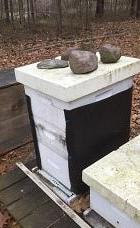
In an attempt to enable the survival of the bees overwinter Holly did not harvest the honey but left it in the hive for the bees to eat and she also wrapped the hive with tar paper to keep them warmer.
All is now quiet in the Bee Yard as the honey bees will not venture out of the hive unless it is a calm day with a temperature of at least 55 degrees or warmer. Did you know that honey bees have two sets of wings, and six legs and they have two stomachs. There are 52 kinds of bees and 16 kinds of honey bees. And, that the temperature in a hive in the middle of winter will be 75 degrees!
See: http://www.cherckeebeeclub.com/Bee%20Facts.htm
All is now quiet in the Bee Yard as the honey bees will not venture out of the hive unless it is a calm day with a temperature of at least 55 degrees or warmer. Did you know that honey bees have two sets of wings, and six legs and they have two stomachs. There are 52 kinds of bees and 16 kinds of honey bees. And, that the temperature in a hive in the middle of winter will be 75 degrees!
See: http://www.cherckeebeeclub.com/Bee%20Facts.htm
The Lemon Tree That Never Stops Giving
The lemon tree has enjoyed its cozy winter spot in the Catherine McAuley Chapel in front of the glass doors. It is healthy and has 22 lemons of different sizes and color. A close look will show small lemons appearing from the center of blossoms now spent. It takes a while for the lemons to ripen for culinary uses.
The Francis Assisi Memorial Garden

All of the flower gardens have been put to bed for the winter. The Memorial Garden, located under the Linden trees and adjacent to the forest, gets a fair share of leaves most of which are raked off the bed to prevent mice and voles from nesting in the leaves and/or eating bulbs or plant roots. Leaves that are left decompose and their nutrients return to the soil feeding the hibernating plants.
If you would like to memorialize a loved one, contact Mercy Farm and their names will be entered into the Memorial Book located in the Catherine McAuley Chapel where they will be remembered in the prayers and works of the Sisters of Mercy on site and those gathered with us in prayer.
If you would like to memorialize a loved one, contact Mercy Farm and their names will be entered into the Memorial Book located in the Catherine McAuley Chapel where they will be remembered in the prayers and works of the Sisters of Mercy on site and those gathered with us in prayer.
Greetings from the Gardens
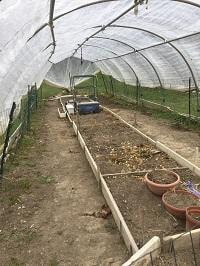
The vegetable and herb gardens have all been put to bed for the winter. The November harvest included kale from the raised beds and beets from the hoop house. The kale was blanched, bagged and frozen for later use and some of beets were used for guests and the balance cooked and frozen. Can spring be that far off?
Blooming Blossoms

The poinsettia was choosen as the flower for December because of its symbolism during the Christmas Season. The Poinsettia is indigenous to Mexico and is found in the wild in deciduous tropical forests at moderate elevations along the Pacific coast. It is particularly well known for its red and green foliage and is widely used in Christmas floral displays. It derives its common English name from Joel Roberts Poinsett, the first United States Minister to Mexico, who introduced the plant to the United states in 1825.
The Mexicans in the eighteenth century thought the plants symbolic of the Star of Bethlehem. Thus the Poinsettia became associated with the Christmas season. The actual flower of the poinsettia are unassuming and do not attract pollinators. They are grouped within small yellow structures found in the center of each broad leaf and are called cyathia. Surrounding the flower are large, bright red leaves, often mistaken for petals.
The plant's association with Christmas began in sixteenth century Mexico, where legend tells of a girl, commonly called Pepita or Maria, who was too poor to provide a gift for the celebration of Jesus' birthday and was inspired by an angel to gather weeds from the roadside and place them in front of the church altar. Crimson blossoms sprouted from the weeds and became poinsettias. From the seventeenth century, Franciscan friars in Mexico included the plants in their Christmas celebrations. The star-shaped leaf pattern is said to symbolize the Star of Bethlehem, and the red color represents the blood sacrifice through the crucifixion of Jesus. See: https://en.wikipedia.org/wiki/Poinsettia
The Mexicans in the eighteenth century thought the plants symbolic of the Star of Bethlehem. Thus the Poinsettia became associated with the Christmas season. The actual flower of the poinsettia are unassuming and do not attract pollinators. They are grouped within small yellow structures found in the center of each broad leaf and are called cyathia. Surrounding the flower are large, bright red leaves, often mistaken for petals.
The plant's association with Christmas began in sixteenth century Mexico, where legend tells of a girl, commonly called Pepita or Maria, who was too poor to provide a gift for the celebration of Jesus' birthday and was inspired by an angel to gather weeds from the roadside and place them in front of the church altar. Crimson blossoms sprouted from the weeds and became poinsettias. From the seventeenth century, Franciscan friars in Mexico included the plants in their Christmas celebrations. The star-shaped leaf pattern is said to symbolize the Star of Bethlehem, and the red color represents the blood sacrifice through the crucifixion of Jesus. See: https://en.wikipedia.org/wiki/Poinsettia
November 2017
Happenings Around the Farm
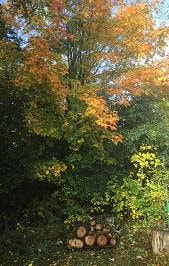
The trees have begun to change into their fall colors, initially muted they have become vibrant. Gentle winds stir the leaves to flight leaving the forest showing signs of what will come. October mornings are filled with the sound of Canada geese as they journey toward their southern winter grounds. The surrounding countryside provides adequate respite including open corn fields and waterways. Their low altitude take off gives onlookers a thrilling sight. Three young white-tailed deer have been seen browsing in the meadow and as the days go by they come closer to the house.
According to the weather temperature records, this October was the warmest October recorded averaging 15 degrees above normal for this time of year. So far, 28 out of 31 days have been above the norm of 58 degrees. During the day there has been a 30 degree spread between the night and day time temperatures.
October was a busy month and included: Mercy Connections and Saint Joseph's College of Maine for days of education and service; The Road Less Traveled
Weekend Retreat; a Recovery Retreat and a private retreat. Mercy Farm hosted a Pranic Healing Course and was the site for spiritual guidance. Mercy Ecology,
Inc. held an orientation meeting for new board members as well as a full Board meeting and former residents of the Benson area now living across the country and beyond came to visit Mercy Farm.
This fall the weather was just perfect for staff to work in the gardens and the Bee Yard. Extracurricular activities included a trip to the Stone Schoolhouse and the
graveyard of the excommunicated referenced in the book House with a Past by Erik Barnouw. The trip was inspired by Barnouw whose curiosity lead him to delve into the history of this unique and interesting stone structure where he discovered the hidden story of America's search for spiritual meaning.
According to the weather temperature records, this October was the warmest October recorded averaging 15 degrees above normal for this time of year. So far, 28 out of 31 days have been above the norm of 58 degrees. During the day there has been a 30 degree spread between the night and day time temperatures.
October was a busy month and included: Mercy Connections and Saint Joseph's College of Maine for days of education and service; The Road Less Traveled
Weekend Retreat; a Recovery Retreat and a private retreat. Mercy Farm hosted a Pranic Healing Course and was the site for spiritual guidance. Mercy Ecology,
Inc. held an orientation meeting for new board members as well as a full Board meeting and former residents of the Benson area now living across the country and beyond came to visit Mercy Farm.
This fall the weather was just perfect for staff to work in the gardens and the Bee Yard. Extracurricular activities included a trip to the Stone Schoolhouse and the
graveyard of the excommunicated referenced in the book House with a Past by Erik Barnouw. The trip was inspired by Barnouw whose curiosity lead him to delve into the history of this unique and interesting stone structure where he discovered the hidden story of America's search for spiritual meaning.
Mercy Connections
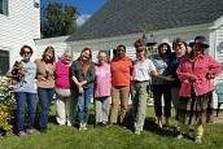
September 28, a warm sunny day brought eight women and two staff members: Heather Gilbert, Program Facilitator and Cathy Ainsworth, Director of Education and Transition Programs from Mercy Connections for an overnight, educational and volunteer experience.
After lunch, a tour of the farm house preceded a walking tour of the farm which began at the honey house, followed by the Bee yard, continuing along the bee yard trail to the barn where all were greeted by Bailey and Dexter, the Guineas, hens and BC. All of the animals were a big hit and brought back childhood memories of their life on family farms. Then by way of the hoop house, down the pond trail and back through the gardens, again memories were shared of family gardens and vegetables grown. The tour ended with the Shiitake mushrooms that grow near the Honey House.
The group was divided between helping Betty prepare supper and outdoor work with Mary. Following a delicious meal all gathered in the Trinity Library to view and discuss the video Dirt:The Movie. Popcorn was enjoyed as was the movie. The group came away with an understanding and appreciation of dirt.
Friday temperatures were in the sixties but a cold wind made for a cool start of the day. Again, some helped Betty with lunch and the rest of the women helped Mary with a weatherization project of installing plastic sheeting along the south wall of the barn to keep rain and melting snow from running inside the barn where it accumulates and freezes creating a safety hazard for both two and four legged creatures.
All too soon it was time for our guests to return to Burlington but before they left all gathered in the Catherine McAuley Chapel for reflection and discussion of their time at the farm. It is always a pleasure for us to be with the people who join us from Mercy Connections and are most grateful for all the help so graciously given!
Mercy Connections is an educational value-driven Vermont non-profit organization living the legacy of the Sisters of Mercy with an enduring concern for women. By compassionately nurturing self sufficiency through education, mentoring and community, people are empowered to make significant life changes.
After lunch, a tour of the farm house preceded a walking tour of the farm which began at the honey house, followed by the Bee yard, continuing along the bee yard trail to the barn where all were greeted by Bailey and Dexter, the Guineas, hens and BC. All of the animals were a big hit and brought back childhood memories of their life on family farms. Then by way of the hoop house, down the pond trail and back through the gardens, again memories were shared of family gardens and vegetables grown. The tour ended with the Shiitake mushrooms that grow near the Honey House.
The group was divided between helping Betty prepare supper and outdoor work with Mary. Following a delicious meal all gathered in the Trinity Library to view and discuss the video Dirt:The Movie. Popcorn was enjoyed as was the movie. The group came away with an understanding and appreciation of dirt.
Friday temperatures were in the sixties but a cold wind made for a cool start of the day. Again, some helped Betty with lunch and the rest of the women helped Mary with a weatherization project of installing plastic sheeting along the south wall of the barn to keep rain and melting snow from running inside the barn where it accumulates and freezes creating a safety hazard for both two and four legged creatures.
All too soon it was time for our guests to return to Burlington but before they left all gathered in the Catherine McAuley Chapel for reflection and discussion of their time at the farm. It is always a pleasure for us to be with the people who join us from Mercy Connections and are most grateful for all the help so graciously given!
Mercy Connections is an educational value-driven Vermont non-profit organization living the legacy of the Sisters of Mercy with an enduring concern for women. By compassionately nurturing self sufficiency through education, mentoring and community, people are empowered to make significant life changes.
Saint Joseph's College of Maine
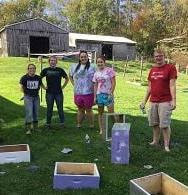
Venturing forth after their last class on Friday, October 6 were students: Austin, Mary Clare and Sara; graduate, Aliyah; Kathryn Cody, Interim Director of Mercy Center and Michial Russell, Farm Manager.
Their late arrival did not damper their enthusiasm to get up with the roosters call and begin their day. After breakfast all gathered in the Trinity Library for Dirt: The Movie. It should be noted that all of these students had come to the farm last year and had enjoyed Awakening the Dreamer/Changing the Dream hence the program change. A synopsis of student comments reflect the impact the movie had on them: "Learning about the importance of dirt and how much we actually have in common with it; how dirt impacts everyone's daily lives and how important taking care of the Earth is, particularly soil."
The group was divided among Betty (meal prep), Holly (the Bee Yard and Honey House) and Mary (the barn) and all gathered to help remove burdock, thistle and other growth behind the hoop house, an area that the brush hog could not reach. Saturday was a busy day! But not so busy that all could not go on the Annual Haunted Hay Ride, a fund raiser for the local volunteer fire departments. In the dark of night the tractor pulled hay wagons made their way through the forest where scary props, people leaping out from behind trees, fire works, sirens and more delighted and scared all wagon goers!
All greeted the dawning of Sunday and a continuance of Saturday's chores and readying the hive bodies for the next honey season. The hive boxes were scraped,
painted and leaf designs were creatively applied. The evening provided time for the students to make their traditional "quilt squares" that illustrated their experience at Mercy Farm. Monday came all too soon as the students readied for their trip back to Maine via Green Mountain College (GMC). Following lunch, bag lunches for the trip home were made, the van packed and a trip to Poultney where Ryan Ihrke, Director of Sustainability awaited our arrival. During a walk through the campus, various eco-friendly initiatives were described including: the computerized system that tracks electrical usage in campus buildings, the free store, recycling procedure in the cafeteria, wood burning furnace, solar panels, gardens (that like SJC supply the college food service department and a CSA program), a tiny house and other projects initiated and constructed by students.
We are most grateful for Austin, Mary Clare, Sara, Aliyah, Kathryn and Michael for their presence among us, their continued interest, willingness to help with a variety
of projects, and for their enthusiasm. You are truly amazing! Thank you.
Our October guests came from: Benson, Bristol, Burlington, Essex Junction, Hinesburg, South Burlington, VT; Berkeley, CA; Cromwell, East Hartford, Hartford, New Haven and West Hartford, CT; Auburn, Hanover and Standish, ME; Wrentham, MA; Lee and Peterborough, NH; Whitehall, NY and Pittsburgh, PA.
Their late arrival did not damper their enthusiasm to get up with the roosters call and begin their day. After breakfast all gathered in the Trinity Library for Dirt: The Movie. It should be noted that all of these students had come to the farm last year and had enjoyed Awakening the Dreamer/Changing the Dream hence the program change. A synopsis of student comments reflect the impact the movie had on them: "Learning about the importance of dirt and how much we actually have in common with it; how dirt impacts everyone's daily lives and how important taking care of the Earth is, particularly soil."
The group was divided among Betty (meal prep), Holly (the Bee Yard and Honey House) and Mary (the barn) and all gathered to help remove burdock, thistle and other growth behind the hoop house, an area that the brush hog could not reach. Saturday was a busy day! But not so busy that all could not go on the Annual Haunted Hay Ride, a fund raiser for the local volunteer fire departments. In the dark of night the tractor pulled hay wagons made their way through the forest where scary props, people leaping out from behind trees, fire works, sirens and more delighted and scared all wagon goers!
All greeted the dawning of Sunday and a continuance of Saturday's chores and readying the hive bodies for the next honey season. The hive boxes were scraped,
painted and leaf designs were creatively applied. The evening provided time for the students to make their traditional "quilt squares" that illustrated their experience at Mercy Farm. Monday came all too soon as the students readied for their trip back to Maine via Green Mountain College (GMC). Following lunch, bag lunches for the trip home were made, the van packed and a trip to Poultney where Ryan Ihrke, Director of Sustainability awaited our arrival. During a walk through the campus, various eco-friendly initiatives were described including: the computerized system that tracks electrical usage in campus buildings, the free store, recycling procedure in the cafeteria, wood burning furnace, solar panels, gardens (that like SJC supply the college food service department and a CSA program), a tiny house and other projects initiated and constructed by students.
We are most grateful for Austin, Mary Clare, Sara, Aliyah, Kathryn and Michael for their presence among us, their continued interest, willingness to help with a variety
of projects, and for their enthusiasm. You are truly amazing! Thank you.
Our October guests came from: Benson, Bristol, Burlington, Essex Junction, Hinesburg, South Burlington, VT; Berkeley, CA; Cromwell, East Hartford, Hartford, New Haven and West Hartford, CT; Auburn, Hanover and Standish, ME; Wrentham, MA; Lee and Peterborough, NH; Whitehall, NY and Pittsburgh, PA.
The Adventures of Bailey and Dexter
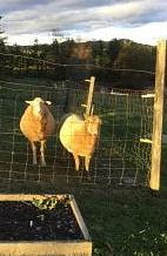
It seems that when we run out of tales of Bailey and Dexter new antics happen. Both sheep have been seen rolling from side to side on their backs. It is quite a sight to see them with their legs straight up in the air. Could it be that they are hinting that a massage parlor be added to the list of barn amenities?
In spite of the daytime warm weather, Bailey and Dexter have began to develop their winter coats. One of the characteristics of this breed is a tolerance for temperature swings. They adjust well to the ups and downs of the mercury.
Bailey and Dexter are still in the summer barn as are the Guineas and occasional stray visiting hens and/or rooster. Throughout the day BC and the band of four, previously known as the newbies, join Bailey and Dexter in the quiet of the summer barn. One barn gate is always open giving the sheep the freedom to come and go as they please. They are seen here in the east paddock, a very short distance from the house, before dawn and well after dark roaming and nibbling away. Life is good!
In spite of the daytime warm weather, Bailey and Dexter have began to develop their winter coats. One of the characteristics of this breed is a tolerance for temperature swings. They adjust well to the ups and downs of the mercury.
Bailey and Dexter are still in the summer barn as are the Guineas and occasional stray visiting hens and/or rooster. Throughout the day BC and the band of four, previously known as the newbies, join Bailey and Dexter in the quiet of the summer barn. One barn gate is always open giving the sheep the freedom to come and go as they please. They are seen here in the east paddock, a very short distance from the house, before dawn and well after dark roaming and nibbling away. Life is good!
Barnyard Banter and BC
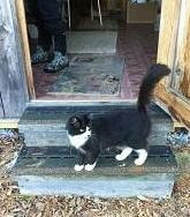
The band of four are now comparable in size or larger than the rest of the flock. Of the five breeds of chickens, the Guineas are taller and sleeker. The other breeds are: araucana, French, Plymouth barred rock, Rhode Island Red and Sumatra. Michael Russell, Farm Manager at Saint Joseph's College of Maine sorted out the breeds and identified our mystery hen as an araucana. Now older, it was easily determined when two of the band of four began to "cock-a-doddle-do" which at first sounded like they had a sock in their throats but now the "alarm" clearly begins between four and five in the morning and continues at odd times throughout the day
The third rooster is among the five guineas. Both male and female Guinea fowl make an abrasive noise, but the male has a single-syllable call with sounds as though they are saying "wheat", while the female has a double-syllable call that sounds like "buck-wheat." The female Guineas mimic the male intensifying the call. The male cannot mimic the female.
See: http://www.ehow.com/info_8139686_}difference-male-female-guinea- birds.html
Guineas are noisy by nature making them excellent "guard birds," alerting chickens, other barnyard residents and anyone within earshot when intruders such as fox, hawks, owls or raccoons are near.
The two French hens, sumatra and aracuna are older than the others and pretty much enjoy the barn. It is calm and quiet while the others are happy to be out around the property, feasting on the variety of vegetation and insects they find along the way. The Plymouth barred rocks wander in the immediate area of the house and barn
traveling a short distance down the drive way, along the flower gardens that boarder the house, around the hoop house and into the herb garden. Oh yes, much to our dismay they also enjoy the back deck. The Guineas loop is quite extensive as they travel through the north meadow and around the pond. They have been seen across the road and into a neighbor's meadow. It is always a hunt to locate the band of four. When not with Bailey and Dexter, they may be up on the ledge and into the woods, or in a different wooded area, or in the hay storage area in the winter barn. They tantalize their keepers by playing hard to get or hide and seek as staff try to move them into the safety of the coop for the night. Sometimes we win, other times one or two chickens win and spend their night up on the rafters with the Guineas or on a perch of their choice near the sheep.
BC has increased her circle of adventure to include along Howard Hill Road and has caught on to the hide and seek game of the chickens! It must be the weather!
She is often seen (when seen) crouched and waiting for a meal or sitting tall and pretty as she casts her eyes over "her estate" or rolling on her back or stretched out on the driveway enjoying the warmth of the crushed stones. It is a hard life for this little feline. But, who can fault her for taking breaks, as Master of the Barn she deserves all the downtime she can get.
The third rooster is among the five guineas. Both male and female Guinea fowl make an abrasive noise, but the male has a single-syllable call with sounds as though they are saying "wheat", while the female has a double-syllable call that sounds like "buck-wheat." The female Guineas mimic the male intensifying the call. The male cannot mimic the female.
See: http://www.ehow.com/info_8139686_}difference-male-female-guinea- birds.html
Guineas are noisy by nature making them excellent "guard birds," alerting chickens, other barnyard residents and anyone within earshot when intruders such as fox, hawks, owls or raccoons are near.
The two French hens, sumatra and aracuna are older than the others and pretty much enjoy the barn. It is calm and quiet while the others are happy to be out around the property, feasting on the variety of vegetation and insects they find along the way. The Plymouth barred rocks wander in the immediate area of the house and barn
traveling a short distance down the drive way, along the flower gardens that boarder the house, around the hoop house and into the herb garden. Oh yes, much to our dismay they also enjoy the back deck. The Guineas loop is quite extensive as they travel through the north meadow and around the pond. They have been seen across the road and into a neighbor's meadow. It is always a hunt to locate the band of four. When not with Bailey and Dexter, they may be up on the ledge and into the woods, or in a different wooded area, or in the hay storage area in the winter barn. They tantalize their keepers by playing hard to get or hide and seek as staff try to move them into the safety of the coop for the night. Sometimes we win, other times one or two chickens win and spend their night up on the rafters with the Guineas or on a perch of their choice near the sheep.
BC has increased her circle of adventure to include along Howard Hill Road and has caught on to the hide and seek game of the chickens! It must be the weather!
She is often seen (when seen) crouched and waiting for a meal or sitting tall and pretty as she casts her eyes over "her estate" or rolling on her back or stretched out on the driveway enjoying the warmth of the crushed stones. It is a hard life for this little feline. But, who can fault her for taking breaks, as Master of the Barn she deserves all the downtime she can get.
Bee Yard Buzz

The floor of the Bee Yard is now carpeted with fallen leaves, pine needles and pine cones. Fern, ginger, golden ray (Ligularia) and lungwort (Pulmonaria) plants still stand tall and green. As October draws to an end and temperatures flirt with low fifties and crisp breezes stir the air through this sacred space beckoning the honey bees to remain in their cozy warm hive to wait for a warmer day.
This art piece depicting a honey comb was done by Aliyah, SJC graduate. The verse from Proverbs is most appropriate!
This art piece depicting a honey comb was done by Aliyah, SJC graduate. The verse from Proverbs is most appropriate!
Greetings from the Garden
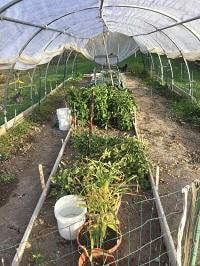
All of our crops have been harvested except for the second planting of kale and beets. Sweet potatoes and onions are curing. Squash, carrots and peppers were the last of our first planting to be harvested. The abundance of produce raised was donated to the Fair Haven Food Shelf on a weekly basis.
Our gardens are now being readied for winter: plant stalks and vines have been pulled; leaves, compost and/or sheep dressing have been added to the soil. All of which improves the quality of our soil. The asparagus have been cut back and garlic bulbs have been planted for July harvesting. We look forward to receiving seed catalogs in early January and planning our gardens for the 2018 growing season.
Our gardens are now being readied for winter: plant stalks and vines have been pulled; leaves, compost and/or sheep dressing have been added to the soil. All of which improves the quality of our soil. The asparagus have been cut back and garlic bulbs have been planted for July harvesting. We look forward to receiving seed catalogs in early January and planning our gardens for the 2018 growing season.
The Francis of Assisi Memorial Garden
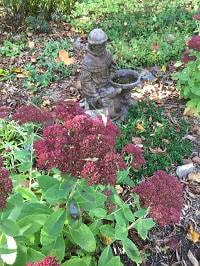
Sedum is now the only flower in bloom. The rest of the plants have gone to seed. The garden, though beautiful well into October with its fall look, is one of hope as each season passes one into another and with the passage of winter spring renewal will bring pleasure as each year the plants spread and life is rejuvenated.
If you would like to memorialize a loved one, contact Mercy Farm and their names will be entered in the Memorial Book located in the Catherine McAuley Chapel where they will be remembered in the prayers and works of the Sisters of Mercy on site and those gathered with us in prayer.
If you would like to memorialize a loved one, contact Mercy Farm and their names will be entered in the Memorial Book located in the Catherine McAuley Chapel where they will be remembered in the prayers and works of the Sisters of Mercy on site and those gathered with us in prayer.
Blooming Blossoms
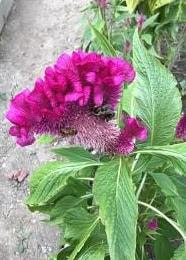
Besides the St. Francis Memorial Garden our named flower gardens are the: Peace, Terrace, Iris and Herb gardens. During the summer months you received a bouquet from us. We hope the photo made you smile, lifted you up, encouraged you ... may it brought whatever you needed when it arrived. Again, bypassing a specific garden, the brightly colored cockscomb growing along the edge of the hoop house drew many closer for a better view.
The flower featured this month is Celosia cristata, a member of the genus Celosia, and is commonly known as cockscomb, since the flower looks like the head of a rooster (cock). The plants are hardy and resistant to most diseases, and grow equally well indoors or out, through the perfect place is one with no shade and a well drained soil, as the plant is susceptible to fungal diseases. The plant is used frequently as an ornamental plant indoors. Their leaves and flowers can be used as vegetables. They are often grown as foods in India, Western Africa and South America.
Cockscomb is an annual plant whose flowers can last up to eight weeks. A high number of seeds can be produced by each flower, up to 1,500 per gram or 43,000 per
ounce. The plant grows up to a foot in height, the leaves are either green or bronze/maroon. The flowers are usually brightly colored, usually red, yellow, pink, or orange.
See: https://en.wikipedia.org/wiki/Celosia_crista
The flower featured this month is Celosia cristata, a member of the genus Celosia, and is commonly known as cockscomb, since the flower looks like the head of a rooster (cock). The plants are hardy and resistant to most diseases, and grow equally well indoors or out, through the perfect place is one with no shade and a well drained soil, as the plant is susceptible to fungal diseases. The plant is used frequently as an ornamental plant indoors. Their leaves and flowers can be used as vegetables. They are often grown as foods in India, Western Africa and South America.
Cockscomb is an annual plant whose flowers can last up to eight weeks. A high number of seeds can be produced by each flower, up to 1,500 per gram or 43,000 per
ounce. The plant grows up to a foot in height, the leaves are either green or bronze/maroon. The flowers are usually brightly colored, usually red, yellow, pink, or orange.
See: https://en.wikipedia.org/wiki/Celosia_crista
Happenings Around the Farm (October)
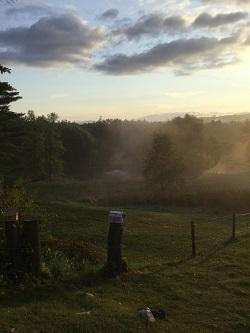
Weather-wise September saw a "splash of rain" and unseasonably warm temperatures! The question, "Is it July or September" was heard over and over again. Most of the month night temperatures fell into the forties and quickly rose to eighty degrees plus during the day. September 24-27 saw temperatures into the nineties, a weather pattern known as a heat wave. Each of those days set new heat records for this area.
All life surrounding the farm and beyond have enjoyed this unexpected weather. The trees have begun to change into their fall colors. The landscape is now sparsely covered with muted colored leaves. Gentle winds stir the leaves to flight leaving the forest showing signs of what will come.
September was relatively quiet compared to other months: a Pranic Healing Course was hosted; guests came to see what Mercy Farm was all about; some to lend a hand with chores; others time to walk and to enjoy the property; still others for an overnight before heading out on a fishing expedition. The Art of Spiritual Guidance retreat weekend was held here and people from Mercy Connections, Burlington, enjoyed an overnight and time on the farm. Beautiful sunny days drew the staff out to the gardens, a wonderful place to be!
Our September guests came from: Benson, Burlington, Fairfax, Middlebury, Milton, North Springfield, Sheldon and Vergennes, VT; Burlington, Rehoboth and Roslindale, MA; Portland, ME; Minnetonka, MN; Suffern and Union, NJ; Horseheads, Ken Lardens, Livonia and Whitehall, NY
All life surrounding the farm and beyond have enjoyed this unexpected weather. The trees have begun to change into their fall colors. The landscape is now sparsely covered with muted colored leaves. Gentle winds stir the leaves to flight leaving the forest showing signs of what will come.
September was relatively quiet compared to other months: a Pranic Healing Course was hosted; guests came to see what Mercy Farm was all about; some to lend a hand with chores; others time to walk and to enjoy the property; still others for an overnight before heading out on a fishing expedition. The Art of Spiritual Guidance retreat weekend was held here and people from Mercy Connections, Burlington, enjoyed an overnight and time on the farm. Beautiful sunny days drew the staff out to the gardens, a wonderful place to be!
Our September guests came from: Benson, Burlington, Fairfax, Middlebury, Milton, North Springfield, Sheldon and Vergennes, VT; Burlington, Rehoboth and Roslindale, MA; Portland, ME; Minnetonka, MN; Suffern and Union, NJ; Horseheads, Ken Lardens, Livonia and Whitehall, NY
The Adventures of Bailey and Dexter
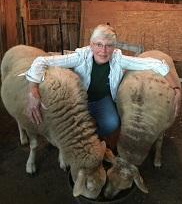
A surprise visit to the summer barn found the sheep just inside the closed door, actually Dexter was laying against the door and when opened he stood up. The newbies were also there and within reach of the sheep. Following an apology for the unexpected interruption the sheep and their feathered friends resumed their cozy sun bath.
Each morning Bailey and Dexter go to the fence to inspect the status of trees that fell onto the west paddock fence. Our friends, Peter and Jeannie came several times with chain saws in hand. Large limbs were removed from the trunk of the tree, cut into sections and stacked for drying. The rest of this massive tree will be dealt with during winter months when it will be easier to work on them. Both the west and east paddocks are safe for all of our animals to roam and to enjoy the grass and other delicacies as they graze.
Bailey and Dexter are still enjoying fresh apples some of which are found along the roadside and others are given to them by neighbors from their trees. This special treat is definitely a high point in their day and they are most appreciative of the kindness and generosity of their apple suppliers. The beauty salon is busy especially during these hot days as a good brushing leaves them a bit cooler. As the saying goes - a new hair-do always makes one feel better - is also true with the sheep!
Each morning Bailey and Dexter go to the fence to inspect the status of trees that fell onto the west paddock fence. Our friends, Peter and Jeannie came several times with chain saws in hand. Large limbs were removed from the trunk of the tree, cut into sections and stacked for drying. The rest of this massive tree will be dealt with during winter months when it will be easier to work on them. Both the west and east paddocks are safe for all of our animals to roam and to enjoy the grass and other delicacies as they graze.
Bailey and Dexter are still enjoying fresh apples some of which are found along the roadside and others are given to them by neighbors from their trees. This special treat is definitely a high point in their day and they are most appreciative of the kindness and generosity of their apple suppliers. The beauty salon is busy especially during these hot days as a good brushing leaves them a bit cooler. As the saying goes - a new hair-do always makes one feel better - is also true with the sheep!
Barnyard Banter and BC
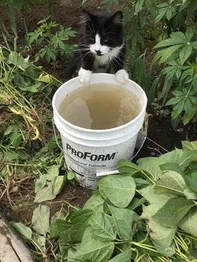
The winter barn was a-buzz one morning and upon closer examination a lot of flitting about was evident. Subsequently, a large paper wasp nest was seen resting in one of the hay cribs. All but a small portion of the nest had fallen from the metal roof and landed in a hay crib in an area frequented by the hens, Guineas and BC. The weight of the wasps in the nest apparently brought the hive down. The threat of the wasps stinging us, the curious hens or BC, was eliminated.
An occasional check on the goings-on in the barn found that the hens spend their mornings resting and relaxing in the sun, or taking dust baths. It is also a time that they lay most of their eggs. Their loud clucking is indicative of laying an egg.
The newbies are still "hanging out" with the sheep perhaps because it is quiet and serene on that side of the barn and the morning sun is inviting. The hens feathers are strikingly beautiful as the sun's rays made their plumage in shades of brown, golden brown, blue, purple, red-orange appear iridescent.
Usually, where ever one of us is BC is likely to be present or just out of sight watching our activity. One day as she completed a tour of the gardens it was time for a quick respite and spotting a bucket of water she helped herself to a not so cool drink of water before she started out on yet another adventure.
An occasional check on the goings-on in the barn found that the hens spend their mornings resting and relaxing in the sun, or taking dust baths. It is also a time that they lay most of their eggs. Their loud clucking is indicative of laying an egg.
The newbies are still "hanging out" with the sheep perhaps because it is quiet and serene on that side of the barn and the morning sun is inviting. The hens feathers are strikingly beautiful as the sun's rays made their plumage in shades of brown, golden brown, blue, purple, red-orange appear iridescent.
Usually, where ever one of us is BC is likely to be present or just out of sight watching our activity. One day as she completed a tour of the gardens it was time for a quick respite and spotting a bucket of water she helped herself to a not so cool drink of water before she started out on yet another adventure.
Bee Yard Buzz
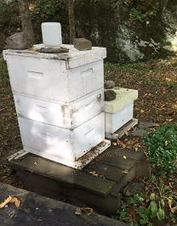
A walk to the Bee Yard was full of the sound of honey bees who were delighted with the warm calm weather as well as plenty of flowers to provide them with pollen and nectar. A variety of birds chirped happily from the tree tops and chipmunks and squirrels when not scurrying from branch to branch let the world know of their pleasure in the day. If insects were part of this natural orchestra they were out done by all the others.
BC, a trail companion who previously had been up and down the tallest tree she could find and running to and fro throughout the Bee Yard, now tuckered out was lulled to a cat nap by the music of the bee yard. The percussion section, chipmunks and squirrels, were the dominant musicians, however, as one approached the bee hive the soft, gentle buzz of the honey bees could be heard harmonizing with the rest of the creatures creating a wonderful symphony.
BC, a trail companion who previously had been up and down the tallest tree she could find and running to and fro throughout the Bee Yard, now tuckered out was lulled to a cat nap by the music of the bee yard. The percussion section, chipmunks and squirrels, were the dominant musicians, however, as one approached the bee hive the soft, gentle buzz of the honey bees could be heard harmonizing with the rest of the creatures creating a wonderful symphony.
The Francis of Assisi Memorial Garden
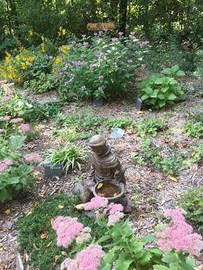
September brought sedums and a different variety of phlox to bloom. Although still beautiful, asters and black-eyed Susan blossoms are beginning to wane. The bumble bees, honey bees and viceroy butterflies are plentiful and busily gather pollen and nectar. Viceroys are similar to the monarch with rich orange color and black wing veins. The viceroy has an extra black line curving around the hind wings distinguishing them from the monarch, which is toxic to potential predators. Their look-a-like appearance protects the viceroy from predators.
If you would like to memorialize a loved one, contact Mercy Farm and their names will be entered in the Memorial Book located in the Catherine McAuley Chapel where they will be remembered in the prayers and works of the Sisters of Mercy on site and those gathered with us in prayer.
If you would like to memorialize a loved one, contact Mercy Farm and their names will be entered in the Memorial Book located in the Catherine McAuley Chapel where they will be remembered in the prayers and works of the Sisters of Mercy on site and those gathered with us in prayer.
Greetings from the Gardens
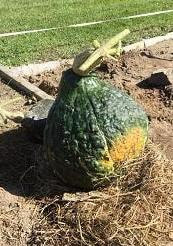
The gardens are busy with cleome and Marigolds blooming; the cherry tree has produced fruit; hyacinth beans, lemon geranium, Rosemary and purple basil, a variety of squash, tomatoes and gourds are still ripening. Peppers and red mini peppers, cherry tomatoes, beets, carrots, radish, eggplant and more tomatoes continue to mature. The raspberries, not as plentiful as the first crop, are still producing delicious sweet berries. The second crop of kale and lettuce was planted and should be ready for harvest before the first frost. The kitchen garden has squash, Chicago Warted Hubbard squash, broccoli and sweet potatoes all will be harvested within the next week or so. Green peppers, cherry tomatoes and tomatillo (goose berries) are maturing nicely in the hoop house. Onions, already picked, are curing on the drying rack.
All this adds up to a lot of color, thoughts of great meals with fresh vegetables and the closure of another growing season.
The abundance of the produce raised is donated to the Fair Haven Food Shelf on a weekly basis. Our second planting will increase what we will be able to give to this most worthy cause.
All this adds up to a lot of color, thoughts of great meals with fresh vegetables and the closure of another growing season.
The abundance of the produce raised is donated to the Fair Haven Food Shelf on a weekly basis. Our second planting will increase what we will be able to give to this most worthy cause.
Blooming Blossoms

Besides the St. Francis Memorial Garden our named flower gardens are the: Peace, Terrace, Iris and Herb gardens. During the summer months you will receive a bouquet from us. We hope the photo will make you smile, lift you up, encourage you ... May it bring whatever you need when it arrives to you. A view of the Terrace Garden, so vivid with color, made it hard to choose which flower would be featured this month.
Coreopsis, the most charming and strikingly beautiful was selected. Considered one of Mother Nature's brightest and most cheerful flowers. The coreopsis or tickseed are perennial plants belonging to the Asteraceae family, which includes sunflowers, asters and cone flowers. Many species are native to eastern North America. They have showy flower heads, the flowers are usually yellow with a toothed tipped. They are also yellow-and-red bi-color. Plants range from eight inches to five feet tall. Most species are two to three feet tall. After the flowering period, it produces small, dry fruits that look like bugs.The name coreopsis is derived from the Greek words koris, meaning "bedbug", and opsis, meaning "view", referring to the shape of the plants dry fruit.
Coreopsis are used as nectar and pollen for insects including bees and butterflies. This species is known to specifically provide food to caterpillars. The sunny, summer blooming, daisy-like flowers are popular in gardens and lend beauty to the landscape. Since 1991, Coreopsis is the official state flower for Florida and are used exclusively in Florida for roadside plantings and highway beautification programs. In the Language of Flowers, coreopsis means "always cheerful." See: https://en.wikipedia.org/wiki/coreopsis andhttps://funflowerfacts.com/2013/11/07/fun-flower-facts-coreopsis-tickseed/
Coreopsis, the most charming and strikingly beautiful was selected. Considered one of Mother Nature's brightest and most cheerful flowers. The coreopsis or tickseed are perennial plants belonging to the Asteraceae family, which includes sunflowers, asters and cone flowers. Many species are native to eastern North America. They have showy flower heads, the flowers are usually yellow with a toothed tipped. They are also yellow-and-red bi-color. Plants range from eight inches to five feet tall. Most species are two to three feet tall. After the flowering period, it produces small, dry fruits that look like bugs.The name coreopsis is derived from the Greek words koris, meaning "bedbug", and opsis, meaning "view", referring to the shape of the plants dry fruit.
Coreopsis are used as nectar and pollen for insects including bees and butterflies. This species is known to specifically provide food to caterpillars. The sunny, summer blooming, daisy-like flowers are popular in gardens and lend beauty to the landscape. Since 1991, Coreopsis is the official state flower for Florida and are used exclusively in Florida for roadside plantings and highway beautification programs. In the Language of Flowers, coreopsis means "always cheerful." See: https://en.wikipedia.org/wiki/coreopsis andhttps://funflowerfacts.com/2013/11/07/fun-flower-facts-coreopsis-tickseed/
Help Wildlife During Fall Migration
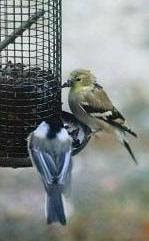
Migrating wildlife may travel through your backyard on their way to their winter home. Here are a few tips to help them during their long journey.
Hummingbirds, like the ruby-throated hummingbird, can travel up to 2,000 miles south to Central America. Place a hummingbird feeder in your habitat as a refueling stop for these travelers.
Across the country, monarch butterflies are heading south toward Mexico and southern California, flying up to 3,000 miles. Plant native milkweed and late blooming nectar plants such as goldenrod and asters to draw in these colorful travelers.
Plant trees and shrubs to provide songbirds, like warblers, with a place to roost and to refuel on berries or insects during their travels. Many birds like the cardinals, chickadees and mockingbirds don't fly south for the winter. By planting native berry producing shrubs or trees you will attract these birds and ensure they have food throughout the winter. Native sumac and American Holly shrubs and trees provide tiny berries and winter cover for birds.
Mammals such as chipmunks hibernate to survive the winter. As autumn nears, chipmunks gather acorns, nuts and seeds which are rich in calories and nutrients and store well for a supply of winter food.
See: NationalWildlifeFederation@nwf.org for articles: Help Wildlife During Fall Migration, Plant Trees and Shrubs for Wildlife and Trees and Shrubs for Wildlife
Hummingbirds, like the ruby-throated hummingbird, can travel up to 2,000 miles south to Central America. Place a hummingbird feeder in your habitat as a refueling stop for these travelers.
Across the country, monarch butterflies are heading south toward Mexico and southern California, flying up to 3,000 miles. Plant native milkweed and late blooming nectar plants such as goldenrod and asters to draw in these colorful travelers.
Plant trees and shrubs to provide songbirds, like warblers, with a place to roost and to refuel on berries or insects during their travels. Many birds like the cardinals, chickadees and mockingbirds don't fly south for the winter. By planting native berry producing shrubs or trees you will attract these birds and ensure they have food throughout the winter. Native sumac and American Holly shrubs and trees provide tiny berries and winter cover for birds.
Mammals such as chipmunks hibernate to survive the winter. As autumn nears, chipmunks gather acorns, nuts and seeds which are rich in calories and nutrients and store well for a supply of winter food.
See: NationalWildlifeFederation@nwf.org for articles: Help Wildlife During Fall Migration, Plant Trees and Shrubs for Wildlife and Trees and Shrubs for Wildlife
Happenings Around the Farm (September)
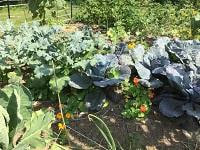
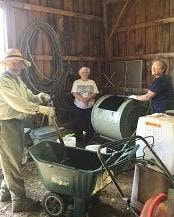
Weather-wise, August was a beautiful month! Sunny with a mix of heat and humidity. The rain fall of under two inches necessitated plenty of watering of the gardens. Guests came for a private retreat, rest and relaxation, hospitality, as a site for spiritual direction and two guests came for lunch and to see what Mercy Farm was all about. During harvest season we spend a lot of time in the gardens and also make room for joining our neighbors for the last Fair Haven Concert in the Park that featured the P.J. Murray Band. Irish music was enjoyed by all those gathered.
Our friends and neighbors Bob and Karen came over and shared their home grown cantaloupe with us, took a tour through the gardens and up to the barn. The following day Bob called and wanted to know if we were interested in a compost project. A resounding yes was given. Wednesday Bob arrived with a five gallon pail of grass, a compost thermometer and a drill. It is so easy when someone shows you how to do something new. Bob began by placing the grass clippings (an activator) into our empty Compostumbler and alternated the grass with natural chicken and sheep ingredients until it was full. He then drilled a hole in the side of the Compostumbler and inserted the thermometer. Instructing us to check and record the temperature once a day. After three days it is up to 125 degrees! This means that Bob's "recipe" is good and it is "cooking!"
Our August guests came from: Benson, Burlington, Center Rutland and Rutland, VT; Bloomfield, Kensington and West Hartford, CT; Silver Lake, NH; Bridgewater, NJ; Ken Lardens, Rochester and White Hall, NY.
Our friends and neighbors Bob and Karen came over and shared their home grown cantaloupe with us, took a tour through the gardens and up to the barn. The following day Bob called and wanted to know if we were interested in a compost project. A resounding yes was given. Wednesday Bob arrived with a five gallon pail of grass, a compost thermometer and a drill. It is so easy when someone shows you how to do something new. Bob began by placing the grass clippings (an activator) into our empty Compostumbler and alternated the grass with natural chicken and sheep ingredients until it was full. He then drilled a hole in the side of the Compostumbler and inserted the thermometer. Instructing us to check and record the temperature once a day. After three days it is up to 125 degrees! This means that Bob's "recipe" is good and it is "cooking!"
Our August guests came from: Benson, Burlington, Center Rutland and Rutland, VT; Bloomfield, Kensington and West Hartford, CT; Silver Lake, NH; Bridgewater, NJ; Ken Lardens, Rochester and White Hall, NY.
The Adventures of Bailey and Dexter
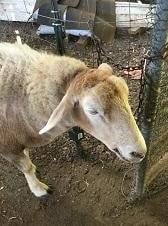
With cold snaps in the low forties Bailey and Dexter have begun to develop winter coats! What will they do when the Indian Summer arrives? It is good that the Katahdin Hair Sheep have an excellent tolerance to temperature. This summer the weather has been perfect for apple growth and droppings from these trees along the road sides. They are an excellent source of food for the sheep, a big favorite and a nice addition to their snack.
Bailey and Dexter have a new repertoire and if RCA is looking for new talent it might be right here at Mercy Farm! Each evening when
Betty goes up to the barn to put the hens in the coop Bailey and Dexter start their evening song. Bailey, lead vocalist, bleats a few stanzas with Dexter harmonizing. The lyrics seem to be "I'm hungry, where's my snack" followed by the refrain "where is she?" This is repeated until Mary arrives with their snack.
Recently, following their morning snack the newly arrived hens came into the sheep area. Upon spotting their dish they walked toward it and three of the four hopped into it to see if there were any leftovers. It's nice to see sharing and harmony in the barn.
Bailey and Dexter have a new repertoire and if RCA is looking for new talent it might be right here at Mercy Farm! Each evening when
Betty goes up to the barn to put the hens in the coop Bailey and Dexter start their evening song. Bailey, lead vocalist, bleats a few stanzas with Dexter harmonizing. The lyrics seem to be "I'm hungry, where's my snack" followed by the refrain "where is she?" This is repeated until Mary arrives with their snack.
Recently, following their morning snack the newly arrived hens came into the sheep area. Upon spotting their dish they walked toward it and three of the four hopped into it to see if there were any leftovers. It's nice to see sharing and harmony in the barn.
Barn Yard Banter and BC
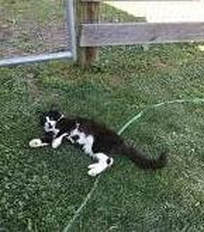
Putting the hens to bed at night is challenging. They have minds of their own and often make up those minds as to who will stay out longer. One night Holly tried all known enticements to move them to the safety of their coop. Finally, all but two strolled into the coop. The scalawags, Plymouth Barred Rock hens (Rocks) thought it a lovely evening and challenged Holly to a game of hide and seek. Wearied from all their shenanigans Holly decided to leave and return later. Upon her return to the barn the Rocks were no where to be found. After a thorough search of their know haunts Holly heard a sound coming from the rafters and peering down at her were the renegades comfortably situated for the night. They spent the night safely high above any harm with the Guineas. We are not sure how the Guineas felt about the new sleeping arrangement! Thankfully all survived to enjoy another day at Mercy Farm.
The French, Araucana and Sumatra hens have officially turned all of the egg production over to the Rocks. They lay an average of six eggs per day or over three dozen eggs a week! Now that's a lot of delicious farm fresh eggs! The Rocks wander all over the paddocks, side and back yard and around the hoop house. Thankfully they have not found the vegetable gardens that are on the opposite side of the farm house. The Guineas travel routine is much wider and they may be seen or heard as far away as across Howard Hill Road and down through the meadow to the pond. The four newbies tend to travel together and may be seen in the paddocks, the wooded area near the barn or with the sheep. Since July their size has doubled and the Rock among the fore-some will soon be as big as her cousins. The Araucanas and our mystery hen are a smaller breed size and will be petite compared to the rest of the flock.
With 16 hens, five fowl and two sheep one would think the Master of the Barn would have their paws full but not BC. She is often spotted sprawled out on the barn floor stretching her head this way and that way checking on the flock. An occasional walk about the barn and meadow gives her a quick check on Bailey and Dexter.
BC's new mode of operation gives her ample time to go on extensive walks all around the farm where she hunts, seeks new adventures, climbs different trees or finds a new sunny spot to nap. When she hears us out on the trails she is apt to appear and join in the walk. BC is still playful with the hens but has tempered her antics and with the sheep she walks about them and they only give a passing glance.
The barn is quieter now without the song and darting about of the barn swallows that nest in the barn. Mid-August, these long-distance migrants left for their winter grounds in Central and South America. They'll be back to Mercy Farm in the spring!
The French, Araucana and Sumatra hens have officially turned all of the egg production over to the Rocks. They lay an average of six eggs per day or over three dozen eggs a week! Now that's a lot of delicious farm fresh eggs! The Rocks wander all over the paddocks, side and back yard and around the hoop house. Thankfully they have not found the vegetable gardens that are on the opposite side of the farm house. The Guineas travel routine is much wider and they may be seen or heard as far away as across Howard Hill Road and down through the meadow to the pond. The four newbies tend to travel together and may be seen in the paddocks, the wooded area near the barn or with the sheep. Since July their size has doubled and the Rock among the fore-some will soon be as big as her cousins. The Araucanas and our mystery hen are a smaller breed size and will be petite compared to the rest of the flock.
With 16 hens, five fowl and two sheep one would think the Master of the Barn would have their paws full but not BC. She is often spotted sprawled out on the barn floor stretching her head this way and that way checking on the flock. An occasional walk about the barn and meadow gives her a quick check on Bailey and Dexter.
BC's new mode of operation gives her ample time to go on extensive walks all around the farm where she hunts, seeks new adventures, climbs different trees or finds a new sunny spot to nap. When she hears us out on the trails she is apt to appear and join in the walk. BC is still playful with the hens but has tempered her antics and with the sheep she walks about them and they only give a passing glance.
The barn is quieter now without the song and darting about of the barn swallows that nest in the barn. Mid-August, these long-distance migrants left for their winter grounds in Central and South America. They'll be back to Mercy Farm in the spring!
Bee Yard Buzz
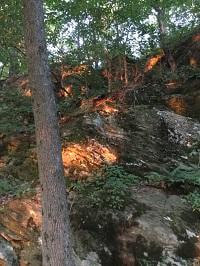
Some of our flowering plants: squash, tomatoes, hyacinth beans, eggplant, peppers, cleome and sunflowers still have blossoms which attract the honey bees. Sill warm days draw them away from the bee yard to the gardens that surround the house. The bees spend the day going back and forth to their hive with nectar. The meadows are also brimming with thistle, goldenrod and burdock giving them other sources of nectar. This year the decision was made not to harvest the honey from the hive as a way to help the bees survive the winter. By not harvesting they will have an abundance of honey (food) that will maintain them during the long winter months.
This time of year the sunsets bring an exceptional beauty to the bee yard. As the sun sinks lower in the sky the reflection of it on the rock formation turns from light yellow to deeper shades of red and orange. This changing of color permeates the bee yard giving it a delicate and exquisite elegance.
This time of year the sunsets bring an exceptional beauty to the bee yard. As the sun sinks lower in the sky the reflection of it on the rock formation turns from light yellow to deeper shades of red and orange. This changing of color permeates the bee yard giving it a delicate and exquisite elegance.
Lemon Tree Very Pretty
When the birds begin to flock, the days shorten, night temperatures dip down to the low forties followed by crisp mornings it is time to move the lemon tree from under the Linden trees back into the house. The appearance of an abundance of green fruit is indicative of their summer spent outside in the sunshine. Over the course of the next few months the lemons will gradually ripen, new buds and blossoms will appear and so the process continues. Thank God!
The Francis of Assisi Memorial Garden

The Memorial Garden has striking vivid splashes of yellow flowers in bloom. Found among the Black-eyed Susan's are: Sweet William (Phlox macutata) whose puff- like white heads sway with the breeze and Bright Eyes (Phlox paniculata) whose vivid pink flowers delight the eye. Obedient plant , AKA, false dragon head (Physostegia virginiana) are about to burst forth with magenta-pink flowers. Each month brings new flowers in bloom giving the garden a fresh appearance and wonder.
If you would like to memorialize a loved one, contact Mercy Farm and their names will be entered in the Memorial Book located in the Catherine McAuley Chapel where they will be remembered in the prayers and works of the Sisters of Mercy on site and those gathered with us in prayer.
If you would like to memorialize a loved one, contact Mercy Farm and their names will be entered in the Memorial Book located in the Catherine McAuley Chapel where they will be remembered in the prayers and works of the Sisters of Mercy on site and those gathered with us in prayer.
Greetings from the Garden
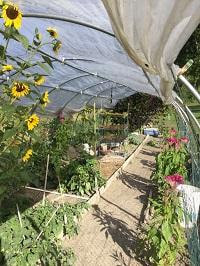
During August we reaped the work of our labors as many vegetables reached maturity. As September approaches many of our gardens wait for the soil to be turned over and readied for winter. Beets, carrots, kale, lettuce, onions, radish and Swiss chard have all been harvested. A second planting of beets, kale and radish have been planted and soon cold crop vegetables, lettuce and spinach, will be planted. This year we had an interesting variety of tomatoes including: Big Beef, Black Brandywine, Black Krim, Cherokee Purple, New Girl and Yellow Mini. Some have been harvested, others have yet to ripen, be harvested and preserved. The second crop of Ever-bearing Raspberries have fruit ripening on the brambles. Cucumbers and squash continue to ripen on the vines. Sweet potatoes are maturing and will not be ready until October after the first frost.
Cabbage, yellow beans, chives, lemon geranium and purple basil may still be found in the Arc Garden. Still growing in the raised beds are: beets, carrots, eggplant, peppers and tomatoes. The hoop house continues to have cherry tomatoes, green peppers that are ripening to red, husk cherries; chives and purple basil. The drying rack has onions curing and sunflower heads that are drying, some will be for bird consumption others for planting next spring. Cleome, cockcomb, marigold, nasturtium and sunflowers are an attraction for honey bees. Continuing their growth in the kitchen garden are: broccoli, cabbage, squash and sweet potatoes. Growing among these vegetables are nasturtium and sunflowers. The sunflowers that grow in many of the gardens are all volunteers from last year's planting.
The abundance of vegetables is donated to the Fair Haven Concerned Food Shelf on a weekly basis.
Cabbage, yellow beans, chives, lemon geranium and purple basil may still be found in the Arc Garden. Still growing in the raised beds are: beets, carrots, eggplant, peppers and tomatoes. The hoop house continues to have cherry tomatoes, green peppers that are ripening to red, husk cherries; chives and purple basil. The drying rack has onions curing and sunflower heads that are drying, some will be for bird consumption others for planting next spring. Cleome, cockcomb, marigold, nasturtium and sunflowers are an attraction for honey bees. Continuing their growth in the kitchen garden are: broccoli, cabbage, squash and sweet potatoes. Growing among these vegetables are nasturtium and sunflowers. The sunflowers that grow in many of the gardens are all volunteers from last year's planting.
The abundance of vegetables is donated to the Fair Haven Concerned Food Shelf on a weekly basis.
Blooming Blossoms!
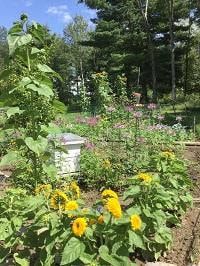
Besides the St. Francis Memorial Garden our named flower gardens are the: Peace, Terrace, Iris and Herb gardens. During the summer months you will receive a bouquet from us. We hope the photo will make you smile, lift you up, encourage you ... May it bring whatever you need when it arrives to you.
A walk through the gardens that surround the farm house revealed a magnificent array of sunflowers, they are the flower featured this month.
Sunflowers typically evoke a feeling of positivity because of the large, yellow blooms. They stand tall - taller than many other garden blooms - and always seem to perk up our moods. Aside from growing a cheerful flower, there are also other benefits to growing sunflowers. Because there bright flowers attract bees, they are useful in areas where people are beekeeping and looking to attract more bees. Sunflowers are native to the Americas and were used for medicine, dye, food and oil, and were exported around 1500. Sunflower oil is packed with calcium and iron and contains vitamins A and D.
Sunflowers can remove toxins such as lead, arsenic and uranium from contaminated soil. They have been used to decontaminate soils at some of the world's biggest environmental disasters including Chernobyl and Fukushima.
See: https"//thespruce.com/fun-facts-about-sunflowers-3972329
The sunflower's flowering heads track the sun's movement, a phenomenon known as heliotropism. In French, the word for sunflower is tournesol, meaning "turn with the sun." Other facts include: one sunflower can have up to 2,000 seeds; there are two kinds of seeds: black and striped. Oil is made from the black seeds and snacks are made from striped seeds. There are 60 different kinds of sunflowers and include yellow, orange, red-orange, maroon, tan, peach and stripped colors. It is also one of the fastest flower growing plants, growing up to 12 feet tall within six months!
See: www.seedylawyer.com/18-sunflower-facts-you-never-knew/
A walk through the gardens that surround the farm house revealed a magnificent array of sunflowers, they are the flower featured this month.
Sunflowers typically evoke a feeling of positivity because of the large, yellow blooms. They stand tall - taller than many other garden blooms - and always seem to perk up our moods. Aside from growing a cheerful flower, there are also other benefits to growing sunflowers. Because there bright flowers attract bees, they are useful in areas where people are beekeeping and looking to attract more bees. Sunflowers are native to the Americas and were used for medicine, dye, food and oil, and were exported around 1500. Sunflower oil is packed with calcium and iron and contains vitamins A and D.
Sunflowers can remove toxins such as lead, arsenic and uranium from contaminated soil. They have been used to decontaminate soils at some of the world's biggest environmental disasters including Chernobyl and Fukushima.
See: https"//thespruce.com/fun-facts-about-sunflowers-3972329
The sunflower's flowering heads track the sun's movement, a phenomenon known as heliotropism. In French, the word for sunflower is tournesol, meaning "turn with the sun." Other facts include: one sunflower can have up to 2,000 seeds; there are two kinds of seeds: black and striped. Oil is made from the black seeds and snacks are made from striped seeds. There are 60 different kinds of sunflowers and include yellow, orange, red-orange, maroon, tan, peach and stripped colors. It is also one of the fastest flower growing plants, growing up to 12 feet tall within six months!
See: www.seedylawyer.com/18-sunflower-facts-you-never-knew/
Happenings Around the Farm (August)

July was a whirl wind of activity! On Sunday, June 2, eleven students from Cristo Rey High School arrived for a week of service; a Yard Sale; private retreat; HEOP Students from Maria College, Albany, NY came for a day and the month culminated with five Occupational Therapy students from Maria College for a service week.
All work and no play is not healthy so when time allowed: the Cristo Rey contingency joined us at the Fair Haven Concert and enjoyed lively Country Music performed by The Spurs, USA and the following week we joined neighbors for the Marble City Swing Band at the Castleton Summer Concerts at the Pavilion. A most delightful concert and time shared. Another evening we attended Studio Two, the number one Tribute Band in New Hampshire, with a prime focus on the Beatles. This concert was held at the Castleton University Pavilion.
July 8 dawned with questionable weather for a yard sale and despite the forecast Mercy Farm drew people from the Benson area and beyond, several from Virginia who were vacationing here and others from our neighboring state of New York. Many hands made light work was proven true as Sisters Jean Marie and Joanne LaFreniere and Ruth Ravey joined the Mercy Farm staff for this event which raised just under $480! For those not aware of Mercy Farm the sale provided an opportunity for them to see the farm and to enjoy its beauty and peacefulness. Unsold items were donated to Our Lady of Seven Dolors Thrift Shop in Fair Haven.
Our July guests came from: Bennington, Benson, Burlington, Castleton, North Springfield, VT; Groton, Milford and Stratford, CT; Westbrook, ME; Bridgewater and Elizabeth, NJ; Albany, Altamont, Ballston Spa, Bronx, Brooklyn, Clifton Park, Guilderland, New York City, Niskayuna, Queens Village, Rhinebeck, Rotterdam, Saugerties, West Babylon and Westport, NY.
All work and no play is not healthy so when time allowed: the Cristo Rey contingency joined us at the Fair Haven Concert and enjoyed lively Country Music performed by The Spurs, USA and the following week we joined neighbors for the Marble City Swing Band at the Castleton Summer Concerts at the Pavilion. A most delightful concert and time shared. Another evening we attended Studio Two, the number one Tribute Band in New Hampshire, with a prime focus on the Beatles. This concert was held at the Castleton University Pavilion.
July 8 dawned with questionable weather for a yard sale and despite the forecast Mercy Farm drew people from the Benson area and beyond, several from Virginia who were vacationing here and others from our neighboring state of New York. Many hands made light work was proven true as Sisters Jean Marie and Joanne LaFreniere and Ruth Ravey joined the Mercy Farm staff for this event which raised just under $480! For those not aware of Mercy Farm the sale provided an opportunity for them to see the farm and to enjoy its beauty and peacefulness. Unsold items were donated to Our Lady of Seven Dolors Thrift Shop in Fair Haven.
Our July guests came from: Bennington, Benson, Burlington, Castleton, North Springfield, VT; Groton, Milford and Stratford, CT; Westbrook, ME; Bridgewater and Elizabeth, NJ; Albany, Altamont, Ballston Spa, Bronx, Brooklyn, Clifton Park, Guilderland, New York City, Niskayuna, Queens Village, Rhinebeck, Rotterdam, Saugerties, West Babylon and Westport, NY.
A Train Ride from Brooklyn to Benson

Emerging from the train, Sunday, July 2, 8:30 p.m. in Castleton were eleven students accompained by Sister Betty Calfapietra, RSM and Tara Crimmins, faculty members of Cristo Rey High School, Brooklyn, NY. During their five hour trip the train ride gave the students an opportunity to see various landscapes, different architectural structures from large cities to farm lands. The beauty of it all was striking!
Idjatou, Sherina, Arlyn, Edwin, Anissa, Omar, Ana, Ricardo, Korey, Ryan, Lashawnda with Sister Betty and Tara were welcomed to the farm and given a tour of the farm house before retiring for the night. Each morning Betty S. showed the video "Awakening the Dreamer - Changing the Dream" followed by discussion. A walking tour of the farm via the trails and an introduction to the hens and sheep followed. As is our practice students are divided up between Betty S. for cooking, Holly for the Bee Yard and Honey House and Mary, trails and barn yard. Students spend a day with each staff member and rotate each day giving all an opportunity to see and to participate in the work of the farm.
Tuesday was celebrated by attending the July Fourth Parade in Poultney followed by a B-B-Q at the farm with all the fixings and that evening a fire pit featuring smores. On Wednesday, between "Awakening the Dreamer, Changing the Dream" and helping to get ready for the July 8 Yard Sale was a power point presentation on reptiles by our neighbor, David Fedor-Cunningham and a walk around the property to identify turtles, frogs, snakes and plant vegetation encountered during the walk.
Thursday, all were on their way to Lake St Catherine State Park to meet Heather and Molly of the State of Vermont Fish and Wildlife Service. While at the park Heather and Molly gave information about invasive (not native to an area) plants and how to remove them. A short walk through the forest led to the site where we would clear honeysuckle and buckthorn growth. These two species spread rapidly and take over thereby having a negative impact on the ecological balance in an area. We were introduced to the Weed Wrench that will pull shrubs and small trees up by their roots. All tried their hand using the Weed Wrench and a tree saw. Once pulled from the soil the tree and root ball were hung in the crook of a tree to dry out and eventually the nutrients from the root ball goes back into the soil. Heather and Molly were pleased with the work done and as they said "you remove something you in turn replace it." All had a chance to plant a tree native to Vermont in the area cleared. After our work was done the students "jumped" into the lake! Although a cloudy day the water was inviting and swimming and a water game were enjoyable.
The final session of "Awakening the Dreamer - Changing the Dream" was held that afternoon and students were presented with a bracelet from the Aquar people of Equator to remind them of their need to nurture planet Earth. The Fair Haven Concert featured Spurs, USA and was a lively time that all enjoyed! Awake time was early Friday as the students had an 8:15 a.m. train to catch.
Working outdoors, learning about nature and the animals, the hospitality and treatment they received were what the students liked most about their experience. When asked to name one new learning from the farm they said:
reasons that invasive plants are not good for the environment or animal life and how to properly remove them; never say you can't do something without trying to do it; not everything can be done alone; the environment is endangered and humans are hurting Earth - we need to change that!
How will you continue this learning? One student said "she will continue doing things that are out of her comfort zone and use that experience to learn new things and grow from it."
Others said that they will share what was learned at the farm and to do things that will not harm the environment.
And lastly, Yes, I achieved my goal by stepping out of my comfort zone and to learn about the environment that surrounds me every single day. This thought is perhaps true for all of the students who came from Brooklyn to a small rural community in Vermont.
Their time with us was short and what they accomplished for us and Mercy Farm was tremendous. Some chores required muscle, others gentleness but all a genuine interest in making our Earth a better place to live. We are most grateful to Idjatou, Sherina, Arlyn, Edwin, Anissa, Omar, Ana, Ricardo, Korey, Ryan, Lashawnda, Sister Betty and Tara for what they did but more importantly for their presence among us. Ryan we wish you every success as you begin college and to the rest of the students make the most of your last year at Cristo Rey. Thank you!
Idjatou, Sherina, Arlyn, Edwin, Anissa, Omar, Ana, Ricardo, Korey, Ryan, Lashawnda with Sister Betty and Tara were welcomed to the farm and given a tour of the farm house before retiring for the night. Each morning Betty S. showed the video "Awakening the Dreamer - Changing the Dream" followed by discussion. A walking tour of the farm via the trails and an introduction to the hens and sheep followed. As is our practice students are divided up between Betty S. for cooking, Holly for the Bee Yard and Honey House and Mary, trails and barn yard. Students spend a day with each staff member and rotate each day giving all an opportunity to see and to participate in the work of the farm.
Tuesday was celebrated by attending the July Fourth Parade in Poultney followed by a B-B-Q at the farm with all the fixings and that evening a fire pit featuring smores. On Wednesday, between "Awakening the Dreamer, Changing the Dream" and helping to get ready for the July 8 Yard Sale was a power point presentation on reptiles by our neighbor, David Fedor-Cunningham and a walk around the property to identify turtles, frogs, snakes and plant vegetation encountered during the walk.
Thursday, all were on their way to Lake St Catherine State Park to meet Heather and Molly of the State of Vermont Fish and Wildlife Service. While at the park Heather and Molly gave information about invasive (not native to an area) plants and how to remove them. A short walk through the forest led to the site where we would clear honeysuckle and buckthorn growth. These two species spread rapidly and take over thereby having a negative impact on the ecological balance in an area. We were introduced to the Weed Wrench that will pull shrubs and small trees up by their roots. All tried their hand using the Weed Wrench and a tree saw. Once pulled from the soil the tree and root ball were hung in the crook of a tree to dry out and eventually the nutrients from the root ball goes back into the soil. Heather and Molly were pleased with the work done and as they said "you remove something you in turn replace it." All had a chance to plant a tree native to Vermont in the area cleared. After our work was done the students "jumped" into the lake! Although a cloudy day the water was inviting and swimming and a water game were enjoyable.
The final session of "Awakening the Dreamer - Changing the Dream" was held that afternoon and students were presented with a bracelet from the Aquar people of Equator to remind them of their need to nurture planet Earth. The Fair Haven Concert featured Spurs, USA and was a lively time that all enjoyed! Awake time was early Friday as the students had an 8:15 a.m. train to catch.
Working outdoors, learning about nature and the animals, the hospitality and treatment they received were what the students liked most about their experience. When asked to name one new learning from the farm they said:
reasons that invasive plants are not good for the environment or animal life and how to properly remove them; never say you can't do something without trying to do it; not everything can be done alone; the environment is endangered and humans are hurting Earth - we need to change that!
How will you continue this learning? One student said "she will continue doing things that are out of her comfort zone and use that experience to learn new things and grow from it."
Others said that they will share what was learned at the farm and to do things that will not harm the environment.
And lastly, Yes, I achieved my goal by stepping out of my comfort zone and to learn about the environment that surrounds me every single day. This thought is perhaps true for all of the students who came from Brooklyn to a small rural community in Vermont.
Their time with us was short and what they accomplished for us and Mercy Farm was tremendous. Some chores required muscle, others gentleness but all a genuine interest in making our Earth a better place to live. We are most grateful to Idjatou, Sherina, Arlyn, Edwin, Anissa, Omar, Ana, Ricardo, Korey, Ryan, Lashawnda, Sister Betty and Tara for what they did but more importantly for their presence among us. Ryan we wish you every success as you begin college and to the rest of the students make the most of your last year at Cristo Rey. Thank you!
The Adventures of Bailey and Dexter

Finally, Bailey shed the remainder of her winter coat! Now a second look at the sheep is needed to tell them apart. They have spent their summer rotating through the two paddocks. And when the opportunity presented itself Bailey and Dexter found an escape route leading presumably to greener pastures. One afternoon a noise that sounded like chewing was heard outside the window. What could it be? Turning around caught us all by surprise. There was Bailey and Dexter chomping away on a cabbage Holly had planted along the side of the house. A carrot or two should lure them back to the paddock. A delivery man was also taken by surprise and said they came down the hill to greet him. Dangling a carrot in front of their nose soon had them back where their adventure began.
Pedicures have now been added to our list of salon offerings! Our friend, Ian, mentioned that he had farm experience and had trimmed sheep hoofs. On one of those cloudy days with shears in hand, Ian "threw the sheep" putting them in a position where he could clip their hoofs. He began with Bailey with Dexter nearby and then Dexter with Bailey doing the heavy looking on. Initially, they weren't too keen on having their hoofs clipped but in the end their expression was one of gratitude and "doesn't that feel good!"
Pedicures have now been added to our list of salon offerings! Our friend, Ian, mentioned that he had farm experience and had trimmed sheep hoofs. On one of those cloudy days with shears in hand, Ian "threw the sheep" putting them in a position where he could clip their hoofs. He began with Bailey with Dexter nearby and then Dexter with Bailey doing the heavy looking on. Initially, they weren't too keen on having their hoofs clipped but in the end their expression was one of gratitude and "doesn't that feel good!"
Barn Yard Banter and BC

BC rose to new heights and after a year of careful study of the structural design of the rafters she made her way up to where the Guineas roost and even made it to the peak of the barn rafters. Soon after BC's triumphant climb and when the Guineas were out of the barn, a Plymouth Barred Rock (Rock) ventured up to the Guinea roost. BC is fearless and not easily discouraged nor intimidated continues to explore all things high above her head. On the other hand, the Rock's attitude seems to be - been there, done that!
The Rhode Island Rooster (Red) became aggressively vicious to the French and Sumatra hens. In talking with neighbors who raise chickens we were advised to remove Red from the flock. And so it happened. In less than a weeks time the hens were back to their carefree living. The Rocks began laying their large dark brown eggs July 17. Known to
Rocks lay up to 200 eggs per year. Presently, our eight hens lay an average of three eggs per day. The Araucana singly lays three or more eggs per week and still holds the citation as the most consistent layer on the farm!
Four young hens arrived July 29 bringing our total count to twenty hens and one Guinea cockerel. The newbies consist of two Araucanas, one Rock and "a cousin of the Rocks" and hopefully they will all be hens! Their first few days were spent in the summer barn with Bailey and Dexter away from the fray and the pecking order of the winter barn. As free range hens they choose where they go and want to be.The other Rocks wander in and out of the summer barn. As the newbies become more familiar with us and their barn mates they will travel with the rest of the flock.
The Rhode Island Rooster (Red) became aggressively vicious to the French and Sumatra hens. In talking with neighbors who raise chickens we were advised to remove Red from the flock. And so it happened. In less than a weeks time the hens were back to their carefree living. The Rocks began laying their large dark brown eggs July 17. Known to
Rocks lay up to 200 eggs per year. Presently, our eight hens lay an average of three eggs per day. The Araucana singly lays three or more eggs per week and still holds the citation as the most consistent layer on the farm!
Four young hens arrived July 29 bringing our total count to twenty hens and one Guinea cockerel. The newbies consist of two Araucanas, one Rock and "a cousin of the Rocks" and hopefully they will all be hens! Their first few days were spent in the summer barn with Bailey and Dexter away from the fray and the pecking order of the winter barn. As free range hens they choose where they go and want to be.The other Rocks wander in and out of the summer barn. As the newbies become more familiar with us and their barn mates they will travel with the rest of the flock.
Bee Yard Buzz
Holly, our beekeeper, received some wonderful news from a fellow beekeeper, Brother Daniel from Weston Priory regarding how to make use of the bees we have to make a second hive. On a calm sunny day Holly and Mary suited up and went to the Bee Yard. Holly opened the first hive and found it very active and then opened the second hive which we knew to be empty. She then removed some frames from the second hive and set them aside and then removed frames from the first hive laden with honey and honey bees and put them into the second hive. After closing that hive up she then placed empty frames into the first hive and closed the hive. The queen bee remained in the first hive and a second queen bee will be "chosen" by the new brood now living in the second hive. Nature is so amazing!
Lemon Tree, Very Pretty!
The lemon tree is enjoying summering under the Linden trees whose canopies shelter her from the July downpours. There are currently 20 green lemons of various sizes and we anticipate soon they will evolve into lovely shades of yellow and then sweet luscious fruit that will enhance many a dish.
The Francis of Assisi Memorial Garden
Blooming in the Memorial Garden this July were: bee balm, coral bells, purple cone flower, coreopsis, lamb's ear, astilbe, hosta and others.
If you would like to memorialize a loved one, contact Mercy Farm and their names will be entered in the Memorial Book located in the Catherine McAuley Chapel where they will be remembered in the prayers and works of the Sisters of Mercy on site and those gathered with us in prayer.
If you would like to memorialize a loved one, contact Mercy Farm and their names will be entered in the Memorial Book located in the Catherine McAuley Chapel where they will be remembered in the prayers and works of the Sisters of Mercy on site and those gathered with us in prayer.
Greetings from the Garden

The three raised beds of ever-bearing raspberry brambles have thus far produced 13 pounds of sweet juicy berries. Picking began July 5 and each morning we pick three pints of berries leaving some to ripen off and the majority to continue to grow and ripen. The berries are washed, drained laid on a cookie sheet, placed in the freezer and when frozen, bagged. They are now ready for Betty to make delicious raspberry pies for our guests!
The hoop house has yielded: a variety of tomatoes and onions. The following plants continue to mature: tomatoes, red peppers, artichoke, husk cherries and cilantro. Vegetables from the arc and kitchen gardens include: green bush beans and hyacinth beans; Zucchini, acorn, summer and delicata squash; and herbs: basil, rosemary and chives. Continuing their growth in the kitchen garden are: sweet potatoes, cabbage, broccoli, cauliflower, onions and cucumbers.
The raised beds have produced: tomatoes, beets, Kale, lettuce, green peppers, radishes, Swiss chard, spinach and green beans. Carrots and eggplants continue to develop. Some of the onions and all of the garlic have been harvested and are now drying and curing. Vegetables we have in abundance are donated to the Fair Haven Concerned Food Shelf. In spite of all the rain, the Guineas making their dust baths in the gardens and the need for a second or third planting of some crops our gardens have done pretty well.
The hoop house has yielded: a variety of tomatoes and onions. The following plants continue to mature: tomatoes, red peppers, artichoke, husk cherries and cilantro. Vegetables from the arc and kitchen gardens include: green bush beans and hyacinth beans; Zucchini, acorn, summer and delicata squash; and herbs: basil, rosemary and chives. Continuing their growth in the kitchen garden are: sweet potatoes, cabbage, broccoli, cauliflower, onions and cucumbers.
The raised beds have produced: tomatoes, beets, Kale, lettuce, green peppers, radishes, Swiss chard, spinach and green beans. Carrots and eggplants continue to develop. Some of the onions and all of the garlic have been harvested and are now drying and curing. Vegetables we have in abundance are donated to the Fair Haven Concerned Food Shelf. In spite of all the rain, the Guineas making their dust baths in the gardens and the need for a second or third planting of some crops our gardens have done pretty well.
Blooming Blossoms

Besides the St. Francis Memorial Garden our named flower gardens are the: Peace, Terrace, Iris and Herb gardens. During the summer months you will receive a bouquet from us. We hope the photo will make you smile, lift you up, encourage you ... May it bring whatever you need when it arrives to you.
The Peace Garden is featured this month. Among Lamb's Ear, Sedum, Echinacea (Purple Coneflower), Brown Eyed Susans, Iris, Milkweed, Daises and a variety of Lilies, the Lavender plant is showcased this month.
Lavandula (common name lavender) is a genus (a group of closely related species) of 47 known species of flowering plants in the mint family. The genus includes annual or short-lived herbaceous plants, and shrub-like perennials, sub-shrubs or small shrubs. Leaf shape is diverse across the genus. Flowers are borne in whorls (a circle of three or more leaves, branches, or flower stalks at a node), held on spikes rising above the foliage.The flowers may be blue, violet or lilac in wild species, occasionally blackish purple or yellowish. The English word lavender is generally thought to be derived from Old French lavandre, ultimately from the Latin lavare (to wash), referring to the use of infusions of the plants.
Commercially, the plant is grown mainly for the production of essential oil of lavender which is used in balms, salves, perfumes, cosmetics, and topical applications. Culinary lavender, usually refers to English Lavender (l. angustifolia and munstead). As an aromatic, it has a sweet fragrance with a taste of lemon or citrus notes. It is used as a spice or condiment in pastas, salads and dressings and desserts. Their buds and greens are used in teas, and their buds, processed by bees, are the essential ingredient of mono-floral honey. In the United States, both lavender syrup and dried lavender buds are used to make lavender scones and marshmallows.
See: https://en.wikipedia.org/wiki/Lavandula
The Peace Garden is featured this month. Among Lamb's Ear, Sedum, Echinacea (Purple Coneflower), Brown Eyed Susans, Iris, Milkweed, Daises and a variety of Lilies, the Lavender plant is showcased this month.
Lavandula (common name lavender) is a genus (a group of closely related species) of 47 known species of flowering plants in the mint family. The genus includes annual or short-lived herbaceous plants, and shrub-like perennials, sub-shrubs or small shrubs. Leaf shape is diverse across the genus. Flowers are borne in whorls (a circle of three or more leaves, branches, or flower stalks at a node), held on spikes rising above the foliage.The flowers may be blue, violet or lilac in wild species, occasionally blackish purple or yellowish. The English word lavender is generally thought to be derived from Old French lavandre, ultimately from the Latin lavare (to wash), referring to the use of infusions of the plants.
Commercially, the plant is grown mainly for the production of essential oil of lavender which is used in balms, salves, perfumes, cosmetics, and topical applications. Culinary lavender, usually refers to English Lavender (l. angustifolia and munstead). As an aromatic, it has a sweet fragrance with a taste of lemon or citrus notes. It is used as a spice or condiment in pastas, salads and dressings and desserts. Their buds and greens are used in teas, and their buds, processed by bees, are the essential ingredient of mono-floral honey. In the United States, both lavender syrup and dried lavender buds are used to make lavender scones and marshmallows.
See: https://en.wikipedia.org/wiki/Lavandula
Happenings Around the Farm

February was a very interesting month weather-wise! Wide temperature swings, that is , zero to 60 degrees! Precipitation included winter mix, wet heavy snow, the white fluffy stuff and rain. Mercy Farm has been a winter wonderland made even more majestic with the breaking of dawn over the horizon and the setting sun leaving hues of pink, orange and purple across the sky. The pond has seen its share of freezing, thawing, changes in color and now open water along the bank. During the last few days of February Canada geese have been heard at the break of day.
Jim and his tree snow sculpture. During the month of February we welcomed guests who came for respite, hospitality, a private retreat and BioBlitz meetings. Some of our guests enjoyed snowshoeing around the property; making tree snow sculptures; the ambiance and warmth of the wood stove and others came to join friends for dinner, conversation, catching up on life and drumming, that has now become a delightful tradition!
Outings were limited to meetings with professors at Castleton University and Green Mountain College regarding the upcoming BioBlitz. Information was shared; new possibilities were realized and are being explored. The sustainability program and tour of Green Mountain's farm were most interesting. A delicious dinner at a neighbor's home was enjoyed and the conversation on the wonders of nature were exciting and informative. We stepped up to the occasional opportunity to shovel and snow blow walks, decks and stairs around the farm. Betty also took part in a 3.7 mile bird monitoring walk in West Rutland.
Our February guests came from the Vermont towns of: Bellows Falls, Benson, Brandon, Burlington, Charlotte, Colchester, Essex Junction, Orwell, Middlebury, North Springfield, Williston and Winooski; Belmont, Burlington, Concord and Rehoboth, MA; Peterborough, NH; Jersey City, NJ and Clifton Park, Dresden and Whitehall, NY.
Jim and his tree snow sculpture. During the month of February we welcomed guests who came for respite, hospitality, a private retreat and BioBlitz meetings. Some of our guests enjoyed snowshoeing around the property; making tree snow sculptures; the ambiance and warmth of the wood stove and others came to join friends for dinner, conversation, catching up on life and drumming, that has now become a delightful tradition!
Outings were limited to meetings with professors at Castleton University and Green Mountain College regarding the upcoming BioBlitz. Information was shared; new possibilities were realized and are being explored. The sustainability program and tour of Green Mountain's farm were most interesting. A delicious dinner at a neighbor's home was enjoyed and the conversation on the wonders of nature were exciting and informative. We stepped up to the occasional opportunity to shovel and snow blow walks, decks and stairs around the farm. Betty also took part in a 3.7 mile bird monitoring walk in West Rutland.
Our February guests came from the Vermont towns of: Bellows Falls, Benson, Brandon, Burlington, Charlotte, Colchester, Essex Junction, Orwell, Middlebury, North Springfield, Williston and Winooski; Belmont, Burlington, Concord and Rehoboth, MA; Peterborough, NH; Jersey City, NJ and Clifton Park, Dresden and Whitehall, NY.
Awakening the Dreamer, Changing the Dream

This day long event had 17 people in attendance from Vermont and New York. The folks spent the day reflecting on: Where are we now? How did we get here? What is emerging now? And Where do we go from here? Some of the learnings were: I didn't realize that other countries were as concerned about Climate change. It didn't start with us in the United States. It was a shock to hear that to live as we do in the United States we would need four earths to maintain what we are doing now. The greatest was knowing that if we have food in our refrigerator, a bed to sleep in, a roof over our head and clothes to wear we are wealthier than 85% of the rest of the world.
Others were reaffirmed and energized to continuing working on making our world environmentally sustainable, spiritually fulfilling and socially just.
Others were reaffirmed and energized to continuing working on making our world environmentally sustainable, spiritually fulfilling and socially just.
The Adventures of Bailey and Dexter

Bailey and Dexter have been particularly impish this month. Is it the abnormal weather conditions? Cabin fever? Or just having fun? They have free access in and out of the barn where they roam both the west and east paddocks, they have enjoyed three Christmas trees. All of which appeared to be without needles but an attempt to remove all of them from the paddock was squelched when they frowned and put their hoofs down. One very sparsely needled tree was left. Enjoy!

Bailey figured out how to open the gate and wiggle her way into the area where the baled hay is stored. Dexter having a few more pounds on him was unable to maneuver through the gate. It was quite surprising to find Bailey "locked in" and Dexter wishing he could join her. The moral of this tale is that if the sheep are not seen out in the paddock for a long time it is best to investigate their whereabouts.

Earlier this month all the animals were put to bed early (by their standards) neither sheep would stand for that as the sun had not yet set. They stood on their hind legs with their front hoofs on the barn door and woefully turned their heads. Their message was received and the door opened. After more fresh air, a run through the paddocks and whatever they found to nibble they were ready to join their barn mates. Life in the barn is never dull as all of the animals take their turns entertaining everyone who goes to the barn be that for housekeeping, room service, beauty salon service or guests curious about what they see: the sheep in the paddocks, the hens and Guineas roaming about or BC scanning the horizon for what might appear. They do have a lot of fun!
Barn Yard Banter and BC

Congratulations to the French hen who laid the first egg, February 17, of what will hopefully be a productive season. Subsequently, an egg was found on the 25 and 27! The way they are laying more egg cartons will have to be procured! The hens are ready to leave their coop by 7:30 a.m. and lately, the Guineas are out of the barn before room service arrives. This is a big change in their routine as they previously stayed up on the rafters while the continental breakfast was served and after the housekeeper had left. The earlier rising sun and increased length of day accounts for behavioral changes. The warm weather also brings the hens out of the barn where they enjoy tasty treats in the now soft soil. The Guineas may be seen strolling around the yard, sneaking a seed or two that has fallen from the bird feeders and searching for delicacies they find along the way. On dreary days they are ready for bed by four otherwise bedtimes are later and for the Guineas it is when they feel like coming into the barn to roost.

BC still waltzes among the hens and Guineas and tantalizes the sheep by walking in and out of their area. All seem to tolerate her antics and go on about their business. It appears that BC might be interested in changing or adding to her pursuits. She may be seen sitting under the bird feeders or hiding behind the pole, tucked in under the lilac bush or crouched down behind the hemlock tree. All indicate a new pursuit - birds. So far it has been unsuccessful and come April 1 the bird feeders will be taken down and stored away until November 1. This Vermont State law is a deterrent to keep bears away.
It can also be said that BC thinks that she is a dog as she follows you wherever you go on the property. She has been along the Bee, Meadow and Pond Trails and into the forest where a new Ridge Trail will be made. She doesn't just walk behind you, she runs ahead, plays hide-and-seek, she's up one tree and down another and finally she sits beside you and meows. Once carried for a short time she is ready to begin again. BC has also been known to stretch out on a bench in the Bee Yard.
It can also be said that BC thinks that she is a dog as she follows you wherever you go on the property. She has been along the Bee, Meadow and Pond Trails and into the forest where a new Ridge Trail will be made. She doesn't just walk behind you, she runs ahead, plays hide-and-seek, she's up one tree and down another and finally she sits beside you and meows. Once carried for a short time she is ready to begin again. BC has also been known to stretch out on a bench in the Bee Yard.
Bee Yard Buzz

Holly has set up shop in the basement for cleaning and painting the hive bodies and scraping the frames of debris. The hive bodies are bright white and will no doubt make the honey bees happy with their refurbished homes.
The two hives located in the Bee Yard swarmed necessitating the purchase of two clusters of bees. A cluster consists of one queen, workers (female bees), drones and their brood.The new clusters will arrive in May and so begins our honey season.
The two hives located in the Bee Yard swarmed necessitating the purchase of two clusters of bees. A cluster consists of one queen, workers (female bees), drones and their brood.The new clusters will arrive in May and so begins our honey season.
Honey bee facts: Honey has been used for medicine by the Egyptians as far back at 5000 years. It is very good for burns, abrasions and indigestion. The sting of the honey bee is used for arthritis, which is called Apitherapy. The darker the honey the higher the mineral content and antioxidant potential. Honey is an effective antimicrobial agent, which inhibits the growth of bacteria.
See: http://www.cherokeebeeclub.com/Bee%20Facts.htm
See: http://www.cherokeebeeclub.com/Bee%20Facts.htm
Greetings from the Garden

Planning for the next growing season has begun! Decisions have been made regarding who is planting what, the first step toward gardening 2017. It is not too early to talk about the soil and what can be done to nourish it. Eggshells are high in calcium (about 96%), so they make great soil boosters for garden plants like tomatoes. They can also be used to deter pests and to feed birds. Eggshells decompose quickly, contributing calcium to the soil as they break down. You can compost them or add a handful of crushed shells to the bottoms of pots or holes before planting tomatoes, peppers and eggplant. These crops are susceptible to blossom end rot, caused by calcium deficiency, so eggshells will help. Source: Mary Janes Farm, June-July 2016, p. 89.
Eggshells and coffee grounds are added to our compost bins.
Eggshells and coffee grounds are added to our compost bins.
Blooming Blossoms

Keeping with St. Patrick's Day, we introduce you to the Killarney strawberry tree. Named for its bright red fruits, the Killarney strawberry tree (Arbutus unedo) is native to Ireland and can be found growing wild mainly in counties; Sligo, Cork and Kerry, where rocky, well-drained soils encourage its growth. Part of the tree's scientific name "unedo," roughly translates as "I eat one," which is believed to refer to the bland flavor of the fruit, which would not inspire tasters to have a second round.
The flower of the Arbutus unedo resembles those of the heather, a larger version of its upside down urn type flowers in bowed clusters. These pretty flowers colored white with a hint to pink, give off a soft scent of honey during their blooming period from November to December, while offering a good source of nectar and pollen for bees at a time when there isn't much else about. Strawberry trees can be found blooming and fruiting at the same time. Blooming time is when the mature fruits from the previous year's flowers become ripe; it takes 12 months to ripen from yellow thru pink to red! The tasteless fruits resemble spiky, round strawberries and have little flavor, though due to their sugar content, they are sometimes used to make jam and preserves.
The tree can be grown as a shrub with proper pruning, or left to grow, reaching heights of up to 30 feet. Well suited to warm weather, the Killarney strawberry tree fares best in U.S. Department of Agriculture plant hardiness zones 7 through 10.
See: www.gardenplansireland.com and homeguides.sfgate.com/killarney-strawberry-tree (Killarney Strawberry Tree Facts)
The flower of the Arbutus unedo resembles those of the heather, a larger version of its upside down urn type flowers in bowed clusters. These pretty flowers colored white with a hint to pink, give off a soft scent of honey during their blooming period from November to December, while offering a good source of nectar and pollen for bees at a time when there isn't much else about. Strawberry trees can be found blooming and fruiting at the same time. Blooming time is when the mature fruits from the previous year's flowers become ripe; it takes 12 months to ripen from yellow thru pink to red! The tasteless fruits resemble spiky, round strawberries and have little flavor, though due to their sugar content, they are sometimes used to make jam and preserves.
The tree can be grown as a shrub with proper pruning, or left to grow, reaching heights of up to 30 feet. Well suited to warm weather, the Killarney strawberry tree fares best in U.S. Department of Agriculture plant hardiness zones 7 through 10.
See: www.gardenplansireland.com and homeguides.sfgate.com/killarney-strawberry-tree (Killarney Strawberry Tree Facts)
Winter Weather Tips for our Feathered Friends

Like humans, birds are warm-blooded, yet they have higher metabolic rates and therefore, higher body temperatures (105 degrees F on average) and when the mercury dips, it can be tough to maintain heat. Their survival depends on both physical and behavioral adaptations.
Bird's feathers provide remarkable insulation, and many species grow an extra layer of "down" as part of a late-fall molt. Feathers are aligned to create tiny air pockets, and their outer layer is coated with waterproofing oil produced by a gland at the tail's base and distributed when a bird preens. As for featherless legs and feet, they're covered with scales that minimize heat loss.
Behaviors that beat cold include: (1) When fall food is plentiful, birds gorge to build up insulating fat, which also provides fuel to conserve body heat. (2) On sunny days, birds take advantage of solar radiation, turning their backs to the sun to allow their largest surface areas to soak up the rays. (3) Small flocking birds such as chickadees, nuthatches and titmice manage cold northern winters by roosting in groups in tight cavities.
Even with adaptations to maintain heat, birds can succumb to storms, frigid temperatures and poor food supplies in winter. To help them out provide quality food -select seeds, suet, nuts high in fat and calories. Keep feeders full to assure access to meals to replenish energy reserves. Leave flower heads and stalks - birds feed on seeds and insects that dried flower and stems provide. Offer shelter- plant evergreens shrubs and trees, build a brush pile or add a roost box to your yard. Provide liquid water-birds can melt snow to drink, but doing so uses energy needed to maintain body temperature. See: www.nwf.org/nwfgarden.Help
Bird's feathers provide remarkable insulation, and many species grow an extra layer of "down" as part of a late-fall molt. Feathers are aligned to create tiny air pockets, and their outer layer is coated with waterproofing oil produced by a gland at the tail's base and distributed when a bird preens. As for featherless legs and feet, they're covered with scales that minimize heat loss.
Behaviors that beat cold include: (1) When fall food is plentiful, birds gorge to build up insulating fat, which also provides fuel to conserve body heat. (2) On sunny days, birds take advantage of solar radiation, turning their backs to the sun to allow their largest surface areas to soak up the rays. (3) Small flocking birds such as chickadees, nuthatches and titmice manage cold northern winters by roosting in groups in tight cavities.
Even with adaptations to maintain heat, birds can succumb to storms, frigid temperatures and poor food supplies in winter. To help them out provide quality food -select seeds, suet, nuts high in fat and calories. Keep feeders full to assure access to meals to replenish energy reserves. Leave flower heads and stalks - birds feed on seeds and insects that dried flower and stems provide. Offer shelter- plant evergreens shrubs and trees, build a brush pile or add a roost box to your yard. Provide liquid water-birds can melt snow to drink, but doing so uses energy needed to maintain body temperature. See: www.nwf.org/nwfgarden.Help
Happenings Around the Farm

December was a roller coaster ride! The month began with over an inch of much needed rain. There were several days of scattered snow, four other days leaving a culmination of ten inches of snow; temperatures were in a state of flux from minus 14 degrees to the low forties. December 18th began with snow, rain, freezing rain and loss of power. Late afternoon there was a bit of blue sky and the return of power. Again, the wood stove saved the day! The month ended with a spectacular winter storm which dumped six inches of snow. This storm was accompanied by some wind and temperatures in the twenties. The month ended with a total of just over 20 inches of snow!
The pond is now frozen. Three deer have been seen in the meadow and roaming through the gardens where they ate the leaves off the raspberry brambles. A single turkey was also seen in the meadow.
Typically December is a slow month giving us time to catch up on things we put off during the warmer months. We have had friends and neighbors stop by and help with jig saw puzzles. Tea, sweets and chatter complete the visits as the last piece of a puzzle is put in place. It's time again for another puzzle!
Each month we attend the Senior Lunch at the Benson Community Center. The meals provided by the Wheel Inn are always delicious and in the tradition of the holidays! It is also an enjoyable time and a chance to catch up with the comings and goings of our neighbors and Benson. Following a delightful meal and camaraderie at a neighbor's home we set off for Middlebury to see the Gingerbread House Display at the Vermont Folklife Center. While there we toured the Center and were impressed with the framed art, cards, knit items and more. Plans had also been made to attend the Annual Christmas Concert in Poultney. The weather precluded our attendance but we look forward to next year's performance. This is an excellent concert!
This time of year a variety of birds find our feeders the go-to place for sunflower seeds, thistle and suet. So far the following birds have visited our feeders: gold finches, nuthatches, black capped chickadees, blue jays, cardinals, tufted titmouse, juncos, mourning doves and red-bellied, hairy, downy and ladder-backed woodpeckers. Bird watching is an interesting and rewarding winter pastime. The hemlock tree located near the feeders is a place of warmth and safety for birds waiting to partake of the feast. Join us. You too will be amazed at their beauty and shenanigans.
Our December guests came from the Vermont towns of: Benson, Burlington and Wells;Bloomfield, CT and Whitehall, NY.
The pond is now frozen. Three deer have been seen in the meadow and roaming through the gardens where they ate the leaves off the raspberry brambles. A single turkey was also seen in the meadow.
Typically December is a slow month giving us time to catch up on things we put off during the warmer months. We have had friends and neighbors stop by and help with jig saw puzzles. Tea, sweets and chatter complete the visits as the last piece of a puzzle is put in place. It's time again for another puzzle!
Each month we attend the Senior Lunch at the Benson Community Center. The meals provided by the Wheel Inn are always delicious and in the tradition of the holidays! It is also an enjoyable time and a chance to catch up with the comings and goings of our neighbors and Benson. Following a delightful meal and camaraderie at a neighbor's home we set off for Middlebury to see the Gingerbread House Display at the Vermont Folklife Center. While there we toured the Center and were impressed with the framed art, cards, knit items and more. Plans had also been made to attend the Annual Christmas Concert in Poultney. The weather precluded our attendance but we look forward to next year's performance. This is an excellent concert!
This time of year a variety of birds find our feeders the go-to place for sunflower seeds, thistle and suet. So far the following birds have visited our feeders: gold finches, nuthatches, black capped chickadees, blue jays, cardinals, tufted titmouse, juncos, mourning doves and red-bellied, hairy, downy and ladder-backed woodpeckers. Bird watching is an interesting and rewarding winter pastime. The hemlock tree located near the feeders is a place of warmth and safety for birds waiting to partake of the feast. Join us. You too will be amazed at their beauty and shenanigans.
Our December guests came from the Vermont towns of: Benson, Burlington and Wells;Bloomfield, CT and Whitehall, NY.
Three Cheers for the Winners Of the Mercy Ecology Getaway Raffle!
- Thanks to everyone's efforts about $6,725 was realized! The net should be little over $6,000. The past two years saw a net of just barely $6,000. THANK YOU! Christmas blessings to each of you and your loved ones! Nancy
This year's winners are:
$500 - Patricia Pora, ME
Grand Beach Resort, FL - Nick Botsacos, CT
Crooked Lake, NY - Jen Ginffreda, RI
Pine Point, ME - Patricia Higgins, RI
Mercy Center, CT - Jeff Mercure, AR
Mercy Farm, VT - Michele Aronica, ME
The Mercy Ecology Board, Inc. is most grateful to all who participated is this benefit raffle for Mercy Ecology at Mercy Farm, VT ~ a non-profit sponsored ministry of the Sisters of Mercy. Our mission is to teach reverence for Earth and work toward sustainability of life by acting in harmony with all creation.
The Adventures of Bailey and Dexter

The five Guineas decided to spend two of coldest nights and days outside perched high up in a tree. No type of enticement would have them leave their lofty branches. At some point on the third day they appeared in the barn as if their previous behavior was normal. Now, their choice of sleeping quarters is on the rafters above the sheep. The Guineas make it a point each day to walk (if the ground is bare) or fly (if the ground is snow covered) to the bird feeders where they hope to find a sunflower seed or two that has slipped from the feeders onto the ground.
BC is still hoping that someone among the French, Araucana and Samatra hens will play with her. The Samatra, the smallest of the hens, stands her ground and BC backs away from her stare, outstretched wings and steps forward. When not seeking a playmate, BC is busy with her barn work or out prowling around. She climbs the tallest trees, lays in wait for what might cross her path or just sits tall and stately as she surveys the landscape. Her fur is mostly black with white accents making her easy to see against the snow.
BC has sort of given up on the hens and Guineas for entertainment and now tantalizes Bailey and Dexter. BC has been stretched out in the hay crib several times while the sheep are eating. Once the intruder is noticed BC scampers away. Pallets make up the walls of the stalls and are wide enough for the Master of the Barn to walk along the top of them. The situation ends up being a nudging and daring game. BC is quick and rapidly gets out of any predicament. If the truth be known it seems that the animals like all of the excitement!
BC is still hoping that someone among the French, Araucana and Samatra hens will play with her. The Samatra, the smallest of the hens, stands her ground and BC backs away from her stare, outstretched wings and steps forward. When not seeking a playmate, BC is busy with her barn work or out prowling around. She climbs the tallest trees, lays in wait for what might cross her path or just sits tall and stately as she surveys the landscape. Her fur is mostly black with white accents making her easy to see against the snow.
BC has sort of given up on the hens and Guineas for entertainment and now tantalizes Bailey and Dexter. BC has been stretched out in the hay crib several times while the sheep are eating. Once the intruder is noticed BC scampers away. Pallets make up the walls of the stalls and are wide enough for the Master of the Barn to walk along the top of them. The situation ends up being a nudging and daring game. BC is quick and rapidly gets out of any predicament. If the truth be known it seems that the animals like all of the excitement!
Barn Yard Banter and BC

These days BC is busy helping with housekeeping chores. Her long bushy tail sweeps and dusts as she prowls around the chicken coop. BC does however scatter a pile destined for the dust pan all around the floor. So much for good help! The cold days keep all pretty much in the barn where they find the perfect place to take their dust baths or just to lay in the sunshine. The few days that stretched to the low forties found all the animals outside. The ground was soft enough for hens and Guineas to find and enjoy a tasty morsel. The five Guineas decided to spend two of coldest nights and days outside perched high up in a tree. No type of enticement would have them leave their lofty branches. At some point on the third day they appeared in the barn as if theirprevious behavior was normal. Now, their choice of sleeping quarters is on the rafters above the sheep. The Guineas make it a point each day to walk (if the ground is bare) or fly (if the ground is snow covered) to the bird feeders where they hope to find a sunflower seed or two that has slipped from the feeders onto the ground.
BC is still hoping that someone among the French, Araucana and Samatra hens will play with her. The Samatra, the smallest of the hens, stands her ground and BC backs away from her stare, outstretched wings and steps forward. When not seeking a playmate, BC is busy with her barn work or out prowling around. She climbs the tallest trees, lays in wait for what might cross her path or just sits tall and stately as she surveys the landscape. Her fur is mostly black with white accents making her easy to see against the snow.
BC is still hoping that someone among the French, Araucana and Samatra hens will play with her. The Samatra, the smallest of the hens, stands her ground and BC backs away from her stare, outstretched wings and steps forward. When not seeking a playmate, BC is busy with her barn work or out prowling around. She climbs the tallest trees, lays in wait for what might cross her path or just sits tall and stately as she surveys the landscape. Her fur is mostly black with white accents making her easy to see against the snow.
Bee Yard Buzz

The silence is interrupted now by the sound of snow falling steadily to an already blanketed Bee Yard. Tree limbs are laden with snow. Pine and evergreen boughs bow under the weight. The east wall of the rock formation is likewise trimmed with falling snow and scattered along its face are varying sizes and arrangements of icicles. The white benches and bee hives are enfolded in white. Stillness lingers there. The brunt of the storm has yet to come.
The hive in the Arc Garden is cocooned and hopefully the bees have thus far survived winter.
The hive in the Arc Garden is cocooned and hopefully the bees have thus far survived winter.
Lemon Tree, Very Pretty!

And the lemon flower is sweet! Holly's 16 year old lemon tree has over 20 lemons in various stages of ripeness and countless blossoms. The tree resides in the Chapel in front of the glass slider from September through June. While there it gets a lot of TLC and grows very well where it is planted. The tree spends summer outside under the Linden trees where it is nurtured by Mother Nature. The abundance of fruit and blossoms are indicative of its care and location.
The Francis of Assisi Memorial Garden

The snow covered garden awaits spring and the prospect of producing another beautiful floral display. The wind chimes, a gift to Betty from her brother Brian, are delighted by the whisper of a breeze or the ferocity of winter's wind. They now chime in memory of Brian and all those held dear. May they all rest in peace.
If you would like to memorialize a loved one contract Mercy Farm. The names of your loved one will be entered in the Memorial Book located in the Catherine McAuley Chapel. They will be remembered in the prayers and works of the Sisters of Mercy on site and those gathered with us in prayer.
If you would like to memorialize a loved one contract Mercy Farm. The names of your loved one will be entered in the Memorial Book located in the Catherine McAuley Chapel. They will be remembered in the prayers and works of the Sisters of Mercy on site and those gathered with us in prayer.
Greetings from the Garden
The gardens lie under a thick blanket snow. Underground the garlic cloves have begun to develop, chives and garlic chives have been cut back and the greens are still visible above the snow. When not enjoying sunflower seeds and suet birds are seen on the Echinacea, Cleome, Cosmos, Calendula, Lavender and Bee Balm flower stalks and eating what seeds remain in the pods.
Blooming Blossoms!

The fruits of our labor have been gathered and underground, the soil, bulbs and perennials are being nourished and rejuvenated for the upcoming growing season. It now seems fitting to share some seasonal thoughts on Christmas symbols and their meanings.
The original Christmas Cactus (Schlumbergera) was developed by a French botanist named Charles Lemaire in 1858 and named after French horticulturist Frederic Schlumbergera, a collector of cacti and other succulent plants. They are called Flor de maio (May Flower) in Brazil.
See:www.reindeerland.org/christmas-customs/christmas-cactus.htm
Schlumbergera is a small genus of cacti with six species found in the coastal mountains of southeastern Brazil. Here it grows as an "epiphyte", a plant which grows with its roots attached to other plants that derive moisture and nutrients from the air and rain.
See: https://en.wikipedia.org/wiki/ Schlumbergera
It is not a parasite but only uses the other plants for support. It can be quite different in appearance from their desert-dwelling cousins. The Christmas Cactus has the common red-colored flowers. The flowers come at the ends of what look like flattened stems, or perhaps leaves, but these are actually called "joints", neither leaf nor branch but a little of both. Buds form each year as early as September and may open anytime between November and January.
See: Success with House plants, Card 376 MCMLXXV
The flowers of Schlumberera have adaptations for pollination by hummingbirds: tubular flowers with abundant nectar, and colors towards the red end of the spectrum. Most require cross-pollination to set seeds.
See: https://en.wikipedia.org /wiki/ Schlumbergera
A Christmas custom or tradition is symbolized by a familiar symbol or icon, such as the Christmas Cactus, have come to represent the spirit and meaning of this special time of the year.
See: www.reindeerland.org/christmas-customs/christmas-cactus.htm
The original Christmas Cactus (Schlumbergera) was developed by a French botanist named Charles Lemaire in 1858 and named after French horticulturist Frederic Schlumbergera, a collector of cacti and other succulent plants. They are called Flor de maio (May Flower) in Brazil.
See:www.reindeerland.org/christmas-customs/christmas-cactus.htm
Schlumbergera is a small genus of cacti with six species found in the coastal mountains of southeastern Brazil. Here it grows as an "epiphyte", a plant which grows with its roots attached to other plants that derive moisture and nutrients from the air and rain.
See: https://en.wikipedia.org/wiki/ Schlumbergera
It is not a parasite but only uses the other plants for support. It can be quite different in appearance from their desert-dwelling cousins. The Christmas Cactus has the common red-colored flowers. The flowers come at the ends of what look like flattened stems, or perhaps leaves, but these are actually called "joints", neither leaf nor branch but a little of both. Buds form each year as early as September and may open anytime between November and January.
See: Success with House plants, Card 376 MCMLXXV
The flowers of Schlumberera have adaptations for pollination by hummingbirds: tubular flowers with abundant nectar, and colors towards the red end of the spectrum. Most require cross-pollination to set seeds.
See: https://en.wikipedia.org /wiki/ Schlumbergera
A Christmas custom or tradition is symbolized by a familiar symbol or icon, such as the Christmas Cactus, have come to represent the spirit and meaning of this special time of the year.
See: www.reindeerland.org/christmas-customs/christmas-cactus.htm
New Tenants at Mercy Farm

The ice is now frozen leaving the beavers to remain in their lodge and to enjoy their cache of edible saplings, bark, twigs and leaves. During our last trip to the river in early December little had changed. There were no new fallen trees. From our vantage point the four trees that had been cut down remained where they dropped. A large tree on the bank of the river showed signs of more gnawing and it is assumed that all will remain as is until the spring. The photo shows how much the river has risen since the beavers moved in. Note the gnawed tree stump in the foreground and in the top left, another fallen tree.
Bird Feeding Tips During Winter

In an interview with The Mountain Times, John Buck a migratory bird biologist with the Vermont Department of Fish and Wildlife gave the following information.
Buck recommends that people feed birds only during the winter months to avoid attracting bears as they are very fond of suet and bird seed, especially black oil sunflower seed. "A good rule of thumb is that if it's generally 'wintry' out for an extended period of time, with consistent snow covering the ground and temperatures at or below freezing, you can put your bird feeder out."
Clean birdfeeders at least once a month to prevent buildup of harmful pathogens. Bacteria, viruses, fungi and parasites can be spread through dirty feeders and make birds ill. Particularly vulnerable species are common redpolls, sparrows, pine siskins, finches, and cardinals.
Buck recommends using a solution of one part bleach to nine parts of hot water to kill bacteria. Hot water and unscented dish detergent also does an excellent job. Bottle brushes work well in tube feeders. Thoroughly rinse and dry feeders before refilling them. Check feeders after rain or wet snow and look for clumping and rotting seeds. Feeders are best placed away from large windows.
"Birds of all species have very interesting behaviors, shapes, and plumage, and being close to them to be able to observe this is a great source of enjoyment throughout the winter months."
Source: VTF&W offers birdfeeding tips. The Mountain Times, Dec. 14-20, 2016
Buck recommends that people feed birds only during the winter months to avoid attracting bears as they are very fond of suet and bird seed, especially black oil sunflower seed. "A good rule of thumb is that if it's generally 'wintry' out for an extended period of time, with consistent snow covering the ground and temperatures at or below freezing, you can put your bird feeder out."
Clean birdfeeders at least once a month to prevent buildup of harmful pathogens. Bacteria, viruses, fungi and parasites can be spread through dirty feeders and make birds ill. Particularly vulnerable species are common redpolls, sparrows, pine siskins, finches, and cardinals.
Buck recommends using a solution of one part bleach to nine parts of hot water to kill bacteria. Hot water and unscented dish detergent also does an excellent job. Bottle brushes work well in tube feeders. Thoroughly rinse and dry feeders before refilling them. Check feeders after rain or wet snow and look for clumping and rotting seeds. Feeders are best placed away from large windows.
"Birds of all species have very interesting behaviors, shapes, and plumage, and being close to them to be able to observe this is a great source of enjoyment throughout the winter months."
Source: VTF&W offers birdfeeding tips. The Mountain Times, Dec. 14-20, 2016
Cups of Blessing Retreat

Eight women gathered from October 14-16 for Cup of Blessing, a guided retreat led by Mercy Associates, Carol Villaggio and Andrea Minelli. From all appearances their time at Mercy Farm was indeed a cup of blessings! When not in the Catherine McAuley Chapel the retreatants were seen walking the grounds, visiting the hens, Guinea fowl, BC, Bailey and Dexter. Some even threatened to take them away from us. This of course prompted a baggage check before packing their cars! It is our delight to see how much pleasure our animals bring to our guests.
 The Honey House is right at home in its new location.
Bee Yard Buzz
The Bee Yard is quiet now except for the coming and going of honey bees from the hive. Although blossoms are scarce they still venture forth, delighting in the warm sunshine, to seek out the stray and often solitary flowering plant.
Holly has placed an excluder, a bar with an opening sized for honey bees, at the base of the hives. This prevents mice and other animals in search of shelter and food from entering each hive.
The Honey House has been relocated from the back of the house to the edge of the woods nestled in among the White Pines, Alders, and natural flora with ledge formation on the east side.
It is a perfect setting and it seems that it has always been there.
The hive in the Arc Garden is readily accessible; the two hives in the Bee Yard are handy as well. Holly is pleased with the setting and has already put the Honey House in order for the harvest next fall!
Did you know that: approximately 7-8 pounds of honey are consumed by bees to produce one pound of bees wax; a single honey bee will produce approximately 1/12 teaspoon of honey in her lifetime; a honey bee will flap its wings approximately 11,400 time per minute creating the "buzz" that you hear; or that honey speeds the healing process and combats infections?
Source: Betterbee Fun Facts
The Bee Yard is quiet now except for the coming and going of honey bees from the hive. Although blossoms are scarce they still venture forth, delighting in the warm sunshine, to seek out the stray and often solitary flowering plant.
Holly has placed an excluder, a bar with an opening sized for honey bees, at the base of the hives. This prevents mice and other animals in search of shelter and food from entering each hive.
The Honey House has been relocated from the back of the house to the edge of the woods nestled in among the White Pines, Alders, and natural flora with ledge formation on the east side.
It is a perfect setting and it seems that it has always been there.
The hive in the Arc Garden is readily accessible; the two hives in the Bee Yard are handy as well. Holly is pleased with the setting and has already put the Honey House in order for the harvest next fall!
Did you know that: approximately 7-8 pounds of honey are consumed by bees to produce one pound of bees wax; a single honey bee will produce approximately 1/12 teaspoon of honey in her lifetime; a honey bee will flap its wings approximately 11,400 time per minute creating the "buzz" that you hear; or that honey speeds the healing process and combats infections?
Source: Betterbee Fun Facts

Use the World Gently
These words from the song "Touch the Earth Lightly" by Tony Alonso and Shirley Murray, were threaded throughout Mater Christi School's Eighth Grade Retreat on October 19. Fifty-four students and five faculty members were joined by Father Antony Pittappillil, Pastor of Our Lady of Seven Dolors, Fair Haven and Sister Dale Jarvis, NE New Membership Team, Portland, ME. Father Antony celebrated Mass and engaged the students in an "interactive homily" which focused on food waste, the statistics of which were startling. Sister Dale, who recently returned from Haiti, gave a presentation on religious life and her outreach work in Haiti.
The day was glorious and following an outdoor lunch the students with faculty members formed four groups and toured the farm gardens, trails, bee yard and barn. Betty, Holly and Mary were in these respective areas. An overview was given, points of interest shared and questions were answered. Hopefully, all saw and experienced their gentle care and respect for the flower and vegetable gardens, bees, hens, Guineas, sheep and barn cat.
These words from the song "Touch the Earth Lightly" by Tony Alonso and Shirley Murray, were threaded throughout Mater Christi School's Eighth Grade Retreat on October 19. Fifty-four students and five faculty members were joined by Father Antony Pittappillil, Pastor of Our Lady of Seven Dolors, Fair Haven and Sister Dale Jarvis, NE New Membership Team, Portland, ME. Father Antony celebrated Mass and engaged the students in an "interactive homily" which focused on food waste, the statistics of which were startling. Sister Dale, who recently returned from Haiti, gave a presentation on religious life and her outreach work in Haiti.
The day was glorious and following an outdoor lunch the students with faculty members formed four groups and toured the farm gardens, trails, bee yard and barn. Betty, Holly and Mary were in these respective areas. An overview was given, points of interest shared and questions were answered. Hopefully, all saw and experienced their gentle care and respect for the flower and vegetable gardens, bees, hens, Guineas, sheep and barn cat.

Learning from Nature
Emerging from two SUVs on October 20 were seven participants and three staff members from Mercy Connections, Burlington. Their overnight stay included watching the video, Dirt: The Movie,
followed by discussion, time to just be together, a tour of Mercy Farm that encompassed the gardens, Bee Yard, honey house, barn and raking leaves. Through raking what was learned through the video was followed with the practical application of leaves in the gardens to enhance soil nutrition and health of the microbes. Friendship was shared during meals and at times of reflection.
Inspired by Dirt: The Movie, a participant wrote: "Maybe instead of GMOs we could cuddle our dirt, love it tenderly, remember its life and reform our relationship. Learn from the wisdom of Nature, making our land stronger, healthier, more resilient through understanding connection and biodiversity."
In 2001 Mercy Connections, Inc. was founded by the Sisters of Mercy as a nonprofit organization whose mission is one of nurturing self-sufficiency through education, mentoring and community.
Our October guests came from the Vermont towns of: Benson, Burlington, Essex Junction, Fair Haven, Hinesburg, Middlebury, Orwell, Rutland, Shelburne and South Burlington; Bloomfield, Cheshire,Cromwell, East Hartford, Hartford, New Haven, Newington and West Hartford, CT; Portland and Standish, ME; Belmont, Beverly, Burlington, Rehoboth and Salem, MA and Whitehall, NY.
Emerging from two SUVs on October 20 were seven participants and three staff members from Mercy Connections, Burlington. Their overnight stay included watching the video, Dirt: The Movie,
followed by discussion, time to just be together, a tour of Mercy Farm that encompassed the gardens, Bee Yard, honey house, barn and raking leaves. Through raking what was learned through the video was followed with the practical application of leaves in the gardens to enhance soil nutrition and health of the microbes. Friendship was shared during meals and at times of reflection.
Inspired by Dirt: The Movie, a participant wrote: "Maybe instead of GMOs we could cuddle our dirt, love it tenderly, remember its life and reform our relationship. Learn from the wisdom of Nature, making our land stronger, healthier, more resilient through understanding connection and biodiversity."
In 2001 Mercy Connections, Inc. was founded by the Sisters of Mercy as a nonprofit organization whose mission is one of nurturing self-sufficiency through education, mentoring and community.
Our October guests came from the Vermont towns of: Benson, Burlington, Essex Junction, Fair Haven, Hinesburg, Middlebury, Orwell, Rutland, Shelburne and South Burlington; Bloomfield, Cheshire,Cromwell, East Hartford, Hartford, New Haven, Newington and West Hartford, CT; Portland and Standish, ME; Belmont, Beverly, Burlington, Rehoboth and Salem, MA and Whitehall, NY.

Mercy Ecology Getaway Raffle
Benefit raffle for Mercy Ecology at Mercy Farm, VT ~ a non-profit sponsored ministry of the Sisters of Mercy. Our mission is to teach reverence for Earth and work toward sustainability of life by acting in harmony with all creation.
This year's Getaways are: the Grand Beach Resort in Orlando, FL, July 15 - 22, 2017, estimated value: $2,000; a private house, Crooked Lake, Rensselaer, NY, available September 2016 - May 2017, after that negotiable, estimated value: $1,000; Mercy Farm, Benson, VT, dates to be determined with the winner, Value $260; Mercy Center, Madison, CT, dates to be determined with the winner, estimated value: $290; a private house, Pine Point Beach, Old Orchard, Maine, May 15 - 21, 2017, estimated value: $1,200.
Benefit raffle for Mercy Ecology at Mercy Farm, VT ~ a non-profit sponsored ministry of the Sisters of Mercy. Our mission is to teach reverence for Earth and work toward sustainability of life by acting in harmony with all creation.
This year's Getaways are: the Grand Beach Resort in Orlando, FL, July 15 - 22, 2017, estimated value: $2,000; a private house, Crooked Lake, Rensselaer, NY, available September 2016 - May 2017, after that negotiable, estimated value: $1,000; Mercy Farm, Benson, VT, dates to be determined with the winner, Value $260; Mercy Center, Madison, CT, dates to be determined with the winner, estimated value: $290; a private house, Pine Point Beach, Old Orchard, Maine, May 15 - 21, 2017, estimated value: $1,200.
Purchase a YELLOW ticket ($10 each or three for $25)
for the 2016 Getaways
If you prefer a $500 cash prize instead
Purchase a GREEN ticket
($10 each or three for $25)
Drawing is December 21, 2016.
Winner need not be present
For more information or purchase of tickets contact Mercy Farm at
802/537-4531 ormercyfarm@mercyecology.org
for the 2016 Getaways
If you prefer a $500 cash prize instead
Purchase a GREEN ticket
($10 each or three for $25)
Drawing is December 21, 2016.
Winner need not be present
For more information or purchase of tickets contact Mercy Farm at
802/537-4531 ormercyfarm@mercyecology.org

Forest Management Plan Update
During the week of October 9, ten acres of open land/meadow were mowed as part of the scheduled recommendations of our Land Management Plan. Mowing is done in early fall to allow grassland birds to complete nesting and honey bees to take advantage of flowering plants including Goldenrod and Queen Ann's Lace.
Same view after mowing.The mowed meadows are revealing what was secretly happening in the tall grass. On several occasions two red fox have been seen slinking about, pausing, head out stretched whiffing the air for the scent or sight of prey. Then a pounce, a catch and a proud walk back into the forest.
During the week of October 9, ten acres of open land/meadow were mowed as part of the scheduled recommendations of our Land Management Plan. Mowing is done in early fall to allow grassland birds to complete nesting and honey bees to take advantage of flowering plants including Goldenrod and Queen Ann's Lace.
Same view after mowing.The mowed meadows are revealing what was secretly happening in the tall grass. On several occasions two red fox have been seen slinking about, pausing, head out stretched whiffing the air for the scent or sight of prey. Then a pounce, a catch and a proud walk back into the forest.

The Adventures of Bailey and Dexter!
It would be an understatement if we said that Bailey and Dexter enjoyed all of our guests from Saint Joseph's College and Mater Christi students wooing and awing over them. Two students came back for more B&D and were not disappointed. Hugs were given and expressions of glee were noted! As one group came and went, they stood patiently, in anticipation, hoping for more of the same. Their pats and rubs were also appreciated. The following day, Mercy Connections also delighted the sheep and they returned the favor to our guests. It's just one big happy family here at Mercy Farm!
Bailey and Dexter are still enjoying fresh meadow grass; cooler nights and the crispness of mornings. They sense the changing season and what will follow. Bailey's winter coat is coming in and under Dexter's "baby coat", his winter coat is seen. As for BC she keeps trying to warm up to the sheep only to be nudged gently away. She does get a bit closer and they seem to hold back and then go for the nudge. In time perhaps ... otherwise it could be a long cold winter.
It would be an understatement if we said that Bailey and Dexter enjoyed all of our guests from Saint Joseph's College and Mater Christi students wooing and awing over them. Two students came back for more B&D and were not disappointed. Hugs were given and expressions of glee were noted! As one group came and went, they stood patiently, in anticipation, hoping for more of the same. Their pats and rubs were also appreciated. The following day, Mercy Connections also delighted the sheep and they returned the favor to our guests. It's just one big happy family here at Mercy Farm!
Bailey and Dexter are still enjoying fresh meadow grass; cooler nights and the crispness of mornings. They sense the changing season and what will follow. Bailey's winter coat is coming in and under Dexter's "baby coat", his winter coat is seen. As for BC she keeps trying to warm up to the sheep only to be nudged gently away. She does get a bit closer and they seem to hold back and then go for the nudge. In time perhaps ... otherwise it could be a long cold winter.

Empowering people to make significant life changes
Located in Burlington, Vermont, Mercy Connections' mission states - by compassionately nurturing self-sufficiency through education, mentoring and community, people are empowered to make significant life changes. Anne Lezak, director of education and transitional programs, and other staff members accompanied nine women to Mercy Farm on October 13.
Referring to the experience, Anne said, “What a wonderful gift to all of us it was to spend the day with you at Mercy Farm! More than one of the women exclaimed to me when we returned, ‘That was exactly what I needed!’ We also appreciated your warm hospitality, the lovely surrounding inside and out, the opportunity to help out with some chores, the delicious food (especially knowing so much was home grown) and the great weather you arranged. You truly provided us with an eco-spiritual experience and a very special day.”
Located in Burlington, Vermont, Mercy Connections' mission states - by compassionately nurturing self-sufficiency through education, mentoring and community, people are empowered to make significant life changes. Anne Lezak, director of education and transitional programs, and other staff members accompanied nine women to Mercy Farm on October 13.
Referring to the experience, Anne said, “What a wonderful gift to all of us it was to spend the day with you at Mercy Farm! More than one of the women exclaimed to me when we returned, ‘That was exactly what I needed!’ We also appreciated your warm hospitality, the lovely surrounding inside and out, the opportunity to help out with some chores, the delicious food (especially knowing so much was home grown) and the great weather you arranged. You truly provided us with an eco-spiritual experience and a very special day.”

Garden News
As we look over the gardens we are filled with opposing emotions of sadness and joy. Since February, we planned our gardens, started the seedlings, hardened them and finally put them into the soil. We watched the garden beds change from barren, to the first leaves which eventually grew into small identifiable plants. We gently tended them, loosening the soil around them, giving them water and carefully watching them mature, produce buds and eventually grow into awesomely delicious vegetables. The harvest was incredible. We raised over 1,650 pounds of produce, used for our guests, donated to the Fair Haven Concerned Food Shelf or shared with neighbors. Currently beets, branching onions, broccoli, cabbage, leeks, peppers and spinach have yet to be harvested.
As we look over the gardens we are filled with opposing emotions of sadness and joy. Since February, we planned our gardens, started the seedlings, hardened them and finally put them into the soil. We watched the garden beds change from barren, to the first leaves which eventually grew into small identifiable plants. We gently tended them, loosening the soil around them, giving them water and carefully watching them mature, produce buds and eventually grow into awesomely delicious vegetables. The harvest was incredible. We raised over 1,650 pounds of produce, used for our guests, donated to the Fair Haven Concerned Food Shelf or shared with neighbors. Currently beets, branching onions, broccoli, cabbage, leeks, peppers and spinach have yet to be harvested.

Touch the earth lightly
Neither mist nor cold could keep 18 eighth-grade students and five faculty members from Mater Christi School in Burlington, Vermont away from Mercy Farm. Each year the students have a retreat day at the Farm, which focuses on Earth. At Mercy Farm, one can see, hear, touch and taste the wonder of nature. They experience the strength as well as the fragility of God’s creation and the impact each of us has on Earth. This leads to a deeper understanding for the need “to touch the earth lightly, use the earth gently, and nourish the life of our world in our care.” These words from a song by Tony Alonso and Shirley Murray opened the liturgical celebration.
Our other guest, Sister Barbara Allaire, RSM helped prepare lunch for staff. This year Sister Joanne LaFrenriere, RSM, the person behind this wonderful experience, included time for volunteering. All joined in with rakes and clippers and made quick work of removing trillions of fallen leaves, invasive bushes, buck thorn, multi-flora rose and honeysuckle
After lunch, all broke up into four groups to walk along the trails and stop at the honey house, bee yard, barn, gardens and the pond. At designated points of interest, staff spoke of the characteristics of the Guinea fowl and French hens, the function of the barn and tools that are used in our work. In the Bee Yard students learned about hives, honey making, characteristics and function of the Queen bee, workers, drones and the brood, what bees do during winter and a bit about colony collapse. As the day progressed the weather cleared.
Neither mist nor cold could keep 18 eighth-grade students and five faculty members from Mater Christi School in Burlington, Vermont away from Mercy Farm. Each year the students have a retreat day at the Farm, which focuses on Earth. At Mercy Farm, one can see, hear, touch and taste the wonder of nature. They experience the strength as well as the fragility of God’s creation and the impact each of us has on Earth. This leads to a deeper understanding for the need “to touch the earth lightly, use the earth gently, and nourish the life of our world in our care.” These words from a song by Tony Alonso and Shirley Murray opened the liturgical celebration.
Our other guest, Sister Barbara Allaire, RSM helped prepare lunch for staff. This year Sister Joanne LaFrenriere, RSM, the person behind this wonderful experience, included time for volunteering. All joined in with rakes and clippers and made quick work of removing trillions of fallen leaves, invasive bushes, buck thorn, multi-flora rose and honeysuckle
After lunch, all broke up into four groups to walk along the trails and stop at the honey house, bee yard, barn, gardens and the pond. At designated points of interest, staff spoke of the characteristics of the Guinea fowl and French hens, the function of the barn and tools that are used in our work. In the Bee Yard students learned about hives, honey making, characteristics and function of the Queen bee, workers, drones and the brood, what bees do during winter and a bit about colony collapse. As the day progressed the weather cleared.

Special guests from Bridgeport, CT
Under the guidance of Mercy Sister Eileen Boffa and Christine Wills, a staff member of the Thomas Merton House of Hospitality, a hearty band of seven women from Bridgeport, Connecticut, arrived at Mercy Farm on October 20. For the past four years, Sister Eileen has ministered to street people. Walking the inner city streets she spends her time meeting, listening, talking, lending a hand, offering direction, advice and hope. Apartments are now available for the homeless, Eileen helps with the necessities for setting up their home. Eileen gives retreats and takes the women to sites like Mercy Farm.
When Yoga Instructor Jean White learned through our e-newsletter that these women were coming, she asked if she could come and give a session. Jean used the 5-Part Simple Meditation (Kripalu), which is a powerful invitation to connect with the present when one is calm and an amazing aid when one is upset. This experience proved to be a very positive one for the women and one that they look forward to continuing.
One Guest said, "This was the best retreat ever thanks to all the sisters. I really want to thank them for showing me how to be happy inside my soul and to know it is okay to be different!”
The Mercy Ministry Fund made their two night experience possible. The focus of this grant was to enable materially poor women who do not have the opportunity to enjoy time away from the noise of the city, the violence of the streets and the chaos that they may be living with, a chance to be immersed in nature, time to rest, relax, to partake of tasty nutritious meals and to enjoy the peace and quiet of Mercy Farm.
Under the guidance of Mercy Sister Eileen Boffa and Christine Wills, a staff member of the Thomas Merton House of Hospitality, a hearty band of seven women from Bridgeport, Connecticut, arrived at Mercy Farm on October 20. For the past four years, Sister Eileen has ministered to street people. Walking the inner city streets she spends her time meeting, listening, talking, lending a hand, offering direction, advice and hope. Apartments are now available for the homeless, Eileen helps with the necessities for setting up their home. Eileen gives retreats and takes the women to sites like Mercy Farm.
When Yoga Instructor Jean White learned through our e-newsletter that these women were coming, she asked if she could come and give a session. Jean used the 5-Part Simple Meditation (Kripalu), which is a powerful invitation to connect with the present when one is calm and an amazing aid when one is upset. This experience proved to be a very positive one for the women and one that they look forward to continuing.
One Guest said, "This was the best retreat ever thanks to all the sisters. I really want to thank them for showing me how to be happy inside my soul and to know it is okay to be different!”
The Mercy Ministry Fund made their two night experience possible. The focus of this grant was to enable materially poor women who do not have the opportunity to enjoy time away from the noise of the city, the violence of the streets and the chaos that they may be living with, a chance to be immersed in nature, time to rest, relax, to partake of tasty nutritious meals and to enjoy the peace and quiet of Mercy Farm.

A group par excellence
The alternating heavy midst, showers and downpours did not hamper the spirit or enthusiasm of Mary Beth Doyle and her combined band of nine students from St. Michael’s College, members of the Boys and Girls Club of Burlington and a nice young man named Andrew on October 4. The planned outdoor chores were quickly replaced with the “just in case it rains list”. DIRT: The Movie was viewed and discussed.
Many rainy day tasks were accomplished. The kitchen was made ready for painting by removing dishes from the shelves and washing window frames. Under cover in the hoop house, students turned the soil over to prepare the beds for winter. Meanwhile, in the barn garden tools were cleaned for next season. A delicious meal, chatter and laughter were shared. An aspect of the DVD, Queen of the Sun was viewed followed by a walk to the Bee Yard and Honey House.
We are most grateful to this wonderful group of students who gave up their Saturday and made our lives easier here at Mercy Farm. Mary Beth, professor of education, gave her students an opportunity to be mentors for members of the Boys and Girls Club. You could truly see them mentoring as they worked side-by-side.
The alternating heavy midst, showers and downpours did not hamper the spirit or enthusiasm of Mary Beth Doyle and her combined band of nine students from St. Michael’s College, members of the Boys and Girls Club of Burlington and a nice young man named Andrew on October 4. The planned outdoor chores were quickly replaced with the “just in case it rains list”. DIRT: The Movie was viewed and discussed.
Many rainy day tasks were accomplished. The kitchen was made ready for painting by removing dishes from the shelves and washing window frames. Under cover in the hoop house, students turned the soil over to prepare the beds for winter. Meanwhile, in the barn garden tools were cleaned for next season. A delicious meal, chatter and laughter were shared. An aspect of the DVD, Queen of the Sun was viewed followed by a walk to the Bee Yard and Honey House.
We are most grateful to this wonderful group of students who gave up their Saturday and made our lives easier here at Mercy Farm. Mary Beth, professor of education, gave her students an opportunity to be mentors for members of the Boys and Girls Club. You could truly see them mentoring as they worked side-by-side.
From garden to food shelf
The month of September was a bumper crop for Mercy Farm. Granted, the vegetables carrying the most weight (squash and potatoes) are harvested at this time, but even so, we had a very good year! During September, 236 pounds of farm fresh veggies, were delivered to the Fair Haven Concerned Food Shelf Vegetables included cherry tomatoes, cucumbers, eggplant, kale, lettuce, peas, peppers, potatoes, radish, spinach, butternut, Hubbard and summer squash and tomatoes. From June 1 through September 30 Mercy Farm’s percentage of crop distribution was: 52 percent enjoyed by staff and guests of Mercy Farm; 44 percent went to the Fair Haven Food Shelf; 4 percent was shared with our neighbors.
The month of September was a bumper crop for Mercy Farm. Granted, the vegetables carrying the most weight (squash and potatoes) are harvested at this time, but even so, we had a very good year! During September, 236 pounds of farm fresh veggies, were delivered to the Fair Haven Concerned Food Shelf Vegetables included cherry tomatoes, cucumbers, eggplant, kale, lettuce, peas, peppers, potatoes, radish, spinach, butternut, Hubbard and summer squash and tomatoes. From June 1 through September 30 Mercy Farm’s percentage of crop distribution was: 52 percent enjoyed by staff and guests of Mercy Farm; 44 percent went to the Fair Haven Food Shelf; 4 percent was shared with our neighbors.

The Nature Trails
Thanks to Ethan Kidder, our farm hand, the Meadow Trail has been mowed and is now an easy walk. This will also make a nice path for cross-country skiing and snowshoeing, wonderful exercise for those who come for days of quiet and reflection. This trail consists of two paths along the east side of the farm: one through the meadow; the other through the tree line.
Thanks to Ethan Kidder, our farm hand, the Meadow Trail has been mowed and is now an easy walk. This will also make a nice path for cross-country skiing and snowshoeing, wonderful exercise for those who come for days of quiet and reflection. This trail consists of two paths along the east side of the farm: one through the meadow; the other through the tree line.

Solar 101
Mercy Farm hosted Solar 101, a nuts and bolts presentation of what you need to know when considering solar energy. Tom Champlin from RGS used a power point presentation to solidify the practical information he shared, which in turn prompted many questions from the attendees. We shared not only information about rebate possibilities but delicious food from the Wheel Inn Restaurant courtesy pf RGS.
In conjunction with Mercy Farm’s interest in solar energy, we are moving forward with weatherization. The oldest windows have been replaced, old mercury thermostats have been upgraded to digital thermostats and we are in the process of installing LED lighting throughout the house. The main house attic, basement and worship space will be insulated along with air sealing the building as necessary.
Mercy Farm hosted Solar 101, a nuts and bolts presentation of what you need to know when considering solar energy. Tom Champlin from RGS used a power point presentation to solidify the practical information he shared, which in turn prompted many questions from the attendees. We shared not only information about rebate possibilities but delicious food from the Wheel Inn Restaurant courtesy pf RGS.
In conjunction with Mercy Farm’s interest in solar energy, we are moving forward with weatherization. The oldest windows have been replaced, old mercury thermostats have been upgraded to digital thermostats and we are in the process of installing LED lighting throughout the house. The main house attic, basement and worship space will be insulated along with air sealing the building as necessary.

The “Honey Bunch”
Joining Sr. Holly for the annual honey harvest were Dave Berman, Kristin Larson, Darla Farley, Jeanne Grass and Christine Moshier. By this, the third year of doing the harvest, they are a well “honeyed” machine. Check out our Facebook page at Mercy Farm Eco Spiritual Center to see more of the honey harvesting process from hive to jar. Some of the steps to this intricate process include removing the frames from the two hives, each with a “super”. To “enter” the hive, one person is designated to handle the smoker. Dave is seen here lowering a frame full of honey into the extractor. Once loaded with frames, the extractor is manually spun to extract the honey from the frames. The honey is strained, bottled and labeled. Everything from the protective clothing, tools, extractor and honey house is cleaned. The yield was 80, eight-ounce bottles of delicious, golden all natural honey!
Joining Sr. Holly for the annual honey harvest were Dave Berman, Kristin Larson, Darla Farley, Jeanne Grass and Christine Moshier. By this, the third year of doing the harvest, they are a well “honeyed” machine. Check out our Facebook page at Mercy Farm Eco Spiritual Center to see more of the honey harvesting process from hive to jar. Some of the steps to this intricate process include removing the frames from the two hives, each with a “super”. To “enter” the hive, one person is designated to handle the smoker. Dave is seen here lowering a frame full of honey into the extractor. Once loaded with frames, the extractor is manually spun to extract the honey from the frames. The honey is strained, bottled and labeled. Everything from the protective clothing, tools, extractor and honey house is cleaned. The yield was 80, eight-ounce bottles of delicious, golden all natural honey!
From garden to pantry
During August, 247 pounds of farm fresh veggies, were delivered to the Fair Haven Concerned Food Shelf including: broccoli, carrots, cucumbers, green beans, kale, pole beans, radish, summer squash, tomatoes, basil and parsley. This represents 58% of our crop, guests of Mercy Farm enjoyed 35% and neighbors, 7%. Ashley Bride, Executive Director, wrote: “Fair Haven Concerned has been receiving fresh vegetables from Mercy Farm to serve to our community. Fair Haven Concerned serves an average of 45- 50 families, 130-150 individuals, including 65-80 children monthly. With the help of Mercy Farm each of these families are offered fresh produce to stretch their monthly food budget. We have also donated any abundance of fresh produce to the general community in hopes of keeping produce from being thrown away. We thank Mercy Farm for their generosity as we all work together to combat the food insecurity that our neighbors face.”
During August, 247 pounds of farm fresh veggies, were delivered to the Fair Haven Concerned Food Shelf including: broccoli, carrots, cucumbers, green beans, kale, pole beans, radish, summer squash, tomatoes, basil and parsley. This represents 58% of our crop, guests of Mercy Farm enjoyed 35% and neighbors, 7%. Ashley Bride, Executive Director, wrote: “Fair Haven Concerned has been receiving fresh vegetables from Mercy Farm to serve to our community. Fair Haven Concerned serves an average of 45- 50 families, 130-150 individuals, including 65-80 children monthly. With the help of Mercy Farm each of these families are offered fresh produce to stretch their monthly food budget. We have also donated any abundance of fresh produce to the general community in hopes of keeping produce from being thrown away. We thank Mercy Farm for their generosity as we all work together to combat the food insecurity that our neighbors face.”

The end of summer . . .
Staff and volunteers, Sisters Cecilia Baranowski and Libby DeLiee, have made relish, pickles and readied the following veggies for the freezer: pole beans, beets, green peppers, snap peas, summer squash, cabbage, scapes, rhubarb, rutabagas and raspberries.
Making Mercy Farm their home during August were folks gathering for a weeklong retreat, others seeking hospitality and volunteers coming to lend their time and talent to much needed projects. Peter Grass came with chain saw in hand and took down a dead Linden tree and cut it in fire wood lengths. It has been stacked and waits splitting. Peter will be back with his wood splitter! Coming all the way from Connecticut were Teri Allen and her daughter Maria. They helped Betty transplant six trees she received from the Arbor Day Foundation. They also divided the Peonies and transplanted ornamental grass. Herbs were also potted and brought in for the winter.
The Yukon potatoes, which make up a fourth of the “hill garden”, were ready for harvesting and yielded 44 pounds. Most of the cucumbers, broccoli, rhubarb, lettuce, garlic, green and pole beans are pretty much picked. There are a lot of tomatoes, peppers, onions, butternut and Hubbard squash, spinach, kale and eggplant yet to be harvested. Our raspberry canes are still producing large, juicy, sweet and delicious berries!
Staff and volunteers, Sisters Cecilia Baranowski and Libby DeLiee, have made relish, pickles and readied the following veggies for the freezer: pole beans, beets, green peppers, snap peas, summer squash, cabbage, scapes, rhubarb, rutabagas and raspberries.
Making Mercy Farm their home during August were folks gathering for a weeklong retreat, others seeking hospitality and volunteers coming to lend their time and talent to much needed projects. Peter Grass came with chain saw in hand and took down a dead Linden tree and cut it in fire wood lengths. It has been stacked and waits splitting. Peter will be back with his wood splitter! Coming all the way from Connecticut were Teri Allen and her daughter Maria. They helped Betty transplant six trees she received from the Arbor Day Foundation. They also divided the Peonies and transplanted ornamental grass. Herbs were also potted and brought in for the winter.
The Yukon potatoes, which make up a fourth of the “hill garden”, were ready for harvesting and yielded 44 pounds. Most of the cucumbers, broccoli, rhubarb, lettuce, garlic, green and pole beans are pretty much picked. There are a lot of tomatoes, peppers, onions, butternut and Hubbard squash, spinach, kale and eggplant yet to be harvested. Our raspberry canes are still producing large, juicy, sweet and delicious berries!

NWF Certifies Mercy Farm as
New Wildlife Habitat
Staff decided to make application to the National Wildlife Federation (NWF) because it coincides with our mission, it certifies what we are already doing, it supports and encourages what we do and it could encourage others to join NWF. Joining this organization will expand our knowledge and understanding of this important topic - ecosystems, the interconnectedness of all creation. For us to become certified we needed to meet NWF criteria of having adequate food, water, cover and places for wild life to raise their young.
Betty will be attending the Vermont Coverts three-day workshop in September. This classroom and field studies program is yet another way to broaden our knowledge allowing us to better maintain and enhance our wildlife habitat and enable us to strengthen healthy ecosystems here at Mercy Farm.
New Wildlife Habitat
Staff decided to make application to the National Wildlife Federation (NWF) because it coincides with our mission, it certifies what we are already doing, it supports and encourages what we do and it could encourage others to join NWF. Joining this organization will expand our knowledge and understanding of this important topic - ecosystems, the interconnectedness of all creation. For us to become certified we needed to meet NWF criteria of having adequate food, water, cover and places for wild life to raise their young.
Betty will be attending the Vermont Coverts three-day workshop in September. This classroom and field studies program is yet another way to broaden our knowledge allowing us to better maintain and enhance our wildlife habitat and enable us to strengthen healthy ecosystems here at Mercy Farm.

Audubon Bound
Roy Pilcher, Co-President of the Rutland County Audubon Society (RCAS) walked Mercy Farm with Sisters Betty and Mary via the Nature Trails located along the periphery of the property. The purpose of his visit was to explore the possibility of Mercy Farm being a bird sanctuary. During our two hour walk, Roy pointed out and identified over 20 birds, to name a few: Eastern Kingbird, Baltimore Oriole and the Common Yellow-Throated Warbler. Five species of butterflies included: Giant Swallow Tail and Meadow Fritillary. Examples of plants that are good food sources for birds include: Purple Cow Vetch, Staghorn Sumac and Thistle. Other interesting sightings - a Phoebe nest in the Bee Yard and a Painted Turtle seen soaking up the sun near the shore of the pond. In conclusion, our land provides an excellent source of food, water and shelter to sustain life for our feathered and winged friends! Betty and I were impressed by how quickly Roy spotted and by sound identified the birds by their song.
Roy Pilcher, Co-President of the Rutland County Audubon Society (RCAS) walked Mercy Farm with Sisters Betty and Mary via the Nature Trails located along the periphery of the property. The purpose of his visit was to explore the possibility of Mercy Farm being a bird sanctuary. During our two hour walk, Roy pointed out and identified over 20 birds, to name a few: Eastern Kingbird, Baltimore Oriole and the Common Yellow-Throated Warbler. Five species of butterflies included: Giant Swallow Tail and Meadow Fritillary. Examples of plants that are good food sources for birds include: Purple Cow Vetch, Staghorn Sumac and Thistle. Other interesting sightings - a Phoebe nest in the Bee Yard and a Painted Turtle seen soaking up the sun near the shore of the pond. In conclusion, our land provides an excellent source of food, water and shelter to sustain life for our feathered and winged friends! Betty and I were impressed by how quickly Roy spotted and by sound identified the birds by their song.

Guniea Keets Turn 40-days Old
The hen house is alive with acrobatic stunts as the keets hop, jump or fly from the ramp to the nesting boxes to the roost or to window sill. A keet was seen sitting inside the hanging poultry feeder. Looking up he seemed to say "first in line for lunch is the best place to be!" At night the three other French hens join "Nanny" and her brood for their nights' rest. Today, Nanny apparently needed some down time and waddled her way out of the coop and found respite in the barn. After a few hours she returned to the coop to the happy squawks of "her children."
The hen house is alive with acrobatic stunts as the keets hop, jump or fly from the ramp to the nesting boxes to the roost or to window sill. A keet was seen sitting inside the hanging poultry feeder. Looking up he seemed to say "first in line for lunch is the best place to be!" At night the three other French hens join "Nanny" and her brood for their nights' rest. Today, Nanny apparently needed some down time and waddled her way out of the coop and found respite in the barn. After a few hours she returned to the coop to the happy squawks of "her children."
From Garden to Pantry
Our July crop produced 200 pounds of veggies, 90 pounds of which were brought to the Fair Haven Concerned Food Pantry; the remaining crops were used for our guests and immediate neighbors. Vegetables enjoyed by farm guests and folks in the Fair Haven area include: beets, broccoli, cabbage, cucumber, eggplant, kale, lettuce, peas, pole and bush beans, radishes, summer squash, tomato and cherry tomatoes. Seasonings: basil, chives, dill, garlic, garlic chives, parsley and thyme. Lastly, fruits: raspberries and rhubarb. Recipes are also included in our deliveries to Fair Haven Concerned.
Our July crop produced 200 pounds of veggies, 90 pounds of which were brought to the Fair Haven Concerned Food Pantry; the remaining crops were used for our guests and immediate neighbors. Vegetables enjoyed by farm guests and folks in the Fair Haven area include: beets, broccoli, cabbage, cucumber, eggplant, kale, lettuce, peas, pole and bush beans, radishes, summer squash, tomato and cherry tomatoes. Seasonings: basil, chives, dill, garlic, garlic chives, parsley and thyme. Lastly, fruits: raspberries and rhubarb. Recipes are also included in our deliveries to Fair Haven Concerned.
Nature Trails
Dan Shea, who has been involved with Spirit in Nature Trails (SPIN), was one of our guests this weekend. SPIN is an organization that creates a place of interconnecting paths where people of diverse spiritual traditions may walk, worship, meet and meditate. They also promote education and action toward better stewardship of this sacred Earth. There is a marvelous Spirit in Nature Trail in Ripton, VT. Dan not only walked our trails, gave suggestions (Trails 101) but spent a couple of hours working on the Hill and Bee Yard Trails. Dan is also a drummer and had extra drums and other percussion instruments with him. There was no question about it - staff drummed along with Dan!
Dan Shea, who has been involved with Spirit in Nature Trails (SPIN), was one of our guests this weekend. SPIN is an organization that creates a place of interconnecting paths where people of diverse spiritual traditions may walk, worship, meet and meditate. They also promote education and action toward better stewardship of this sacred Earth. There is a marvelous Spirit in Nature Trail in Ripton, VT. Dan not only walked our trails, gave suggestions (Trails 101) but spent a couple of hours working on the Hill and Bee Yard Trails. Dan is also a drummer and had extra drums and other percussion instruments with him. There was no question about it - staff drummed along with Dan!

Garden Fence Creates Illusion
The arc, raised beds and kitchen gardens have been fenced in using a standard four-foot post with an additional post slanted at a 45-degree angle to it. The inner fence has three strands of ½-inch tape at different heights and the outer a single strand. This combination of posts and tape gives a 3-D effect, which should deter deer from jumping the fence. So far so good!
The arc, raised beds and kitchen gardens have been fenced in using a standard four-foot post with an additional post slanted at a 45-degree angle to it. The inner fence has three strands of ½-inch tape at different heights and the outer a single strand. This combination of posts and tape gives a 3-D effect, which should deter deer from jumping the fence. So far so good!

St. Joseph's College Students Visit MF
Under the encouragement of Betty Calfapietra, RSM, and fellow faculty member Susan Wilcox, CSJ, students Jin, Theresa, Melissa and Rebecca visited Mercy Farm this spring.
Staff member, Sister Betty, used the film entitled “Dirt” as an educational component and a focal point for their four-day stay. Hands-on experience in the gardens, bee yard and along one of the trails with the guidance of Holly, Betty and Mary supplemented the educational piece.
A trip to Book Farm always proves to be a learning and memorable event as calves are viewed and time is spent in the “milking parlor”. It is fascinating to see dairy cows move into the parlor in an orderly fashion, attached to a mechanical milking machine and when finished move back into the barn as gently as they entered.
Complementing the surroundings of Mercy Farm and its rootedness in Eco-spirituality, a trip to Mount Equinox in Manchester, VT heightened their understanding, knowledge, experience and wonder of our planet Earth.
No visit to Mercy Farm would be complete if one did not go to downtown Benson to visit the Wheel Inn Restaurant, The Book Shed and the Benson Village Store.
Under the encouragement of Betty Calfapietra, RSM, and fellow faculty member Susan Wilcox, CSJ, students Jin, Theresa, Melissa and Rebecca visited Mercy Farm this spring.
Staff member, Sister Betty, used the film entitled “Dirt” as an educational component and a focal point for their four-day stay. Hands-on experience in the gardens, bee yard and along one of the trails with the guidance of Holly, Betty and Mary supplemented the educational piece.
A trip to Book Farm always proves to be a learning and memorable event as calves are viewed and time is spent in the “milking parlor”. It is fascinating to see dairy cows move into the parlor in an orderly fashion, attached to a mechanical milking machine and when finished move back into the barn as gently as they entered.
Complementing the surroundings of Mercy Farm and its rootedness in Eco-spirituality, a trip to Mount Equinox in Manchester, VT heightened their understanding, knowledge, experience and wonder of our planet Earth.
No visit to Mercy Farm would be complete if one did not go to downtown Benson to visit the Wheel Inn Restaurant, The Book Shed and the Benson Village Store.

Habitat Technicians Share Expertise
Recently, two Habitat Technicians from the State of Vermont Department of Fish & Wildlife walked the immediate property – focusing on the meadow leading to the pond, the pond and surrounding habitat. Several points were discussed and more information is to follow as they further investigate their resources and our options. We are trying to revitalize the pond and land immediately surrounding it. During our walk, several invasive (non-native) plants were identified, including Honey Suckle and Buck Thorn. Invasive plants can take over an area, their dense root systems can smother the root systems of surrounding vegetation and they offer little nutritional value for birds.
The pond aerator is now up and running, a strong indication that summer must be here! The aerator not only provides movement of the pond water but the sight of water spraying into the air and the sound of it adds much to the ambiance of an already beautiful area.
Recently, two Habitat Technicians from the State of Vermont Department of Fish & Wildlife walked the immediate property – focusing on the meadow leading to the pond, the pond and surrounding habitat. Several points were discussed and more information is to follow as they further investigate their resources and our options. We are trying to revitalize the pond and land immediately surrounding it. During our walk, several invasive (non-native) plants were identified, including Honey Suckle and Buck Thorn. Invasive plants can take over an area, their dense root systems can smother the root systems of surrounding vegetation and they offer little nutritional value for birds.
The pond aerator is now up and running, a strong indication that summer must be here! The aerator not only provides movement of the pond water but the sight of water spraying into the air and the sound of it adds much to the ambiance of an already beautiful area.

New Flock of Guineas
Twenty-seven Guinea eggs were found hidden amongst a thick growth of burdock and nettle! Guinea eggs are particularly vulnerable to animals of prey, including: fox, hawks, owls. For this reason, the Guinea eggs were placed under a brooding French hen in our coop. Other alternatives to a successful hatching were investigated but having a surrogate mother has proven to be the best choice. Our French hen has been most faithful to sitting on the job!
Twenty-seven Guinea eggs were found hidden amongst a thick growth of burdock and nettle! Guinea eggs are particularly vulnerable to animals of prey, including: fox, hawks, owls. For this reason, the Guinea eggs were placed under a brooding French hen in our coop. Other alternatives to a successful hatching were investigated but having a surrogate mother has proven to be the best choice. Our French hen has been most faithful to sitting on the job!

Sister Elizabeth Secord Honored
The University of Saint Joseph (USJ) in West Hartford, Connecticut will honor Sister Elizabeth (Betty) Secord of Benson, Vermont with a Distinguished Alumni Award for her extensive parish service and community work. Sister Betty will be recognized with the Winifred E. Coleman Service Award for her "exemplary service and commitment to the University of Saint Joseph and its Core Values," at an awards dinner in Hartford on April 25.
Betty, who is a former Case Manager for the Resettlement Program at Community Partners in Action in Hartford, received her Master's degree in Education in 1974, followed by a Master's degree in Counseling in 1981, both from the USJ. As part of her work, Betty helped women newly released from prison to set goals for their future. "Elizabeth understands what hospitality truly means to those who search for acceptance when there has been none forthcoming in their present lives," said Rev. Anne Davenport, an alumna of SJU who recommended Betty for the Distinguish Alumni Award. "She has been a mentor and educator for others."
Betty currently serves as co-director and is the point person for programming at Mercy Farm.
The University of Saint Joseph (USJ) in West Hartford, Connecticut will honor Sister Elizabeth (Betty) Secord of Benson, Vermont with a Distinguished Alumni Award for her extensive parish service and community work. Sister Betty will be recognized with the Winifred E. Coleman Service Award for her "exemplary service and commitment to the University of Saint Joseph and its Core Values," at an awards dinner in Hartford on April 25.
Betty, who is a former Case Manager for the Resettlement Program at Community Partners in Action in Hartford, received her Master's degree in Education in 1974, followed by a Master's degree in Counseling in 1981, both from the USJ. As part of her work, Betty helped women newly released from prison to set goals for their future. "Elizabeth understands what hospitality truly means to those who search for acceptance when there has been none forthcoming in their present lives," said Rev. Anne Davenport, an alumna of SJU who recommended Betty for the Distinguish Alumni Award. "She has been a mentor and educator for others."
Betty currently serves as co-director and is the point person for programming at Mercy Farm.

Taking a Hike on the Farm
Sisters Holly, Betty and Mary took a "survey" of the "South-East trail". The expansiveness of the meadow now snow covered and crisscrossed with deer, fox and other wildlife tracks was exhilarating. Maintaining our three trails will be made easier with the help of our Gator.
Sisters Holly, Betty and Mary took a "survey" of the "South-East trail". The expansiveness of the meadow now snow covered and crisscrossed with deer, fox and other wildlife tracks was exhilarating. Maintaining our three trails will be made easier with the help of our Gator.
What a Deere!

An anonymous donor gave this new John Deere utility vehicle to Mercy Farm. We expect that it will make hauling easier and be a great help in working the farm and the bee yard.
Winter fun at Mercy Farm

Christine Moshier is ready to take off into the winter wonderland at Mercy Farm.
|
From left, Sister Betty and Sister Mary take up the beat to Christine Moshier's strumming. |
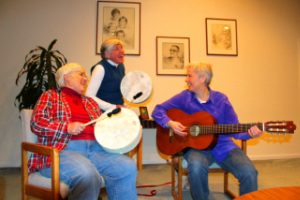 |
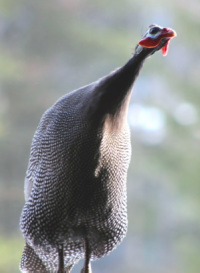 |
A Guinea Hen |
|
Kathy Webb, ready for a hike around the farm |
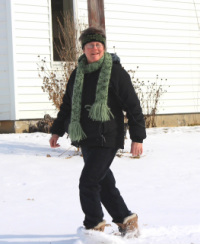 |
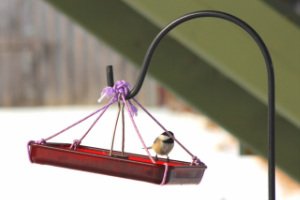 |
Nuthatch ready for lunch! |
|
Sister Mary filling feeders for our fine feathered guests! |
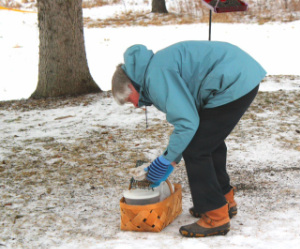 |
Farm-to-Table Event: Very Tasty!

On September 7, Sophia Pendergast, an independent chef from Newport, Rhode Island, delighted the guests at Mercy Farm with a delectable luncheon.
The menu for the meal, which also served as a place card, indicated where Sophia skillfully selected Mercy Farm produce to create a mouth-watering, memorable experience.
Guests were given a tour of Mercy Farm and introduced to its charm.
Increased Staffing at Mercy Farm

Sister Holly Cloutier, right, is pleased to welcome two new staff members to Mercy Farm, Sister Elizabeth (Betty) Secord, left, and Sister Mary Quinn, center.
Mercy Farm's Squash Takes Prize

This Hubbard squash, grown at Mercy Farm, took first prize at the Rutland State Fair, Vermont.
Playtime in the nursery

Being playful is instinctive for these kids!
A new "kid" at the Farm

On Monday, May 13, Mercy Farm welcomed Angel, the first Alpine Buckling born at the Farm. He is Rosemary's first Kid.
Up and about in no time flat!

It is amazing how quickly Angel acclimated to his new life. He is full of energy and curiosity!